| Service | 🇺🇦 Ukraine | 🇨🇿 Czech Republic | 🇹🇷 Turkey |
|---|---|---|---|
| Treatment of caries in a baby tooth | from USD 43 | from USD 40 | from USD 71 |
| Fissure sealing (per tooth) | from USD 17 | from USD 29 | from USD 26 |
| Preventive hygiene (ages 6–12) | from USD 22 | from USD 64 | from USD 63 |
| Paediatric dentist consultation | from USD 12 | from USD 71 | from USD 43 |
Prices in the “Ukraine” column come from MediUkraine’s partner clinics. The Czech Republic and Turkey columns show the lower bounds of prices published by clinics there (for Turkey, also the Turkish Dental Association’s recommended 2026 tariff), collected in August 2026 and converted to US dollars at the rate on the day of collection. A dash means we could not find a comparable published price. In any country, the final cost is set by the clinic after an examination.
Paediatric dentistry is the branch of dentistry that looks after the teeth and the bite from the eruption of the first incisors until the change to permanent teeth is complete. Children are seen by a doctor specialising in "Paediatric Dentistry", a separate specialty acquired during internship, the postgraduate training that follows basic dental education. It differs from adult dentistry in more than the knack of winning a child over: a baby tooth is built differently and is treated to different protocols, with different materials and on a different timescale.
Every paediatric dentist hears the same question: why treat them if they are going to fall out anyway? A baby tooth really is temporary, but until it falls out it does a job nothing else will take over. It holds the space in the dental arch for the permanent tooth erupting beneath it; it is used for chewing, which drives jaw development; and it helps the child pronounce sounds correctly. When a tooth is lost early, through complicated caries or an injury, the neighbouring teeth tilt into the empty space and take up the room. A few years later the permanent tooth no longer has enough space and erupts outside the arch or rotated. This is the source of some of the crowding that later takes months of orthodontic treatment to correct; to avoid it, a simple space maintainer is fitted after an early extraction.
The second reason is more serious than the first. The bud of the permanent tooth lies directly beneath the root of the baby tooth, and chronic inflammation at the tip of that root reaches it. The result can be damage to the enamel of the permanent tooth, ranging from white and yellow spots to marked hypoplasia, where the tooth erupts with a defect already present in its hard tissues and needs restoring straight away. In other words, an untreated baby tooth is not "a tooth that will fall out" but a risk to the one that will replace it.
Do not wait for pain before booking a visit. Reasons for a planned visit are a white or brown spot on the enamel, food getting stuck between the teeth, complaints about cold and sweet things, bleeding gums, mouth breathing, thumb sucking after the age of three, or simply reaching the age for the next check-up. Pain, a swollen cheek, an abscess on the gum or an injured tooth (chipped or dislodged) need a same-day visit, without waiting for a booking. A standard appointment in the chair is not right for every child. For a child who, because of age, the amount of work or their health, cannot cope with treatment while awake, sedation or treatment under general anaesthesia is discussed rather than insisting on an ordinary visit.
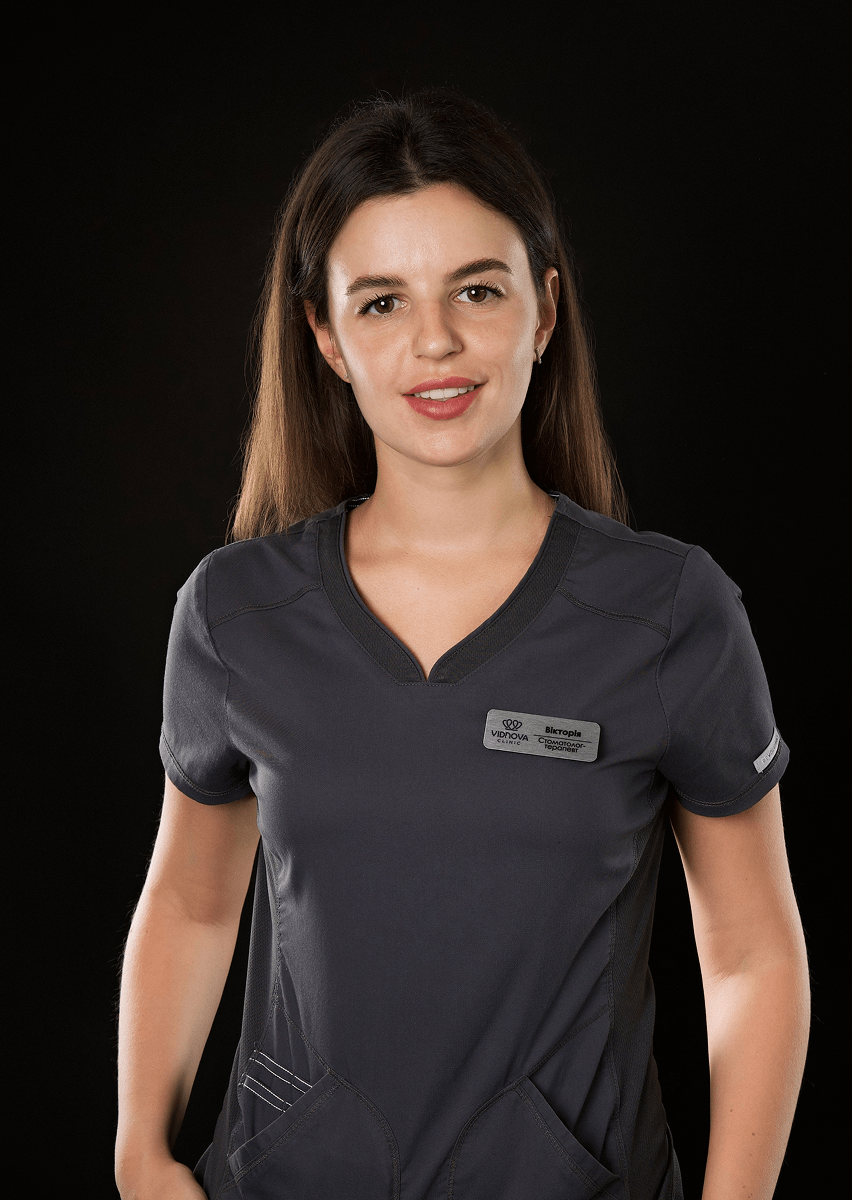
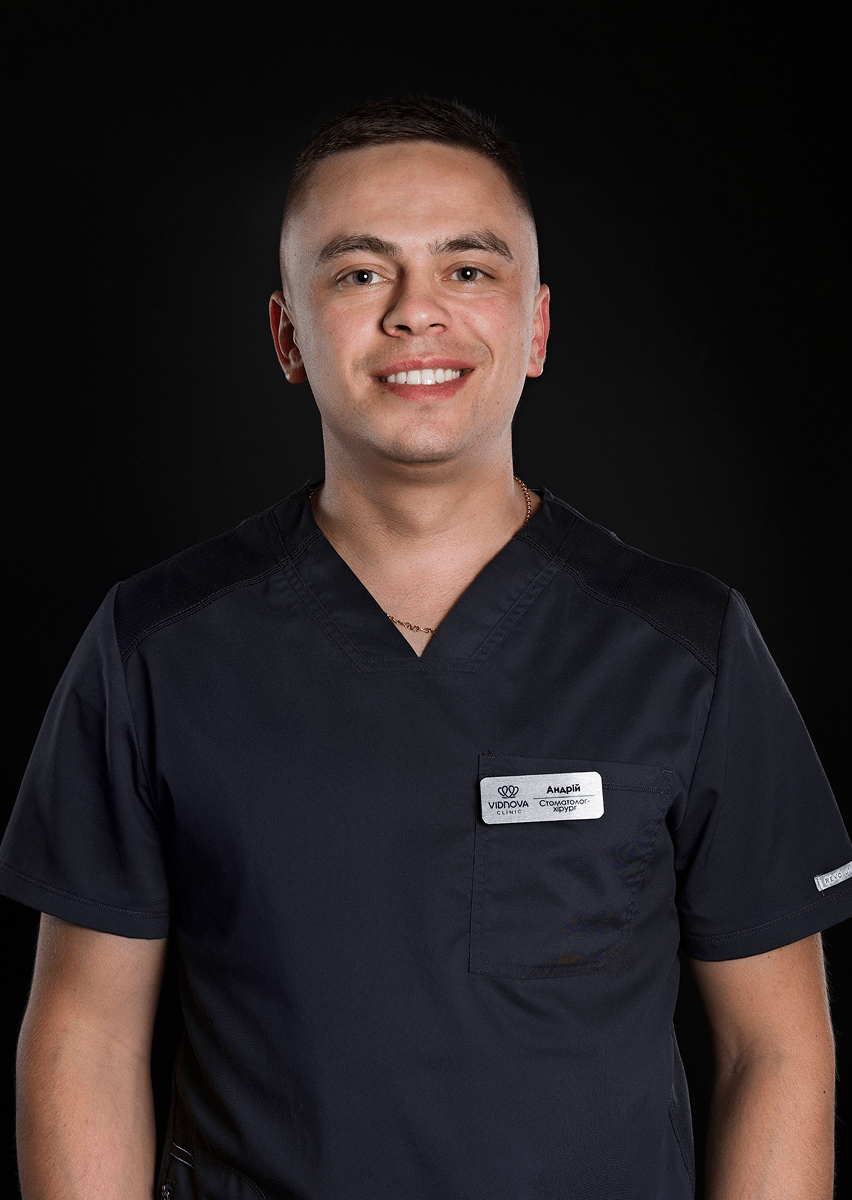
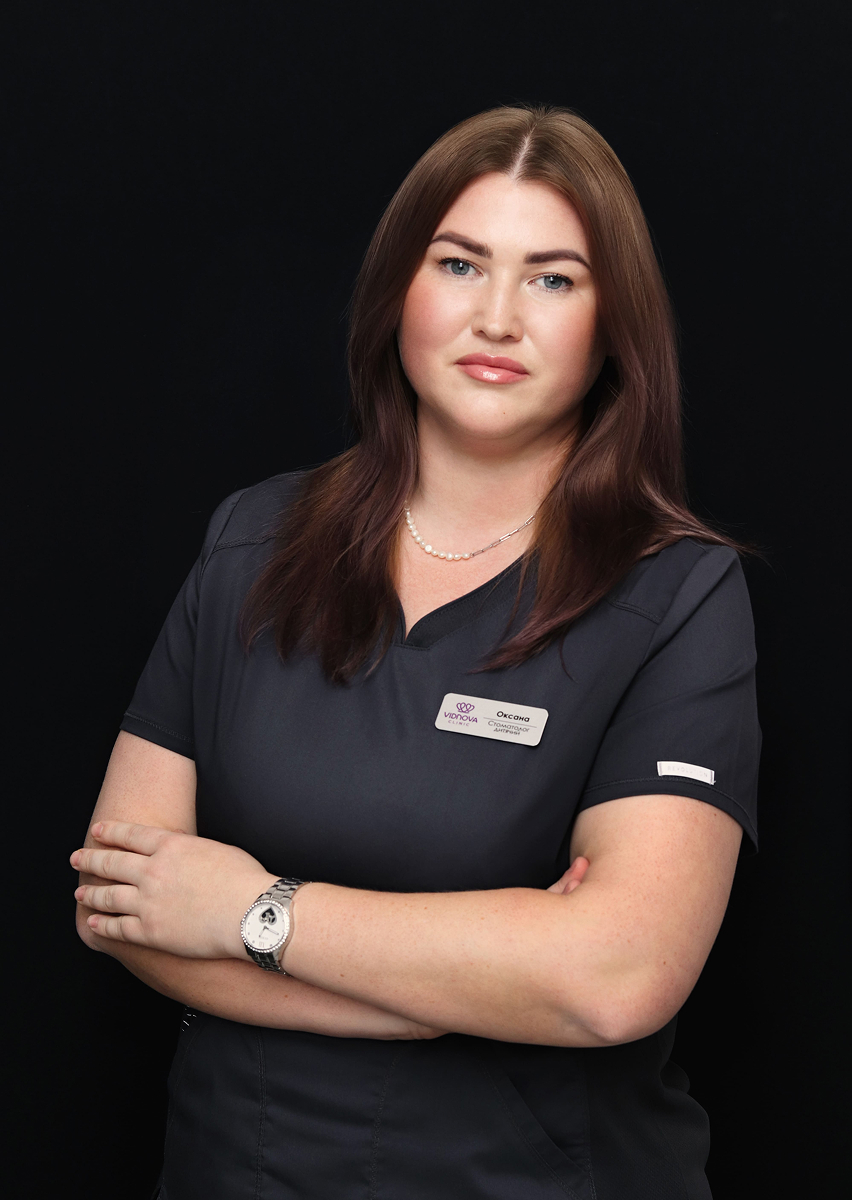
MediUkraine is a treatment search and coordination service, not a clinic. We find the clinic and a doctor with the right specialism, arrange the visit dates and support the family throughout, including families travelling from abroad. Our partner clinic in this field is Vidnova Dental Clinic in Lviv, 10 Ivana-Teodoziia Kurovtsia Street. The decision on what to do with a particular tooth is made by the doctor after an examination and an X-ray.

Travel. Ukrainian airspace is closed, so there are no commercial flights. Patients reach Lviv overland, most often from Poland: Rzeszów and Kraków airports are the usual entry points, with a train, bus or private transfer onward to the border and on to the city. Lviv is roughly 70 km from the Polish border, the shortest crossing of any Ukrainian city.
Visas. Citizens of the EU, the United Kingdom and the United States do not need a visa for short stays in Ukraine. Rules depend on your citizenship, so check your own before booking.
Safety, plainly. Ukraine is at war. Air raid alerts occur in Lviv, and an appointment can be interrupted by one. Several governments advise against travel to Ukraine, and while that advice stands, ordinary travel and medical insurance is often void — confirm your cover with your insurer before you commit to anything.
Language. MediUkraine handles correspondence, scheduling, the written treatment plan and the quote in English. The clinic's team communicates with international patients in English.
Payment. You pay the clinic directly. Our coordination service is free of charge for you.
More on travel, safety and insurance: Safety and travel.
The main work here is preventive, and it starts before any treatment. Parents should brush the child's teeth until the child can write confidently, roughly up to 7–8 years of age, and for several years after that they supervise evening brushing. In the surgery, professional hygiene is scheduled once every 6 months, along with fluoride varnish and, where indicated, remineralising therapy with calcium and phosphate preparations. Fluoride toothpaste is used from the eruption of the first tooth; the fluoride concentration and the amount both depend on age: a smear the size of a grain of rice up to the age of three, and a pea-sized amount after that.
Fissure sealing closes the natural grooves on the chewing surface, the place where caries in children most often begins. Fissures can be so deep and narrow that a bristle cannot reach into them, and the enamel of a newly erupted tooth is not yet mature and dissolves in acid more easily than mature enamel. The groove is cleaned and filled with a flowable sealant, sometimes after minimal opening with a bur. It is best done straight after eruption, while the fissure is not yet affected: the first permanent molars, the so-called six-year molars, erupt at 6–7 years, the second ones at 11–13. Sealant wears and chips over time, so its condition is checked at every preventive check-up and renewed if needed.
Caries at the white spot stage is treated without a drill. Demineralised but not yet broken-down enamel can recover: remineralising agents are used, or silver diamine fluoride, which stops the process but leaves a dark stain at the affected site, or resin infiltration, where the spot is impregnated with material without drilling. Each method has its limit: once a cavity has formed, none of them will work and a filling is needed.
Filling materials for baby teeth are chosen with two things in mind: the tooth will last a few more years, and the child can manage 20–30 minutes in the chair. Glass ionomer cements release fluoride and tolerate a little moisture, so they are placed where perfect isolation cannot be achieved. Compomers and composites are stronger and more aesthetic, but require a rubber dam and a dry field. Coloured children's composites are sometimes used, not for appearance but so that the child sees "their own" filling and is more willing to agree to the work. A filling in a baby tooth has a shorter service life than in a permanent tooth, and this is built into the plan: its task is to see the tooth through to its natural replacement.
When caries has reached the pulp, the approach depends on how far the inflammation has spread. Where the damage is limited, a pulpotomy is performed: the crown part of the pulp is removed, and the root part is left alive under a protective material, mineral trioxide aggregate, bioceramics or ferric sulphate. If the pulp has died, a pulpectomy is done: the canals are cleaned and filled with a paste that resorbs together with the root, based on zinc oxide and eugenol or on calcium hydroxide with iodoform. A baby tooth is not filled with permanent materials such as gutta-percha: they do not resorb, they interfere with the natural replacement of the tooth, and a hard mass in the canal can deflect the permanent tooth as it erupts.
A badly broken-down baby tooth cannot be saved with a filling, so a crown is placed. Preformed metal crowns for molars come in ready-made sets of sizes, so the doctor selects and fits a crown in a single visit. There is the Hall technique, in which the crown is seated on glass ionomer cement with no drilling and no anaesthesia at all: it is not suitable in every case, but it helps with children who cannot cope with long procedures. In the front of the mouth, paediatric zirconia crowns are used. Extraction remains a last resort, not a way to save time: it is done when the tooth is broken down to gum level, when there is a chronic focus of infection near the root that threatens the bud of the permanent tooth, or when the tooth is already loose before being replaced. If more than a year remained before the natural change, a space maintainer is discussed after the extraction, a simple appliance that stops the neighbouring teeth from taking up the room.
Early childhood caries, more often called bottle caries, affects the upper incisors in children under three and develops quickly: it can take only a few months from the first spot to a broken-down crown. The cause is not "weak enamel" but the feeding pattern: milk, formula, juice or sweetened water from a bottle in bed and frequent night feeds leave carbohydrates on the teeth just when saliva is hardly produced and cannot neutralise the acid in time. The enamel of a newly erupted tooth is especially vulnerable to this. What to do in practice: after the age of one, gradually wind down night feeds and the bottle in bed, do not give sweet drinks instead of water, teach the child to drink from a cup, and make evening brushing the last thing of the day, with only water after it. Early caries is treated according to its depth, from fluoride varnish and silver diamine fluoride to crowns, and when there is a lot of work and the child is two years old, treatment under general anaesthesia is discussed.
Working with fear is as much a part of treatment as the filling. The basic method is called "tell, show, do": the doctor explains in simple words what they are going to do, lets the child hold and look at the instrument, shows how it works on a finger or a toy, and only then begins. The child keeps a sense of control: an agreed "stop" signal, pauses on request, several short sessions instead of one long one. Where fear is marked, an adaptation visit without treatment is arranged: to see the surgery, sit in the chair, meet the doctor and go home. Parents are asked not to intervene or comment on the process, because a child responds worse to two adults at once than to one.
When behavioural methods do not work, medication-based support is discussed, and the indications for it are quite specific. Nitrous oxide sedation means breathing a gas mixture through a nasal mask: the child remains conscious, hears the doctor and answers, while anxiety is reduced; sedation does not replace pain relief, so local anaesthesia is still given. Treatment under general anaesthesia is considered when a lot of work is needed in a young child, in early childhood caries affecting many teeth, in children with autism spectrum disorders or neurological conditions, and when attempts at treatment in the chair have already failed. It is not a convenience option but a medical intervention: it requires an examination by an anaesthetist, tests, an empty stomach and several hours of observation after waking.
Alongside this the doctor keeps an eye on the bite and on the habits that shape it. Sucking a thumb or a dummy after the age of three, prolonged mouth breathing with enlarged adenoids and an infantile swallowing pattern gradually change the shape of the jaws. Some problems are resolved by removing the cause in time, some are corrected with removable plates or myofunctional trainers during the mixed dentition, and some are treated with braces after the teeth have changed. That is why the first orthodontic check-up is advised at around 7 years, when the first permanent molars and incisors have erupted and it is clear whether there is enough room in the arch.
After a filling the child returns to their usual activities the same day, and there is no recovery period as such. The restrictions concern the next few hours: if local anaesthesia was given, the child should not eat until the numbness has worn off, and should not be given anything hot. A composite filling sets under the curing light straight away, so it can be chewed on immediately; a glass ionomer one takes longer to mature, and the doctor will tell you how long to spare the tooth.
Numbness after local anaesthesia lasts 1.5–3 hours, and this is the riskiest part of the day. Children bite the numb lip, cheek or tongue, often until it bleeds, without noticing. So keep an eye on the child until sensation returns, warn them: "your lip is asleep, no biting", and do not let them have a snack at school. A wound from such biting heals within a few days and usually needs no treatment.
After an extraction a gauze pad is held in place for 15–20 minutes and then removed. That day, do not rinse the mouth, do not warm the cheek, and do not give hot food or drinks, and do not let the child drink through a straw; food should be soft and warm. Slight swelling and tenderness in the first day or two are expected, but increasing pain, swelling that grows on the third day or a raised temperature are a reason to phone the clinic rather than wait for the scheduled visit.
After a pulpotomy or pulpectomy the tooth is kept under observation. A control X-ray is usually taken after 6 months and then once a year until the tooth is replaced: it shows whether there is a focus of infection near the root and whether root resorption is proceeding normally. Some of these teeth still need extracting before their time; this cannot be predicted in advance, and the doctor warns about that scenario from the outset.
Realistic expectations look like this. A filling in a baby tooth does not last as long as one in a permanent tooth and may fall out or chip; recurrent caries under a filling develops more often the poorer the hygiene at home remains. The most common reason for re-treatment is not the quality of the material but the fact that nothing has changed at home: the same snacks, the same sweet drinks, the same hurried brushing. Only a doctor can forecast the outcome for a particular child after an examination, and that forecast is always conditional.
A routine check-up is scheduled once every 6 months, or once every 3–4 months where the risk of caries is high. At it, the condition of fillings and sealants is checked, plaque is removed, eruption and the change of teeth are assessed and home care is reviewed. These check-ups are where the result of treatment is assessed: between them there are mostly no visible changes, and an early spot cannot be seen without magnification.
Step 1. Getting acquainted and the examination. The doctor first talks to the child rather than reaching for an instrument: shows them the surgery, explains what they will do, lets them hold the mirror. Then they examine the teeth, count them out loud, and assess the bite and the condition of the gums and mucosa. They ask the parents about diet, night feeds or drinks, tooth brushing, past illnesses, allergies and medicines. This conversation takes up a noticeable part of the first appointment and shapes everything that follows.
Step 2. X-ray and plan. Caries between the teeth and a focus of infection near the root cannot be seen by eye, so if needed a periapical or panoramic X-ray is taken on a digital unit in children's mode. Based on the results the doctor draws up a plan: which teeth to treat, in what order, over how many visits and what can be done in one appointment. A quote with separate lines is issued together with the plan, and it is at this step that the need for sedation is decided.
In total, an appointment lasts 20–45 minutes. Between the introductory examination and the follow-up visit six months later come pain relief with topical gel and an injection, treatment of the tooth itself under a rubber dam with a filling or a preformed crown, and finally professional hygiene, fluoride varnish and brushing instruction for the child and parents. No hospital stay is needed, the child can return to their usual activities the same day, and the only restriction in the first hours is not to eat or bite the lip until the numbness wears off.
Paediatric dentistry is not a one-off service but monitoring over many years. Teeth erupt, are replaced and shift position, so what was normal six months ago may need intervention in the next age window. Hence the basic rhythm: a routine check-up once every 6 months, or once every 3–4 months where the risk of caries is high, because that is how long it takes for an early spot to turn into a cavity.
The first cycle starts earlier than parents expect. A check-up is recommended at about one year, when the first incisors have already erupted, and it is needed not for treatment but to assess risk, demonstrate brushing technique and sort out night feeds. It is at this age that early childhood caries develops, and the period from one to three years is the only window when it can still be prevented rather than treated.
From three to six years the baby teeth are all in place, and natural gaps appear between them as the jaw grows and makes room for the permanent teeth. Check-ups in this period are needed to catch caries on the contact surfaces, to watch for habits such as thumb sucking, and to get the child used to calm visits while nothing hurts. This is also when the first professional hygiene and fluoride varnish are done.
The period from 6 to 12 years is the busiest, because the teeth change unevenly. The first permanent molars erupt at around 6–7 years; they are often mistaken for baby teeth and overlooked, even though they need sealing straight away. In these same years the first orthodontic check-up is done, the space in the arch is monitored, and if needed a space maintainer is fitted after an early extraction. Baby teeth are treated here on the same indications as before, adjusted for the time they have left.
After 12 years the bite is mostly permanent, and the child gradually moves on to the adult monitoring protocol, although orthodontic treatment often continues. The cycle does not stop there: the 6-month interval remains, and only the content of the visit changes, with more attention to hygiene, sealing of the second molars and the condition of the enamel after appliances are removed. A missed check-up is rarely felt straight away, but its consequences are visible by the next one.
The greatest risk in paediatric practice comes not from treatment but from delaying it. Untreated caries progresses to pulpitis and then to periodontitis with a focus of infection at the tip of the root; this leads to periostitis with a swollen cheek, a fistula on the gum and pain that wakes the child at night. A separate consequence is damage to the bud of the permanent tooth lying under the root: it erupts with spots or enamel hypoplasia and needs restoring as soon as it appears in the mouth.
Complications of treatment itself are mostly local and reversible. A filling in a baby tooth may fall out or chip, recurrent caries develops under it over time, and a tooth that has had a pulpotomy sometimes has to be extracted before its natural replacement. Sensitivity for a few days after deep treatment is expected; increasing pain, swelling or an abscess is not, and is a reason to come in outside the schedule.
Local anaesthesia in children has its own rules. The dose is calculated by weight, not "by eye", and must not be exceeded; before the injection the doctor checks for allergies and the medicines the child takes. The most common complication here is an everyday one: biting the numb lip, cheek or tongue in the first 1.5–3 hours, sometimes to the point of a wound. True allergy to modern local anaesthetics is rare; a reaction to fear or to the vasoconstrictor component is far more often mistaken for it.
Sedation and treatment under general anaesthesia require separate preparation and a separate conversation. Nitrous oxide is not used with a blocked nose, in certain neurological conditions, or in a child who cannot breathe through the mask. General anaesthesia is given by an anaesthetist at a clinic with the appropriate licence: a prior examination, tests, an empty stomach before the procedure and several hours of observation after waking are required. An acute respiratory infection, fever or a flare-up of a chronic illness is a reason to postpone the procedure, not to "get it treated while we have the booking".
Fluoride is beneficial in the right dose and harmful in excess. Fluorosis of the enamel of permanent teeth develops when a child swallows too much fluoride for years while the teeth are forming, usually from eaten toothpaste rather than from varnish applied in the surgery. That is why toothpaste is dispensed in an age-appropriate portion, the child is taught to spit it out, and up to the age of three the teeth are brushed under adult supervision. Marked fluorosis leaves spots on the enamel that do not go away on their own.
Temporary contraindications to planned treatment are an acute infection with fever, a flare-up of a chronic illness, and herpetic stomatitis in the acute phase; planned procedures are postponed, while acute pain is relieved. Children with heart defects, clotting disorders, immunosuppression or in the period after a transplant need a separate decision: the approach is agreed with the relevant specialist, and antibiotic prophylaxis is sometimes required. MediUkraine's partner clinics hold a licence from the Ministry of Health of Ukraine for medical practice in the relevant specialties, and the doctor reviews the list of contraindications individually at the examination.
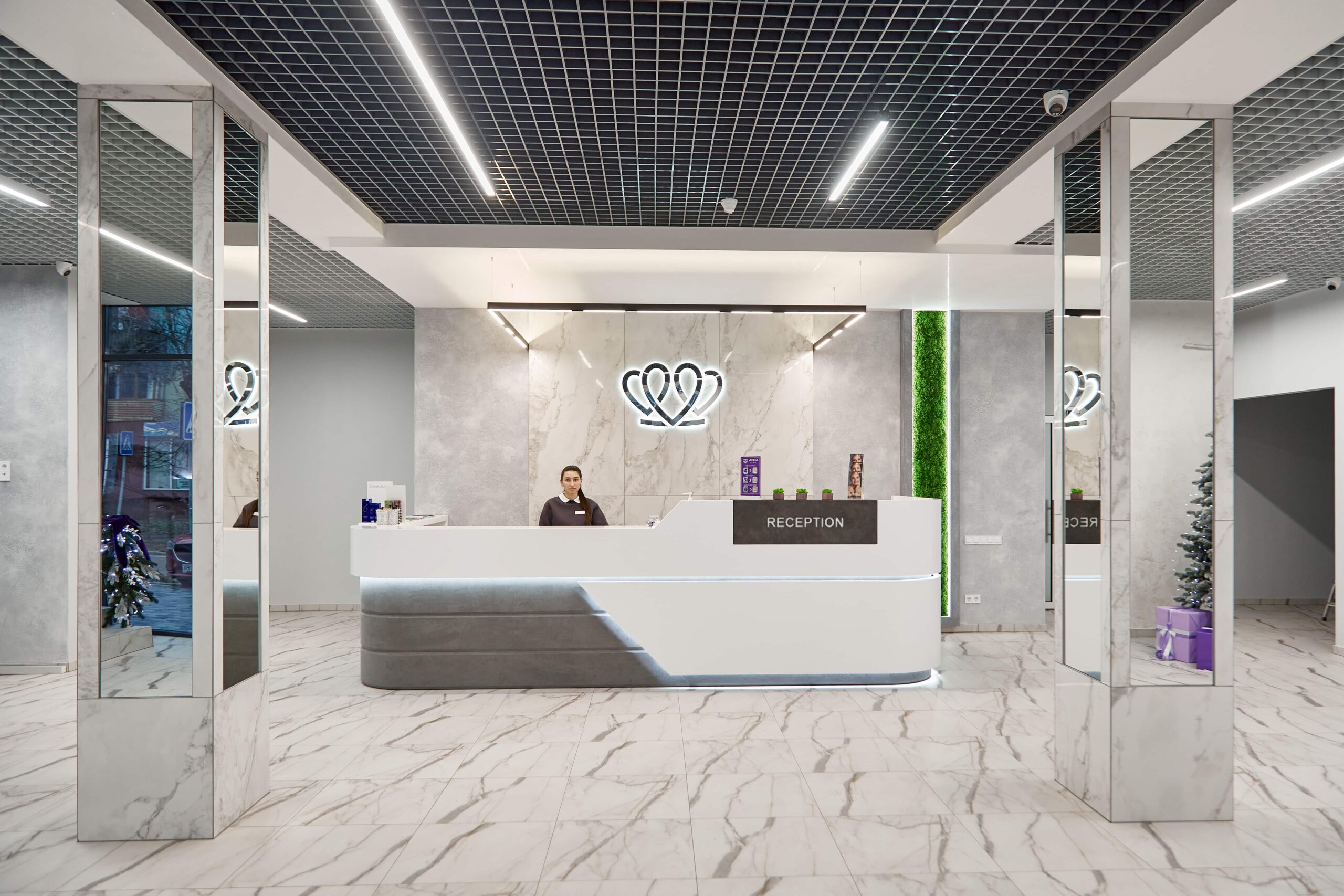
📍 Lviv, Ukraine
A dental clinic in Lviv with a separate doctor for each field: oral surgery and implants, prosthodontics, restorative dentistry, endodontics under a microscope, periodontics, orthodontics and paediatric dentistry.
Because until they fall out, they are doing a job. A baby tooth holds the space for the permanent one: when it is lost early, the neighbouring teeth tilt into the empty space and the permanent tooth no longer has enough room, which is how crowding arises. The second reason is more important: the bud of the permanent tooth lies under the root of the baby tooth, and chronic inflammation at the root tip reaches it. The permanent tooth then erupts with spots or an enamel defect. If more than a year remained before the tooth would have been replaced, a space maintainer is discussed after the extraction.
At MediUkraine's partner clinic, a paediatric dentist consultation costs from USD 12, treatment of caries in a baby tooth from USD 43 fissure sealing from USD 17 per tooth, and preventive hygiene for a child aged 6–12 from USD 22. These are prices per unit of work: three teeth are charged as three items. X-rays, local anaesthesia, sedation and treatment under general anaesthesia are paid for separately. The prices are indicative; the final cost is set by the doctor after an examination.
At about one year, when the first incisors have already erupted. This visit is not about treatment: the doctor assesses the risk of caries, looks at how the teeth are erupting, shows the parents brushing technique and goes through the feeding routine. It is before the age of three that early childhood caries develops, and this is the only window when it is easier to prevent than to treat. After that, check-ups are scheduled once every 6 months, or once every 3–4 months where the risk is high.
It is the common name for early childhood caries: it affects the upper incisors in children under three and develops quickly. The cause is not inherited "weak enamel" but routine: milk, formula, juice or sweetened water from a bottle in bed and frequent night feeds leave carbohydrates on the teeth at a time when saliva is hardly produced. Prevention is practical: after the age of one, gradually wind down night feeds and the bottle at sleep time, do not give sweet drinks instead of water, teach the child to drink from a cup, and make evening brushing the last thing of the day.
Start with a conversation at home. Do not use the doctor as a threat for bad behaviour, do not recount your own bad experience in front of the child, and do not promise that "they won't do anything": a broken promise costs more than the fear itself. In the surgery the doctor works on the "tell, show, do" principle and gives the child an agreed "stop" signal and pauses. Children with marked fear are offered an adaptation visit without treatment, to see the surgery and get to know the doctor. If that does not work, sedation is discussed.
Yes, but on medical indications, not on request. Treatment under general anaesthesia is considered when a lot of work is needed in a young child, in early childhood caries affecting many teeth, in children with autism spectrum disorders or neurological conditions, and when attempts at treatment in the chair have already failed. It is a medical intervention: it requires an examination by an anaesthetist, tests, an empty stomach and several hours of observation after waking. An acute infection or fever is a reason to postpone it.
It is done straight after the tooth erupts, while the grooves on the chewing surface are not yet affected: the first permanent molars erupt at 6–7 years, the second ones at 11–13. Fissures can be so narrow that a bristle cannot reach into them, and the enamel of a newly erupted tooth is more vulnerable to acid. The procedure takes about ten minutes and needs neither a drill nor anaesthesia. Sealant wears over time, so its condition is checked at every preventive check-up and renewed if needed.
Tell us what you need: we will suggest a clinic and a doctor and send you a cost estimate.
Request a consultation →