| Service | 🇺🇦 Ukraine | 🇨🇿 Czech Republic | 🇹🇷 Turkey |
|---|---|---|---|
| Myofunctional trainer for children | from USD 111 | — | — |
| Removable orthodontic appliance | from USD 60 | from USD 229 | from USD 198 |
| Hyrax appliance (jaw expansion) | from USD 278 | from USD 310 | from USD 261 |
| Paediatric orthodontist consultation | from USD 16 | — | — |
Prices in the “Ukraine” column come from MediUkraine’s partner clinics. The Czech Republic and Turkey columns show the lower bounds of prices published by clinics there (for Turkey, also the Turkish Dental Association’s recommended 2026 tariff), collected in August 2026 and converted to US dollars at the rate on the day of collection. A dash means we could not find a comparable published price. In any country, the final cost is set by the clinic after an examination.
The fundamental difference between children's and adults' orthodontics is that a child's jaws are still growing. While the bone is forming, the doctor can influence not only the position of individual teeth but also the width of the palate, the length of the dental arch and how the jaws relate to each other. In adults the same problems can be solved only by moving the teeth or by surgery, so childhood is a window of opportunity that closes with time.
Treatment is most often needed in a few situations. A crossbite, where the lower jaw shifts to the side as the teeth close, is a reason to treat without delay, because asymmetric loading affects growth. A narrow upper jaw with a high palate often goes hand in hand with difficulty breathing through the nose. A pronounced distal bite (Class II malocclusion), where the upper incisors stick out noticeably, raises the risk of injuring them in a fall. Early loss of a baby tooth calls for a space maintainer; otherwise the neighbouring teeth tilt into the gap and the permanent tooth does not have enough room.
It is just as important to know when there is no need to rush. At 7–9 years many children have upper incisors that fan out with a gap between them. This stage is called the "ugly duckling" stage, and it passes on its own when the canines come through. Gaps between baby teeth are also normal: they are needed so that the permanent teeth, which are wider than the baby teeth, fit into the row. Slight unevenness of the incisors in the mixed dentition without functional problems often lessens as the jaws grow, and in that case an appliance would be an unnecessary burden for both the child and the family budget.
The method also has its limits. Removable appliances work only for as long as they are worn, so without the cooperation of both child and parents there will be no result; this is the main reason treatment fails. Where there is a marked skeletal mismatch between the jaws, children's appliances reduce the problem but do not always remove it completely: once growth has finished, treatment with braces may be needed and, in some cases, orthognathic surgery.
MediUkraine is a service that finds and coordinates treatment; it is not a clinic. We find the clinic and a doctor with the right specialism, agree the dates and support your family, including if you are travelling from abroad; our partners include the Vidnova Dental Clinic in Lviv. The diagnosis and treatment approach are decided by the doctor after examining your child in person.

Travel. Ukrainian airspace is closed, so there are no commercial flights. Patients reach Lviv overland, most often from Poland: Rzeszów and Kraków airports are the usual entry points, with a train, bus or private transfer onward to the border and on to the city. Lviv is roughly 70 km from the Polish border, the shortest crossing of any Ukrainian city.
Visas. Citizens of the EU, the United Kingdom and the United States do not need a visa for short stays in Ukraine. Rules depend on your citizenship, so check your own before booking.
Safety, plainly. Ukraine is at war. Air raid alerts occur in Lviv, and an appointment can be interrupted by one. Several governments advise against travel to Ukraine, and while that advice stands, ordinary travel and medical insurance is often void — confirm your cover with your insurer before you commit to anything.
Language. MediUkraine handles correspondence, scheduling, the written treatment plan and the quote in English. The clinic's team communicates with international patients in English.
Payment. You pay the clinic directly. Our coordination service is free of charge for you.
More on travel, safety and insurance: Safety and travel.
The first orthodontic examination is recommended at around 6–7 years. That is when the first permanent molars and central incisors come through, and the doctor can assess for the first time how the jaws close and whether there will be enough room for the rest of the permanent teeth. This does not mean treatment will start straight away: most children are simply monitored, with a check-up every six months. The point of an early visit is to catch the few conditions where timing really does decide the outcome.
Expansion of the upper jaw is the clearest example of an intervention tied to age. The upper jaw consists of two halves joined by the midpalatal suture; while the suture is still pliable, the appliance separates the bone itself rather than just tilting the teeth. The fixed Hyrax appliance is attached by bands to the molars, and the parents activate the screw in the centre at home with a special key: one quarter turn gives about 0.2 mm, and two quarter turns a day are usually prescribed. The active phase lasts two to four weeks, after which the appliance stays in the mouth for another 4–6 months as a retainer; without this retention phase the jaw narrows again. The gap that appears between the upper central incisors as the suture opens is an expected sign, not a problem: it closes on its own within a few weeks.
Removable plates are made of acrylic from models of the jaws, with a screw, springs, a labial bow or bite planes built in as needed. The screw is activated less often than on the Hyrax, usually once every 7–10 days. What matters most is wearing time: the appliance must be in the mouth 20–22 hours a day and is taken out only for meals and toothbrushing. A plate expands the dental arch and tilts individual teeth well, but it can barely move a tooth bodily or change the relationship between the jaws.
A myofunctional trainer is a ready-made silicone or polyurethane tray in standard sizes, which the child wears for one to two hours during the day and all night. Its job is not to push the teeth mechanically but to train the tongue to rest against the palate, the lips to stay closed and the child to breathe through the nose. The evidence should be stated plainly: systematic reviews of myofunctional appliances rest on small studies with a high risk of bias, so the trainer is regarded as an addition to work on the cause, not a stand-alone replacement for appliance treatment or braces.
In a distal bite, where the lower jaw lags behind and the upper incisors stick out, functional appliances are used: the two-piece Twin Block, the activator, removable appliances with inclined planes. They hold the lower jaw in a forward position and make use of the child's own growth, so they are prescribed during the pubertal growth spurt: in girls this is roughly 10–12 years, in boys 12–14. Timing is based not on the child's age in years but on skeletal maturity, assessed from the cervical vertebrae on the cephalogram or from a hand X-ray.
A reverse overjet, where the lower front teeth overlap the upper ones, calls for even earlier intervention. To bring the upper jaw forward, a face mask resting on the forehead and chin is used together with an expansion appliance. The skeletal response to such treatment is noticeably better while the child is under 8–10 years old; after that the effect increasingly comes down to tilting the teeth, so delay is costly.
No appliance will hold the result if the cause that deformed the bite keeps acting. Constant mouth breathing because of adenoids, enlarged tonsils, a deviated septum or allergic rhinitis changes the position of the tongue and the tone of the facial muscles, so a child with a narrow palate is first referred to an ENT specialist. A short tongue frenulum stops the tongue from rising to the palate; where indicated it is released, and exercises are needed afterwards, otherwise the tongue keeps its habitual position. Sucking a finger or a dummy after the age of three or four creates an open bite, and until the habit is broken the appliance is treating the effect, not the cause.
Early loss of a baby tooth through decay or injury is a separate case. Baby teeth hold the space for the permanent ones, and if a tooth is lost a year or two before its natural time, the neighbouring teeth tilt into the gap. In that case a space maintainer is fitted: a simple fixed device made of a band and a loop, which costs less than creating space later with an appliance or braces.
Braces are a tool for the permanent dentition, so they are fitted once almost all the teeth have changed, usually at 11–13 years; teenagers are also offered aligners if they are willing to wear the aligners for the required number of hours. Whether it is worth treating in two stages, first an appliance at 7–9 years and then braces, has been studied in randomised trials: with protruding upper incisors the early phase above all reduces the risk of injury to those teeth, while the final state of the bite in the two-phase and one-phase groups turned out to be comparable. That is why early treatment is recommended for a specific purpose, not just in case.
There are also things that children's orthodontics does not do. It does not speed up the eruption of teeth, does not change the genetically determined shape of the face and does not automatically spare the child braces in the future. The doctor gives a prognosis for each child after the examination, X-rays and analysis, and reviews it as the child grows, which is why any plan covering several years must stay flexible.
The first few days with a new appliance are a period of adjustment. The appliance feels foreign, the child produces more saliva, may lisp and complain of pressure on the teeth. Speech usually returns to normal within 3–7 days, and the drooling passes even sooner; reading aloud for 10–15 minutes a day helps.
After each activation of the screw the feeling of pressure returns for a few hours. With upper jaw expansion there may also be pressure around the nose and the bridge of the nose, an expected reaction to the opening of the suture. If the pain is sharp, the child cannot bite together, or the anchor molars have become loose, stop activating the screw and contact the doctor without waiting for the scheduled visit.
Progress is checked every 4–8 weeks, and a meaningful assessment is possible only after 3–6 months. During expansion the width of the dental arch changes within weeks, but stability can be judged only after the retention period, once the bone in the suture has matured.
Relapse is a real risk, not a rare exception. It most often happens when the retention stage was shortened, when the child wore the removable appliance for less time than prescribed, or when the underlying cause was not addressed: the child still breathes through the mouth or rests the tongue between the teeth. That is why the doctor checks breathing and habits at every visit.
Some children still need braces in their teens after a successful first phase, and that is not a failure of treatment but a planned second stage. It is equally normal for the child to stay under monitoring after the appliance is removed until growth is complete: the bite changes together with the jaws. No one can predict exactly how an individual child will respond, so the doctor gives a range of timeframes rather than an exact date.
For families from abroad, part of the monitoring stage can be done remotely: standardised photos of the dental arches give the doctor enough to spot worrying changes between visits. The report, the X-rays and the activation instructions stay with you, and MediUkraine arranges a video consultation with the same doctor if needed and plans the next trip.
Step 1. Examination and conversation. The doctor asks the parents about feeding, habits, past illnesses, ENT surgery and dental injuries, and then examines the child: the type of bite, the condition of the baby and permanent teeth, the tongue and lip frenula, and the pattern of breathing and swallowing. This part takes up most of the appointment and determines whether X-rays are needed.
Step 2. Diagnostics. A panoramic X-ray is taken, and a lateral cephalogram if needed; impressions are taken or the jaws are scanned with an intraoral scanner, and the face and dental arches are photographed from standard angles. None of this hurts, no anaesthetic is needed, and children usually find scanning easier than impressions.
In total, it takes at least 6 months from the first examination to removal of the appliance, and with retention and monitoring the process extends over years: between the first visit and the end come diagnostics with X-rays, agreement of the plan and the quote, fabrication of the appliance in the laboratory, regular activations once every 4–8 weeks and parallel work on breathing and habits. No hospital stay or anaesthetic is needed, and after each visit the child can go back to their usual activities.
Treating a child is not about a single appliance but a cycle tied to growth. The cycle is divided into four stages: diagnostics, the active phase, retention, and observation until jaw growth is complete. A skipped or shortened stage is what most often brings the problem back.
The length of the active phase depends on the appliance. Expanding the upper jaw with a Hyrax takes 2–4 weeks of activation, a removable plate works for 6–12 months, and a functional appliance for a distal bite for 9 to 18 months. The summary at the top of this page says "from 6 months" because a full cycle is almost never shorter.
Retention usually lasts no less than the active phase, and after opening of the palatal suture it lasts longer. The appliance is either left in the mouth passively or replaced with a tray or a fixed retainer. Shortening this stage is the most common reason for having to start again.
Between phases the child stays under the doctor's care. While the teeth are changing, check-ups are scheduled once every 4–6 months: the doctor watches the canines and premolars come through and checks whether there is enough room and whether any tooth is delayed. These check-ups are where the decision on a second phase is made.
The second phase is usually braces or aligners after all the teeth have changed. The total time from the first visit to removal of the retainer can easily stretch over several years, and that is perfectly normal: the schedule follows the child's growth, not a treatment calendar.
The most common complication of children's orthodontics is not a broken appliance but tooth decay. Plaque collects more easily around bands and brackets, and with poor hygiene white spots of demineralisation appear within a few months and remain on the enamel even after the appliance is removed. That is why the clinic teaches brushing with an interdental brush, prescribes fluoride products and examines the enamel at every visit.
Mechanical problems are also to be expected. In the first days the appliance may rub the inside of the mouth, which orthodontic wax and rinses help with; wire components break, bands come unstuck, removable plates get lost or crack. This becomes a risk only if the child keeps wearing a damaged appliance: a sharp edge injures the mucosa, and a displaced component moves the teeth in an unpredictable direction.
Upper jaw expansion has risks of its own. If activation is too fast there can be marked pain and inflammation of the mucosa under the palatal part of the appliance, and in rare cases a pressure sore. Excessive expansion tilts the anchor teeth and exposes their necks, so the doctor calculates the amount of expansion in advance from the X-rays rather than by eye.
Allergic reactions to materials are possible, most often to nickel in metal components and less often to the acrylic of a plate; any known allergies must be mentioned before the appliance is made. Root resorption is linked mainly to the braces stage and prolonged tooth movement, and it is rare with children's removable appliances. The claim that bite correction causes temporomandibular joint disorders is not supported by the available research, but nor is there any basis for fitting an appliance to prevent such disorders.
There are few strict contraindications, but more limitations. Active tooth decay and gum inflammation are treated before the appliance is fitted; with unresolved ENT problems, nasal breathing is restored first, otherwise the appliance will be working against a cause that is still present. For children with severe physical or neurological conditions the plan is agreed with the paediatrician and the relevant specialist, and removable appliances are prescribed taking into account whether the child is able to use them every day.
Parents have the right to a second opinion, and in orthodontics it is worth seeking more often than you might think: for the same bite, the approaches of different schools may differ in timing and in the choice of appliance. The X-rays, the analysis and the treatment plan are handed to you, so they can be shown to another specialist. If needed, MediUkraine arranges a second consultation at another partner clinic.
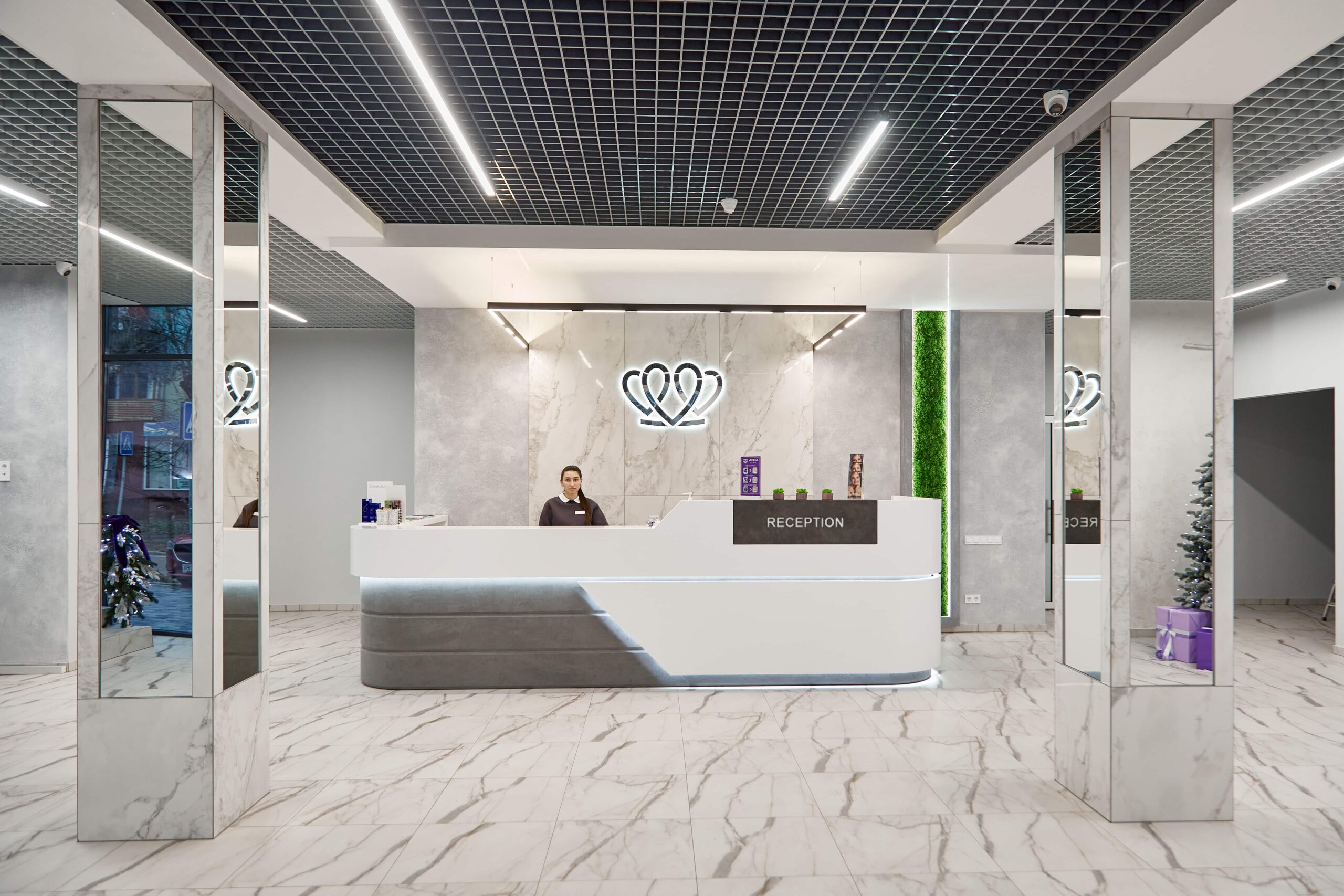
📍 Lviv, Ukraine
A dental clinic in Lviv with a separate doctor for each field: oral surgery and implants, prosthodontics, restorative dentistry, endodontics under a microscope, periodontics, orthodontics and paediatric dentistry.
The usual guide is 6–7 years, when the first permanent molars and central incisors come through: at this point the doctor can already see how the jaws close and whether there will be enough room for the permanent teeth. Go earlier if you notice a crossbite with the jaw shifting to the side, constant mouth breathing, finger sucking after the age of three, or if the child has lost a baby tooth long before its time. The first examination usually ends not with an appliance but with a monitoring plan and a check-up every six months.
A paediatric orthodontist consultation at partner clinics costs from USD 16, a removable orthodontic appliance from USD 60, a children's myofunctional trainer from USD 111, and a Hyrax appliance for jaw expansion from USD 278. Diagnostics with X-rays, treatment of the teeth before the appliance is fitted and a retention tray after the active phase are paid for separately. The prices are indicative: the doctor gives the final figure after an examination, because the scope depends on the child's age and the condition of the teeth.
No. Gaps between baby teeth are normal: they are needed so that the wider permanent teeth fit into the row. The stage at 7–9 years when the upper incisors fan out with a gap between them is also physiological and passes once the canines come through. Slight unevenness of the incisors in the mixed dentition often lessens as the jaws grow. Immediate treatment makes sense when there is a functional problem: the jaw shifting to the side on closing, a narrow palate with mouth breathing, incisors that stick out noticeably and are at risk of injury. The decision is made by the doctor after an examination and an X-ray, not from a photograph.
A myofunctional trainer is a ready-made silicone tray in standard sizes, worn for one to two hours during the day and all night; it works mainly on function: the position of the tongue, closure of the lips, nasal breathing. A removable plate is custom-made from models and has a screw and springs; it expands the dental arch and tilts individual teeth, but has to be worn 20–22 hours a day. Braces move teeth precisely and in three planes, so they are fitted once the permanent dentition is in place, usually after 11–12 years.
Because these factors distort the bite every day. With constant mouth breathing the tongue drops away from the palate, the cheeks press on the side teeth, and the upper jaw grows narrower than it should. A short tongue frenulum stops the tongue from rising, and after it is released exercises are needed, otherwise the habitual position will not change. If these factors are not dealt with alongside the appliance, the width of the jaw will most likely return to what it was once the appliance is removed. That is why the child is often referred to an ENT specialist, and sometimes to a speech therapist, before treatment begins.
There is usually no sharp pain, but there is pressure. After each activation of the screw the child feels tension around the palate and the bridge of the nose for a few hours, and sometimes brief discomfort in the teeth. No pain relief is needed for the procedure itself. The gap that appears between the upper incisors is an expected sign that the suture is opening, not a complication: it closes on its own within a few weeks. If the pain is sharp, the gum or palate under the appliance becomes inflamed or the anchor teeth become loose, stop activating the screw and see the doctor without waiting for a scheduled visit.
Often yes, and that is not a sign of failure. Appliances in the mixed dentition solve problems that are harder or impossible to solve later: the width of the jaw, room for the permanent teeth, the relationship between the jaws. Precise alignment of individual teeth is left to the braces or aligners stage in the teenage years. In studies of two-phase treatment, the final state of the bite turned out to be comparable with one-phase treatment, while the early phase above all reduced the risk of injury to protruding incisors. Only a doctor can predict the result for an individual child, after an examination.
Tell us what you need: we will suggest a clinic and a doctor and send you a cost estimate.
Request a consultation →