| Service | 🇺🇦 Ukraine | 🇨🇿 Czech Republic | 🇹🇷 Turkey |
|---|---|---|---|
| Aesthetic tooth restoration | from USD 73 | from USD 143 | from USD 94 |
| Crown fitting | from USD 280 | from USD 476 | from USD 260 |
| Dentist consultation | from USD 8 | from USD 38 | from USD 34 |
Prices in the “Ukraine” column come from MediUkraine’s partner clinics. The Czech Republic and Turkey columns show the lower bounds of prices published by clinics there (for Turkey, also the Turkish Dental Association’s recommended 2026 tariff), collected in August 2026 and converted to US dollars at the rate on the day of collection. A dash means we could not find a comparable published price. In any country, the final cost is set by the clinic after an examination.
Inlays, onlays and overlays replace the damaged part of the tooth's crown, not the whole crown. An inlay sits within the chewing surface between the cusps and does not cover them. An onlay covers one or more cusps. An overlay covers the whole chewing surface while keeping the tooth's own side walls. A separate option is the endocrown, a one-piece restoration for a root-treated tooth that anchors in the access cavity instead of using a post and core.
The difference from a filling lies in how it is made. A filling is built up directly in the mouth, and as the composite sets, its shrinkage pulls the tooth walls inwards; an inlay is made outside the mouth, on a model or digitally, so shrinkage affects only the thin layer of cement. In large cavities this gives a more accurate contact point with the neighbouring tooth, better cusp anatomy and a smoother margin where less plaque collects.
The difference from a crown lies in how much tooth is removed. For an all-ceramic crown the tooth is reduced all the way round; measurements on extracted teeth show this removes about two thirds of the crown's hard tissue. Partial restorations remove roughly half as much, and an inlay only a few per cent more than decay has already destroyed. For a vital tooth this matters: the more dentine is left, the lower the risk of pulp inflammation and root fracture.
The indications depend on the extent of the damage. A practical guide is the width of the cavity and the thickness of the walls: when the cavity spans more than half the distance between the cusps and a cusp wall is thinner than 1.5–2 mm, an ordinary filling is very likely to lead to a fracture. Typical situations include large cavities on the biting and contact surfaces with a lost marginal ridge, replacing an old amalgam or bulky composite filling, cracks in enamel and dentine, a worn biting surface, and root-treated back teeth with enough wall structure left.
Inlays are not needed for a shallow cavity: an ordinary filling is enough, and paying for an indirect restoration makes no sense. Nor are they made when almost no walls are left or the edge of the cavity runs deep under the gum: the area cannot be isolated with a rubber dam, and without a dry field adhesive bonding does not hold, so a crown is considered instead. Relative limitations include uncontrolled bruxism, active decay in several teeth at once, poor oral hygiene, and use of the tooth as a bridge abutment. MediUkraine is a treatment search and coordination service, not a clinic: we select the clinic and the doctor, agree dates and support you, while the dentist decides on the type of restoration after an examination and an X-ray.

Travel. Ukrainian airspace is closed, so there are no commercial flights. Patients reach Lviv overland, most often from Poland: Rzeszów and Kraków airports are the usual entry points, with a train, bus or private transfer onward to the border and on to the city. Lviv is roughly 70 km from the Polish border, the shortest crossing of any Ukrainian city.
Visas. Citizens of the EU, the United Kingdom and the United States do not need a visa for short stays in Ukraine. Rules depend on your citizenship, so check your own before booking.
Safety, plainly. Ukraine is at war. Air raid alerts occur in Lviv, and an appointment can be interrupted by one. Several governments advise against travel to Ukraine, and while that advice stands, ordinary travel and medical insurance is often void — confirm your cover with your insurer before you commit to anything.
Language. MediUkraine handles correspondence, scheduling, the written treatment plan and the quote in English. The clinic's team communicates with international patients in English.
Payment. You pay the clinic directly. Our coordination service is free of charge for you.
More on travel, safety and insurance: Safety and travel.
An inlay sits within the chewing surface: it fills the cavity between the cusps, rests on the floor and walls, but does not cover the cusps. It is used when the tooth walls are intact and thick enough, and the only problem is that the cavity is too large for a reliable filling. The minimum thickness of ceramic at the narrowest point is about 1.5 mm: a thinner layer chips under chewing load, so the dentist would rather deepen the cavity by a fraction of a millimetre than accept a thin restoration.
An onlay covers one or more cusps and takes the load off a weakened wall. The rule of thumb is simple: a cusp thinner than 1.5–2 mm, or undermined from within by caries, is covered rather than left to bear load. The same applies to teeth after root canal treatment: once the marginal ridge is lost, the tooth loses rigidity and the risk of a wall fracturing during chewing increases many times over. An overlay is the next step: it covers the whole chewing surface but does not touch the side walls, so it suits worn teeth when the height of the tooth needs restoring without grinding it down all the way round.
For root-treated teeth there is a separate option, the endocrown. The restoration has an extension that reaches a few millimetres into the access cavity and acts as the retaining element, so a post and core are no longer needed. This preserves the dentine around the canal openings; drilling it away for a post used to account for a significant share of vertical root fractures. An endocrown works well on molars with enough cavity height; on premolars with a narrow pulp chamber the decision is made case by case.
The most common material is lithium disilicate. It is a glass ceramic with a flexural strength of about 350–400 MPa that etches well with hydrofluoric acid and therefore forms a strong chemical bond with the cement. It is translucent, so it suits both the smile zone and the back teeth; long-term studies show a high proportion of restorations lasting more than ten years. The downside is the thickness it needs, 1.0–1.5 mm on the biting surface; any thinner and the material is working at its limit.
Zirconia is stronger: from 1,000–1,200 MPa in the opaque generations to 550–800 MPa in the more translucent ones made for aesthetics. It allows a thinner restoration, from 0.5–1.0 mm, so it is chosen for bruxism and where vertical space is short. The trade-off is more complex bonding: zirconia does not etch with hydrofluoric acid, so the surface is sandblasted with aluminium oxide and a primer containing the phosphate monomer MDP is applied. Another feature is hardness: monolithic zirconia with an unpolished surface wears the enamel of the opposing tooth faster than glass ceramic, so after fitting the restoration is always polished rather than left rough.
Composite CAD/CAM blocks and hybrid ceramics with a polymer matrix are an intermediate option. They are softer, absorb impact better, are easier to adjust directly in the mouth and cost less, but over time they wear more and change colour. They make sense as a temporary or medium-term solution: for young patients whose bite is still developing, for heavy grinding or clenching where ceramic is too risky, or as an interim stage before definitive prosthetic work. For smaller cavities, a direct composite filling placed in the chair remains a valid option: it is cheaper and can be repaired.
The tooth is recorded with a digital scanner or a conventional impression. Intraoral scanning takes a few minutes, needs no impression tray and immediately shows on screen any areas where the preparation margin is unclear, so the dentist can correct this before you leave. From there, there are two routes. The first is milling at the clinic: the restoration is cut from a block in 10–20 minutes, crystallised in the furnace, glazed and bonded the same day. The second is the laboratory: the technician presses or mills the restoration and applies stains and glaze, which takes 3–10 working days, during which the tooth is protected by a temporary inlay.
The success of the work depends more on bonding than on the material. The tooth is isolated with a rubber dam, the ceramic surface is etched with hydrofluoric acid and treated with silane, the enamel and dentine with phosphoric acid and adhesive, after which the restoration is seated on a dual-cure or light-cure composite cement. Excess is removed before curing, the margin is polished, and the bite is checked with articulating paper at rest and during sideways jaw movements. Glass ceramic must not be fitted with conventional cement: it stays in place precisely because it is bonded to the tooth tissue.
It is also worth understanding the limits of the method. A partial restoration has to rest on the tooth's own walls, so when practically none are left, when the edge of the defect runs more than 1–2 mm under the gum and the field cannot be isolated, or when the tooth has to serve as an abutment for a bridge, a crown is chosen, sometimes after crown lengthening. This is not a failure but a different tool: a crown encircles the tooth and is held mechanically, so it does not need a perfectly dry field.
No one can predict how long a particular restoration will last without an examination: the outcome depends on the amount of remaining tissue, the state of the pulp, the nature of the bite and hygiene. A realistic conversation with the dentist starts not with promises but with what, in this particular tooth, speaks for and against a partial restoration.
In the first days after bonding the tooth may react to cold and to biting. This is a normal response to preparation and adhesive treatment of the dentine and usually fades within one to two weeks. If sensitivity has not eased after a month, gets worse, or pain appears for no reason, book an extra check-up rather than wait.
Pain only when biting usually means the restoration is slightly high, a fraction of a millimetre taller than it should be. The adjustment takes a few minutes: the dentist finds the spot with articulating paper, removes the excess and polishes the area. Do not put it off, because overloading a single cusp can lead to a crack.
The result can be fairly judged after about two weeks, once you stop noticing the tooth and your tongue has got used to the new shape. Until then, a feeling that "something is in the way" is normal even if the bite is correct. The colour of glass ceramic is stable from the start: unlike composite, it does not darken from coffee and wine, although plaque forms at the edge of the restoration just as it does on natural enamel.
You can usually chew on that side from the next day; for the first 24 hours, avoid very hard food while the cement reaches full strength. After that the restrictions are the usual ones for any restoration: do not crack fruit stones, ice or nuts in their shells, and do not open packaging with your teeth. Use floss as usual, but rather than snapping it upwards out of the gap, pull it out sideways.
A check-up is usually booked after a month, then every six months alongside professional cleaning. The dentist checks the restoration margin with a probe and on an X-ray, and assesses the surrounding gum and the bite, which changes over time. These check-ups catch secondary caries at the margin while refinishing and polishing are still enough.
Lifespan is best discussed as a range rather than a single figure. Clinical studies of ceramic partial restorations show that most of them last more than ten years, but some need attention sooner because of chipping, debonding or decay next to the restoration. The dentist can only estimate how long it will last in your case after an examination, taking into account the condition of the neighbouring teeth, the bite and hygiene.
Step 1. Examination, X-ray and choice of restoration. The dentist assesses how many walls remain and how thick they are, checks the tooth's response to cold, and looks at a periapical X-ray for caries under the filling and the condition of the root. This is where the main decision is made (a filling, a partial restoration or a crown), and a quote is drawn up with an alternative in case there is more damage under the old filling than can be seen.
Step 2. Preparation and isolation. Under local anaesthesia the old filling and decayed dentine are removed, and the cavity is shaped with a smooth margin and the clearance needed for the material, with the cusps covered if necessary. The tooth is isolated with a rubber dam, deep areas are covered with a liner, and exposed dentine is sealed with adhesive straight away: this reduces post-operative sensitivity and improves the bond later on.
In total, treatment takes two visits of 40–60 minutes each or, if the clinic mills the restoration on site, one longer appointment. Between preparation and bonding come three technical stages: taking a digital scan or impression, making the restoration from the chosen material, and the try-in with a check of the contact point and colour. Anaesthesia is only needed for preparation, and there is no hospital stay or recovery period: you can usually chew on that side from the day after bonding.
There are two scenarios, and the number of visits depends on which one applies. With the single-visit protocol, preparation, scanning, milling and bonding fit into one appointment of 2–3 hours. With the laboratory protocol there are two visits, with 3–10 working days between them while the technician makes the restoration.
Between preparation and bonding, the tooth is protected by a temporary inlay. It shields the dentine from irritants and keeps the neighbouring teeth in place, but is deliberately fixed loosely so it is easy to remove. So avoid chewing anything hard or sticky on that side, and if the temporary inlay falls out, have it replaced at the clinic within a day or two: without it the teeth can shift, and the finished restoration may not fit.
The first week after bonding is a period of adjustment: sensitivity to cold, an unfamiliar feeling when biting, and sometimes a quick bite adjustment. After that the tooth is back to normal use: chewing without restrictions apart from very hard foods, and an ordinary toothbrush and floss.
Follow-up consists of a check-up after a month, then visits every six months alongside professional cleaning. At these visits the restoration margin, the surrounding gum and the bite are checked, and a periapical X-ray is taken once a year if the tooth is root-treated. These visits are not a formality: they catch secondary caries and micro-chips while a minor adjustment is still enough.
In the long term there are three possible scenarios. The restoration serves for years without intervention; it needs repair or remaking because of chipping or debonding; or the damage progresses and the tooth needs a crown. Converting a partial restoration to a crown is almost always technically possible, which is why starting with the less invasive option is usually the wiser choice.
The most common unwanted effect is post-operative sensitivity. Preparation opens the dentinal tubules, and for a while the tooth reacts more sharply to cold and to biting. This usually passes within one to two weeks; the risk is reduced by sealing the dentine immediately after preparation, working under a rubber dam and careful control of the bite. If sensitivity persists beyond a month or night-time pain appears, the pulp is examined.
The second most common problem is a chip or crack in the restoration. Glass ceramic chips mainly where the layer ended up thinner than planned or a cusp is overloaded, and with bruxism the risk is noticeably higher. A small chip can sometimes be polished out or repaired with composite; a larger one needs the restoration replaced. Debonding is less common and almost always points to a deviation from the bonding protocol or moisture contamination.
The third is secondary caries at the restoration margin. It develops where the margin runs under the gum and is hard to clean, or where the fit was imperfect from the start. Prevention is simple: floss or an interdental brush between the teeth every day, professional cleaning every six months and a margin check at each check-up. Pain and odour from under a restoration should not be ignored: caries under a restoration is often found only when root canal treatment is already needed.
A risk patients rarely hear about is pulp inflammation after preparation of a vital tooth. It is small but real: some teeth with deep cavities need root canal treatment within a few years of prosthetic work. The likelihood is higher when caries came close to the pulp, when the tooth already reacted to cold before treatment, or when it has been injured. That is why the dentist checks pulp vitality before the work and warns of this possibility in advance.
Contraindications and limitations are mostly technical. A partial restoration is not made when almost no walls remain, when the edge of the defect runs deep under the gum and the field cannot be isolated, or when the tooth is mobile because of periodontitis or has a vertical root fracture. Uncontrolled bruxism, active caries in several teeth and poor hygiene are reasons to deal with the cause first rather than restoring on top of it. Allergic reactions to components of adhesive systems are rare, but tell the dentist about known allergies before work begins.
MediUkraine's partner clinics hold a licence from the Ministry of Health of Ukraine to practise medicine in the relevant specialties, and instruments are processed according to disinfection and sterilisation protocols. You have the right to a second opinion: X-rays, the written summary and photos of the work can be shown to another specialist, and if needed we arrange a consultation at another partner clinic. No one can predict in advance how a particular tooth will behave: only a dentist can assess the outlook after an examination, an X-ray and a bite check.
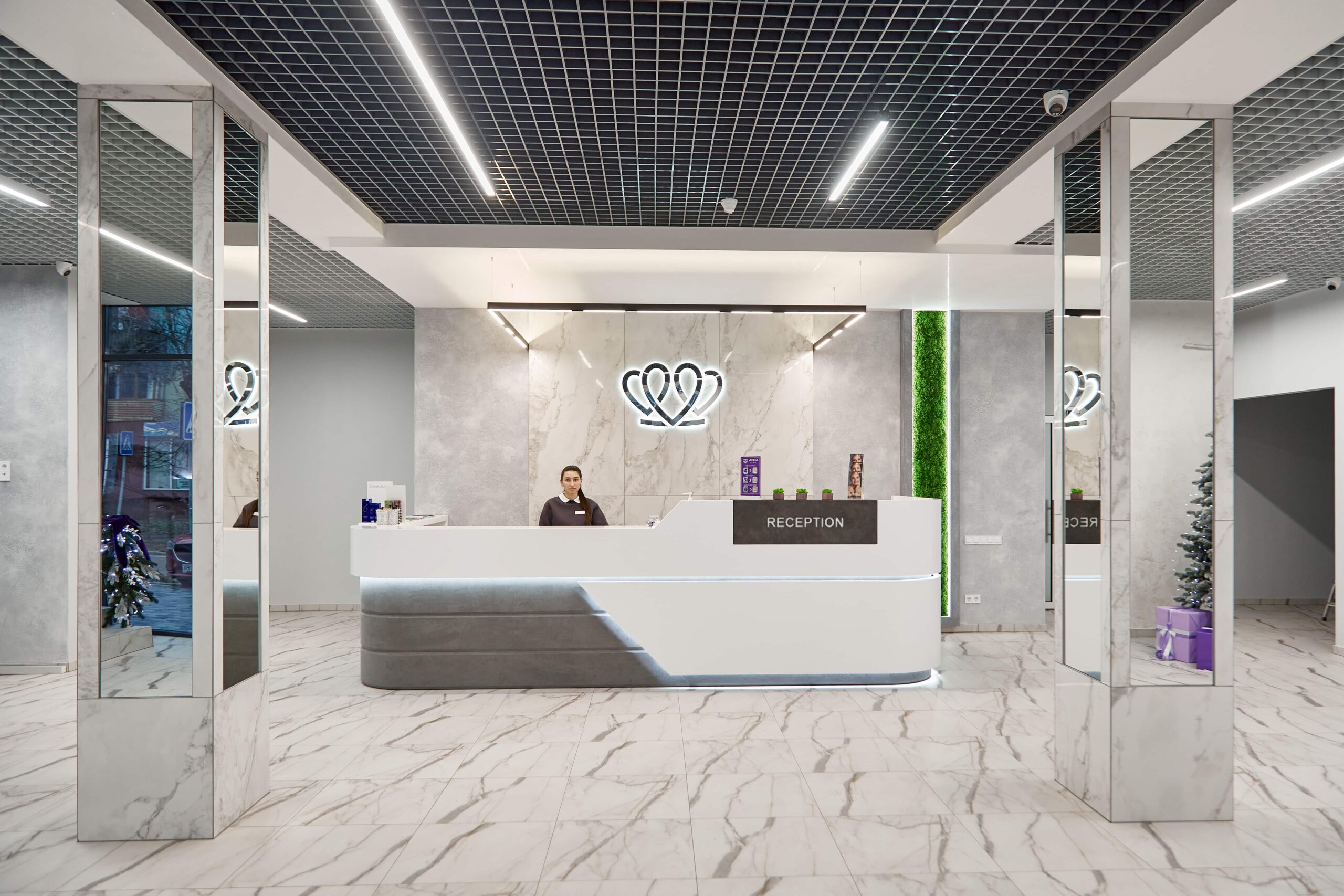
📍 Lviv, Ukraine
A dental clinic in Lviv with a separate doctor for each field: oral surgery and implants, prosthodontics, restorative dentistry, endodontics under a microscope, periodontics, orthodontics and paediatric dentistry.
The dentist shapes a filling directly in the mouth, and as the composite sets it shrinks, pulling the walls of the tooth inwards. An inlay is made outside the mouth, milled from a block or pressed in a laboratory, so the shrinkage affects only the thin layer of cement. With large cavities this gives a more accurate contact with the neighbouring tooth, better cusp anatomy and a smoother margin. With a small cavity there is no such advantage, and an ordinary filling is both cheaper and sufficient.
At MediUkraine's partner clinics, a dentist consultation costs from USD 8, and the clinic quotes an onlay after an examination. Preparing the tooth is charged separately: removing the old filling, treating caries and, if needed, the canals. For comparison, aesthetic composite restoration of a tooth starts from USD 73, and crown fitting from USD 280. The final figure is set by the clinic after an examination and an X-ray, because the true extent of the damage is visible only once the old filling has been removed.
When there is not enough tooth left to support it. If almost none of the tooth's own walls remain, the edge of the defect runs more than 1–2 mm under the gum and the field cannot be isolated with a rubber dam, the tooth is mobile because of periodontitis or has to serve as an abutment for a bridge, a crown is chosen. It encircles the tooth and is held mechanically, so it does not need a perfectly dry field, but it requires removing much more tooth tissue. The decision is often made only after the old filling has been removed, when the true extent of the damage is visible.
Lithium disilicate is the default choice: strength of about 350–400 MPa, good translucency and reliable bonding to the tooth, but it needs a thickness of 1.0–1.5 mm. Zirconia is stronger and allows a thinner restoration, so it is used for bruxism and where vertical space is short; it is more complex to bond and needs thorough polishing so as not to wear the opposing tooth. Composite CAD/CAM blocks are softer and cheaper and easy to adjust, but wear faster and change colour, making them more of a medium-term solution.
Yes, if the clinic has an intraoral scanner, a milling machine and a crystallisation furnace. Then preparation, scanning, milling and bonding fit into one appointment of 2–3 hours, and no temporary inlay is needed. The laboratory route takes two visits 3–10 working days apart, but the technician can apply stains in layers, which makes a difference in the smile zone. For patients from abroad, the choice usually depends more on the length of the trip than on aesthetics.
Clinical studies show that most ceramic partial restorations last more than ten years, but some need attention sooner. The most common reasons are chipping of the material, secondary caries at the margin and debonding. Service life is affected by the amount of preserved tissue, the bite, bruxism and hygiene, so there is no single figure for everyone. The dentist outlines the outlook for a particular tooth after an examination, an X-ray and a bite check, and check-ups every six months help catch problems early.
Yes, and it should be: a root-treated tooth loses rigidity, and leaving it under a large filling means risking a fractured wall. Back teeth after root canal treatment are covered with an onlay or overlay that takes the load. Where a lot of tissue has been lost, an endocrown may be considered: a restoration with an extension into the access cavity, which removes the need for a post. Before the prosthetic work the dentist checks the quality of the root filling and the condition of the tissue at the root tip on an X-ray.
Tell us what you need: we will suggest a clinic and a doctor and send you a cost estimate.
Request a consultation →