Travel. Ukrainian airspace is closed, so there are no commercial flights. Uzhhorod lies right on the border with Slovakia and close to Hungary, so patients usually arrive overland from one of these two countries, by car, bus or train.
Visas. Citizens of the EU, the United Kingdom and the United States do not need a visa for short stays in Ukraine. Rules depend on your citizenship, so check your own before booking.
Safety, plainly. Ukraine is at war. Air raid alerts occur across the country, including in Uzhhorod, and an appointment can be interrupted by one. Several governments advise against travel to Ukraine, and while that advice stands, ordinary travel and medical insurance is often void — confirm your cover with your insurer before you commit to anything.
Language. MediUkraine handles correspondence, scheduling, the written treatment plan and the quote in English. The clinic's team communicates with international patients in English.
Payment. You pay the clinic directly. Our coordination service is free of charge for you.
More on travel, safety and insurance: Safety and travel.
Surgical removal is a versatile treatment for benign lesions of the skin and subcutaneous tissue. The lesion is excised under local anaesthesia together with a small margin of healthy tissue: this lowers the likelihood of recurrence and also provides tissue for histological examination, which confirms that the lesion is benign. The method is suitable for lipomas, atheromas, fibromas and other lesions of different sizes.
Laser removal is used for superficial, vascular and pigmented lesions. The laser vaporises tissue with minimal damage to the surrounding skin and stops bleeding at the same time thanks to its haemostatic effect. Precise control of depth gives a better cosmetic result.
Radiofrequency and electrosurgical methods remove the lesion with radio waves or high-frequency current. They are associated with a low risk of infectious complications, minimal bleeding and quick tissue regeneration. The doctor decides which to use according to the nature, location and size of the lesion.
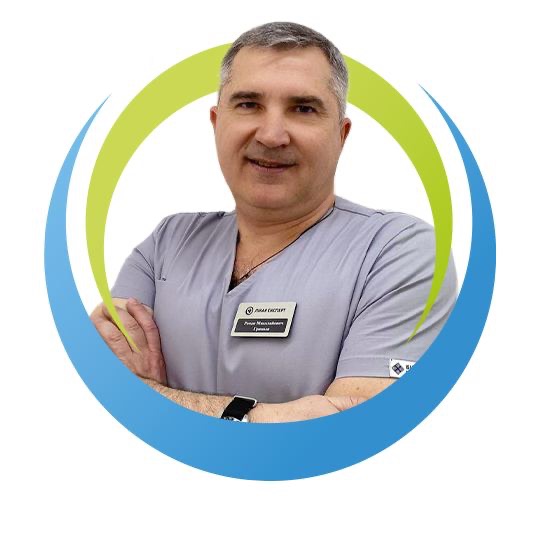
Through MediUkraine you can reach specialists at the partner clinic in Uzhhorod who use these techniques and provide related services.
Recovery depends on the method used and the size of the lesion. After laser or radiofrequency removal the area heals in 7–14 days. If surgical excision with stitches was performed, it takes 2–3 weeks. Throughout this time protect the treated area from intense physical activity and direct sunlight.
Care comes down to a few simple things: regular cleaning of the wound with antiseptic, no bathing or showering on the first day, and keeping the stitches dry. Mild swelling and redness are a natural tissue reaction. Antibacterial plasters and silicone gels help reduce discomfort and improve the cosmetic result.
Through MediUkraine you can arrange removal at the partner clinic, which follows current protocols and continues to look after you after the procedure. The next step after healing is a scheduled check-up with a dermatologist to spot any recurrence in time.
Before the procedure the surgeon examines the lesion and, if needed, orders pre-operative tests and dermoscopy. This determines not only the method but also the scope of work: a lipoma or atheroma is removed together with its capsule or surrounding tissue, depending on its type and location.
The operation itself is performed under local anaesthesia, using techniques that cause minimal tissue damage and carry a low risk of complications. The removed tissue is sent straight away for histological examination: it confirms the final diagnosis and rules out malignant changes.
MediUkraine puts you in touch with qualified surgeons at the partner clinic in Uzhhorod who remove benign lesions, and coordinates your appointment. The clinic's team communicates with international patients in English.
Removal of benign skin lesions is a common dermatological procedure that costs considerably less in Ukraine than in Europe or the USA. The price difference is mainly due to lower medical staff pay and premises rent, not the level of care. Ukrainian dermatologists and surgeons use the same kind of equipment for laser removal, cryotherapy and surgical excision as clinics in Western Europe.
For international patients the procedure at a Ukrainian clinic costs 40-60% less than in Poland or the Czech Republic, while doctors' qualifications and sanitary standards meet European requirements. The savings apply not only to the operation itself but also to diagnostics and specialist consultations.
MediUkraine handles communication with the clinic and can advise on transfers. The clinic's team communicates with international patients in English. You do not have to look for a medical facility and arrange an appointment on your own.
This is a standard surgical procedure: when protocols are followed, the risk of complications is low. MediUkraine's partner clinic uses electrosurgery, laser ablation, radiofrequency surgery and classic excision with histological examination of the tissue. The method is chosen individually, according to the nature, size and location of the lesion.
The risk is reduced by following international standards of hygiene and infection control and by using sterile materials. The pre-operative examination includes dermoscopy, which helps the doctor look for signs of malignancy. All removed tissue is sent for histopathological examination to confirm the final diagnosis.
MediUkraine's partner clinic meets licensing requirements, has staff experienced in dermatologic surgery and looks after you from the consultation to the post-operative check-up and wound care advice.

📍 Uzhhorod, Ukraine
A multidisciplinary hospital in Uzhhorod, part of a network of medical facilities in western Ukraine: an outpatient clinic, a surgical centre covering 15 specialties and a 30-bed inpatient unit. Its 52 doctors include professors and PhDs; many operations are done as day surgery, with discharge after 1–2 days.
These are growths of skin or subcutaneous tissue cells that are not malignant: papillomas, moles, atheromas, lipomas and fibromas. They are not life-threatening, but they can become inflamed or injured and cause discomfort or cosmetic concerns.
The price depends on the type, size and location of the lesion and on the method chosen. On average, laser or radiofrequency removal starts from USD 13, and surgical removal from USD 46.
Reasons for a visit include a lesion getting bigger, a change in colour or shape, pain, itching, bleeding or irritation. A consultation is also needed before any cosmetic procedures if there are suspicious lesions on the skin.
For a few days before the procedure, do not injure the area of skin and do not use scrubs, alcohol-based products or acid creams on it. On the day of the procedure your skin should be clean, without make-up or creams. The doctor may order preliminary tests or a consultation with a dermatologist.
In most cases the procedure is postponed until after pregnancy or breastfeeding. However, if there is a medical reason, for example inflammation or rapid growth of the lesion, the doctor may remove it under local anaesthesia if this is safe for you.
Indications include discomfort, rubbing by clothing, inflammation, rapid growth, a change in colour or shape, and the wish to improve the appearance of the skin. The doctor always examines the lesion and, if needed, sends the tissue for histology.
Medicines or ointments cannot remove such a lesion: it has to be removed physically. But surgery does not always mean a scalpel: superficial papillomas, moles and small vascular lesions are removed with a laser, radiofrequency or electrocoagulation, under local anaesthesia and as an outpatient. A scalpel is needed for lipomas, atheromas and anything that lies in the subcutaneous tissue. The doctor chooses the method after an examination, according to the type, size and depth of the lesion.
Any of the methods also involves preliminary diagnosis and post-operative care. After complete removal, benign lesions rarely recur, and the removed tissue is sent for histological analysis to confirm the diagnosis. MediUkraine will help you arrange diagnosis and removal by experienced surgeons and dermatologists at the partner clinic in Uzhhorod, using the least traumatic method.
Tell us what you need: we will suggest a clinic and a doctor and send you a cost estimate.
Request a consultation →