| Service | 🇺🇦 Ukraine | 🇨🇿 Czech Republic | 🇹🇷 Turkey |
|---|---|---|---|
| Baby tooth pulpitis treatment, 1 canal | from USD 32 | from USD 29 | from USD 76 |
| Baby tooth pulpitis treatment, 2 canals | from USD 42 | — | — |
| Baby tooth pulpitis treatment, 3 canals | from USD 49 | — | — |
| Paediatric dentist consultation | from USD 12 | from USD 71 | from USD 43 |
Prices in the “Ukraine” column come from MediUkraine’s partner clinics. The Czech Republic and Turkey columns show the lower bounds of prices published by clinics there (for Turkey, also the Turkish Dental Association’s recommended 2026 tariff), collected in August 2026 and converted to US dollars at the rate on the day of collection. A dash means we could not find a comparable published price. In any country, the final cost is set by the clinic after an examination.
The pulp is the soft tissue inside a tooth that contains blood vessels and nerves. In a primary tooth it takes up more space than in a permanent one: the enamel and dentine are roughly half as thick, the pulp chamber is wider, and its horns sit close to the chewing surface, especially the mesiobuccal horn of the lower molar. The dentinal tubules are wider and shorter, so microorganisms from a carious cavity reach the pulp faster.
As a result, decay in a child can lead to complications within weeks rather than years. A tooth that showed only a small spot at a check-up six months ago may now have inflamed pulp, and this speed is what sets children apart from adults. The second difference is that infection more often spreads not to the root tip but into the furcation, the area between the roots, beneath which the permanent tooth bud lies.
Symptoms can be vague. Classic night-time pain and a lingering reaction to cold do occur, but many cases are chronic and cause almost no complaints: the child simply stops chewing on one side, complains of pain while eating or cannot point to the exact tooth. Sometimes the first sign is a swollen gum, a whitish gum boil (fistula) next to the tooth or persistent bad breath.
Pulpitis is classed as reversible or irreversible. The sensitivity tests used in adults are unreliable in children, who react to the expectation of pain rather than the stimulus itself. So the dentist relies on the history, the examination, the X-ray and how the pulp behaves during treatment. If bleeding stops within a few minutes after the crown part of the pulp is removed, the root pulp is most likely alive; if blood flows heavily and does not stop, the inflammation has gone further.
There is a real reason to treat baby teeth: the second baby molar holds the space for the premolar and guides the position of the first permanent molar, which erupts at about six years of age. Losing it early lets the neighbouring teeth drift and takes space away from the permanent tooth. MediUkraine is a treatment search and coordination service, not a clinic: we choose the clinic and the paediatric dentist, agree the date and support your family, while the treatment approach is decided by the dentist after an examination.

Travel. Ukrainian airspace is closed, so there are no commercial flights. Patients reach Lviv overland, most often from Poland: Rzeszów and Kraków airports are the usual entry points, with a train, bus or private transfer onward to the border and on to the city. Lviv is roughly 70 km from the Polish border, the shortest crossing of any Ukrainian city.
Visas. Citizens of the EU, the United Kingdom and the United States do not need a visa for short stays in Ukraine. Rules depend on your citizenship, so check your own before booking.
Safety, plainly. Ukraine is at war. Air raid alerts occur in Lviv, and an appointment can be interrupted by one. Several governments advise against travel to Ukraine, and while that advice stands, ordinary travel and medical insurance is often void — confirm your cover with your insurer before you commit to anything.
Language. MediUkraine handles correspondence, scheduling, the written treatment plan and the quote in English. The clinic's team communicates with international patients in English.
Payment. You pay the clinic directly. Our coordination service is free of charge for you.
More on travel, safety and insurance: Safety and travel.
The method depends on whether the pulp in the canals is alive, and this is only confirmed during treatment. After the crown part of the pulp is removed, a moist cotton pellet is placed over the canal openings and the dentist waits a few minutes. If the bleeding stops, the root pulp is considered vital and the tooth is treated by pulpotomy. If blood flows heavily and does not stop, or the canals are already infected, the pulp is removed completely.
When decay is deep but the pulp is not yet exposed, and the child only has a brief reaction to sweet or cold things, the inflammation is considered reversible. In that case an indirect pulp cap is done: the softened dentine is removed, leaving a thin layer over the pulp horn, the floor is covered with a calcium silicate material or glass ionomer, and the tooth is restored with a tight seal. Success depends above all on a well-sealed restoration with no leakage at the margin: if the filling leaks, the inflammation comes back regardless of what was placed on the floor.
Pulpotomy is the main method for irreversible inflammation of the crown pulp. The tooth is anaesthetised and isolated with a rubber dam, all affected tissue is removed, the pulp chamber is opened and the crown pulp is cut away down to the canal openings with a sharp sterile bur or excavator. The bleeding is then controlled, a medicated material is placed over the openings, a liner of zinc oxide eugenol or glass ionomer goes on top, and the crown is restored, all in a single appointment.
The material placed over the canal openings largely determines the outcome. MTA, mineral trioxide aggregate, and calcium silicate cements such as Biodentine give the best results in studies with two-year follow-up; grey MTA can stain the crown grey, so white versions are chosen for front teeth. A cheaper alternative still in use is 15.5% ferric sulphate solution, which acts as a haemostatic agent. Formocresol, used for decades, is gradually being phased out: it contains formaldehyde and more often leads to internal root resorption.
Pulpectomy, complete removal of the pulp with canal treatment, is done when the inflammation has spread into the roots or the pulp has already died. The canals of primary teeth are wide, ribbon-shaped, often curved and joined by lateral branches, while the walls and floor of the chamber are thin, so they are shaped carefully and at low speed. The working length is set 1–2 mm short of the radiographic apex, because the permanent tooth bud lies just beyond it. The canals are rinsed gently with dilute sodium hypochlorite or chlorhexidine, without pressure, so that the fluid does not pass beyond the apex.
The canals of a baby tooth are filled only with pastes that can resorb. Gutta-percha and sealers for permanent teeth are not used here: the root resorbs over time, while insoluble material would remain in the bone and interfere with the eruption of the permanent tooth. In practice zinc oxide eugenol paste, a combination of calcium hydroxide with iodoform, and more complex iodoform formulations are used. They differ in how fast they resorb: zinc oxide eugenol resorbs more slowly than the root and may leave fragments in the bone, while calcium hydroxide with iodoform resorbs faster, sometimes faster than needed. With an iodine allergy, iodoform pastes are not used.
Root resorption is not a complication but a normal process: it begins about three years before the tooth falls out, and how far it has gone determines whether treatment makes sense. If more than a third of the root has resorbed on the X-ray, the tooth is loose, the floor of the chamber is perforated or the crown is so broken down that nothing can hold it, the pulp is not treated and extraction is chosen instead. The same applies to a lesion that has destroyed the bone over the follicle of the permanent tooth.
A word on methods that have been abandoned. Devitalising pastes containing arsenic or paraformaldehyde, once left in the tooth "to kill the nerve", cause uncontrolled necrosis: if the dressing is not sealed, the paste leaks out and burns the gum and bone, and in a baby tooth it ends up too close to the bud of the permanent tooth. Nor does the approach "we'll put in a filling, and if it hurts we'll take the tooth out" work: a sealed tooth with inflamed pulp hurts more, and this usually ends in night-time pain and an emergency appointment.
After a pulpotomy or pulpectomy the tooth becomes more brittle, so the restoration matters as much as the treatment itself. A small defect is closed with composite or glass ionomer, but a molar with two or three broken-down surfaces is more reliably covered with a preformed paediatric crown made of stainless steel: it distributes the chewing load and usually lasts until the tooth is naturally replaced. A large filling on such a tooth is more likely to break off along with the tooth wall, and the tooth then has to be extracted early.
If the tooth cannot be saved, it is extracted and the space is held with a removable or fixed space maintainer. This is not a cosmetic detail: after early loss of a baby molar, the neighbouring teeth tilt into the gap within a few months, and the permanent tooth may not have enough room. The dentist decides whether a space maintainer is needed based on the child's age, which tooth has been lost and whether the first permanent molar has erupted.
For the first two or three hours after the visit the lip, cheek and tongue stay numb, and the main risk is not to the tooth but to the soft tissues: your child cannot feel them and may bite them hard enough to cause a serious wound. Do not let your child eat until sensation returns, offer only room-temperature drinks and remind them from time to time not to bite their cheek.
Moderate tenderness on biting for one to three days is expected: the tissues around the tooth are reacting to the treatment inside it. Give a painkiller at the dose for your child's age, at bedtime if needed. Call the dentist if the pain increases, swelling of the cheek or gum appears, your child's temperature rises, the tooth becomes loose or the temporary filling falls out.
When treatment is split into two appointments, a temporary filling with a medicated dressing stays in the tooth in between, usually for one to two weeks. During this time your child should avoid chewing hard food on that tooth, and the second visit should not be postponed: a temporary filling left too long loses its seal, and bacteria get back into the canals.
The result is assessed in two ways. Clinically, there is no pain, swelling or gum boil, the tooth is not loose and does not hurt on biting. On X-ray, the follow-up image shows no lesion in the furcation and no pathological resorption from inside the root. The first follow-up X-ray is usually taken after 6 months, then after 12, and then once a year until the tooth is replaced.
The honest aim of treatment is to get the tooth to its natural replacement without pain or inflammation, not to preserve it for ever. Some teeth still have to be extracted, when the inflammation returns or the root starts to resorb from within. Only a dentist, after an examination and an X-ray, can predict the outcome for a particular child, which is why follow-up visits should not be skipped even when the tooth is causing no trouble.
After that, prevention is what counts, because pulpitis is rarely a one-off. Brushing twice a day with fluoride toothpaste in the amount appropriate for your child's age, cleaning between the teeth, fewer snacks and sugary drinks between meals, a check-up every six months and fissure sealing of the permanent molars after they erupt achieve more than any treatment of a tooth that is already diseased. If decay has affected several teeth, the dentist plans treatment for all of them, rather than one tooth at a time.
Step 1. Examination and X-ray. The dentist examines all the teeth, asks you when and how the pain started and whether there was swelling or a temperature, and then takes a periapical X-ray of the affected tooth. The X-ray shows the depth of the cavity, the number of canals, the condition of the bone in the furcation and the degree of root resorption: the method cannot be chosen without this information.
Step 2. Anaesthesia and isolation. The gum is first treated with an anaesthetic gel, then a local anaesthetic is injected at a dose calculated from the child's weight. Once the tooth is numb, it is isolated with a rubber dam: a latex sheet separates the tooth from the rest of the mouth, protects it from saliva and prevents the child from swallowing water or a small instrument.
Altogether the appointment lasts 40–60 minutes, no hospital stay is needed, and your child goes home the same day. Between the anaesthetic and the crown restoration comes the main part of the work: removing affected dentine, pulpotomy, stopping the bleeding and placing the medicated material over the canal openings, or filling the canals with paste if the pulp could not be saved. At the end the dentist gives you the X-rays and the record and sets the date of the follow-up examination.
Treatment begins with a consultation and an X-ray, and ends not with a filling but with a follow-up examination six months later. Getting from the first visit to a fully restored tooth usually takes anything from a single appointment to three weeks, depending on whether the root pulp could be saved.
The shortest scenario is a pulpotomy: diagnosis, treatment and restoration of the crown fit into one visit, after which only follow-up examinations remain. This is possible when the child is brought in early, before the inflammation has reached the canals.
A longer scenario is dead pulp or a lesion on the X-ray. The canals are treated, a medicated dressing is left for one to two weeks, and at the second appointment the canals are filled with paste and the tooth is restored. Sometimes a third visit is added if the tooth is to be fitted with a paediatric crown as a separate stage.
The rest of the teeth are planned at the same time. Pulpitis rarely occurs in a child whose other teeth are all healthy, so the dentist usually plans treatment for all of them: several appointments of 40–60 minutes each, from the most complex to the simplest, finishing with fissure sealing and a professional cleaning.
After that comes monitoring, which continues until the tooth is naturally replaced: an examination and X-ray at 6 and 12 months, then routine check-ups every six months. The dentist checks how the root is resorbing and whether the permanent tooth bud has shifted. If things are getting worse, the tooth is extracted and, if needed, a space maintainer is fitted, without waiting for complications. Families from abroad can conveniently have some of these check-ups at home and send the X-rays to the dentist who treated the child.
The main risk comes not from treatment but from waiting. The roots of a baby molar surround the permanent tooth bud, and the inflammation spreads into the area between the roots, directly above the follicle. A long-standing lesion can disrupt the mineralisation of the permanent tooth's enamel (producing a Turner's tooth with white or yellow-brown spots and enamel defects), shift the bud or delay its eruption.
Treatment itself can also have complications. During pulpotomy the thin floor of the chamber may be perforated; when the canals are filled, paste may be pushed beyond the apex towards the tooth bud; and internal root resorption has been reported after formocresol. Some failures show up not as pain but as a gum boil or a lesion on the follow-up X-ray, another reason not to skip the check-ups at 6 and 12 months.
In children the anaesthetic dose is calculated by weight, so the dentist does not ask about weight out of curiosity. After the appointment, watch the soft tissues: until sensation returns, your child may bite their lip or cheek without noticing. Tell the dentist about allergies (to anaesthetics, antibiotics, iodine) and chronic illnesses before treatment starts, not afterwards.
Not every primary tooth is worth treating. It cannot be saved if more than a third of the root has resorbed, the tooth is loose, the floor of the chamber is perforated, the crown is so broken down that nothing can hold it, or a lesion has destroyed the bone over the follicle of the permanent tooth. In such cases the tooth is extracted: this is a decision in favour of the permanent tooth, not a refusal to treat.
There are also general restrictions. Planned treatment is postponed if your child has an acute infection with a temperature, and children with congenital heart defects, immunosuppression or uncontrolled chronic illnesses need a paediatrician's consultation, sometimes with antibiotic prophylaxis before treatment. If, because of age or developmental needs, a child cannot be treated in the chair, the options are nitrous oxide sedation or treatment under general anaesthesia: these are separate protocols with their own indications and pre-treatment tests.
Left untreated, the inflammation spreads to the tissues around the root, followed by an abscess, a swollen cheek, a raised temperature and enlarged lymph nodes. In children this develops faster than in adults, and some of these cases end up not in the dental chair but in a maxillofacial surgery department. You have the right to a second opinion: the X-rays and the examination record can be shown to another dentist, and if needed MediUkraine arranges a consultation at another partner clinic.
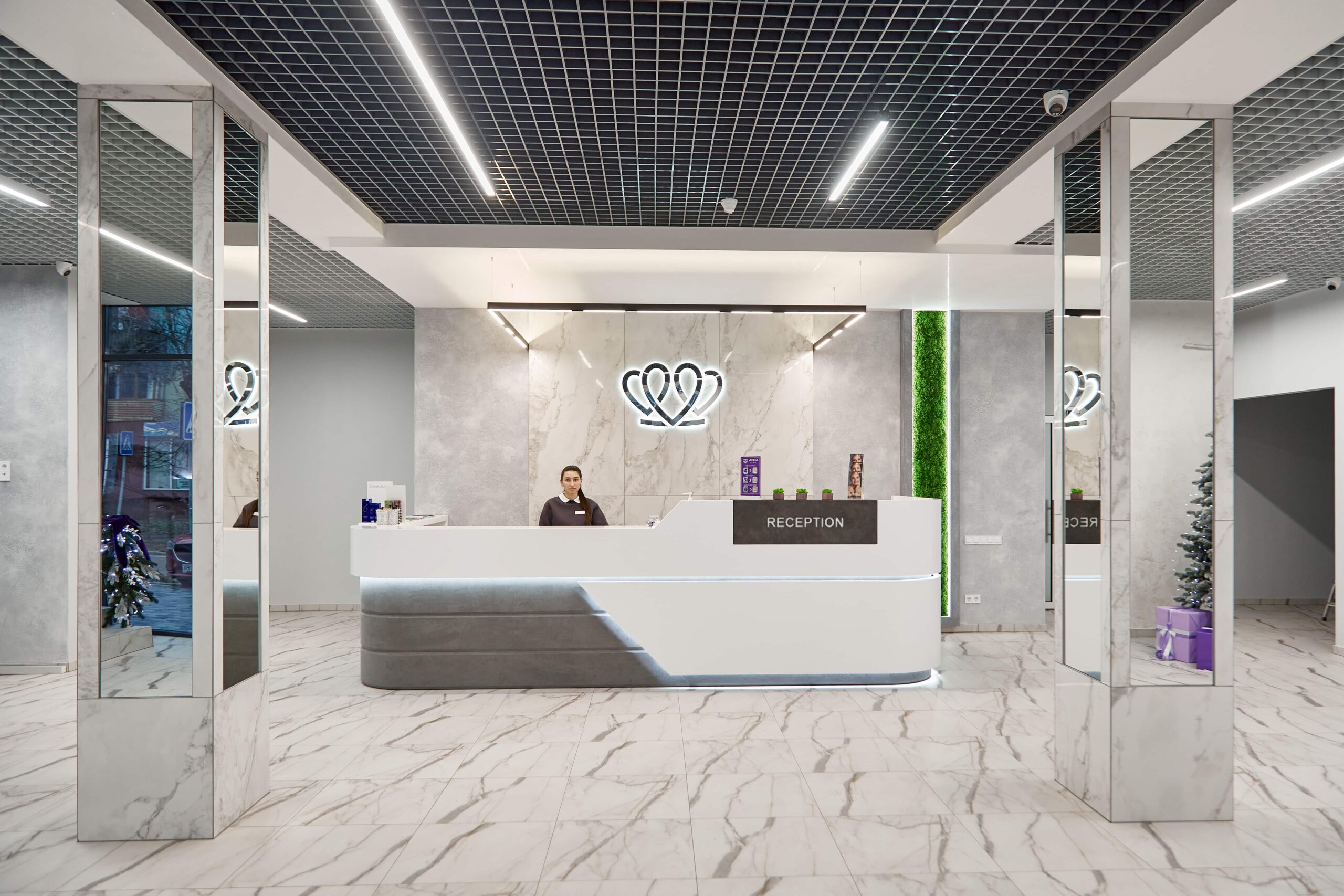
📍 Lviv, Ukraine
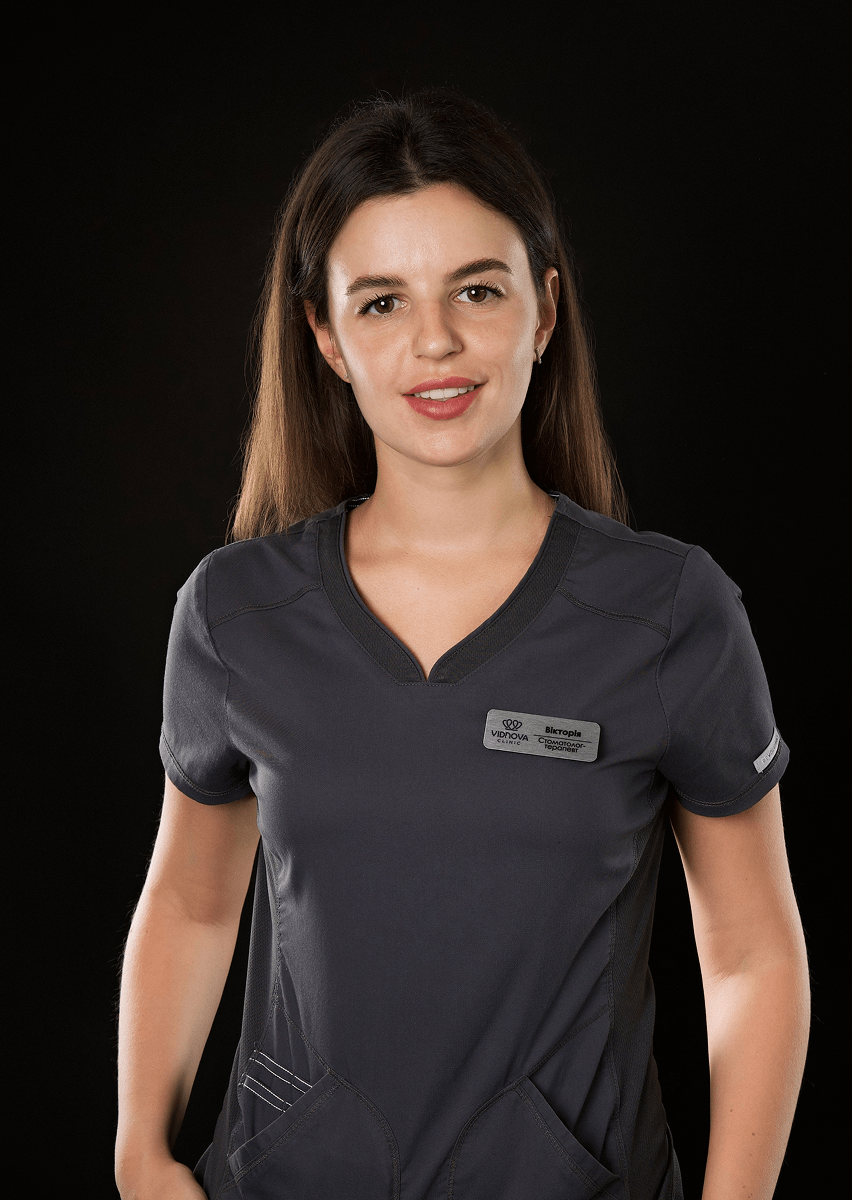
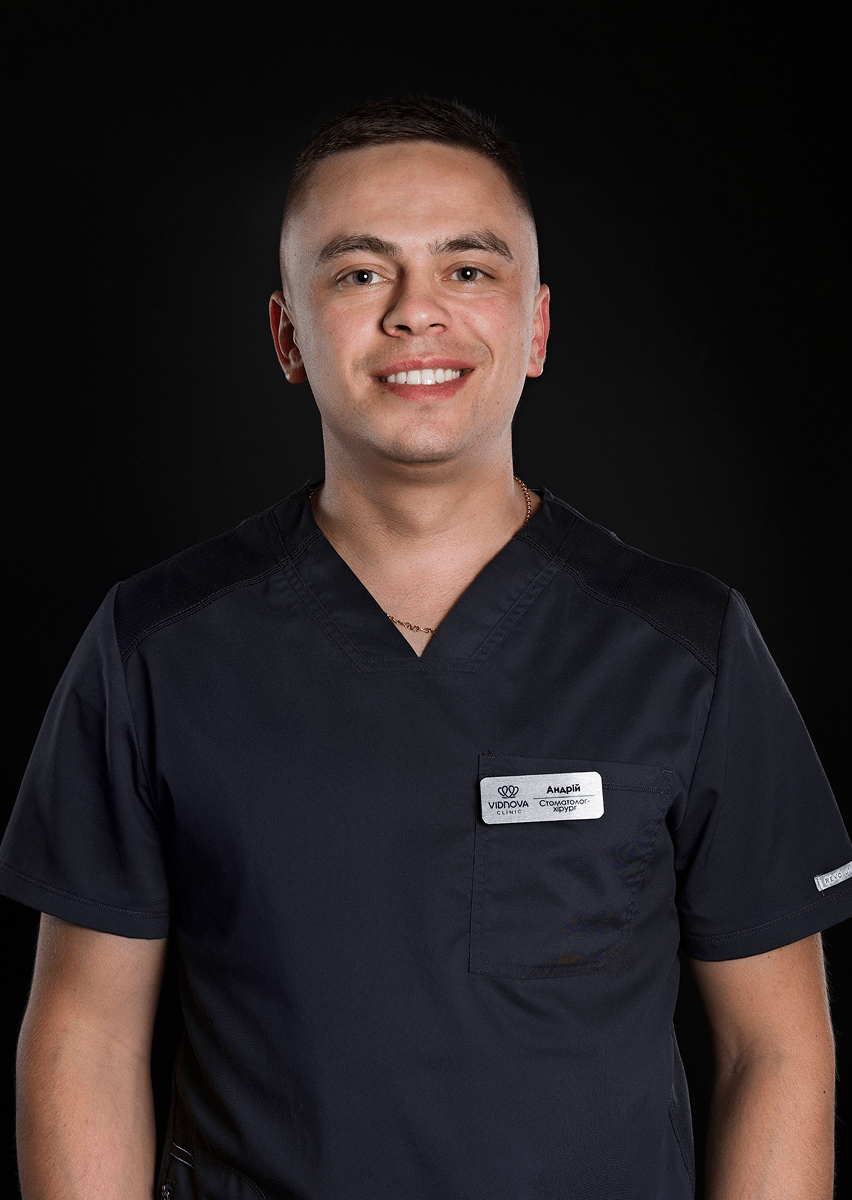
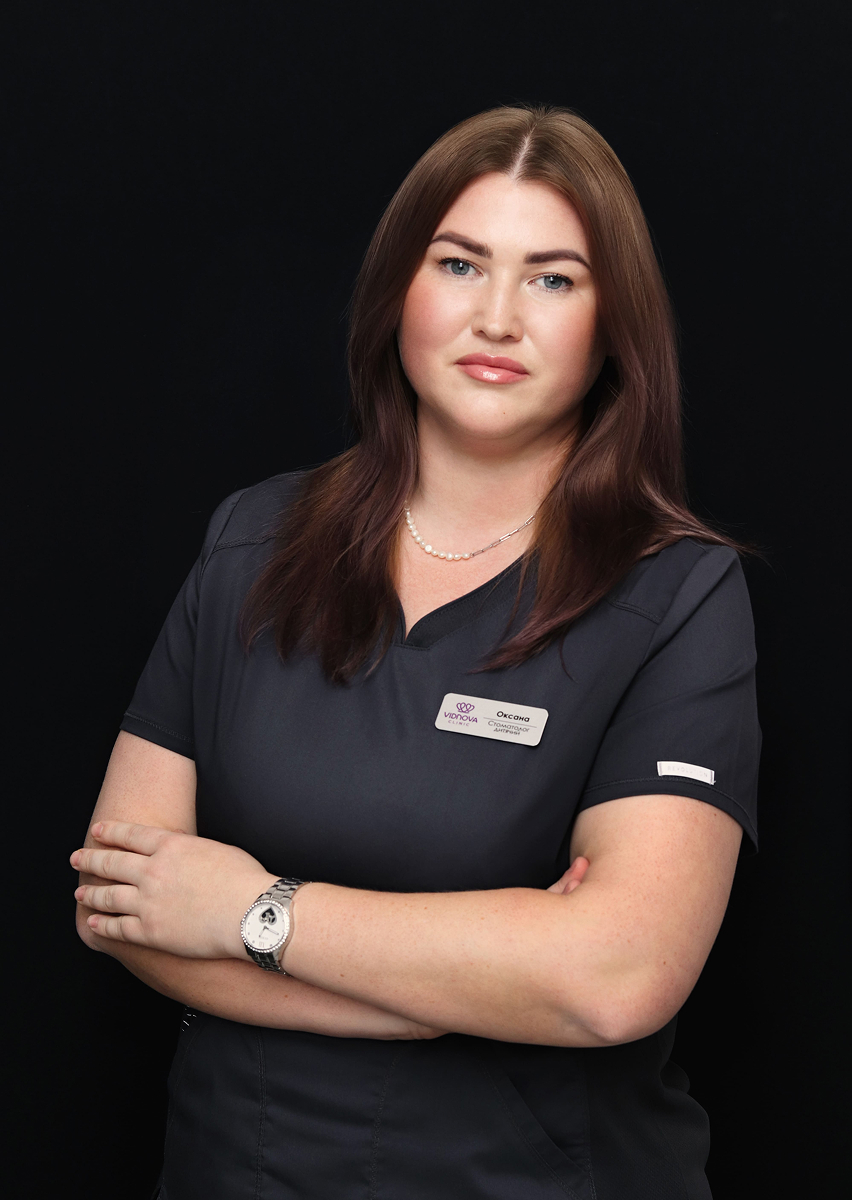
A dental clinic in Lviv with a separate doctor for each field: oral surgery and implants, prosthodontics, restorative dentistry, endodontics under a microscope, periodontics, orthodontics and paediatric dentistry.
Yes, and the main reason is not the tooth itself. The permanent tooth bud lies beneath the roots of a baby molar, and long-standing inflammation next to it can disrupt the mineralisation of the future tooth's enamel or shift the bud. The second reason is space: the second baby molar holds the space for the premolar and guides the position of the first permanent molar. The third is pain and the risk of swelling, which builds up quickly in a child. If, however, more than a third of the root has resorbed and the tooth is due to fall out soon, the dentist may choose extraction, which is also a decision in favour of the permanent tooth.
At Vidnova Dental Clinic in Lviv, a single-canal baby tooth costs from USD 32 a two-canal tooth from USD 42 and a three-canal tooth from USD 49. The price depends on the number of canals, not the tooth: an incisor has one canal, a lower molar mostly two and an upper molar three. A paediatric dentist consultation, including an examination and an X-ray, costs from USD 12. Crown restoration is charged separately: a composite filling and a preformed paediatric crown differ in price. The dentist confirms the final cost after an examination and an X-ray.
Because of how primary teeth are built. Their enamel and dentine are roughly half as thick, the pulp chamber is wider, and the pulp horns sit close to the chewing surface. The dentinal tubules are wider and shorter, so microorganisms from a carious cavity reach the pulp within weeks rather than years. On top of this, children complain of early sensitivity less often: many cases are chronic, with almost no pain, and parents notice the problem only when swelling appears or the child refuses to chew on one side.
A pulpotomy is the removal of the inflamed crown part of the pulp while keeping the living tissue in the canals. The dentist cuts the pulp away down to the canal openings, stops the bleeding and covers the openings with MTA or calcium silicate cement. The tooth stays partly alive: the root pulp keeps working, and the root resorbs at its natural time. The method is possible when bleeding from the openings stops within a few minutes, a sign that the inflammation has not spread into the roots.
The bud lies beneath the roots of the baby tooth, so the dentist works with it in mind: the working length of the canal is set 1–2 mm short of the apex, the paste is introduced without pressure, and the X-ray after filling shows whether material has passed beyond the root. Untreated pulpitis poses a much greater threat to the bud: a chronic lesion in the bone next to the follicle can disrupt the mineralisation of the permanent tooth's enamel and shift it. So delay is riskier than treatment.
Only with pastes that resorb together with the root: zinc oxide eugenol paste, a combination of calcium hydroxide with iodoform, or iodoform formulations. Gutta-percha and sealers for permanent teeth are not used in primary teeth: the root resorbs over time, while insoluble material would remain in the bone and interfere with the eruption of the permanent tooth. The pastes resorb at different rates, and the dentist chooses one based on the child's age and the condition of the root. With an iodine allergy, iodoform formulations are not used.
Start with a familiarisation visit: getting to know the treatment room and the chair, with no drill, using the "tell, show, do" approach. This is often enough for the next appointment to go calmly. At home, a few simple rules help: never use the dentist as a threat, do not use words like "injection" and "put up with it", and do not promise there will be no treatment if treatment is planned. If, because of age or developmental needs, your child cannot sit through an appointment, the dentist will discuss nitrous oxide sedation or treatment under general anaesthesia, which have their own indications and pre-treatment tests.
Tell us what you need: we will suggest a clinic and a doctor and send you a cost estimate.
Request a consultation →