

Travel. Ukrainian airspace is closed, so there are no commercial flights. Uzhhorod lies right on the border with Slovakia and close to Hungary, so patients usually arrive overland from one of these two countries, by car, bus or train.
Visas. Citizens of the EU, the United Kingdom and the United States do not need a visa for short stays in Ukraine. Rules depend on your citizenship, so check your own before booking.
Safety, plainly. Ukraine is at war. Air raid alerts occur across the country, including in Uzhhorod, and an appointment can be interrupted by one. Several governments advise against travel to Ukraine, and while that advice stands, ordinary travel and medical insurance is often void — confirm your cover with your insurer before you commit to anything.
Language. MediUkraine handles correspondence, scheduling, the written treatment plan and the quote in English. The clinic's team communicates with international patients in English.
Payment. You pay the clinic directly. Our coordination service is free of charge for you.
More on travel, safety and insurance: Safety and travel.
Medication is the main method of treating allergic reactions in children. The first line is second-generation antihistamines (cetirizine, loratadine, desloratadine): they are suitable for children and have few side effects. For severe obstructive reactions, topical or systemic glucocorticosteroids are prescribed. In acute anaphylaxis, adrenaline (epinephrine) is given intramuscularly without delay. MediUkraine helps parents book with paediatric allergists at the partner clinic in Uzhhorod, who will choose medication according to the child's age and the severity of symptoms.
Avoidance measures mean removing the allergen from the child's environment. For food allergy this means dietary restrictions supervised by a dietitian; for atopic dermatitis, hypoallergenic skincare and changes to the home environment. Parents are also taught how to clean, how to choose bedding and how to control indoor humidity.
Immunotherapy is used for IgE-mediated allergies in children over 5 years of age. Sublingual or subcutaneous specific immunotherapy reduces hyperreactivity and can bring the child into long-term remission. The course is lengthy and requires regular monitoring by a specialist. Whether it is indicated is decided by the allergist at the partner clinic in Uzhhorod.
How long recovery takes depends on the nature and severity of the reaction and the treatment chosen. In most children, symptoms resolve within a few days of taking antihistamines or corticosteroids. But lasting improvement depends on following the doctor's advice and regular follow-up.
During recovery, the main things are to avoid contact with the identified allergen, follow the diet recommended by the paediatric allergist and keep an eye on the child's health. A follow-up visit takes place 2–4 weeks after an acute episode: the doctor assesses how well the treatment has worked and adjusts the medication. MediUkraine will help you book a follow-up consultation with the allergist at the partner clinic in Uzhhorod.
Long-term prevention means specific immunotherapy, if the doctor finds it indicated. Parents should learn to recognise the first signs of an allergic reaction and always carry emergency medication. Book the date of the next follow-up visit while you are still at the appointment, so that the course is not interrupted.
Managing allergy starts with a detailed history and specialist tests. The allergist determines the allergen, the mechanism of sensitisation and the severity of the reaction. For this, skin prick tests and blood tests for specific IgE immunoglobulins are used, and in some cases provocation tests under medical supervision. An accurate diagnosis determines how much the child's daily life and diet need to be restricted.
Day-to-day control is based on an elimination diet and avoiding contact with the identified allergens. Then, depending on the clinical picture, the doctor prescribes antihistamines, topical corticosteroids and, where indicated, systemic corticosteroids. In severe anaphylactic reactions, adrenaline (epinephrine) is given intramuscularly straight away, followed by monitoring of the child's condition.
For long-term control, allergen-specific immunotherapy (AIT), subcutaneous or sublingual, may be considered: it gradually reduces the body's sensitivity to the triggers. The course proceeds in stages, with regular follow-up and adjustment of treatment. MediUkraine will help parents book a consultation with a qualified specialist at the partner clinic in Uzhhorod.
Allergy treatment for children in Ukraine costs considerably less than at clinics in Western Europe and the USA. Allergy diagnostics, including skin tests and laboratory tests for specific IgE antibodies, are usually more affordable than similar services abroad.
Medication, including antihistamines, topical corticosteroids and inhalers for allergic asthma, is available both as locally produced medicines and as products from international manufacturers at noticeably lower prices. For courses of treatment that last for months, the difference is significant.
MediUkraine arranges an initial consultation with a paediatric allergist at the partner clinic in Uzhhorod for international patients. The clinic's team communicates with international patients in English. Parents get quality medical care at a reasonable cost, without long waiting lists.
Safety depends on following established protocols for diagnosis and treatment. Testing includes skin tests, measurement of specific IgE levels and, where needed, provocation tests. Children are seen by paediatric allergist-immunologists with specialist training in paediatric allergy, who know how to treat children of different ages.
Allergy testing and treatment require readiness to provide emergency care for anaphylactic reactions, with adrenaline, antihistamines and glucocorticosteroids to hand. All medicines used are registered in Ukraine.
The treatment plan is worked out individually, according to the child's age, the type of allergen and the severity of the reaction. The principles of rational prescribing help to reduce the risk of side effects. MediUkraine will help you book an appointment at the partner clinic in Uzhhorod.

📍 Uzhhorod, Ukraine
A multidisciplinary hospital in Uzhhorod, part of a network of medical facilities in western Ukraine: an outpatient clinic, a surgical centre covering 15 specialties and a 30-bed inpatient unit. Its 52 doctors include professors and PhDs; many operations are done as day surgery, with discharge after 1–2 days.
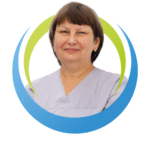 Mariia Bondarenkopaediatrician
It is a sequence of steps: diagnosis, avoiding contact with the allergen and medication. The allergist identifies the allergen responsible using skin tests or a blood test, chooses medicines to relieve the symptoms (antihistamines, topical treatments) and, where indicated, prescribes immunotherapy, which gradually builds tolerance to the allergen.
The first step is an initial consultation with a paediatric allergist at the partner clinic, from USD 20. The cost of further treatment depends on the type of reaction, the tests needed and the length of treatment, so the doctor names the plan and the estimate after the examination. MediUkraine can help you get an estimate before you travel.
Reasons to book include frequent rashes, itching, a runny nose without a cold, difficulty breathing, watery eyes, or a reaction to foods, dust, animals or medicines. Seeing a doctor early makes it possible to identify the allergen in time and prevent chronic complications.
For a few days before the tests, do not introduce new foods, and prepare a list of all the medicines your child takes. If necessary, the doctor will advise you to stop antihistamines for a while so that they do not affect the test results.
Yes. Treatment is also prescribed for babies and toddlers; the key is choosing it carefully: the doses, the type of treatment and its length are set individually, taking into account the child's age, weight and health.
Typically these are a skin rash or itching, swelling, frequent sneezing, a runny nose, a cough without a cold, watery eyes, difficulty breathing or digestive upset after eating. Any of these is a reason to have your child seen by a doctor.
It depends on the type of allergic reaction and the child's individual characteristics. With atopic allergies (to pollen, animal dander, mould spores), a complete cure is usually not possible, but stable remission and a much better quality of life are achievable. Allergists use allergen-specific immunotherapy (AIT), which changes the body's immune response to the allergen.
Contact allergies (to chemical substances or food additives), by contrast, often resolve once the source of contact is removed. Food allergies in children often disappear with age as the immune system matures. The key to success is timely diagnosis and an individual treatment plan. MediUkraine will help you book a qualified allergist at the partner clinic in Uzhhorod, who will assess the outlook for your child and draw up a treatment plan.
Tell us what you need: we will suggest a clinic and a doctor and send you a cost estimate.
Request a consultation →

