| Service | 🇺🇦 Ukraine | 🇨🇿 Czech Republic | 🇹🇷 Turkey |
|---|---|---|---|
| Trichologist consultation with review of results | from USD 31 | from USD 50 | from USD 40 |
Prices in the “Ukraine” column come from MediUkraine’s partner clinics. The Czech Republic and Turkey columns show the lower bounds of prices published by clinics there (for Turkey, also the Turkish Dental Association’s recommended 2026 tariff), collected in August 2026 and converted to US dollars at the rate on the day of collection. A dash means we could not find a comparable published price. In any country, the final cost is set by the clinic after an examination.
The hair follicle is one of the tissues with the fastest cell division in the body, so it reacts to deficiencies and hormonal changes earlier than most other organs. An examination and trichoscopy show how the hair is thinning, but not why. Laboratory tests fill that gap.
Tests are ordered when hair starts falling out diffusely two to three months after an illness with high fever, surgery, childbirth or a strict diet; when a woman's parting is widening; or when there are signs of thyroid dysfunction such as feeling the cold, swelling, weight change or dry skin. Another group is people with heavy periods, regular blood donors, vegetarians and patients after bariatric surgery, among whom iron deficiency is common.
Sometimes a long list is not needed. In a man with typical hereditary thinning (a receding hairline, thinning at the crown and intact hair at the back of the head), laboratory values are usually normal; tests are done to avoid missing a coexisting deficiency, not to confirm the diagnosis.
There is no universal panel "for hair loss". The doctor draws up the list after an examination and trichoscopy, based on the pattern of hair loss, sex, age and medical history. Testing for "everything" is a poor idea, and not only because of cost: the more values on the form, the greater the chance of a random abnormality that has nothing to do with hair but leads to unnecessary further tests.
MediUkraine is a service that finds and coordinates treatment; it is not a clinic or a laboratory. We select the medical centre and a doctor of the right speciality, agree the dates of the blood draw and the appointment, and support you throughout, including if you travel from abroad. The doctor decides which tests are needed and interprets the results.

Travel. Ukrainian airspace is closed, so there are no commercial flights. Patients enter Ukraine overland, most often from Poland (Rzeszów and Kraków airports are the usual entry points), and continue to Dnipro by train. Dnipro is in the east of the country, a long journey from the border, so plan the route and timing with us before you book.
Visas. Citizens of the EU, the United Kingdom and the United States do not need a visa for short stays in Ukraine. Rules depend on your citizenship, so check your own before booking.
Safety, plainly. Ukraine is at war. Dnipro is attacked more often than western Ukraine, and an appointment can be interrupted by an air raid alert. Several governments advise against travel to Ukraine, and while that advice stands, ordinary travel and medical insurance is often void — confirm your cover with your insurer before you commit to anything.
Before you travel. The centre offers an online consultation, so the plan and the number of grafts can be estimated from photos before you decide to make the trip.
Language. MediUkraine handles correspondence, scheduling, the written treatment plan and the quote in English. The centre's team communicates with international patients in English.
Payment. You pay the centre directly. Our coordination service is free of charge for you.
More on travel, safety and insurance: Safety and travel.
A complete blood count comes first. The doctor looks not only at haemoglobin but also at the red cell indices: a reduced mean corpuscular volume (MCV) and low haemoglobin content per cell (MCH) point to iron-deficiency anaemia, an increased MCV to a deficiency of vitamin B12 or folic acid. The white cell differential and ESR may point to an inflammatory or autoimmune process the patient had not linked to their hair.
Ferritin is the main marker on this list, and the reason it matters more than haemoglobin is simple. Ferritin reflects iron stores in the tissues, and these are depleted long before haemoglobin starts to fall. In other words, there is no anaemia yet and the blood count is normal, but the body is already short of iron, and the follicle, with its high rate of cell division, is among the first to suffer. There is no single threshold of "sufficient" ferritin in hair loss: some authors use 30 ng/mL, others 40–70 ng/mL, and that is exactly why interpretation is left to the doctor.
Serum iron, transferrin and transferrin saturation complete the picture, but serum iron on its own means very little: it fluctuates through the day and jumps after a single iron tablet. Low transferrin saturation together with low ferritin is a convincing combination; an isolated low iron figure on the form is not.
TSH and free T4 are checked almost always. Hypothyroidism causes diffuse thinning, dry brittle hair and sometimes loss of the outer third of the eyebrows; thyrotoxicosis is also accompanied by hair loss, though less often. TSH is more sensitive and changes earlier than T4, so a raised TSH with normal T4 is a reason to see an endocrinologist rather than set the results aside. If abnormalities persist, thyroid peroxidase antibodies are added.
Vitamin D is measured as 25-OH. Deficiency is widespread in northern latitudes and in winter, and lower levels have been described in studies of alopecia areata and telogen effluvium. However, the link is less clear-cut than with iron: correcting the deficiency does not by itself bring the hair back; it removes one possible obstacle.
Zinc is checked selectively, when there is reason to suspect a deficiency: inflammatory bowel disease, malabsorption, previous bariatric surgery or a prolonged strict diet. Taking zinc "just in case" is not advisable: long-term excess blocks copper absorption and can itself cause hair loss and anaemia.
Total and free testosterone, SHBG and DHEA-S form a panel for women with female-pattern thinning, especially with an irregular cycle, acne or excess facial and body hair. SHBG (sex hormone-binding globulin) determines what share of testosterone stays free and active: with low SHBG, total testosterone may be normal while free testosterone is raised. A high DHEA-S suggests an adrenal source of androgens. An important caveat: in a woman with typical androgenetic alopecia and no other signs of hyperandrogenism, these values are usually normal. That does not rule out the diagnosis, because follicle sensitivity to androgens is inherited and cannot be measured by a blood test.
Prolactin is checked for cycle disorders or nipple discharge, and as part of the hormone panel. A moderate rise is often due to stress or the blood draw itself, so borderline values are rechecked, sometimes together with macroprolactin: a biologically inactive form that can raise the figure without clinical significance.
Fasting glucose and insulin with the HOMA-IR index are added if polycystic ovary syndrome or insulin resistance is suspected. Testing for syphilis is ordered when hair loss is patchy and uneven ("moth-eaten"): syphilitic alopecia can resemble alopecia areata, and the treatments are entirely different. Antinuclear antibodies are checked when lupus erythematosus or scarring alopecia is suspected, alongside a scalp biopsy, not instead of it.
The key point about reading results: a figure outside the reference range is not a diagnosis in itself; it is interpreted together with the examination findings, the complaints and the other values. The reverse is also true: normal results do not mean there is no cause. In androgenetic alopecia laboratory values are mostly within the normal range, and the diagnosis is made by trichoscopy and the pattern of thinning. Do not prescribe yourself medicines based on the results, even when the abnormality is obvious: the dose, form and duration of treatment depend on how severe the deficiency is and on the rest of your medical history.
Routine tests (complete blood count, ferritin, iron, TSH, free T4 and vitamin D) are ready in 1–3 working days. Some values are available the same day. Results are sent by email or to your online account, and the paper copy can be collected later.
The next step is not searching online for normal ranges but taking the results to the doctor. Reference intervals differ between laboratories, and some markers have clinically meaningful limits that do not match the printed normal range: the classic example is ferritin, formally "normal" at 20 ng/mL, although for hair that is too little.
If a deficiency is confirmed, be prepared for months rather than weeks. Iron stores recover slowly: supplements are usually taken for three to six months, and hair responds to the correction with a further delay, because the follicle cycle is measured in months. The first changes are assessed no earlier than 3–4 months later.
The doctor orders follow-up tests, and their timing varies: ferritin is usually rechecked 8–12 weeks after starting iron, TSH roughly 6–8 weeks after a change in the dose of a thyroid medicine. There is no point in testing earlier: the value simply does not have time to respond.
A normal result is still a useful result, not wasted money. It rules out deficiencies and endocrine causes and points the search towards hereditary thinning or a scarring process. From there the tools are trichoscopy over time, standardised photographs and, if needed, a scalp biopsy.
For patients from abroad, results are issued with the laboratory's units and reference intervals, so a doctor at home can read them. If needed, MediUkraine arranges a video review of the results with the doctor who examined you.
Step 1. Examination and trichoscopy. First the doctor examines the scalp under magnification, assesses the type of thinning and takes a history: when the hair loss started, what preceded it, which medicines and supplements you take. The list of tests is based on this examination; without it, the choice of markers would be random.
Step 2. Preparation. The blood draw is planned for the morning, on an empty stomach; stop biotin three days before and iron supplements three to five days before. For women, the date is timed to the cycle if sex hormones are on the list. Do not stop prescribed medicines without your doctor's agreement.
From the first examination to the review of results usually takes 3–5 days: after the examination and fasting preparation, the blood draw takes 5–10 minutes, the laboratory returns routine values within 1–3 working days, and then the doctor compares them with the trichoscopy and draws up a plan with a date for follow-up tests. No anaesthesia, hospital stay or recovery period is needed: right after the blood draw you can return to your usual activities.
The difference comes from the laboratory's cost structure. Reagents and test systems are bought from international manufacturers, but rent, pay for non-medical staff, utilities and administration cost a Ukrainian facility less.
The second factor is the scale of the laboratory networks. Large Ukrainian networks have hundreds of collection points and a high daily flow of samples, so each test on the same analyser costs less: the reagent cost is the same, but equipment maintenance is spread across far more tests.
The third factor is competition. In Ukraine, including Kyiv and Dnipro, several independent laboratory networks and private clinics operate side by side, competing for patients on price, turnaround time and the convenience of their collection points.
A lower price does not mean a simplified method. Hormones are measured by the same chemiluminescent immunoassay, results are issued in SI units with reference intervals, and laboratories undergo external quality control. The difference lies in the cost of the test, not in its content.
Another source of savings is logistics. MediUkraine fits the examination and review of results with the trichologist at the partner clinic and the blood draw at the laboratory into one schedule, so the trip fits into a few days. For a patient from abroad this directly reduces the cost of travel and accommodation.
Drawing venous blood is a minimally invasive procedure. A single-use needle and a vacuum system are used, the skin is treated with an antiseptic, and a sterile pad is applied after the draw. The most common nuisances are a bruise at the puncture site and brief dizziness; if you have fainted during a blood draw before, say so in advance and the blood will be taken while you lie down.
The clinics and laboratories MediUkraine works with hold a licence from the Ministry of Health of Ukraine for medical practice in the relevant specialities. The laboratory additionally takes part in external quality assessment programmes, and that is what distinguishes a verified facility from a room with an analyser.
Test results are confidential medical information. Laboratories release them to you in person on presentation of ID, or send them to the email address you provide or to your online account; they are passed to third parties only with your written consent.
Treatment based on the results must also be appropriate. Iron supplements are given for a confirmed deficiency and under laboratory monitoring: taking iron for a long time without need leads to iron overload, and in people with hereditary haemochromatosis to damage to the liver and pancreas. So "a course of iron just in case" is not harmless.
The same applies to other prescriptions. Levothyroxine without confirmed hypothyroidism causes palpitations, arrhythmias and loss of bone mass; high doses of vitamin D taken as self-treatment lead to hypercalcaemia; prolonged zinc intake without monitoring causes copper deficiency. Before prescribing, the doctor checks for other conditions, pregnancy and every medicine you already take.
You keep the paper results and are free to seek a second opinion: results that state the method, units and reference ranges can be shown to another specialist without giving blood again. If needed, MediUkraine will help arrange a further consultation.
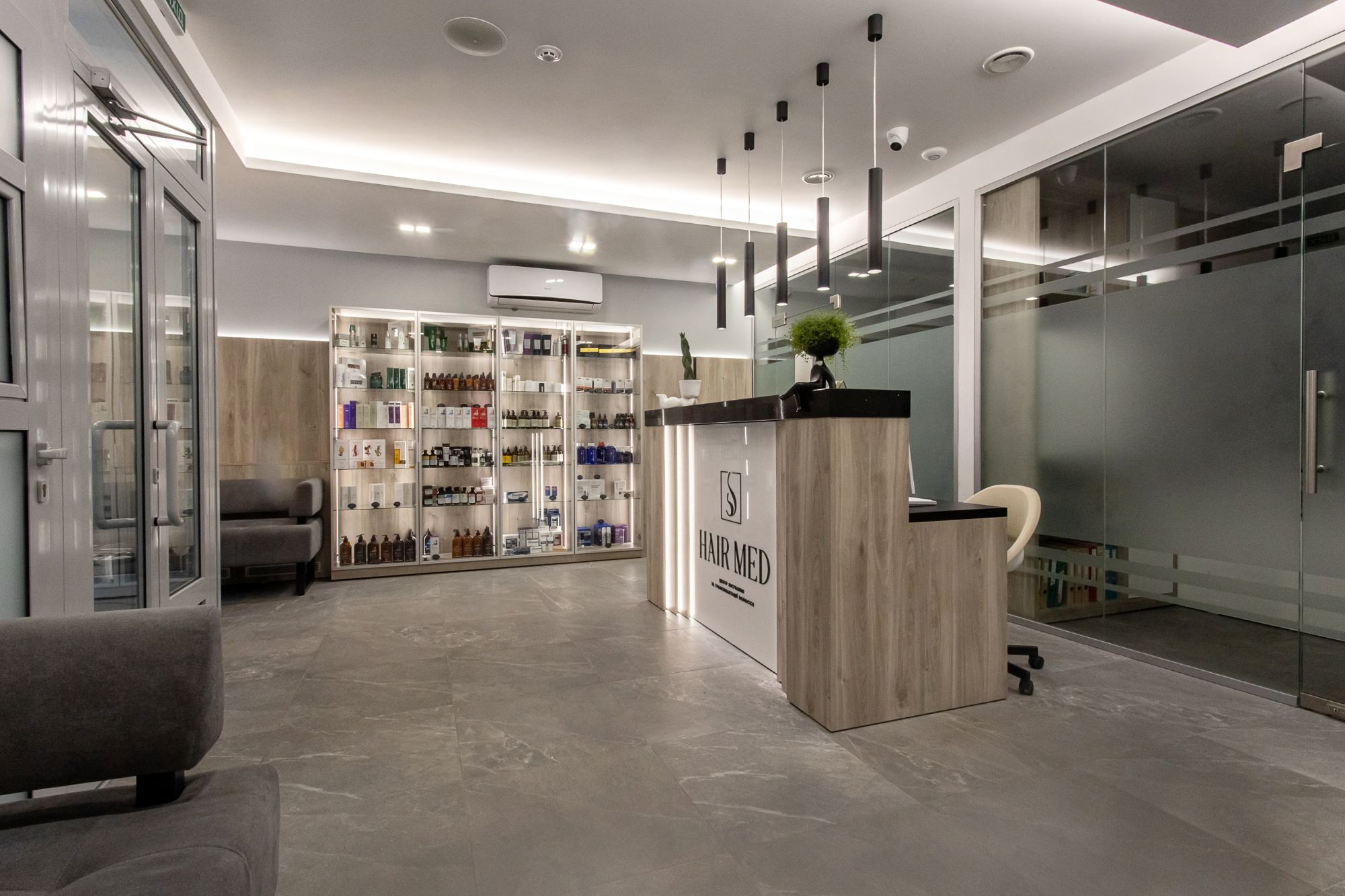
📍 Dnipro, Ukraine
A hair treatment and transplant centre in Dnipro: 430 m², two surgical zones, an SMP room and its own HairHub. Transplants are performed by Ivan Baranov, PhD (member of ISHRS and the World FUE Institute) and transplant surgeon Svitlana Nedbailo. Therapy is led by a team of trichologists and dermatologists.
The basic set is a complete blood count, ferritin and serum iron, TSH and free T4, and vitamin D. Where indicated, zinc, total and free testosterone, SHBG, DHEA-S, prolactin, glucose and insulin are added. If specific causes are suspected, testing for syphilis or antinuclear antibodies is ordered. There is no universal list: the doctor draws it up after an examination and trichoscopy, because different markers matter in different forms of hair loss.
Yes. Blood is taken in the morning, after 8–12 hours without food; plain water is allowed. Stop biotin three days before the draw: it is part of "hair and nail" supplements and distorts chemiluminescent immunoassays, making TSH falsely low and free T4 falsely high. Do not take iron supplements for three to five days before the test. Do not stop prescribed medicines on your own; discuss this with your doctor.
Haemoglobin is the last to fall. The body first uses up the iron stores in the tissues, and that is exactly what ferritin shows; anaemia develops much later. The hair follicle divides quickly and reacts to a lack of iron at a stage when the complete blood count still looks perfectly normal. So normal haemoglobin does not rule out iron deficiency, and low ferritin with normal haemoglobin is a typical finding in diffuse hair loss.
Most sex hormones are tested on the second to fifth day of the cycle, counting from the first day of menstruation. Progesterone is tested separately, around day 20–23 of a 28-day cycle. Prolactin is sensitive to stress and physical exertion, so blood for it is taken in the morning, at rest, 15–20 minutes after you arrive at the laboratory. Be sure to tell the doctor about hormonal contraceptives: they change SHBG and free testosterone, and without that note the results will be misread.
At the clinics MediUkraine works with, a trichologist consultation with a review of the results costs from USD 31, and laboratory panels are paid for separately, at the laboratory. The doctor gives the list of tests and their cost after the examination, and MediUkraine helps you get a cost estimate before you travel.
Most often, that the cause is not a deficiency. In androgenetic alopecia laboratory values are mostly normal: the sensitivity of follicles to androgens is inherited and is not measured by a blood test, and the diagnosis is made by the pattern of thinning and trichoscopy. Normal results do not rule out scarring forms of alopecia either, where a scalp biopsy decides. So normal results are not a reason to stop looking but a reason to return to the clinical examination.
No. An abnormal result shows the direction, but not the dose, form or duration of treatment: these are determined by how deep the deficiency is, by coexisting illnesses and by the list of medicines you already take. Iron without a confirmed deficiency accumulates in the body, thyroid medicines without hypothyroidism cause arrhythmias and loss of bone mass, and high doses of vitamin D cause hypercalcaemia. Besides, some abnormalities have nothing to do with hair, and treating "by the numbers" will not help.
Tell us what you need: we will suggest a clinic and a doctor and send you a cost estimate.
Request a consultation →