| Service | 🇺🇦 Ukraine | 🇨🇿 Czech Republic | 🇹🇷 Turkey |
|---|---|---|---|
| Nitrous oxide, 15 min | from USD 13 | — | — |
| Nitrous oxide, 30 min | from USD 33 | from USD 114 | — |
| Anaesthetist supervision, 1 hour | from USD 13 | from USD 334 | from USD 313 |
| Dentist consultation | from USD 8 | from USD 38 | from USD 34 |
Prices in the “Ukraine” column come from MediUkraine’s partner clinics. The Czech Republic and Turkey columns show the lower bounds of prices published by clinics there (for Turkey, also the Turkish Dental Association’s recommended 2026 tariff), collected in August 2026 and converted to US dollars at the rate on the day of collection. A dash means we could not find a comparable published price. In any country, the final cost is set by the clinic after an examination.
Nitrous oxide is a colourless gas with a faint sweetish smell that has been used in medicine for more than a century and a half. In dentistry it is not used as a general anaesthetic: the patient breathes a mixture of nitrous oxide and oxygen through a nasal mask, in which the proportion of oxygen never falls below roughly a third. It is the lightest form of sedation, known as conscious sedation because the patient remains fully conscious.
Patients describe the state the mixture produces in similar terms: warmth, a slight tingling in the fingers and lips, a feeling of weightlessness, dulled anxiety and an altered sense of time, so that half an hour in the chair passes like ten minutes. The person hears the dentist, answers questions, breathes unaided and keeps their protective reflexes, so the method does not require separate airway management.
It is important to understand the limits of the method from the start: the gas relieves anxiety, not pain. It raises the pain threshold slightly and noticeably weakens the gag reflex, but for caries treatment, an extraction or root canal work, local anaesthesia is given in full; the injection is simply tolerated more calmly.
The indications fall into two broad groups. The first is children from about three years of age who already understand the dentist's requests and can breathe through the nose: for them it is the gentlest way to get through their first treatment without tears or being held down. The second is adults with dental phobia, a strong gag reflex or years of avoiding the dentist, when the fear itself stops them from getting into the chair. The mixture also helps with procedures that require keeping still: taking impressions, fissure sealing, professional hygiene.
The method is not for everyone, and the most common reason it cannot be used is simple: a blocked nose. With a runny nose, adenoids or a deviated septum the mixture does not reach the lungs. The second barrier is the first trimester of pregnancy; the other limitations are covered below. MediUkraine is a treatment search and coordination service, not a clinic: we select the clinic and doctors with the right specialism, and the dental part is carried out by our partner clinic, Vidnova Dental Clinic in Lviv. The decision on sedation is made by the dentist and the anaesthetist after an in-person examination.

Travel. Ukrainian airspace is closed, so there are no commercial flights. Patients reach Lviv overland, most often from Poland: Rzeszów and Kraków airports are the usual entry points, with a train, bus or private transfer onward to the border and on to the city. Lviv is roughly 70 km from the Polish border, the shortest crossing of any Ukrainian city.
Visas. Citizens of the EU, the United Kingdom and the United States do not need a visa for short stays in Ukraine. Rules depend on your citizenship, so check your own before booking.
Safety, plainly. Ukraine is at war. Air raid alerts occur in Lviv, and an appointment can be interrupted by one. Several governments advise against travel to Ukraine, and while that advice stands, ordinary travel and medical insurance is often void — confirm your cover with your insurer before you commit to anything.
Language. MediUkraine handles correspondence, scheduling, the written treatment plan and the quote in English. The clinic's team communicates with international patients in English.
Payment. You pay the clinic directly. Our coordination service is free of charge for you.
More on travel, safety and insurance: Safety and travel.
The gas acts quickly because the body barely metabolises it. It enters the blood through the lungs, acts on receptors in the central nervous system and is eliminated unchanged in the same way, through the lungs; the liver and kidneys play almost no part in this. Hence its main practical advantage, controllability: the doctor can reduce the flow at any moment, and the patient's state changes within minutes, not hours.
A session always starts with pure oxygen: the patient breathes it through the mask for a few minutes, getting used to the flow and to the feel of the mask on the face. Nitrous oxide is then added in small steps, roughly 5–10% at a time, with the patient asked how they feel after each one. The working concentration for most patients lies within 20–40%, and only occasionally reaches half the mixture. This is called titration: the dose is set not by weight or a chart but by the individual's response.
The first signs appear within 3–5 minutes: warmth, tingling in the fingertips, a pleasant heaviness in the body. At the end of the work the flow is switched off, and the patient breathes pure oxygen for at least another 5 minutes. This step is never skipped: the gas leaves the blood quickly into the alveoli and can briefly displace oxygen from them, a phenomenon called diffusion hypoxia, and the oxygen "flush" prevents it.
In terms of depth this is minimal sedation, also known as anxiolysis, the lightest of the options available. The patient is oriented in time and place, responds to requests to open their mouth or turn their head, and remembers the visit. Intravenous sedation is a different level: the person dozes and usually does not remember the details, and a cannula in a vein, fasting and someone to take them home are required. Treatment under general anaesthesia is a separate matter, with hospital-level requirements. For a short or medium-length visit, a mixture of nitrous oxide and oxygen does the job without these complications, which is why it is considered the gentlest option.
Pain relief is worth mentioning again, because this is the most common misunderstanding. The gas raises the pain threshold but does not block the conduction of impulses along the nerve, so local anaesthesia is always given: caries, extractions and root canal work all require it in full. On the other hand, under sedation the injection is tolerated more calmly: the patient is less tense, and the gag reflex, which gets in the way when working on the back teeth, becomes noticeably weaker.
In paediatric practice the method has its own conditions. It works from about three years of age (younger children are rarely able to follow requests and keep the mask on) and depends on two things: nasal breathing and willingness to cooperate. A child crying with their mouth open is breathing room air, not the mixture, so there will be no effect at any concentration. For this reason sedation is not used as a way to "restrain" a child: it strengthens the rapport with the dentist rather than replacing it.
The method suits a fairly wide range of procedures: treatment of caries and pulpitis in milk teeth, fissure sealing, extraction of milk teeth and simple extractions of permanent teeth, professional hygiene, taking impressions and scans, fitting orthodontic appliances, short surgical procedures. The limit is not complexity but time: it is comfortable to work under sedation for 30–45 minutes with a child and up to an hour and a half with an adult, after which fatigue takes its toll. Treatment lasting several hours calls for intravenous sedation or general anaesthesia.
Combinations are discussed separately. Nitrous oxide with local anaesthesia is a standard combination with no added complications. The same gas together with an oral sedative or antihistamine produces moderate sedation: requirements for monitoring, fasting and an escort are added, and this is decided by the anaesthetist, not by the patient. Taking "something calming" before the visit on your own initiative without telling the doctor is a bad idea for exactly this reason.
The equipment is simple, but the details matter. Nasal masks come in several sizes, and children's versions are scented with strawberry, mint or vanilla; the smell helps the child accept the mask. The mask itself is double: the inner circuit delivers the mixture, and the outer one collects the exhaled air and diverts it into the vacuum line. The cylinders have their own markings and are connected through a fitting that physically prevents them from being mixed up with oxygen cylinders.
Finally, the honest limits. In roughly one adult in ten a sufficient effect cannot be achieved; this is individual sensitivity, and it is no reason to keep raising the concentration. Sedation does not make complex treatment simpler or shorter, and it does not affect how a filling will hold or whether an implant will integrate: it changes only how the patient tolerates the visit. If the anxiety is too strong or the scope of treatment too large, the doctor will offer another option, not a double dose.
After the flow is switched off, the patient stays in the chair with the mask on and breathes pure oxygen for at least 5 minutes. The chair is then raised slowly; do not stand up suddenly, as you may feel dizzy. The person sits under observation for another 10–15 minutes, until the doctor is satisfied that they are fully oriented, walk steadily and have no nausea or weakness.
The most common after-effects are mild dizziness, nausea and sometimes a headache. They are uncommon and usually pass within an hour. Nausea is more likely if the patient came on an empty stomach or, conversely, ate a heavy meal before the visit, and also when the concentration was raised too quickly. Children sometimes have a brief spell of tearfulness or excitement on the way out; this passes on its own.
Most patients can return to their usual activities the same day. A child is usually not taken straight to school or nursery after a session: it is better to give them half a day of rest, especially if the treatment was long. Adults go back to work, and whether they may drive is decided by the doctor: after the gas alone there are usually no restrictions; if a tablet was also given, there are, and you will be told this beforehand.
The restrictions on that day are dictated not by the sedation but by the treatment itself. After local anaesthesia you must not eat until the numbness has worn off: a child may bite their cheek or lip without noticing, so parents keep an eye on them for two to three hours. After an extraction the usual rules for the socket apply, and after a filling, the dentist's advice on chewing with the tooth.
The result here is best judged not by how you feel after the mask but by what was achieved. The question is simple: did the dentist do what was planned, did the patient manage the whole visit, and was it calmer than the previous time? In children the effect is cumulative: the first two or three visits under sedation often make it possible to have treatment calmly without it later on, although this does not always happen.
It is worth calling the clinic if nausea lasts more than a few hours, a headache does not go away, unusual drowsiness persists or ear pain appears. Such complaints are rare, but they are not ignored. For patients from other cities and from abroad, MediUkraine helps them get in touch with the doctor after they return home and, if needed, arranges a video consultation.
Step 1. Consultation and the decision on sedation. The dentist examines the mouth, orders an X-ray if needed and draws up a treatment plan. The anaesthetist separately establishes whether inhalation sedation is possible: asks about lung disease, pregnancy, ear and eye operations, medicines and allergies, and checks nasal breathing. The approximate length of the session and the quote are agreed at the same stage.
Step 2. Preparation on the day of the visit. The patient arrives having eaten lightly a couple of hours before the appointment and signs informed consent to the treatment and to the sedation. The dentist checks once more that the nose is clear, selects a mask of the right size, shows it to the child and lets them hold it. The device is prepared in advance, and the vacuum scavenging line is switched on before the start.
In total the visit takes 30–60 minutes, and most of that time goes on the treatment itself. Between adjusting the concentration and the switch to pure oxygen, the dentist gives local anaesthesia and carries out what was planned, a filling, an extraction or hygiene, and at the end the patient breathes pure oxygen for at least 5 minutes. No hospital admission is needed, and no separate day for recovery either: after 15–20 minutes of observation most patients return to their usual activities the same day.
The cycle begins not with the gas but with a plan. At the consultation the dentist decides how many visits are needed, what to do first and where sedation is not needed: most patients get through an examination, an X-ray and light hygiene calmly without it.
The children's scenario almost always consists of several short visits. One or two teeth can comfortably be treated in one session, so treatment of four teeth is planned over two or three appointments a week or two apart. The first visit is often an adaptation visit: trying on the mask, counting the teeth, a ride in the chair, and home without treatment.
For an adult with dental phobia the logic is the same, only the reason is different. Treatment starts with something simple and short, professional hygiene or a single filling, so that the patient has the experience of a calm visit. More complex treatment is planned after that, and for some patients sedation becomes unnecessary at this stage.
If the gas did not work, the plan is reviewed rather than simply repeated. There are several options: intravenous sedation, when the scope is large and the patient cannot manage a long visit, or treatment under general anaesthesia, for young children and patients with whom contact is not possible. Both routes have stricter requirements for examination, fasting and an escort.
Once treatment is complete, the cycle moves into monitoring: an examination and professional hygiene twice a year and, in children, monitoring of tooth eruption and fissure sealing. The more familiar visits become, the less often sedation is needed; for many patients it remains a tool for the first few appointments rather than a permanent part of treatment.
Inhalation sedation is considered one of the gentlest methods in dentistry, but it does have side effects of its own. The most common are nausea and vomiting, dizziness, headache and excessive drowsiness if the concentration is too high. In some patients, especially children, brief excitement occurs instead of calm; the flow is then reduced or stopped, and things settle within a few minutes.
Diffusion hypoxia is a separate issue: a brief drop in alveolar oxygen right after the gas is switched off. That is exactly why the oxygen "flush" at the end of the session is mandatory, and why the mask is not taken off the patient immediately after the last filling. During the session a pulse oximeter shows the oxygen saturation of the blood and the pulse rate.
The contraindications follow from two properties of the gas. The first is the need for nasal breathing: a blocked nose, a cold or another viral respiratory infection, adenoids, polyps or a deviated septum make a session pointless. The second is that nitrous oxide accumulates in closed air-filled spaces in the body and expands them, so the method is not used after recent middle ear surgery, with pneumothorax or bowel obstruction, or after eye surgery with a gas tamponade.
Pregnancy is a separate point. In the first trimester inhalation sedation is not carried out; in the second and third it is considered only when urgently needed and after consulting an obstetrician. Caution is also needed with severe lung disease with carbon dioxide retention, severe untreated sleep apnoea and psychiatric conditions in which the patient cannot report how they feel.
One more limitation is less well known than it should be: nitrous oxide inactivates vitamin B12 in an enzyme needed for homocysteine metabolism. For a single short session this rarely matters, but with B12 deficiency, pernicious anaemia, a strictly vegetarian diet or inherited disorders of homocysteine metabolism, repeated long sessions can cause neurological disorders. That is why the doctor should be told about anaemia and diet in advance.
Staff safety matters too: long-term exposure of surgery staff to the gas is undesirable, which is why a vacuum scavenging system and ventilation are mandatory, and pregnant staff members are not assigned to such rooms. The patient signs informed consent, receives the sedation record and has the right to a second opinion: the record can be taken to another specialist, and if needed MediUkraine will arrange a consultation at another partner clinic. The clinics we work with hold a licence from the Ministry of Health of Ukraine for medical practice; only a doctor, after an examination, can predict how treatment will go for a particular patient.
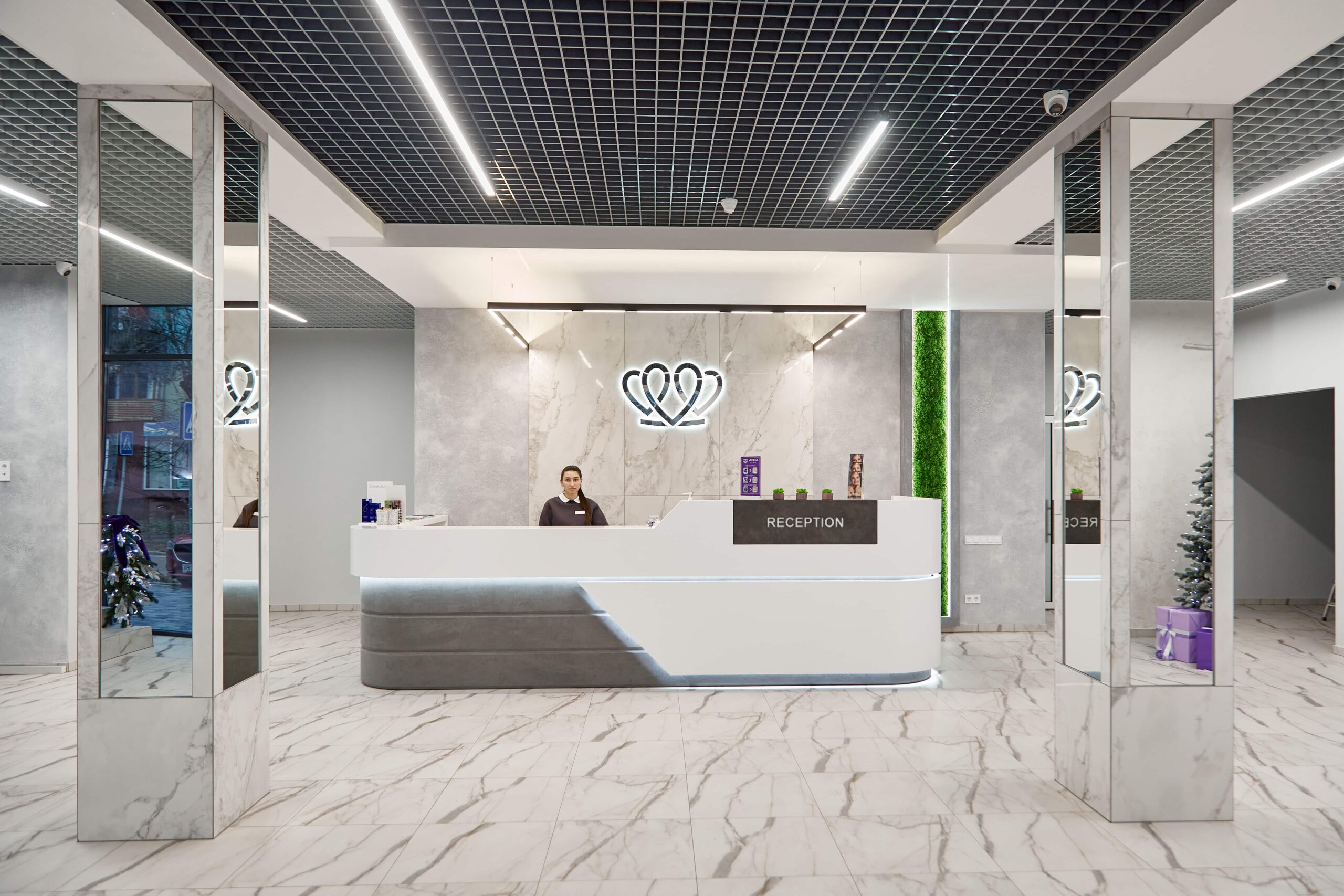
📍 Lviv, Ukraine
A dental clinic in Lviv with a separate doctor for each field: oral surgery and implants, prosthodontics, restorative dentistry, endodontics under a microscope, periodontics, orthodontics and paediatric dentistry.
No. It is minimal sedation, also called conscious sedation: the patient is awake throughout, breathes unaided, hears the dentist, answers questions and keeps their protective reflexes. The mixture is given through a nasal mask, and the proportion of oxygen in it is never less than roughly a third. Under general anaesthesia the patient is completely unconscious and breathing is supported by a ventilator; that is a different level of intervention with different requirements for examination and for the room. After a session with the gas, most patients go home within 15–20 minutes.
At MediUkraine's partner clinic a 15-minute session costs from USD 13 a 30-minute one from USD 33. Anaesthetist supervision is charged separately, from USD 13 per hour, and a dentist consultation costs from USD 8. The treatment itself, local anaesthesia and diagnostics are charged separately, so the final total depends on the scope of work and the number of visits. The prices are indicative: the final quote is given by the clinic after an examination.
Usually from about three years of age. It is not a question of age as such but of two conditions: the child must understand the dentist's requests and be able to breathe through the nose with the mouth closed. A toddler crying with their mouth open is breathing room air, so there will be no effect at any concentration. The mask is not put on by force: it is shown to the child, they are allowed to hold it, and the dentist waits for them to agree. If there is no rapport at all, other options are discussed: adaptation visits or treatment under general anaesthesia.
No, pain is relieved by local anaesthesia, and it is always given. Nitrous oxide relieves anxiety, raises the pain threshold slightly and noticeably weakens the gag reflex, but it does not block the conduction of nerve impulses. The practical difference lies elsewhere: under sedation the anaesthetic injection is tolerated more calmly, the patient is less tense, and time in the chair subjectively passes faster. So the gas and local anaesthesia are not alternatives: they work together.
Unlike intravenous sedation, no fasting is needed. A light meal 2 hours before the visit is the best option: nausea is more common both on an empty stomach and straight after a heavy meal. As for driving, the decision is made by the doctor after checking you on the way out: after nitrous oxide alone there are usually no restrictions, because the gas is eliminated through the lungs within a few minutes. If a tablet was also given, you do not drive that day and need someone to accompany you.
The most common reason it cannot be used is a blocked nose: a runny nose, a cold or another viral respiratory infection, adenoids, polyps, a deviated septum. The method is not used in the first trimester of pregnancy, after recent operations on the middle ear or on the eye with a gas tamponade, or with pneumothorax and bowel obstruction. Caution is needed with severe lung disease, untreated sleep apnoea, vitamin B12 deficiency and disorders of homocysteine metabolism. The final decision is made by the anaesthetist after questioning and examination.
This happens: in roughly one adult in ten a sufficient effect cannot be achieved, and the concentration is not raised indefinitely. In children the reason is more often simpler: breathing through the mouth instead of the nose. The dentist first checks the mask and its fit, then adjusts the flow, and if that does not help, honestly suggests another route: splitting the treatment into shorter visits, considering intravenous sedation or, for a young child, treatment under general anaesthesia. There is no point continuing a session "by force".
Tell us what you need: we will suggest a clinic and a doctor and send you a cost estimate.
Request a consultation →