| Service | 🇺🇦 Ukraine | 🇨🇿 Czech Republic | 🇹🇷 Turkey |
|---|---|---|---|
| Repositioning or muscle-relaxation splint | from USD 344 | from USD 100 | from USD 423 |
| Splint adjustment and replacement | from USD 384 | from USD 88 | from USD 80 |
| Gnathologist consultation | from USD 16 | from USD 114 | from USD 110 |
| Occlusal onlay | from USD 12 | — | — |
Prices in the “Ukraine” column come from MediUkraine’s partner clinics. The Czech Republic and Turkey columns show the lower bounds of prices published by clinics there (for Turkey, also the Turkish Dental Association’s recommended 2026 tariff), collected in August 2026 and converted to US dollars at the rate on the day of collection. A dash means we could not find a comparable published price. In any country, the final cost is set by the clinic after an examination.
Bruxism is repetitive jaw muscle activity: clenching the jaws or grinding the teeth together. There are two forms, depending on the time of day, and they are not the same thing. Sleep bruxism is rhythmic muscle contractions during brief night-time arousals, which the patient is usually unaware of; awake bruxism is mostly quiet clenching of the jaws during the day: at work, at the wheel, in a tense conversation. Their mechanisms differ, and so does the approach: the night-time form is managed with an appliance, while the daytime form is mostly a habit to unlearn.
An important point that often gets lost in the dental chair: in a person with no other health problems, the international consensus definition treats bruxism not as a disease but as a motor phenomenon. It becomes something to treat when consequences appear: enamel wear, chipped restorations, muscle pain and fatigue, headache in the temples in the morning. So the dentist's question is not "do you grind your teeth?" but "what has it already done to your teeth and muscles?"
The damage shows on the teeth before the patient suspects anything. Enamel wears into flat facets that match exactly on the upper and lower teeth when they close; chips and a translucent edge appear on the incisors, and shiny flat areas and islands of exposed dentine on the chewing surfaces. Fillings crack and fall out, the ceramic of veneers and crowns chips, and sometimes the tooth itself cracks. For patients with implants, overload is an extra risk: an implant is fused directly with the bone, has no ligament and does not cushion chewing pressure the way a natural tooth does, so the effects of grinding show up first on prosthetic restorations.
Not everyone needs a custom splint, and it is worth saying so plainly. It is prescribed when there is evidence of active damage: fresh wear facets, repeated chipping of restorations, exposed dentine, muscle pain in the morning, and also when costly prosthetic work or veneers are planned and need protecting from the same load. If there are no signs of wear, no pain and no reports of night-time grinding from those close to you, an appliance is not needed: a photographic record and a check-up are enough. A splint is not made for children with primary or mixed dentition either: grinding at this age is common and mostly passes by itself, while a rigid appliance on growing jaws can interfere with the eruption of teeth.
One more caveat: not all tooth wear is caused by grinding. Acid erosion from reflux or frequent acidic drinks, and abrasion from a hard toothbrush with abrasive toothpaste, can look very similar; in these cases a splint is pointless, because it protects against mechanical friction, not against acid. Only an in-person examination with a photographic record and jaw models can show what is actually damaging the enamel. MediUkraine is a treatment search and coordination service, not a clinic: we match you with a clinic and a suitably specialised doctor, arrange the dates and support you throughout, while diagnosis and treatment decisions are made by the doctor after an examination.

Travel. Ukrainian airspace is closed, so there are no commercial flights. Patients reach Lviv overland, most often from Poland: Rzeszów and Kraków airports are the usual entry points, with a train, bus or private transfer onward to the border and on to the city. Lviv is roughly 70 km from the Polish border, the shortest crossing of any Ukrainian city.
Visas. Citizens of the EU, the United Kingdom and the United States do not need a visa for short stays in Ukraine. Rules depend on your citizenship, so check your own before booking.
Safety, plainly. Ukraine is at war. Air raid alerts occur in Lviv, and an appointment can be interrupted by one. Several governments advise against travel to Ukraine, and while that advice stands, ordinary travel and medical insurance is often void — confirm your cover with your insurer before you commit to anything.
Language. MediUkraine handles correspondence, scheduling, the written treatment plan and the quote in English. The clinic's team communicates with international patients in English.
Payment. You pay the clinic directly. Our coordination service is free of charge for you.
More on travel, safety and insurance: Safety and travel.
Bruxism is diagnosed in steps, and it helps to know this in advance so you do not expect more from an examination than it can deliver. The international approach distinguishes three levels of certainty: possible bruxism, when there is only the account of the patient or those close to them; probable, when findings from a clinical examination are added to that account; and definite, when jaw muscle activity has been recorded by an instrument. Most patients are treated at the second level, and this is normal practice: instrumental recording is not needed to justify a splint, only to answer specific questions.
The clinical examination gives the most information. The dentist looks for wear facets that match on the upper and lower teeth when they close, enamel cracks, chipped incisor edges and ceramics, exposed dentine on the cusps, a white line on the inside of the cheek at the level where the teeth meet, and tooth marks along the edge of the tongue; separately, the dentist assesses the bulk of the masseter muscle, its firmness and tenderness on palpation. All of this is recorded in a photographic record and on jaw models. Without such a reference point it is impossible to say a year later whether the wear is progressing or standing still, and that is exactly what determines whether active intervention is needed.
The next step is to establish whether grinding really is the cause of the wear. A similar picture is produced by erosion: acid from fizzy drinks, citrus fruit and wine, as well as stomach contents coming up with reflux, dissolve the enamel; the surface becomes smooth and shiny, with cup-shaped hollows, and fillings begin to stand proud of the tooth. Another cause is abrasion from a hard toothbrush and abrasive toothpastes, which stays near the necks of the teeth. The distinction matters: a splint protects against mechanical friction but does not stop acid, so with untreated reflux the damage will continue underneath it.
Polysomnography with audio and video recording is the only method that records episodes of rhythmic jaw muscle activity during sleep while also showing breathing, blood oxygen saturation and sleep structure. It is not prescribed for everyone, only for specific reasons: suspected breathing disorders during sleep, unusual movements or tongue biting at night, grinding that appears after starting a new medicine, or treatment that has had no effect. Portable electromyography (EMG) devices that you stick onto the muscle at home are cheaper and more convenient, but they do not see breathing, so they do not rule out apnoea.
Bruxism is rarely a purely dental matter, and that is the main reason not to stop at a mouthguard. The daytime form is consistently linked with anxiety, emotional strain and concentration: people clench their jaws at the screen, in traffic, during urgent work. The night-time form is linked with brief arousals during sleep, and it depends more on how sleep is structured than on how the teeth are aligned. Substances and medicines also play a part: smoking, caffeine in the second half of the day, alcohol, and among medicines, SSRI antidepressants and venlafaxine, atomoxetine and psychostimulants. If the grinding appeared a few weeks after starting a new medicine, adjusting the therapy sometimes solves the problem, and that is done by the doctor who prescribed the medicine, not by the dentist.
Sleep apnoea deserves separate attention. Pauses in breathing during sleep are accompanied by brief arousals, and some episodes of grinding coincide with them, so the two conditions often coexist in the same patient. In practice, if a person snores, if those close to them notice pauses in breathing, if daytime sleepiness persists, then sleep screening comes first and an appliance in the mouth only afterwards. The reason is not bureaucracy: in some patients with untreated apnoea an ordinary occlusal splint worsens breathing during sleep, because it changes the position of the lower jaw and the tongue. For such cases there is a separate appliance, a device that moves the lower jaw forward, and it is prescribed together with a sleep specialist, after an assessment, not instead of one.
Now to the splints themselves: there are several kinds, and mixing them up can cost you teeth. A muscle-relaxation splint, also called a stabilisation splint, is a rigid appliance of clear acrylic covering the whole arch with even contacts; this is the main option for an adult patient with signs of wear. A repositioning splint holds the lower jaw in a set position and is used for specific jaw joint indications and for a limited period. A soft silicone mouthguard is attractive for its comfort, but the jaw muscles often take the yielding material as an invitation to chew: in some patients it increases clenching. An anterior bite plane, which covers only the incisors, quickly takes load off the muscles, but with unsupervised wear the side teeth can shift and the bite can change, so it is prescribed under supervision and not for the whole night without monitoring.
Ready-made mouthguards from a pharmacy are a separate issue, and the problem is not the price but the specific ways they can cause harm. A blank that is softened in boiling water and bitten into cannot be fitted so that the contacts are even: in the mouth it rests on a few random points, and those teeth receive a double load. If the appliance does not cover the whole arch, the teeth left outside it have time to over-erupt over months of wear, and the bite changes, which then has to be corrected orthodontically. The material of such mouthguards is usually soft, which works against the patient; nobody calculates the thickness; the seam and edges injure the gums, and the porous surface is hard to clean. Most importantly, the mouthguard muffles the sound and reassures the household, so the check for apnoea, reflux and medicine side effects never happens.
Reversible methods work alongside the splint and cost much less. Daytime clenching responds well to awareness training: you set phone reminders or put stickers on your monitor and each time check a simple rule: lips together, teeth apart, tongue resting gently against the palate. Next comes work on sleep: a consistent bedtime, limiting caffeine after lunch, avoiding alcohol in the evening, winding down before bed. Cognitive behavioural therapy and biofeedback techniques have a limited evidence base specifically as regards the number of grinding episodes, but they are reversible, do not harm the teeth and help with the anxiety that often goes along with the condition.
Dentistry has no medicine that switches bruxism off, and an offer to "take a course of pills" should raise suspicion. Botulinum toxin injections into the jaw muscles reduce the strength of contraction and, in some studies, pain as well, but they do not affect the central mechanism, the effect is temporary, and data on long-term use are limited; this is a method for individual cases of marked muscle pain or hypertrophy, not a first-line treatment. Restoring worn teeth is a separate and often extensive prosthetic job: when bite height has been lost, it is restored in stages, with temporary restorations and a trial period in them. Starting this work before protection is in place makes no sense: new ceramics chip under the same load that destroyed the natural enamel.
The first few nights with a splint almost always feel strange. You may produce more saliva and your speech may change, and in the morning there may be a feeling that the teeth are not meeting the way they used to; this passes within 20–30 minutes of taking the appliance out. Getting used to it usually takes 3–7 days. But if the splint presses on a particular tooth, rubs the gums or falls out at night, do not wait it out: this is a fitting issue that takes a few minutes to fix at an extra visit.
The first check is scheduled after 1–2 weeks, and then roughly every 4–6 weeks during the active stage. This is because as the jaw muscles relax, the lower jaw takes up a slightly different position, and a splint that fitted perfectly a month ago begins to make uneven contact. That is why adjustments are not an extra service but part of the method, and skipping them means wearing an appliance that is no longer working as intended.
Muscle pain is the first to ease. Morning jaw fatigue and tension pain in the temples usually ease within 2–6 weeks if evening habits are changed alongside the splint. The grinding itself, however, may remain: the appliance redistributes the load and takes it on itself but does not switch off the muscle activity, so those close to you may still hear the sound. This is not a sign of failure: the goal is preserved teeth and no pain, not silence at night.
The clearest indicator of the effect is the splint itself. After a few months its surface shows exactly where and how hard the teeth are working: from the depth and position of the marks the dentist assesses the load, and at the same time can see whether the patient wears it at all. The second tool is repeat photos and jaw models after 6–12 months: they are compared with the initial ones to see whether the wear has increased. The comparison is based on measurements and images, not on how things feel.
To be frank about the long-term outlook: bruxism follows a wave-like course. Quiet periods alternate with flare-ups triggered by stress, lack of sleep or a change of medication, and this rhythm cannot be fully predicted. Only a doctor who has examined you can predict the outcome in your case. That is why the splint is usually kept on after the active stage is over, as permanent protection for the teeth rather than a course with an end date.
If after three or four months the pain has not eased or the wear is visibly progressing, the right course is to review the diagnosis rather than keep doing the same thing. At this stage the dentist checks whether a breathing disorder during sleep has been missed, whether this is acid erosion, whether the medication has changed, and whether the source of pain lies outside the jaw muscles. If you live abroad, interim checks can conveniently be done remotely: you keep the photos, examination report and models, and MediUkraine arranges a video consultation with the same doctor if needed.
Step 1. Examination and review of complaints. The dentist asks when the grinding started, who hears it, whether there is morning jaw fatigue and headache in the temples, which medicines you take, how you sleep and whether you snore. Next comes an examination of every tooth surface under magnification, palpation of the masseter and temporal muscles and an assessment of the restorations. At this stage it becomes clear whether there is active damage or only signs of old, inactive wear.
Step 2. Recording the initial state. A photographic record is made, impressions are taken or the dental arches scanned, and a panoramic X-ray is taken if needed. The jaw models and images become the reference point: a year later, the dentist will compare against them to see whether the wear has increased. Without this step any later assessment of the result becomes a matter of opinion.
In total the active stage takes three to six months: after the examination and recording of the initial state come work on the causes and sleep screening where indicated, then making the splint and a series of adjustments every 4–6 weeks, and only then reassessment and a decision on restoring the worn teeth. No hospital stay or anaesthesia is needed at any of these stages; treatment is outpatient, and between visits you carry on with normal life.
Bruxism treatment does not fit into a single visit: it is a cycle of several stages, with an active phase of 3–6 months on average followed by long-term protection. This timescale reflects the nature of the condition: grinding depends on sleep, stress and medicines rather than on a single appliance in the mouth, which is why it changes slowly.
The diagnostic stage takes from a few days to two weeks. It includes the examination, the photographic record, jaw models, an X-ray and sleep screening if needed, and it ends with a separate discussion in which the dentist explains the findings and agrees the plan with you. For a patient from another city these steps are usually compressed into two or three days.
Making the splint takes several working days in the laboratory and ends with a visit for handover and fitting. Then comes a settling-in period of 3–7 days, during which the dentist may adjust how you wear the splint depending on how you feel; the first check-up is after one or two weeks.
The active stage lasts three to six months: daily wear according to the agreed regime, work on daytime jaw clenching, changes to sleep habits and visits every 4–6 weeks. It is the regularity of adjustments, not merely having the appliance, that determines whether you make progress.
After that the cycle does not end but moves into monitoring mode: the splint continues to be worn at night, and check-ups with photos and models are done every 6–12 months, with the appliance replaced as it wears. If restoration of worn teeth is needed after stabilisation, it is a separate cycle with its own timeline, from a few weeks to a few months. For patients from abroad this schedule is usually split into two or three trips, with contact kept up remotely in between; MediUkraine agrees the dates with the clinic so that each visit completes a stage.
A rigid splint is itself a reversible treatment: you take it out and your teeth are unchanged. Risks arise when the wearing instructions are not followed or an appliance is used without supervision. A repositioning splint, which holds the lower jaw in a different position, can change the bite permanently if worn round the clock for a long time: the side teeth stop making contact, and this then has to be corrected orthodontically or with prosthetics. The same applies to anterior bite planes worn on the front teeth for months without monitoring.
The second group of complications relates to hygiene. The splint must be cleaned every morning with a brush and no toothpaste, rinsed and stored dry in a ventilated case; otherwise bacteria and fungi build up on it, and decay and gum inflammation develop underneath. For patients with removable dentures and those with a dry mouth this matters twice as much: reduced saliva in itself raises the risk of decay under the appliance.
A note on breathing disorders during sleep. If a patient has untreated obstructive sleep apnoea, an ordinary occlusal splint in some cases worsens breathing, because it changes the position of the lower jaw and the tongue. So snoring with pauses in breathing, morning headache and daytime sleepiness are a reason to have a sleep assessment first rather than buy a mouthguard. An appliance that moves the lower jaw forward is used for apnoea, but it is a different device with different indications, and it is prescribed by a doctor after a sleep study.
It is important to understand the limits of the method. A splint does not remove the habit of clenching the jaws, does not treat anxiety, does not affect medicines that provoke grinding and does not stop acid erosion. It takes the load on itself and in doing so preserves the teeth, no more and no less. If the enamel is being destroyed by acid due to reflux, a gastroenterologist is needed, otherwise the process will continue under the appliance; if the source of pain is not in the jaw muscles, a splint will not remove it.
Injection techniques have their own risks. Botulinum toxin in the jaw muscles weakens chewing, can alter the smile through its effect on neighbouring muscles if injected inaccurately, and with long-term repeated use a reduction in muscle bulk and changes in the bone beneath have been described. It is not used during pregnancy and breastfeeding, in diseases of neuromuscular transmission or during an acute infection in the injection area. That is why such procedures are discussed once reversible methods have been exhausted, not instead of them.
Sometimes the problem is something else entirely, and a splint would only delay the right diagnosis. Warning signs include night-time episodes with seizures, tongue biting or urinary incontinence, which need a neurologist; sudden attacks of pain on one side of the face; swelling and redness over the jaw joint with a raised temperature; numbness on one side of the face; and an abrupt change in the bite within a few weeks without an obvious cause. In children with primary and mixed dentition, grinding mostly passes by itself, and rigid appliances are not routinely made for growing jaws: observation and an examination by a paediatric dentist are more appropriate here than treatment.
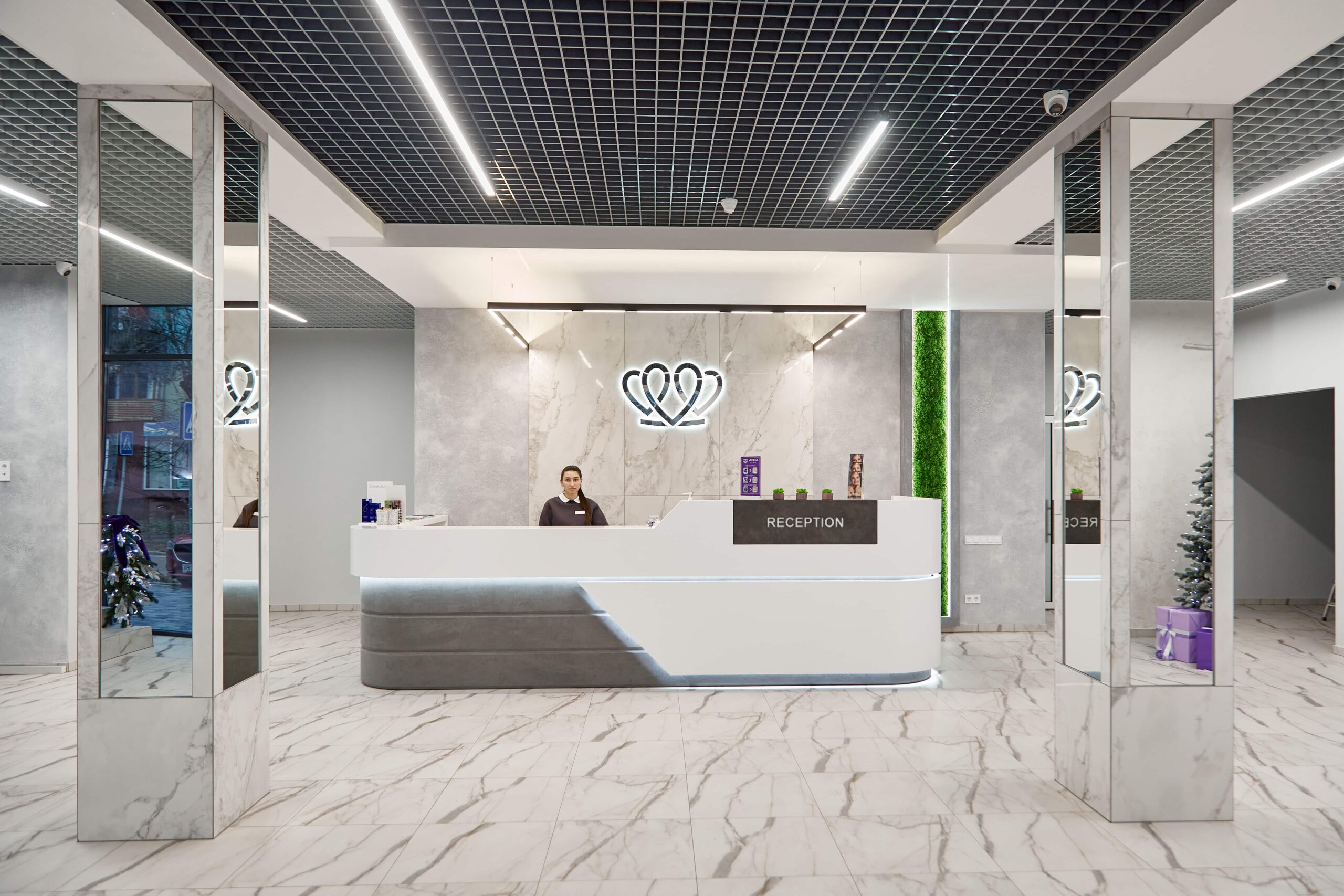
📍 Lviv, Ukraine
A dental clinic in Lviv with a separate doctor for each field: oral surgery and implants, prosthodontics, restorative dentistry, endodontics under a microscope, periodontics, orthodontics and paediatric dentistry.
The simplest way is to ask whoever sleeps next to you, or to record the night with the voice recorder on your phone. If that is not possible, look for signs in the morning: tired or stiff jaws on waking, tight pain in the temples, tooth marks along the edge of the tongue, a white line on the inside of the cheek where the teeth meet. The dentist adds what can be seen in the mouth: flat wear facets that match on the upper and lower teeth, enamel cracks, repeated chipping of fillings and ceramics. Only a sleep study can definitively confirm jaw muscle activity at night, but for a decision on protecting the teeth an examination and the account of those close to you are usually enough.
At the clinics MediUkraine works with, a gnathologist consultation starts from USD 16. A custom repositioning or muscle-relaxation splint costs from USD 344 per appliance; the price covers planning, impressions or scanning, the dental laboratory's work and fitting. Splint adjustment and replacement is from USD 384 an occlusal onlay from USD 12. X-rays, a sleep specialist consultation and a sleep study, treatment of decay and restoration of already worn teeth are paid for separately: the last of these can cost several times more than the splint itself. The final cost is set by the clinic after an examination.
Technically you can, but it is worth knowing the consequences in advance. A blank that is softened and bitten into cannot be fitted so that the contacts are even: the appliance rests on a few random points, and those teeth are overloaded. If it does not cover the whole arch, the teeth outside it have time to over-erupt over months of wear, and the bite changes. In some patients the soft material actually provokes jaw clenching, and the porous surface is hard to clean. More importantly, the mouthguard muffles the sound, and the search for the cause stops there, so breathing disorders during sleep, reflux or the effect of medicines go unnoticed.
No, and it is more honest to say so straight away. A splint protects the teeth and restorations from wear and chipping, takes load off the jaw muscles and reduces morning pain, but it does not switch off the muscle activity itself during sleep. The grinding may remain, and those close to you may still hear the sound, but the enamel is no longer being damaged. Other tools act on the causes: work on sleep and anxiety, limiting caffeine and alcohol, reviewing medicines that provoke grinding, and treating sleep apnoea if present. That is why a splint is seen as part of the plan, not as a treatment in itself.
Yes, both links have been described, though in different ways. Daytime jaw clenching is consistently linked with anxiety, emotional strain and concentrated work: people catch themselves with clenched teeth at the screen or at the wheel. The night-time form depends more on the structure of sleep: episodes of jaw muscle activity coincide with brief arousals, which are caused, among other things, by pauses in breathing in obstructive apnoea. In practice this means that with snoring, pauses in breathing or daytime sleepiness, a sleep assessment should come before a splint is made: in some patients with untreated apnoea an ordinary occlusal splint worsens breathing.
Mostly not. Grinding in the primary and mixed dentition is common and in most children passes by itself with age, so rigid splints are not routinely made for growing jaws: an appliance can interfere with the eruption of teeth. It is worth taking your child to a dentist if the enamel of the baby teeth is noticeably wearing, jaw pain has appeared, the child complains of headache in the morning, or the grinding comes with snoring and restless sleep; the latter is a reason to check breathing during sleep and the state of the tonsils. The approach is decided by a paediatric dentist after an examination.
Once protection is in place and the wear has stopped. The logic is simple: new ceramics or composite chip under the same load that destroyed the natural enamel, so first the splint and work on the causes, and only then the prosthetic stage. The scope depends on how much has been lost: individual teeth are restored with composite or onlays, while marked wear with loss of bite height requires restoration in stages with temporary restorations, in which the patient tests the new jaw position for several weeks or months. Once the work is complete, the night splint continues to be worn, now as protection for the restorations.
Tell us what you need: we will suggest a clinic and a doctor and send you a cost estimate.
Request a consultation →