| Service | 🇺🇦 Ukraine | 🇨🇿 Czech Republic | 🇹🇷 Turkey |
|---|---|---|---|
| Hyrax appliance | from USD 278 | from USD 310 | from USD 261 |
| Haas appliance | from USD 333 | from USD 477 | from USD 288 |
| Appliance activation | from USD 12 | — | — |
| Orthodontist consultation | from USD 16 | — | — |
Prices in the “Ukraine” column come from MediUkraine’s partner clinics. The Czech Republic and Turkey columns show the lower bounds of prices published by clinics there (for Turkey, also the Turkish Dental Association’s recommended 2026 tariff), collected in August 2026 and converted to US dollars at the rate on the day of collection. A dash means we could not find a comparable published price. In any country, the final cost is set by the clinic after an examination.
The upper jaw is not a single solid bone. It consists of two halves joined by the midpalatal suture, a strip of connective tissue running along the palate from the front teeth backwards. In children and teenagers this suture is still pliable, so the two halves of the jaw can be moved apart mechanically, and the space between them later fills with new bone.
This is the basis of the method. A fixed appliance is attached to the first permanent molars, sometimes with additional anchorage on the premolars: metal bands are joined by rigid arms to an orthodontic screw in the centre of the palate. Each turn of the screw puts pressure on the bones, and the suture gradually opens. The Hyrax appliance has no plastic parts and sits clear of the roof of the mouth, which makes it easier to keep clean.
The appliance is most often fitted for a crossbite in the side areas, when the upper teeth close inside the lower ones on one or both sides. Another common reason is a narrow upper jaw with too little room for the permanent teeth: expansion widens the arch so the erupting teeth have enough space. The method is also used to help an impacted canine erupt, to prepare for face mask treatment in Class III cases, and in patients with a cleft palate, where a separate protocol applies.
In some situations expansion is not done or is postponed. A single tooth in crossbite is usually corrected by simpler means rather than with an appliance for the whole jaw. Active caries, gum inflammation and poor hygiene need treating first, as plaque builds up more easily under the bands than on exposed enamel. Sound anchor teeth are also essential: loose or badly decayed molars cannot provide anchorage. Adults are a different case: in most of them the suture has already fused, and the same appliance will tip the teeth outwards without moving the bones apart.
MediUkraine is a treatment search and coordination service, not a clinic. We choose the dental centre and a doctor with the right specialism, arrange the appointment dates and support your family throughout, including if you are travelling from another city or country. The diagnosis, type of appliance and scope of treatment are decided by the orthodontist after an in-person examination.

Travel. Ukrainian airspace is closed, so there are no commercial flights. Patients reach Lviv overland, most often from Poland: Rzeszów and Kraków airports are the usual entry points, with a train, bus or private transfer onward to the border and on to the city. Lviv is roughly 70 km from the Polish border, the shortest crossing of any Ukrainian city.
Visas. Citizens of the EU, the United Kingdom and the United States do not need a visa for short stays in Ukraine. Rules depend on your citizenship, so check your own before booking.
Safety, plainly. Ukraine is at war. Air raid alerts occur in Lviv, and an appointment can be interrupted by one. Several governments advise against travel to Ukraine, and while that advice stands, ordinary travel and medical insurance is often void — confirm your cover with your insurer before you commit to anything.
Language. MediUkraine handles correspondence, scheduling, the written treatment plan and the quote in English. The clinic's team communicates with international patients in English.
Payment. You pay the clinic directly. Our coordination service is free of charge for you.
More on travel, safety and insurance: Safety and travel.
The Hyrax appliance consists of four elements: an orthodontic screw in the centre of the palate, rigid arms, metal bands on the anchor teeth and the cement that holds it all in place. The bands are attached to the first permanent molars, and if needed, extra anchorage is added on the premolars or baby molars. The screw has four holes for the key: each quarter turn moves its halves apart by about 0.2 mm. The appliance is entirely metal and sits clear of the roof of the mouth, so food debris rinses away easily; that is why it has become the standard choice at most clinics.
The Haas appliance is built on the same principle but has two acrylic pads that rest against the palate on either side of the screw. The load is shared between the teeth and the palatal tissues, and some orthodontists choose this design when there are few anchor teeth or they are small. The trade-off is care: food gets trapped under the acrylic and the tissue under the pads can become irritated and red, so the area has to be flushed with a water flosser after every meal. Studies show no fundamental difference in how many millimetres of expansion the two designs achieve, so the choice usually depends on the clinical situation and the orthodontist's approach.
The activation schedule is set individually by the orthodontist and must not be changed on your own. The classic rapid expansion protocol is one to two quarter turns a day, that is 0.2–0.4 mm, usually in the morning and evening. The active phase lasts 2–4 weeks, during which the arch widens by 6–8 mm, and the signal to stop is not the number of turns but what the orthodontist sees clinically: the palatal cusps of the upper molars should reach roughly the cheek-side cusps of the lower ones. The slow protocol, one quarter turn every two to three days, stretches the process over two to three months and is chosen when gentler forces on the teeth and tissues are preferred.
A gap between the front teeth is an expected stage, not a complication. It appears in the second or third week of the active phase and shows that the suture has genuinely opened, rather than the teeth simply tipping. The gap can be noticeable, up to a few millimetres, and it is what worries children and parents most. After the turns stop, the gap (diastema) mostly closes on its own over a few weeks or months: the fibres connecting the teeth pull them back together. If a gap remains at the end of retention, it is closed at the next stage of treatment, with braces or a plate.
Retention is half the result. Once the turns are finished, the screw is locked so it cannot unwind, and the appliance stays in the mouth for another 3–6 months while the space in the suture fills with new bone. Removing the appliance as soon as the target width is reached sharply increases the risk of relapse: the bone has not yet formed, and the two halves of the jaw move back towards their original position. After removal, a removable plate or a fixed arch is sometimes fitted to hold the width until the next phase of treatment.
Age and the maturity of the suture determine whether the method will work. Expansion is most predictable in the mixed dentition, roughly from 7 to 11 years, and usually remains possible in adolescence. After that the suture gradually ossifies, at a different pace in each person: in some girls it has already fused soon after the age of 14, while in some young men it remains pliable even at 18. So before treating a teenager or young adult, the orthodontist relies not on their age on paper but on a CBCT cross-section showing the stage of suture maturation.
In adults with a fused suture, a banded appliance mainly tips the teeth outwards: the crowns move apart but the bones do not, and the cost can be gum recession and pain. For adults there are two solutions. An expander anchored on mini-screws placed in the bone of the palate transmits force directly to the bone rather than through the teeth, and in young adults it often opens the suture without surgery. In surgically assisted expansion, a maxillofacial surgeon makes cuts in the bone where resistance is greatest, after which the appliance works in the usual way. Both options are planned jointly by the orthodontist and the surgeon, and both require separate diagnostics with CBCT.
Nasal breathing comes up with almost every other family. Expanding the upper jaw also widens the floor of the nasal cavity, and measurements show that resistance in the nasal passages decreases after treatment while the volume of the cavity increases. At the same time, the appliance does not treat allergic rhinitis, enlarged adenoids or a deviated nasal septum: if these are the reason a child does not breathe through the nose, expansion alone will not be enough. In children with obstructive sleep apnoea and a narrow jaw, expansion is part of comprehensive treatment and in some patients reduces the number of apnoea episodes, but it does not replace an examination by an ear, nose and throat (ENT) specialist and polysomnography. The right order is to find the cause of the breathing problem first, and only then decide what role orthodontics should play.
Other expansion appliances solve other problems. A removable plate with a screw mainly moves the teeth and suits a slight lack of space, the quad-helix is a wire spring for slow expansion in the mixed dentition, and aligners give limited dentoalveolar expansion in adults. None of these opens the midpalatal suture the way a banded screw appliance does, so with marked skeletal narrowing they are not considered an equivalent substitute.
Expansion is almost never a complete treatment in itself. It is the first phase, which creates space in the arch, and in the second phase the teeth are aligned with braces, aligners or removable appliances, usually after all the baby teeth have been replaced. Between the phases there may be a pause of several months or years, during which the child is examined every six months. The orthodontist should explain this at the outset: removing the appliance is not the end of treatment but the move to the next stage.
The first days after fitting are the hardest, and it is worth warning the child about this in advance. The appliance feels like a foreign body, there is more saliva, 's' and 'sh' sounds change, and your child will need to eat slowly and in small bites. Getting used to it usually takes 3–5 days, and speech recovers within one to two weeks, faster if the child talks more and reads aloud.
Each activation causes brief but noticeable pressure in the palate, under the nose and between the eyes. It lasts a few minutes and passes on its own. If the pressure turns into sharp pain or lasts for hours, make the next turn only after speaking to the orthodontist: pain is a warning sign here, and regularly taking painkillers to mask it is not advisable.
In the second or third week a gap appears between the upper incisors. This is expected, not a breakage: it confirms that the suture is opening. Explain this to your child in advance and show them photos of similar cases; otherwise the gap can feel like a ruined smile, at an age when appearance already matters.
Check-up visits during the active phase are scheduled every 1–2 weeks. The orthodontist checks how far the teeth have moved apart, whether a band has come loose and whether the soft tissues are irritated, and decides when to stop the turns. The active phase usually ends after 2–4 weeks, and the target width includes a small margin, because some of the expansion is lost over time.
Then the retention period begins, when almost nothing seems to be happening. The appliance stays in the mouth for another 3–6 months, visits become less frequent, and meanwhile bone fills the space in the suture. This is the stage families most often want to cut short, yet it is exactly what determines whether the arch width is maintained. Removing the appliance takes a few minutes and needs no anaesthesia; afterwards the enamel under the bands is polished and its condition assessed.
The result also has to be judged at the right time. Arch width is measured straight after removal, the bone in the suture is assessed on a follow-up X-ray, and the effect on breathing is assessed by an ENT specialist no earlier than a few months later. The bite changes as the face grows, so the child is followed up until growth is complete, and the second phase is planned around the bite as it develops. Timelines and progress vary from child to child, so only an orthodontist can predict the result for an individual child after an examination.
Step 1. Consultation and diagnostics. The orthodontist examines the bite, measures the width of the upper arch, assesses how the side teeth meet and the condition of the gums, and asks about nasal breathing, snoring and habits. Next, a panoramic X-ray and a lateral cephalogram are taken, plus a cone beam CT (CBCT) scan where indicated to assess the midpalatal suture. On this basis the orthodontist decides whether expansion is needed, which appliance will suit and how long each stage will take.
Step 2. Separation and measurements. 5–7 days before fitting, rubber separators are placed between the molars and the neighbouring teeth to make room for the metal bands; during these days chewing may ache. At the same or the next visit impressions or scans of the jaws are taken, the bands are chosen by size, and the laboratory makes the appliance, usually within a few days.
In total, treatment takes about 4–8 months. After X-rays and a week with separators, the appliance is cemented in a single 40–60 minute appointment, and then the screw is turned at home on schedule: the active phase lasts 2–4 weeks, the child is examined once every one to two weeks, and that is when a gap appears between the incisors. Then the screw is locked, and the appliance stays in the mouth for another 3–6 months of retention while bone forms in the suture; it is removed in a few minutes, after which the orthodontist decides when to start the second phase with braces or aligners. No anaesthesia or hospital stay is needed at any step, and getting used to the appliance takes 3–5 days.
The first stage is diagnostics and deciding when to start. The orthodontist determines whether there is skeletal narrowing, whether simpler treatment would be enough and whether it is too early for expansion. This is also when it is decided whether to have two-phase treatment with a pause in between or to postpone everything until adolescence.
The second stage is preparing the mouth. Caries is treated, plaque is removed and, if needed, baby teeth that are blocking the eruption of permanent ones are extracted. The family is shown how to use interdental brushes and a water flosser, because once the appliance is fitted, cleaning takes longer and needs more care.
The third stage is expansion followed by retention: 2–4 weeks of active turns and another 3–6 months with the same appliance in place, about six months in total. At the end of the stage follow-up X-rays are taken and the amount of space gained in the arch is assessed.
The fourth stage is a pause and monitoring. While the remaining baby teeth are being replaced, the child is examined every six months, and a removable plate is used if needed to hold the width. The length of the pause depends on the child's age at the start: it is longer for a seven-year-old, while for a twelve-year-old there may be no pause at all.
The fifth stage is aligning the teeth and retention afterwards. Braces or aligners are usually worn for one to two years, after which a fixed retainer is bonded to the inner side of the front teeth and a night-time retainer is added. For international patients the cycle is split into several trips, and some interim check-ups are done from photos, as agreed with the orthodontist.
Most of the unpleasant sensations in this treatment are expected and short-lived. Pressure in the palate, under the nose and between the eyes after turning the screw lasts a few minutes; in the first few days speech changes, there is more saliva and chewing is harder. But if the pain is sharp, lasts for hours or your child cannot eat at all, stop the turns and call the clinic: "putting up with it" is not an option here.
The second group of problems relates to the tissues of the mouth. Under the acrylic pads of the Haas appliance the palatal tissue can become red and inflamed, the edges of the arms sometimes rub the cheek, and with poor hygiene the gums around the bands become inflamed. The most troublesome consequence of poor care is white demineralised spots on the enamel under the edge of a band: they remain after the appliance is removed and need separate treatment. A water flosser and interdental brushes are not a luxury here but an essential part of treatment.
Technical breakages happen and need a quick response. A band can come loose, an arm can break off, and the screw can jam or turn back if the key is removed incorrectly. Do not continue activation if this happens: a loose appliance injures the tissues and stops transmitting force to the bone. Report a breakage to the clinic the same day rather than waiting for the scheduled visit.
There are also risks that are not visible straight away. The anchor molars can tip outwards, the bone on their outer side can thin, the gums can recede, and with excessive expansion the roots can partly resorb. That is why expansion follows a calculated plan and stops according to clinical signs, rather than turning the screw "as long as it turns". Another risk is relapse: if the appliance is removed as soon as the required width is reached, the bone in the suture does not have time to form, and the jaw partly returns to its original size.
Contraindications mostly concern the condition of the mouth and age. Expansion is postponed with active caries, gum inflammation and poor hygiene, with loose or broken-down anchor teeth, and with ankylosed teeth, which do not move together with the bone. In adults with a fused suture the classic appliance has no skeletal effect, so an expander anchored on mini-screws or surgical assistance is considered instead. Children with a cleft palate and syndromic conditions are assessed separately: they are treated under different protocols and by a team of specialists.
The clinics MediUkraine works with hold a medical practice licence from the Ministry of Health of Ukraine. Before treatment starts, you receive a written plan and are entitled to a second opinion: the X-rays, models and plan can be shown to another orthodontist. We advise against agreeing to have the appliance fitted on the day of the first consultation without diagnostics and a written plan: expansion changes the relationship of the jaws long term, and the decision deserves time.
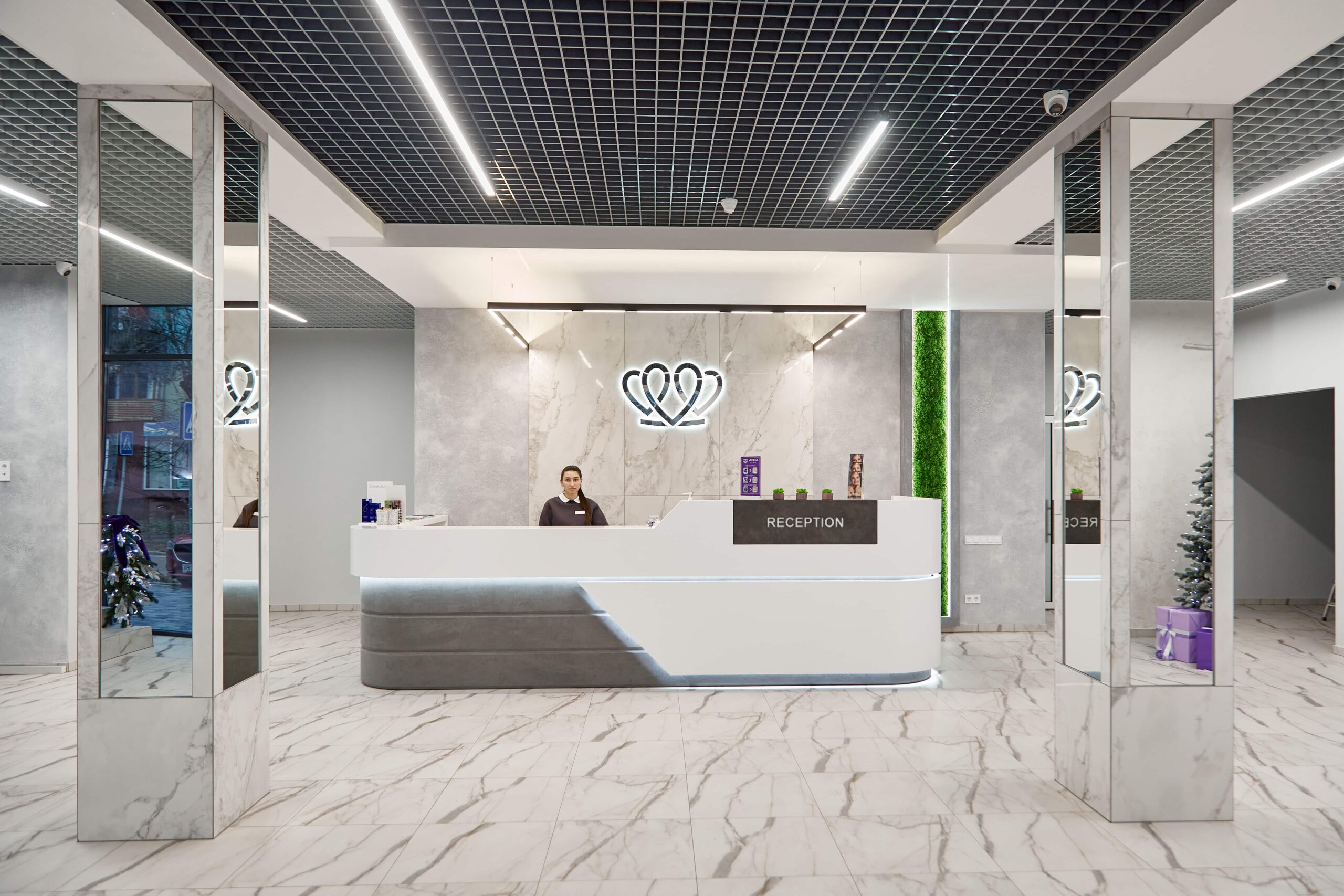
📍 Lviv, Ukraine
A dental clinic in Lviv with a separate doctor for each field: oral surgery and implants, prosthodontics, restorative dentistry, endodontics under a microscope, periodontics, orthodontics and paediatric dentistry.
Expansion is most predictable in the mixed dentition, roughly from 7 to 11 years, when the midpalatal suture is still pliable. In teenagers the method usually works too, but here the orthodontist relies on imaging rather than age on paper: cone beam CT (CBCT) is used to assess how mature the suture is. In some girls it has already fused soon after the age of 14, while in some young men it remains pliable even at 18. Before the age of 6 the appliance is rarely fitted, and only for specific indications, because the anchor teeth are not yet stable.
At the clinics MediUkraine works with, the Hyrax appliance costs from USD 278 and the Haas appliance from USD 333. This usually covers making the appliance in the laboratory, the bands, the screw and fitting the appliance in the mouth. Check-up visits are charged separately: an appliance activation from USD 12, an orthodontist consultation from USD 16. Diagnostics, removal of the appliance, a retention plate and the second phase of treatment are charged separately at the clinic's rates. The final cost is confirmed by the clinic.
The key is inserted into the front hole of the screw and pushed backwards, towards the throat, until the next hole comes into view: that is one quarter turn, about 0.2 mm. The key is removed by drawing it backwards in the same way, so as not to turn the screw in the opposite direction. It is easiest in good light, with your child lying down with their head in your lap. After the turn, pressure is felt in the palate and under the nose for a few minutes; this is an expected reaction. Tick off each turn in the calendar: missed or doubled activations throw off the orthodontist's calculations.
It is a sign that the method is working. When the halves of the upper jaw move apart, the central incisors move apart with them, so the gap between them is an expected part of the active phase, not a sign that the appliance is broken. The gap can reach a few millimetres and usually appears in the second or third week. After the turns stop, it mostly closes on its own over a few weeks or months: the fibres between the teeth pull them back together. If a gap remains, it is closed at the next stage of treatment.
Expanding the upper jaw also widens the floor of the nasal cavity, and after treatment resistance in the nasal passages usually decreases. But the appliance does not treat allergic rhinitis, enlarged adenoids or a deviated septum: if these are the reason a child does not breathe through the nose, expansion alone will not be enough. In children with sleep apnoea and a narrow jaw, expansion is part of comprehensive treatment and in some patients reduces the number of episodes, but it does not replace an examination by an ENT specialist. The right order is to find the cause first and then plan orthodontics.
In adults the midpalatal suture has mostly already fused, and a banded appliance only tips the teeth outwards without moving the bones apart; the consequences can be gum recession and pain. So adults have two other options. The first is an expander anchored on mini-screws placed in the bone of the palate: in young adults it often opens the suture without surgery. The second is surgically assisted expansion, in which a maxillofacial surgeon makes cuts in the bone, after which the appliance works in the usual way. The choice is made jointly by the orthodontist and the surgeon after a CBCT scan.
The active phase with turns of the screw lasts 2–4 weeks, after which the appliance stays in the mouth for another 3–6 months: this is the retention period, during which new bone forms in the suture. That comes to about six months in total. Some of the width is lost over time, so the orthodontist builds in a small margin and, after removing the appliance, may prescribe a plate or an arch to hold it. The biggest relapse risk comes from removing the appliance too early, so retention should not be shortened. Long-term stability is assessed at routine check-ups.
Tell us what you need: we will suggest a clinic and a doctor and send you a cost estimate.
Request a consultation →