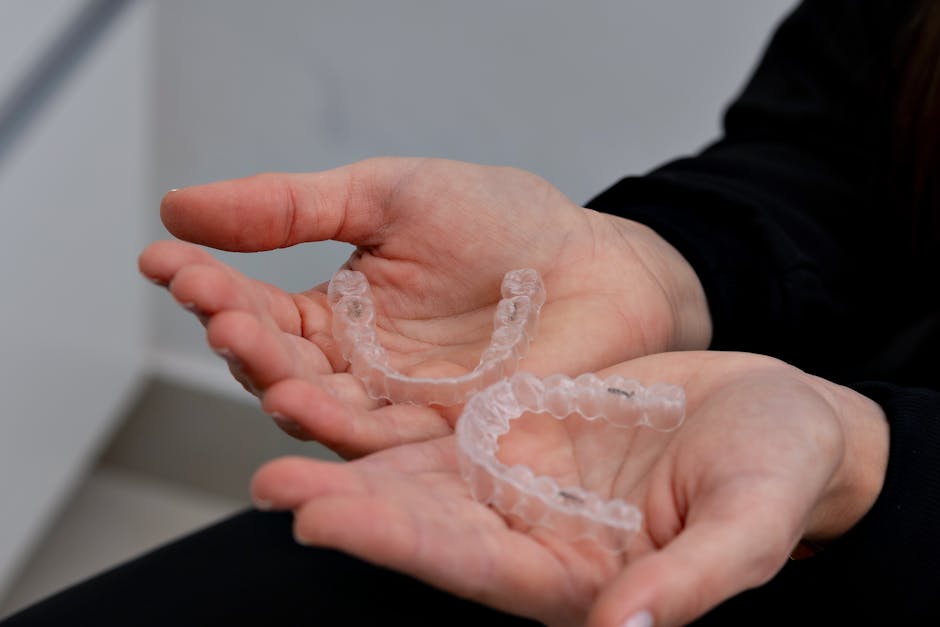
Correcting the bite and straightening teeth is one of the most common reasons for seeing a dentist, among teenagers and adults alike. Modern orthodontics offers two main approaches: classic braces and removable aligners. The choice between them depends on the clinical situation, your lifestyle and your budget.
01Braces or aligners: what is the fundamental difference?
Both systems move teeth by applying gradual, controlled pressure, but the mechanism and the conditions of use differ considerably. Braces are a fixed appliance that the orthodontist fits for the whole course of treatment. Aligners are clear removable trays that you replace every 1–2 weeks according to the plan.
Braces are more effective for complex bite problems, significant crowding and rotated teeth. Aligners are better suited to moderate problems and to patients for whom appearance during treatment matters, such as people in public-facing roles or adults with an active social life.
Types of braces
- Metal braces: the most common and affordable option, highly effective whatever the complexity
- Ceramic braces: colour-matched to the enamel, less noticeable, slightly more expensive than metal
- Sapphire braces: transparent and very discreet, but they require careful hygiene
- Lingual braces: attached to the inner surface of the teeth, invisible from the outside, the most expensive option
Types of aligners
- Invisalign: an international benchmark, with digital planning and an extensive evidence base
- Usmile, OrthoSnap and similar: more affordable systems, of acceptable quality for moderate clinical tasks
02How does orthodontic treatment in Ukraine work?
Treatment begins with a consultation with an orthodontist, who assesses your bite, takes X-rays and, if needed, prescribes a CT scan. Based on this, an individual treatment plan is drawn up, stating the method, duration and cost.
Active orthodontic treatment lasts on average from 12 to 24 months. After the braces are removed or the course of aligners is completed, a retention period is essential: you wear retainers to hold the result and prevent relapse.
Treatment is planned digitally; Invisalign uses its own three-dimensional planning software, ClinCheck. You can find out more and arrange a consultation through MediUkraine.
Not sure which clinic to start with?
A MediUkraine coordinator will help you choose a clinic and a doctor for your case, free of charge.
03How much does orthodontic treatment in Ukraine cost compared with Europe?
Treatment in Ukraine costs considerably less than in EU countries for comparable quality. This is one of the key arguments for patients who are considering travelling for treatment, including Ukrainians living abroad.
An indicative comparison for a full course of orthodontic treatment:
- Metal braces in Ukraine: USD 800–1,800
- Metal braces in Poland: EUR 1,500–2,500
- Metal braces in Germany: EUR 3,000–5,000
- Invisalign in Ukraine: USD 1,500–3,500
- Invisalign in Israel: USD 4,000–7,000
- Invisalign in Germany: EUR 4,500–8,000
The difference in cost allows patients from abroad to cover their travel and accommodation and still save substantially. This is especially relevant for long courses of treatment, where the total is significant.
04What should you know before starting orthodontic treatment?
Before braces are fitted or aligners are made, your mouth needs to be made healthy: tooth decay treated, tartar removed and, if necessary, gum disease treated. Orthodontic treatment must not be carried out while there are untreated teeth or active gum inflammation.
Some patients need certain teeth removed before orthodontic treatment, most often premolars, to create space when crowding is severe. This is normal clinical practice, not a sign that your teeth are in poor condition.
During treatment it is important to follow the hygiene recommendations: with braces, use interdental brushes and a water flosser; with aligners, wear them for at least 20–22 hours a day and clean them after every meal. Not following these rules lengthens treatment and worsens the result.
Age is not a contraindication: modern orthodontics treats patients from 6 to 60+ years old. In adults, treatment takes somewhat longer because bone development is complete, but with retention the result is stable and predictable.
The MediUkraine team arranges treatment at the partner dental clinic in Lviv, organises the consultation and coordinates every stage of treatment, from the first examination to the retention period. The clinic’s team communicates with international patients in English.
Related services: Braces in Ukraine · Orthodontic Treatment for Children in Ukraine · Metal Braces in Ukraine