Travel. Ukrainian airspace is closed, so there are no commercial flights. Uzhhorod lies right on the border with Slovakia and close to Hungary, so patients usually arrive overland from one of these two countries, by car, bus or train.
Visas. Citizens of the EU, the United Kingdom and the United States do not need a visa for short stays in Ukraine. Rules depend on your citizenship, so check your own before booking.
Safety, plainly. Ukraine is at war. Air raid alerts occur across the country, including in Uzhhorod, and an appointment can be interrupted by one. Several governments advise against travel to Ukraine, and while that advice stands, ordinary travel and medical insurance is often void — confirm your cover with your insurer before you commit to anything.
Language. MediUkraine handles correspondence, scheduling, the written treatment plan and the quote in English. The clinic's team communicates with international patients in English.
Payment. You pay the clinic directly. Our coordination service is free of charge for you.
More on travel, safety and insurance: Safety and travel.
In Ukraine, prostate treatment is built around minimally invasive methods: urination problems are resolved without major surgery. A smaller intervention means shorter recovery and a lower risk of complications, so these operations are also suitable for older patients.
The core technique is HoLEP: laser enucleation of the excess tissue, which is then removed through the bladder. The obstructing tissue is removed completely, the urine stream is restored and bladder control is preserved. The method is used even when the prostate is very large.
Patients who cannot tolerate general anaesthesia or have a higher risk of bleeding are offered a gentler option, laser vaporisation. The volume of tissue is reduced through the urethra, without large incisions or a long hospital stay, and relief comes within a few days of the procedure.
Depending on your symptoms, age and coexisting conditions, the doctor may recommend another route, from an endoscopic procedure to medication or monitoring. The choice is made after an in-person consultation and tests, not from a description of complaints over the phone. For some patients with moderate symptoms, the urologist advises against surgery and recommends monitoring with regular tests.
Through MediUkraine you can book a urologist at the partner clinic in Uzhhorod, have your tests done and get a treatment plan that follows international protocols, with a transparent cost estimate and support at every stage.
In the first days after a minimally invasive procedure you may have temporary discomfort or frequent urges to urinate; this is a normal reaction of the body. Return to your normal routine gradually: avoid sitting for long periods and physical exertion during the first week. Drive only once the doctor allows it.
How long full recovery takes depends on your age, general health and the type of procedure. People doing light physical work go back to work within a few days, in some cases after up to three weeks. The doctor gives the final recommendations on activity and routine at the follow-up examination.
Daily walks help recovery by improving circulation. Hot baths, saunas, swimming pools, sexual activity, alcohol and smoking, on the other hand, are off limits. It is just as important to keep up hygiene, drink plenty of water and maintain your general fitness.
Pain, a fever or blood in the urine are reasons to see a doctor immediately. The MediUkraine team stays in touch after discharge, so you can put questions to the urologist without having to track down contact details yourself.
Prostate surgery is not only about urination: sexual function also depends on the chosen technique. This matters for patients who plan to have children or want to maintain the quality of their intimate life. Laser techniques, including HoLEP, work precisely and spare the nerve structures, and the urologist discusses the risk of retrograde ejaculation and changes in potency with you before the operation.
The approach to treatment is always personalised. The urologist orders tests: ultrasound, blood tests, a semen analysis and hormone levels. If there is a risk of reduced fertility, the doctor explains the possible consequences and chooses a gentler option. When conception is planned in the near future, the procedure may be postponed, or sperm banking may be suggested in advance.
Surgery is not prescribed automatically. If symptoms are mild and fertility is important to you, conservative treatment may take priority. The final decision is made after consultations, taking into account your plans and the risks assessed together with the doctor.
Ukrainian clinics combine European protocols with affordable prices. Patients from abroad choose them not only for the cost but also for quick appointments, a clear treatment route and a well-organised process.
A particular advantage is laser treatment, especially HoLEP: a low-trauma technique without open surgery and with shorter rehabilitation. The targeted effect on the affected area preserves the surrounding tissue and its functions, which matters for men who care about their sexual health.
Prostate treatment in Ukraine costs significantly less than at clinics in the EU or Turkey. The reasons are simple: the moderate cost of providing medical services, lower rent and staff salaries, and greater competition between private centres. Hence a cost estimate with no hidden costs.
The partner clinic in Uzhhorod works according to international protocols, has the necessary equipment and provides an individual approach and ongoing medical supervision, from the first consultation to the follow-up examination after discharge.
lower cost of medical services compared with EU countries
modern equipment and well-trained urologists
a shorter hospital stay thanks to the minimally invasive approach
predictable results and transparent prices
The risk is low when the clinic follows the protocol. At well-established private centres, procedures take place under sterile conditions, following the rules of anaesthesia, infection control and post-operative monitoring.
HoLEP laser treatment is performed routinely. The low-trauma approach needs no large incisions, reduces the risk of complications and shortens the hospital stay. Operations are performed by experienced urologists, and precision comes from the combination of the surgeon's experience and the capabilities of the equipment.
At the partner clinic in Uzhhorod you go through the whole pathway in one facility, from the first consultation to the end of rehabilitation. This saves time and money and removes the need to coordinate several medical facilities.
When choosing a clinic, look at the number of procedures performed, the specialists' qualifications, transparent pricing and independent reviews. MediUkraine will arrange a consultation at the partner clinic in Uzhhorod for your diagnosis and show you the cost estimate before you arrive.

📍 Uzhhorod, Ukraine
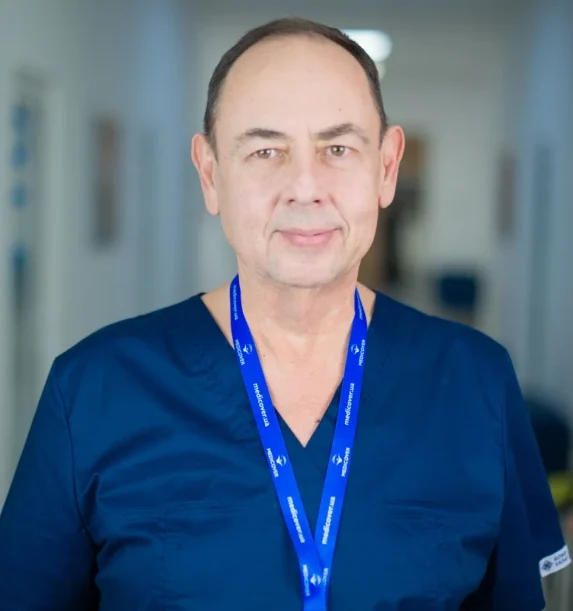
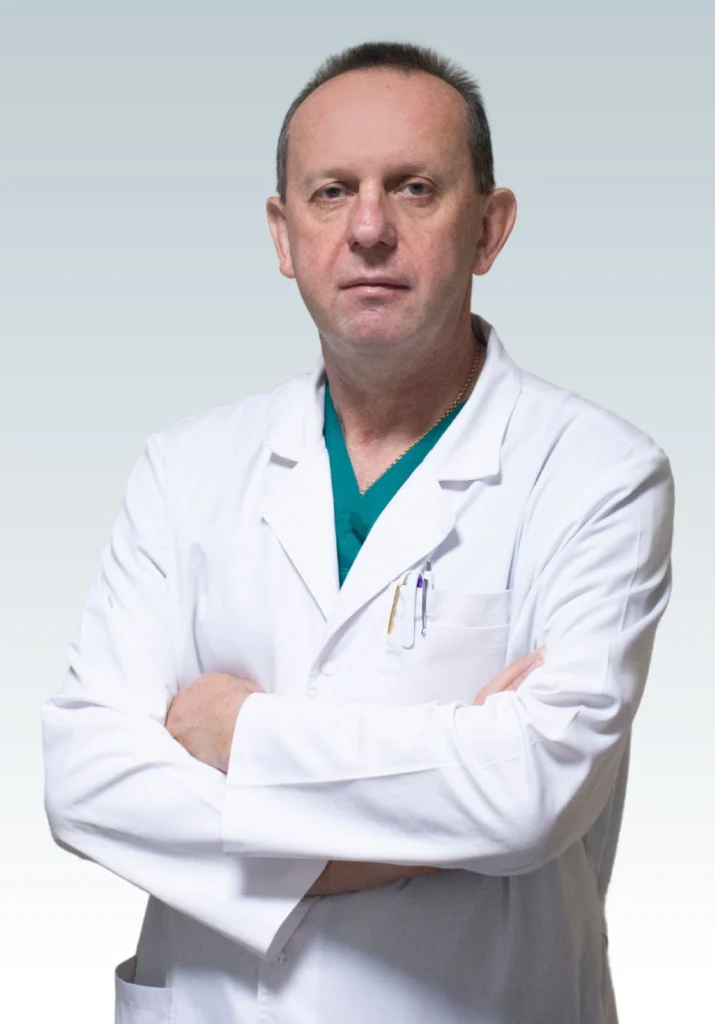
A multidisciplinary hospital in Uzhhorod, part of a network of medical facilities in western Ukraine: an outpatient clinic, a surgical centre covering 15 specialties and a 30-bed inpatient unit. Its 52 doctors include professors and PhDs; many operations are done as day surgery, with discharge after 1–2 days.
These are inflammatory, benign or malignant changes in the prostate tissue that can cause difficulty urinating, pain, reduced libido and other symptoms.
The price depends on the method (medication, laser or surgical treatment), the clinic, the scope of tests and the length of the hospital stay. MediUkraine will help you work out the cost estimate before you arrive.
Citizens of many countries, including the EU, the UK, Canada, Israel, Switzerland and Turkey, do not need a visa for a short stay of up to 90 days. Check the conditions for your country before you travel.
The final decision is made by the doctor after tests: ultrasound, laboratory tests, a urologist consultation and an assessment of the extent of prostate involvement.
Medication, holmium laser enucleation (HoLEP), transurethral resection (TURP) and other minimally invasive methods, depending on the indications.
After HoLEP laser surgery you usually stay 1–2 days in the clinic and return to normal life within a few days. Full recovery takes up to 2–3 weeks.
Laser techniques spare the nerve structures, so erectile function is mostly preserved, and sometimes fertility as well. The technique is agreed with the urologist.
Tell us what you need: we will suggest a clinic and a doctor and send you a cost estimate.
Request a consultation →