| Service | 🇺🇦 Ukraine | 🇨🇿 Czech Republic | 🇹🇷 Turkey |
|---|---|---|---|
| Partial braces | from USD 233 | — | — |
| Distal jet appliance, one side | from USD 444 | — | — |
| Distal jet appliance, both sides | from USD 556 | — | — |
| Orthodontist consultation | from USD 16 | — | — |
Prices in the “Ukraine” column come from MediUkraine’s partner clinics. The Czech Republic and Turkey columns show the lower bounds of prices published by clinics there (for Turkey, also the Turkish Dental Association’s recommended 2026 tariff), collected in August 2026 and converted to US dollars at the rate on the day of collection. A dash means we could not find a comparable published price. In any country, the final cost is set by the clinic after an examination.
With partial braces, brackets are bonded to one segment of the dental arch rather than to the whole arch. The most common option is known as the 2×4 technique: four brackets on the permanent incisors, two tubes or bands on the first permanent molars and a thin archwire between them. The wire simply bridges the area where baby teeth are still in place or where there is no tooth at all.
This approach was developed specifically for the mixed dentition. At 7–10 years of age the incisors and first molars have already erupted, but the canines and premolars have not, so there is simply nothing to fit full braces to. Waiting for all the permanent teeth is not always an option: some problems do not resolve with time but become established, and correcting them at 13 takes longer and is more difficult.
The indications are narrow and specific. They include an anterior crossbite, where a lower incisor sits in front of the upper one; an incisor that has erupted on the palatal side; a diastema to be closed before frenuloplasty; marked rotation or tipping of a single tooth. The most common reason, however, is a lack of space for a permanent tooth that physically has nowhere to erupt.
Moving the molars back (distalisation) is a separate task. If the upper first molar has drifted forward after the early loss of a baby tooth, the arch becomes shorter and there is no room left for the canine or premolar. The molars are then moved back with a fixed appliance such as the Distal jet, while the brackets on the incisors hold and align the front teeth.
In adults, segmental braces are used mainly before prosthetic work: to upright a molar that has tipped into the space of a tooth extracted long ago, to create space for an implant between roots that have moved closer together, or to slowly extrude the root of a broken-down tooth so that it can be restored with a crown. In these cases brackets go on three or four teeth for 4–8 months.
Partial braces are not suitable when the problem lies in the bite as a whole: with a distal, deep or open bite, crowding across the whole arch or a marked mismatch in jaw size, treating one segment will not solve it. MediUkraine is a treatment search and coordination service, not a clinic: we select the clinic and the orthodontist, arrange the dates and support you throughout, while the treatment method is chosen by the doctor after an in-person examination.

Travel. Ukrainian airspace is closed, so there are no commercial flights. Patients reach Lviv overland, most often from Poland: Rzeszów and Kraków airports are the usual entry points, with a train, bus or private transfer onward to the border and on to the city. Lviv is roughly 70 km from the Polish border, the shortest crossing of any Ukrainian city.
Visas. Citizens of the EU, the United Kingdom and the United States do not need a visa for short stays in Ukraine. Rules depend on your citizenship, so check your own before booking.
Safety, plainly. Ukraine is at war. Air raid alerts occur in Lviv, and an appointment can be interrupted by one. Several governments advise against travel to Ukraine, and while that advice stands, ordinary travel and medical insurance is often void — confirm your cover with your insurer before you commit to anything.
Language. MediUkraine handles correspondence, scheduling, the written treatment plan and the quote in English. The clinic's team communicates with international patients in English.
Payment. You pay the clinic directly. Our coordination service is free of charge for you.
More on travel, safety and insurance: Safety and travel.
The 2×4 technique is the basic form of segmental braces in the mixed dentition. Brackets are bonded to the four permanent incisors, bands with tubes or bonded tubes are placed on the first permanent molars, and an archwire runs between them. Treatment starts with a thin nickel-titanium wire, about 0.014 inch thick: it is flexible, applies a light continuous force and aligns the incisors in 2–4 months. After that, stiffer steel wires are used, which hold the shape of the arch and provide anchorage for the remaining movements.
The options differ in the number of teeth included. Besides 2×4, there is a 2×6 set-up, which adds erupted premolars to the incisors and molars, as well as true segmental archwires: a short, stiff wire on two to four teeth that works as a lever. Brackets are mostly metal: in children they are more reliable than ceramic ones, cheaper to rebond and do not chip. Ceramic and sapphire brackets are used mainly in adults, on visible teeth.
Opening space for a permanent tooth is one of the main tasks. An open nickel-titanium coil spring is placed along the wire between neighbouring teeth, and it gradually pushes them apart, freeing 2–4 mm over a few months. This is done when a lateral incisor or a canine has nowhere to erupt, and also when a tooth has already erupted outside the arch. If the tooth is still in the bone, a space maintainer is fitted after the space has been opened, otherwise the gap will close again.
The Distal jet is a fixed appliance for distal movement of the upper molars. It consists of an acrylic Nance button on the palate, supporting arms to the premolars or baby molars, and two guide tubes with nickel-titanium springs that push the first molars back. There is nothing for the patient to take out or put in: the appliance works around the clock, which is what mainly sets it apart from headgear. The molars can usually be moved back by 2–4 mm in 4–7 months; the appliance is fitted on one side or on both, depending on where arch length has been lost.
The trade-off with distalisation is anchorage loss. The spring pushes the molar back, but it pushes the anchor teeth forward with equal force: the premolars move mesially, the incisors tip forward and the overbite decreases. The Nance button on the palate limits this but does not eliminate it. That is why distalisation is almost always planned as a first stage, after which the result has to be consolidated by work on the rest of the arch.
There are alternatives, and choosing between them is not about price. Mini-screws (orthodontic micro-implants) about 1.5 mm in diameter are placed in the bone to provide skeletal anchorage, so the incisors do not move forward. The pendulum appliance works on a similar principle to the Distal jet, but tilts the molar crowns more. Headgear gives good control but has to be worn for 12–14 hours a day, and with teenagers this is what most often derails the plan.
Bringing an impacted tooth into the arch is a separate scenario, with the partial archwire serving as anchorage. The surgeon exposes the crown of the impacted tooth and bonds a button with a chain to it, and the orthodontist pulls the tooth towards the wire with elastic traction. Upper canines are the teeth most often brought down this way. The process is slow: 6–12 months, sometimes longer, and the result depends on the starting position of the tooth, its angulation and the patient's age.
In adults, segmental braces are most often used to prepare for prosthetic work. A molar that has tipped into the space of a long-lost neighbour is uprighted over 4–8 months, and only then is an implant or crown placed; otherwise the abutment axis would be wrong and the load uneven. In the same way, space is created between roots that have converged over the site of an extracted tooth: without this an implant simply will not fit. Another option is slow orthodontic extrusion of a root when the damage extends below the gum and has to be brought up to create a proper margin for a crown.
Now for the most common misconception. Treating one segment costs less than full treatment, which creates the impression that it can replace full braces. In reality it solves one problem in one area and does not control the bite: aligned incisors may start to contact the lower ones prematurely, and the cause of crowding, lack of space in the arch, remains. With genuine crowding, the so-called "social six" approach, with brackets only on the front teeth for a quick cosmetic result, leads to flared incisors, gum recession and the crowding returning within a year or two.
Patients also often compare this with a removable plate. A plate with an expansion screw is cheaper and can be taken out, but it tips the crown rather than moving the whole tooth with its root, and it only works for as many hours as it is actually worn. A fixed appliance moves teeth in a controlled way, including the root angle, and does not depend on the patient's discipline. At the same time, some children will still need full braces in the permanent dentition after the first phase: this is not a planning error but an expected scenario that the doctor should mention at the start.
For the first 3–5 days the teeth are sore when biting: this is a normal reaction to the start of tooth movement, not a complication. Soft food, cool drinks and, if needed, an over-the-counter painkiller at an age-appropriate dose help. In the first days the brackets rub the inside of the cheeks and lips, so keep orthodontic wax to hand from day one.
Speech changes little, because there are few brackets in the segment, but hygiene becomes noticeably harder. Brushing takes 5–7 minutes, interdental brushes and a single-tuft toothbrush are needed, and ordinary floss is replaced with Superfloss or a water flosser. This is not just a recommendation: demineralisation of the enamel around the brackets begins after just a few weeks of poor care.
The first visible changes appear quickly. A rotated incisor noticeably changes position in 4–8 weeks, and a crossbite of a single tooth is usually corrected in 2–4 months. Complete alignment of the segment takes from 4 to 12 months, distal movement of the molars 4–7 months, and bringing an impacted canine into the arch 6–12 months or more.
Timelines depend on age, bone density, the starting position of the teeth and how precisely instructions are followed: elastics worn less than prescribed can double the length of treatment. Only a doctor can predict the result for an individual patient, after an examination, and even then timelines are given as a range rather than a date.
Judging the result by eye is not enough: a follow-up X-ray is needed. After distalisation a repeat panoramic X-ray is taken to see the actual position of the molars and how the developing permanent teeth have responded. After space has been opened, the doctor checks whether the tooth is erupting into the gap created and whether surgical help is needed.
Retention after the brackets are removed is essential. In the mixed dentition this is most often a space maintainer or a removable plate worn at night; in adults, a fixed wire bonded behind the teeth. Without retention the teeth return to their previous position, and this happens fastest in the first months. If a second phase with full braces is needed later, the retainer is removed immediately before it.
Step 1. Consultation and diagnostics. The orthodontist examines the dental arch, assesses the bite and measures the space shortfall, then orders a panoramic X-ray, a cephalometric X-ray if needed, clinical photos and impressions or a scan. From these records the orthodontist decides whether treating one segment will be enough or full braces are needed and, most importantly, whether it makes sense to start now: in the mixed dentition, timing matters as much as the method.
Step 2. Preparatory dental treatment and fitting. First, any caries is treated and professional hygiene is done; if the plan involves bands, separating elastics are placed 5–7 days before the fitting. At the fitting itself the teeth are isolated, the enamel is etched, brackets are bonded to the incisors, tubes or bands are placed on the molars and the first nickel-titanium archwire is inserted. The visit takes 40–60 minutes and requires no anaesthetic.
In total, the time from the first consultation to removal of the appliance is usually 4–12 months, and longer when an impacted tooth is being brought into the arch. Between preparation and removal the patient goes through the fitting, a week of adaptation, four to eight activation visits and an interim follow-up X-ray, on the basis of which the plan is adjusted if needed. Treatment does not end with removal: the retention stage and monitoring of the eruption of the permanent teeth last for at least another year.
In children, treatment is rarely a single stage. The cycle consists of a first phase in the mixed dentition, a monitoring pause, a second phase in the permanent dentition if needed, and retention. Partial braces almost always form that first phase, so they have to be planned with the next steps in mind.
The first phase is short and has a narrow aim: to correct a crossbite, free up space for a particular tooth, move the molars back, bring down a canine. The active period lasts 6–12 months, after which the appliance is removed, even if the rest of the arch has not yet formed. There is no point in keeping brackets on for years "just because": it is an unnecessary risk to the enamel with no benefit to the result.
The monitoring pause is a full stage, not a break. The child comes in every 4–6 months, the doctor monitors the eruption of the canines and premolars and leaves a space maintainer in place if needed. It is during this period that it becomes clear whether the first phase was enough or whether the arch is losing length again.
Not everyone needs a second phase. The decision is made after the canines and second premolars have erupted, based on a new X-ray and new calculations: if the bite and the space in the arch are normal, retention is all that is needed. If not, full braces are fitted for 12–24 months, and this possibility is worth factoring into the budget discussion from the start.
Retention completes each phase and usually lasts at least as long as the active period. In adults the cycle looks simpler: segmental braces for 4–8 months, removal, and then prosthetic work straight away within the interval set by the doctor, before the tooth has time to return to its previous position. An annual check-up is needed in both scenarios.
The most common complication is demineralisation of the enamel around the brackets: white chalky spots that remain permanently after the appliance is removed. There is one cause: plaque that is not removed every day. The risk is higher in children, so the doctor assesses hygiene at every visit, recommends fluoride products and may remove the appliance early if hygiene does not improve.
Apical root resorption is shortening of the root during tooth movement. Slight shortening is common and clinically insignificant, marked shortening is rare, and the risk is higher with prolonged movements, previous injury to the tooth and certain root shapes. Resorption is monitored by X-ray: if changes are visible on the interim panoramic X-ray, the approach is changed rather than continued as planned.
With distalisation there is a separate risk: loss of anchorage, with the incisors tilting forward and the premolars moving mesially. The Nance button can irritate the palate, and with poor hygiene the tissue underneath it becomes inflamed and develops a characteristic odour. That is why the button is inspected at every visit, and with marked irritation the appliance is removed early.
Minor but common problems are loose brackets, wire ends that dig into the cheek, and mouth ulcers in the first weeks. Metal components sometimes cause a contact reaction in patients sensitive to nickel: titanium or ceramic components are then used. Small parts could in theory be swallowed, so the child is specifically taught not to tug at the appliance.
Most contraindications are relative and resolve with preparation: active caries, untreated gum inflammation, poor hygiene, acute infections of the mouth. A few conditions need a separate assessment: a severe uncontrolled general condition, treatment with bisphosphonates (they can slow tooth movement) and a history of radiotherapy to the jaw area; treatment is impossible in situations where moving teeth in the segment is technically impossible because of the condition of the bone and periodontal tissue.
It is also worth understanding the cost of doing nothing. A permanent tooth that did not have enough space erupts outside the arch or stays in the bone; within a few months the neighbouring teeth drift into the gap, and moving them back later is harder and takes longer. Over time an anterior crossbite leads to enamel wear and gum recession on the lower teeth. At the same time, not every deviation in the mixed dentition needs intervention: some correct themselves, and only a doctor can tell one from the other after an examination and an X-ray.
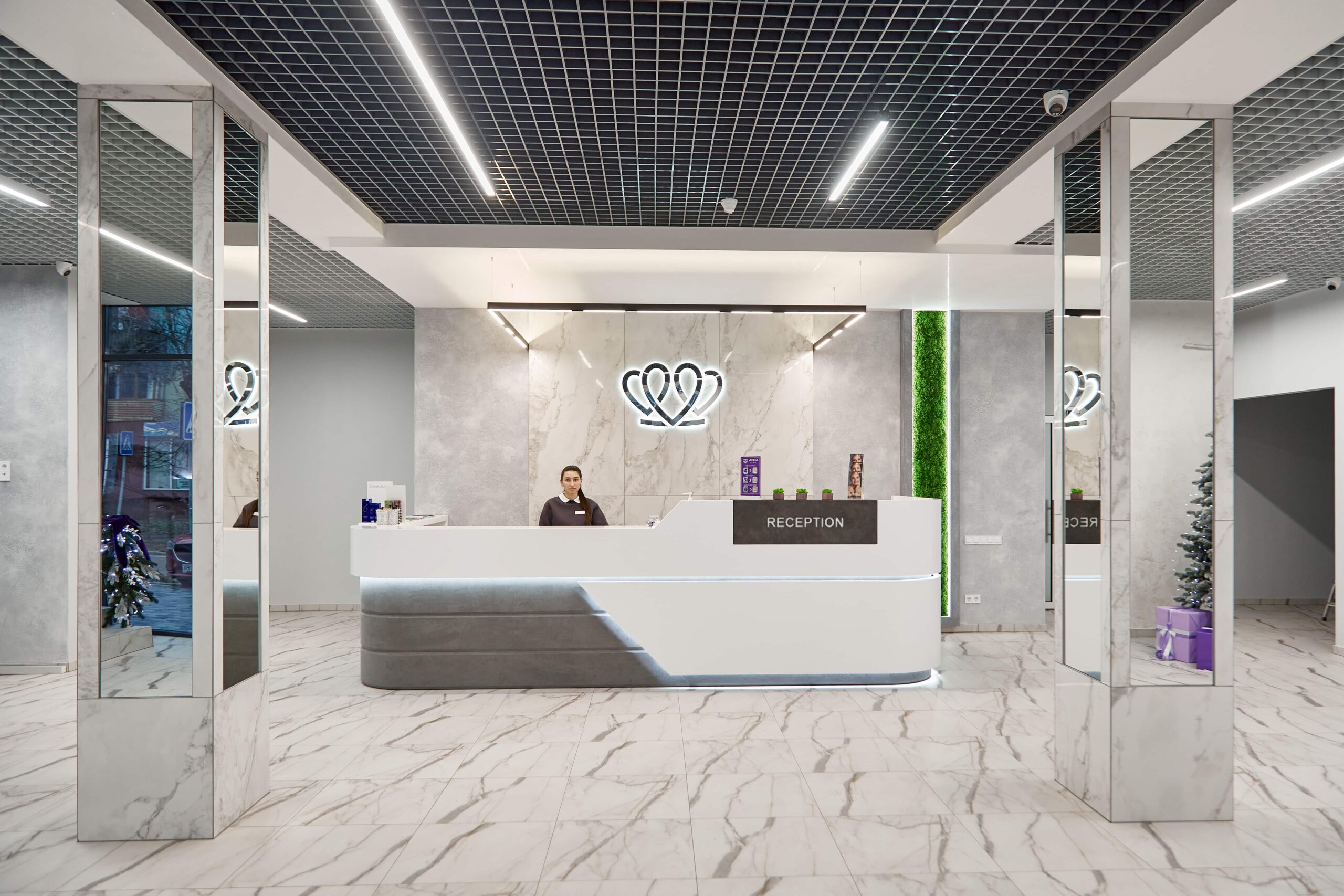
📍 Lviv, Ukraine
A dental clinic in Lviv with a separate doctor for each field: oral surgery and implants, prosthodontics, restorative dentistry, endodontics under a microscope, periodontics, orthodontics and paediatric dentistry.
They differ in how many teeth are included and in their aim. Full braces cover the whole dental arch and correct the bite as a whole, while segmental braces sit on part of the arch, most often on the four incisors and the two first molars, and solve one specific problem: rotating an incisor, freeing up space for a permanent tooth, correcting an anterior crossbite, moving the molars back. So this is not a cheaper version of full treatment but a different tool with different indications and different limits.
Usually from 7–9 years, when the permanent incisors and first molars have already erupted: the appliance is held on them. The right moment depends not on the child's age as such but on the stage of eruption seen on a panoramic X-ray. Earlier there is simply nothing to fit the appliance to, and later some problems already require full braces. In adults there are no age limits: segmental braces are used at 40 and at 60, if the condition of the bone and gums allows.
Partial braces on one jaw start from USD 233 and an orthodontist consultation from USD 16. The cost of the fitting usually includes the brackets, bonding and the first archwire. Charged separately are diagnostics with X-rays, activation visits every 4–8 weeks, the distalisation appliance (Distal jet from USD 444 for one side and from USD 556 for both), a retainer after removal and preparation: treatment of caries and professional hygiene. The final cost is set by the clinic after an examination.
The active phase usually takes 4–12 months. Rotation of an individual incisor is visible within 4–8 weeks, a crossbite of a single tooth is corrected in 2–4 months, distal movement of the molars takes 4–7 months, and bringing an impacted canine into the arch 6–12 months or longer. Timelines depend on age, the starting position of the teeth and discipline in wearing elastics. After removal, retention begins, and it usually lasts at least as long as the active phase.
It is used to move the upper first molars back when they have drifted forward and the arch has run out of space for a canine or premolar. The appliance is fixed: an acrylic button rests on the palate, and nickel-titanium springs along guide tubes push the molars distally, so the result does not depend on how many hours the patient wears anything. The molars usually move by 2–4 mm in 4–7 months. The downside is partial loss of anchorage: the incisors tilt forward slightly in the process, and this is built into the plan.
Technically yes, but with genuine crowding it is a bad idea. To align the front teeth, space is needed; if it has not been created, they align by tilting forward. The consequences are gum recession, thinning of the gums over the incisors and the crowding returning within a year or two. Aligning only the front segment is justified when the space deficit is minimal, the bite is not disturbed and the doctor has confirmed this with calculations rather than by eye.
Sometimes yes, and this possibility is worth asking about before treatment begins. The first phase in the mixed dentition corrects a specific problem and creates the conditions for normal eruption, but it does not rule out a second phase: the decision is made after the canines and premolars have erupted, based on a new X-ray. For some children retention is all that is needed; others need full braces for 12–24 months. Adults who have had segmental braces before prosthetic work mostly do not need full braces.
Tell us what you need: we will suggest a clinic and a doctor and send you a cost estimate.
Request a consultation →