Laparoscopic Fibroid Removal (Myomectomy) in Ukraine

Myomectomy is an operation in which uterine fibroids are removed and the uterus is preserved. In Ukraine it is performed laparoscopically, hysteroscopically or as open surgery, depending on the size, number and position of the fibroids. MediUkraine arranges treatment at the partner clinic in Uzhhorod for your case, agrees the dates of tests and surgery, and prepares a personal cost estimate with no hidden charges.
Request a consultation
By clicking the button, you agree to the processing of your personal data
AnaesthesiaGeneral anaesthesia
Duration1–3 hours
Hospital stay1–3 days
Recovery4–6 weeks

Cost of myomectomy in Ukraine

Service🇺🇦 Ukraine🇨🇿 Czech Republic🇹🇷 Turkey
Laparoscopic myomectomy, 1 fibroid ≤5 cmfrom USD 577from USD 4,200from USD 3,000
Multiple fibroids (2–4 or 6–10 cm)from USD 790from USD 5,500from USD 3,800
Complex myomectomy (≥5 fibroids / >10 cm / deep intramural / adhesiolysis)from USD 1,063from USD 7,500from USD 5,500

Prices in the “Ukraine” column come from MediUkraine’s partner clinics. The Czech Republic and Turkey columns show the lower bounds of prices published by clinics there (for Turkey, also the Turkish Dental Association’s recommended 2026 tariff), collected in August 2026 and converted to US dollars at the rate on the day of collection. A dash means we could not find a comparable published price. In any country, the final cost is set by the clinic after an examination.

What is myomectomy

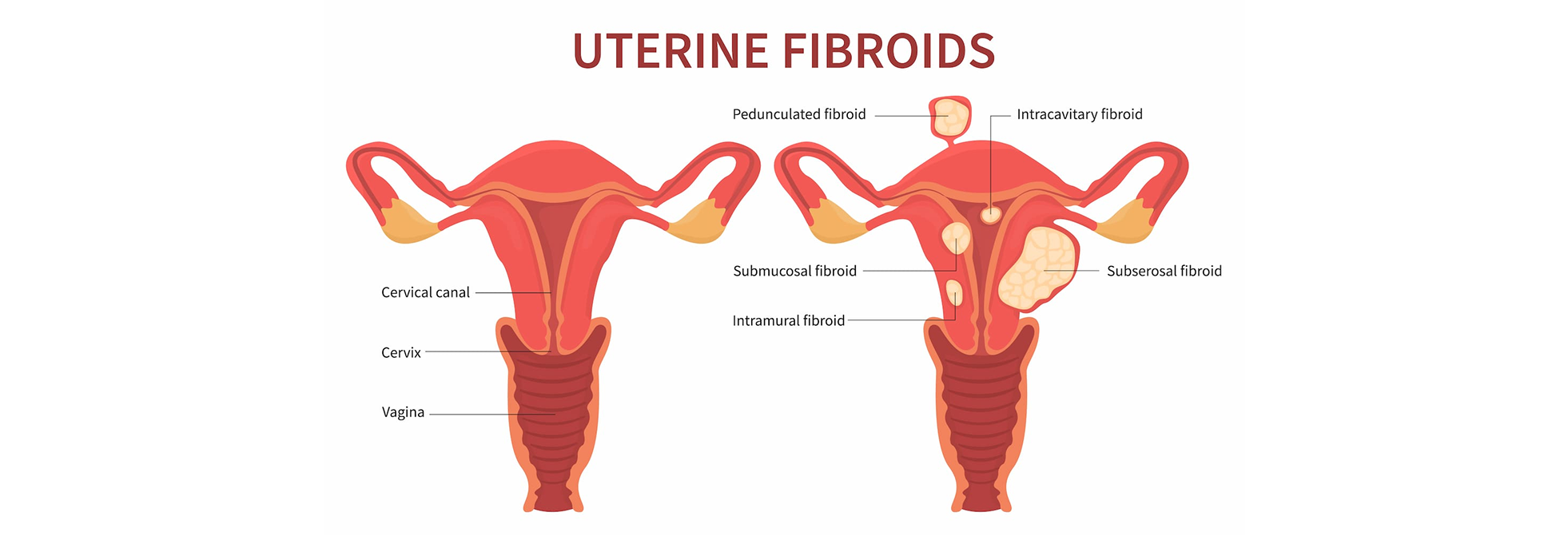
Uterine fibroids are growths of muscle and connective tissue cells that can lie either inside the uterus or on its outer surface. They are mostly benign but vary in size and number, and so behave differently: some women notice nothing for years, while others have heavy and painful periods, or pain in the pelvis or lower back. The position of the fibroids is the surgeon's main guide: it determines which approach to use and whether an abdominal incision can be avoided. That is why there are several types of operation, and the right one is chosen individually according to the number, size and location of the fibroids. The fundamental difference from hysterectomy is that the uterus is not removed but preserved. For a woman this means preserved fertility: pregnancy is possible after the procedure, and if the fibroids were preventing conception, the chances may increase. For patients planning children, this is the deciding argument. There is also a downside. Abdominal and laparoscopic approaches require incisions that injure the myometrium, the muscle layer of the uterus. This increases the risk of uterine rupture during pregnancy and childbirth, so women who have had such operations are often advised to plan a caesarean section. This is not a reason to refuse treatment, but a reason to discuss with the surgeon in advance how the wound will be sutured and how long to wait before planning a pregnancy. For detailed information and a consultation, contact MediUkraine. The cause of fibroids is still unknown. They are most often found in women aged 40–50: according to US studies, by the age of 50 about 70% of white women and 80% of Black women have had uterine fibroids. A fibroid in itself does not block the path to motherhood, but it increases the risk of complications such as miscarriage or premature birth. That is why, when a pregnancy is being planned, the gynaecologist assesses not only whether fibroids are present but also their size and position relative to the uterine cavity.
Doctor consulting a patient in a clinic room
Why MediUkraine?
Your personal care
coordinator at MediUkraine
Contact the MediUkraine team

Coming to Uzhhorod for treatment: what to expect

Travel. Ukrainian airspace is closed, so there are no commercial flights. Uzhhorod lies right on the border with Slovakia and close to Hungary, so patients usually arrive overland from one of these two countries, by car, bus or train.

Visas. Citizens of the EU, the United Kingdom and the United States do not need a visa for short stays in Ukraine. Rules depend on your citizenship, so check your own before booking.

Safety, plainly. Ukraine is at war. Air raid alerts occur across the country, including in Uzhhorod, and an appointment can be interrupted by one. Several governments advise against travel to Ukraine, and while that advice stands, ordinary travel and medical insurance is often void — confirm your cover with your insurer before you commit to anything.

Language. MediUkraine handles correspondence, scheduling, the written treatment plan and the quote in English. The clinic's team communicates with international patients in English.

Payment. You pay the clinic directly. Our coordination service is free of charge for you.

More on travel, safety and insurance: Safety and travel.

Types of fibroid surgery

Myomectomy is performed in three main ways: open, minimally invasive (laparoscopic) and hysteroscopic. Which one is chosen in your case depends on the size and number of the fibroids and their position in the uterus. Each approach affects the length of the hospital stay and the time it takes to return to normal life differently. Open, or abdominal, surgery involves an incision in the abdomen. It is chosen for very large fibroids, when the surgeon needs to see all the pelvic organs. This approach is more traumatic than the others, but in complex cases with multiple or giant fibroids there may be no alternative. Recovery is the same as after other abdominal operations: a few days in hospital and up to six weeks at home until full recovery. Minimally invasive approaches mean faster recovery and less trauma to the body. In laparoscopic surgery, the surgeon inserts a thin lighted telescope through a small incision near the navel, then makes several small punctures in the abdominal wall and removes the fibroids through them or through the vagina. There is also a single-port option, in which all the instruments pass through one opening near the navel; the incision is only slightly larger. After laparoscopy you usually stay in hospital for 1–2 days. The hysteroscopic approach requires no incisions at all. If the fibroids are conveniently located, the surgeon inserts a camera with a special attachment into the uterus through the vagina and removes them. Compared with the other approaches, this operation is quick. Discuss with the MediUkraine team which approach suits you: the decision is made after ultrasound and an assessment of the position of the fibroids.

Recovery after surgery

The first week after the operation usually brings noticeable tiredness; this is normal. You can return to your usual activities gradually, without waiting for the weakness to pass completely. For the first two weeks, do not lift anything heavy that you would need both hands to carry. Drive 4–6 weeks after the procedure, provided the seat belt does not cause discomfort. When you can return to work depends on its nature and physical demands: office tasks are usually possible earlier than work involving lifting. Agree the exact timing with your doctor at the follow-up examination. Movement speeds up recovery, so stay as active as you comfortably can. Swimming and walking are safe and effective options, but wait until the first outpatient check-up before using a swimming pool. Also avoid smoking, drink more fluids and eat more fresh fruit and vegetables.

Myomectomy and fertility

Myomectomy preserves the uterus, so a woman who has fibroid symptoms and is planning children is a typical candidate for this operation. There are several approaches, abdominal, laparoscopic and hysteroscopic, and the doctor decides which one to use. This also determines how long recovery takes, usually several weeks. The procedure relieves symptoms but does not protect against new fibroids appearing in the future: if they grow, a repeat operation may be needed. That is why after the operation you should stay under the care of a gynaecologist and not put off routine check-ups.

Why does the operation cost less in Ukraine?

Before choosing a country for surgery, it is important to look not only at the price of the operation but at the total cost: travel, accommodation, additional tests and medicines after discharge. In most cases the total for treatment in Ukraine is lower than abroad, and the organisation is simpler: consultations, tests and surgery take place in one medical centre with a short hospital stay.

Why is the cost lower in Ukraine? First, the cost of medical services (bed-days, consumables, rent, utilities) is lower than in the EU or Turkey. Second, competition in the private sector encourages transparent pricing of all-inclusive packages. Third, the widespread use of minimally invasive techniques shortens the operation and the hospital stay, which directly reduces the bill.

Less expensive does not mean worse. The level of risk is kept low: modern private clinics work according to European protocols, meet infection control requirements, and provide full anaesthetic support and post-operative monitoring. Teams experienced in organ-preserving uterine surgery perform laparoscopic procedures routinely, with predictable results and monitored complication rates.

Key factors behind the lower price in Ukraine:

  • lower cost of bed-days and consumables;

  • transparent package offers and competition between private clinics;

  • a shorter hospital stay thanks to laparoscopy and quick recovery.

Patients choose Ukrainian clinics for laparoscopic myomectomy, combining savings with high standards of safety and quality. MediUkraine will help you agree a treatment plan with the partner clinic in Uzhhorod and get a personal cost estimate with no hidden charges.

Is this operation safe?

Private clinics in Ukraine work according to European protocols and provide full anaesthetic support and infection control, which keeps the risk low; laparoscopic procedures are performed routinely, with a short hospital stay. At the partner clinic in Uzhhorod you can have the tests and the operation in one place.

To choose a reliable facility, look at the number of operations performed, the surgeon's experience and a transparent cost estimate. MediUkraine will help you check these points for the partner clinic in Uzhhorod before you travel.

Where to have it done

EXPERT medical network

EXPERT medical network ✔

📍 Uzhhorod, Ukraine

Licensed by the Ministry of Health of Ukraine52 doctors, 15 specialties30-bed inpatient unitKarl Storz / Pentax equipment

A multidisciplinary hospital in Uzhhorod, part of a network of medical facilities in western Ukraine: an outpatient clinic, a surgical centre covering 15 specialties and a 30-bed inpatient unit. Its 52 doctors include professors and PhDs; many operations are done as day surgery, with discharge after 1–2 days.

★★★★★4.6451 Google reviews
Prices
Laparoscopic myomectomy, 1 fibroid ≤5 cmfrom USD 577
Multiple fibroids (2–4 or 6–10 cm)from USD 790
Complex myomectomy (≥5 fibroids / >10 cm / deep intramural / adhesiolysis)from USD 1,063
Get a treatment plan with prices →Go to the clinic page →

Related services

Frequently asked questions

What is myomectomy?

Myomectomy is an organ-preserving operation in which fibroids are removed and the uterus is preserved. It is performed laparoscopically, hysteroscopically or as open surgery; the choice of method depends on the size, number and position of the fibroids and on your pregnancy plans.

How much does myomectomy cost in Ukraine?

As a guide: from USD 577 for laparoscopic removal of one fibroid ≤5 cm; the starting prices for multiple fibroids and complex cases are shown in the table above. The exact price is set after an examination and ultrasound and depends on the length of the operation, the hospital stay and consumables.

Do I need a visa to visit Ukraine?

Visa-free stays of up to 90 days within 180 are available to citizens of most EU/EEA countries and Switzerland, as well as the UK, the USA, Canada, Japan, South Korea, Israel, Turkey, Brazil, Chile and others. The list and conditions are confirmed by the Ministry of Foreign Affairs of Ukraine and the government websites of partner countries.

If your country is not on the visa-free list, you apply for a type C e-visa for a short stay entirely online. Processing usually takes 1 working day (urgent) or 3 working days (standard). You can check whether you need a visa and apply on the official portal.

Am I suitable for myomectomy?

The operation is suitable for patients with symptomatic fibroids (bleeding, pain, pressure on organs, infertility or miscarriages) who need to preserve the uterus. The decision is made individually after ultrasound or MRI, taking into account the size and position of the fibroids, your age, pregnancy plans and other conditions.

What types of myomectomy are there?

The main types are laparoscopic, hysteroscopic and open (laparotomy), the same approaches used at leading centres worldwide. The choice is based on the map of the fibroids and your reproductive plans; other things being equal, minimally invasive approaches are preferred.

How long is the recovery period after myomectomy?

After laparoscopy, you usually stay 1–2 days in hospital, return to light activities within 3–7 days and fully recover in 2–4 weeks. After hysteroscopy, often 1 day in hospital and 2–7 days of recovery. After open surgery, 3–5 days in hospital and 4–6 weeks until full activity.

Can myomectomy improve fertility?

Yes, especially if submucosal fibroids or those that distort the uterine cavity are removed. Planning a pregnancy is usually recommended after 3–6 months (sometimes longer after deep suturing), and the method of delivery is decided individually with your obstetrician-gynaecologist.

Ready to plan your treatment?

Tell us what you need: we will suggest a clinic and a doctor and send you a cost estimate.

Request a consultation →


Gynaecology — all services in this area
Prices, recovery times and answers to common questions on one page.
Request a consultation
By clicking the button, you agree to the processing of your personal data