| Service | 🇺🇦 Ukraine | 🇨🇿 Czech Republic | 🇹🇷 Turkey |
|---|---|---|---|
| FUE hair transplant, up to 2,000 grafts | from USD 1,044 | from USD 3,000 | from USD 1,300 |
| FUE hair transplant, 2,000–3,500 grafts | from USD 2,089 | from USD 4,500 | from USD 1,500 |
| Consultation with treatment planning and graft count | from USD 22 | from USD 70 | from USD 40 |
Prices in the “Ukraine” column come from MediUkraine’s partner clinics. The Czech Republic and Turkey columns show the lower bounds of prices published by clinics there (for Turkey, also the Turkish Dental Association’s recommended 2026 tariff), collected in August 2026 and converted to US dollars at the rate on the day of collection. A dash means we could not find a comparable published price. In any country, the final cost is set by the clinic after an examination.
FUE stands for follicular unit extraction: the surgeon removes individual follicular units, natural groups of one to four hairs, from the donor area with a cylindrical punch 0.8–1.0 mm in diameter. Each graft is removed individually, with no linear incision or stitches, and the harvesting sites are left with pinpoint wounds that heal within a few days.
The back of the head and the temples serve as the donor area for a reason. Follicles in this area are genetically insensitive to dihydrotestosterone, the hormone that, in hereditary alopecia, gradually thins the hair on the crown and at the front of the head. Transplanted to a new site, they usually keep this property and grow where your own hair has already fallen out.
The older FUT method works differently: a strip of skin is cut from the back of the head, the edges are sutured, and the follicular units are dissected from it under a microscope. The strip yields more grafts in a single session and costs less, but it leaves a linear scar along the back of the head that is visible with a short haircut. That is why FUE has displaced it in private practice.
The key point to understand before surgery: the donor supply is limited and does not regenerate. Over a lifetime roughly 4,000–8,000 grafts can be safely taken from it, and every graft removed is gone for good. The first operation is therefore not a "trial run": it draws on a reserve that has to last for decades.
MediUkraine is a service that finds and coordinates treatment; it is not a clinic. We select a medical centre and a surgeon with the relevant expertise, agree the date of the operation and support patients, including those travelling from abroad. Decisions on indications, the scope of the procedure and the technique are made by the doctor after an in-person examination.

Travel. Ukrainian airspace is closed, so there are no commercial flights. Patients enter Ukraine overland, most often from Poland (Rzeszów and Kraków airports are the usual entry points), and continue to Dnipro by train. Dnipro is in the east of the country, a long journey from the border, so plan the route and timing with us before you book.
Visas. Citizens of the EU, the United Kingdom and the United States do not need a visa for short stays in Ukraine. Rules depend on your citizenship, so check your own before booking.
Safety, plainly. Ukraine is at war. Dnipro is attacked more often than western Ukraine, and an appointment can be interrupted by an air raid alert. Several governments advise against travel to Ukraine, and while that advice stands, ordinary travel and medical insurance is often void — confirm your cover with your insurer before you commit to anything.
Before you travel. The centre offers an online consultation, so the plan and the number of grafts can be estimated from photos before you decide to make the trip.
Language. MediUkraine handles correspondence, scheduling, the written treatment plan and the quote in English. The centre's team communicates with international patients in English.
Payment. You pay the centre directly. Our coordination service is free of charge for you.
More on travel, safety and insurance: Safety and travel.
FUE (follicular unit extraction) is the basic technique of modern hair transplantation. The surgeon marks the donor area at the back of the head and the temples, anaesthetises it, and then uses a cylindrical 0.8–1.0 mm punch to separate the follicular units from the surrounding tissue one at a time and remove them with forceps. A single session yields anywhere from a few hundred to three or four thousand grafts, with no linear incision or stitches.
The punch can be manual or motorised. Manual harvesting is slower and causes less mechanical trauma; a micromotor works faster and passes through dense fibrous skin more reliably. The key indicator here is not the name of the instrument but the transection rate, the percentage of grafts damaged during harvesting. In experienced hands it stays below 5%, and it is this rate that determines how much hair eventually grows.
The second stage is creating the recipient sites in the transplant area. The surgeon makes micro-incisions at the same angle and in the same direction in which your own hair grew: it is the angle, not the number of grafts, that makes the result undetectable. Density is set at this point too, usually 30–45 grafts per square centimetre. Trying to "pack in" more does not add hair; it impairs the blood supply to the area.
DHI differs from FUE only in the implantation stage: the doctor loads the follicular unit into a Choi implanter, a hollow needle with a plunger, and in one movement creates the channel and places the graft, without creating the sites in advance. This shortens the time the graft spends outside the body and makes it possible to avoid shaving the whole area, but it costs more. Harvesting is the same, so DHI is not an alternative to FUE but a variant of it; it is covered on a separate page.
Planning the hairline is the most important part of the conversation with the surgeon. The line is placed not where it was at twenty, but where it will look natural at forty and at sixty: a hairline set too low in a young patient turns over the years into a strip of hair above the forehead with a bald patch showing through behind it. The doctor takes into account age, family history and the forecast of further thinning. A surgeon who lowers the line as far as the patient asks is a warning sign.
Volume is calculated for the specific area. The front hairline with the temple corners takes 1,500–2,500 grafts, the frontal area with the transition zone 2,500–3,500 and the crown from 1,500 to 2,500, and the supply is often not enough to cover both the crown and the frontal area in one session. The crown is also geometrically difficult: hair there grows in a whorl, and that pattern is harder to reproduce. When the supply is limited, the frontal area is covered first, because it frames the face.
The donor area is assessed before surgery: the density per square centimetre, the thickness of the hair shafts and the size of the area insensitive to androgens are measured. No more than 20–25% of the follicular units from a given area are taken in one session; exceeding that leaves a thinned-out back of the head that nothing can fix.
Graft survival in properly performed series is 85–95% at twelve months: it is affected by the time the graft spends outside the body, the temperature of the solution, the blood supply to the area and whether the patient smokes. A promise of "98% guaranteed" is marketing: some grafts always die.
The most important thing advertised packages leave out: a transplant does not stop androgenetic alopecia. The transplanted follicles stay in place, but your own hair around them keeps thinning. Without treatment, two or three years later the patient is left with a dense transplanted strip with an empty area around it and needs another operation, drawing on the non-renewable supply a second time. That is why evidence-based medication is prescribed before the procedure and continued long term afterwards.
Transplants are not performed during active alopecia areata: the immune attack will destroy the transplanted follicles just as it does your own. Unstable scarring alopecias are not operated on either (lichen planopilaris, frontal fibrosing alopecia and folliculitis decalvans): in these cases a transplant is considered only after at least a year of inactive disease. Uncontrolled diabetes, clotting disorders and a tendency to keloids call for caution.
The overall complication rate of FUE in large series is roughly 1–5%; most often it is superficial folliculitis in the transplant area, which clears within a few days with topical treatment. Skin necrosis is rare, occurring in roughly 0.1% of cases, and is almost always linked to an excessive density of recipient sites. Temporary loss of sensation in the donor area is common and passes within a few months; persistent loss is rare. Pinpoint white scars at the harvesting sites always remain: they cannot be seen under a hairstyle, but they are noticeable with a clipper cut at grade one or two.
Expect swelling for the first two or three days. It appears on the second day, often moves down onto the forehead and eyelids, sometimes looks dramatic, and goes away on its own by the end of the first week. Sleep with the head of the bed raised, and do not touch the transplant area.
Small scabs form at the recipient sites. Do not pick them: gentle washing starts on days five to seven, following the clinic's routine, and by day 10–14 the scabs come away on their own. By then most patients are back to their usual activities, apart from sport, saunas, swimming pools and direct sun, which are put off for about a month.
After 2–4 weeks the transplanted hair falls out, and this is what frightens people most. In fact it is an expected phase: the shaft drops away, while the follicle under the skin stays alive and enters a resting phase. The phenomenon is called shock loss; it also affects some of your own hair around the transplant area, and that hair usually grows back too.
Growth usually begins from month 3–4. At first fine, colourless hair appears, which gradually coarsens and gains pigment. By the sixth month roughly half of the result is visible, and the final result is assessed at 12–18 months: the crown matures noticeably more slowly than the frontal area.
Graft survival in properly performed series is 85–95%, but only a doctor can forecast the result for a particular patient, after an in-person examination. If after a year the density turns out lower than expected or the alopecia has progressed further, a second session is planned, smaller in volume and drawing on the supply that was deliberately held back.
Follow-up check-ups are usually scheduled for day 10–14 and then at three, six and twelve months. Patients from abroad can complete these remotely using standardised photos; if needed, MediUkraine arranges a video call with the same surgeon.
Step 1. Consultation and graft count. The doctor examines the thinning area and the donor area with a trichoscope, assesses density and shaft thickness, determines the stage of alopecia, calculates the number of grafts needed and shows exactly where the hairline will sit. The forecast of further thinning and treatment after surgery are discussed at the same appointment.
Step 2. Preparation on the day of surgery. The donor area is shaved, the hairline is drawn with a marker and agreed with the patient in front of a mirror, and reference photos are taken. Then local anaesthesia is given: it takes a few minutes and is the most uncomfortable part of the day.
In total the operation takes 6–8 hours under local anaesthesia. No hospital stay is needed: in the evening the patient goes back to the hotel or home. Most people return to work within 7–14 days, once the swelling has gone down and the scabs have come away, while restrictions on sport, saunas and sun apply for about another month.
A Ukrainian clinic's cost structure is different. Rent, non-medical staff salaries and administration are cheaper here, and that is where the price difference comes from, whereas punches, implanters and sterile solutions are bought at world-market prices, and the clinic names their manufacturers on request. What gets cheaper is the way the work is organised, not the scope of the procedure: the number of grafts, the transplant areas and the density are recorded in the operation protocol.
The second reason is the cost of the team's work. A 6–8 hour operation involves a surgeon and several assistants, and paying for those hours makes up most of the bill. In Ukraine that hour costs less, and the clinic sets out in the contract the make-up of the team and the stages the surgeon performs personally.
The third factor is competition. In Ukraine, including Kyiv and Dnipro, there are clinics offering hair transplantation, and they compete on price and the quality of their portfolios, not just on advertising.
A word on Turkey, because in this field it is cheaper even than Ukraine. An all-inclusive package for USD 1,500 with a hotel and transfer really does exist, but it relies on a conveyor-belt model: at some clinics the doctor appears only for the marking or not at all, while graft harvesting and implantation are done entirely by technicians. The patient finds this out only once in the chair.
So a low price in itself is neither an argument against Turkey nor one for Ukraine. The argument is the operating surgeon's name in the contract, the number of grafts stated as a figure and a clear procedure if the result turns out to be unsatisfactory. Prices on this page are indicative; please confirm the final cost with the clinic.
FUE is a surgical procedure and is prepared for like any operation. The patient is examined in advance, pain relief is given with a local anaesthetic, and their condition is monitored throughout the day. General anaesthesia is not used for hair transplantation: it adds risk without benefit, and an offer to operate "while you sleep" should put you on your guard.
The clinics MediUkraine works with hold a licence from the Ministry of Health of Ukraine to practise medicine, and procedures are performed in an operating room with sterile single-use instruments. Punches and needles are not reused, and grafts are stored in a sterile chilled solution.
The contract is as much a part of safety as sterility. It should state the name of the operating surgeon, the number of grafts as a figure, the transplant areas, the list of what the price includes and the terms for corrective work if graft survival proves lower than agreed. Wording such as "as many as needed" in practice means that the volume will be decided after the operation, leaving you nothing to dispute.
You should be warned about complications before the procedure, not after it. The most common is superficial folliculitis in the transplant area, treated topically within a few days. Less often there is persistent swelling, epidermal cysts or prolonged hypoaesthesia of the donor area. Skin necrosis is rare and almost always linked to excessive density or an excessive volume of anaesthetic, which is an argument against promises of "maximum density in one session".
Pinpoint scars in the donor area always remain: this is a property of the method, not a surgeon's error. With careful harvesting and preserved density they are invisible under medium-length hair, but become visible with a clipper cut. Patients who wear their hair very short are told this before surgery.
The patient has the right to a second opinion. Photos of the donor area, the graft calculation and the surgical plan can be shown to another surgeon, and no conscientious doctor objects to this. If needed, MediUkraine arranges a consultation at another partner clinic: there is no reason to rush a decision about an operation that draws on a non-renewable donor supply.
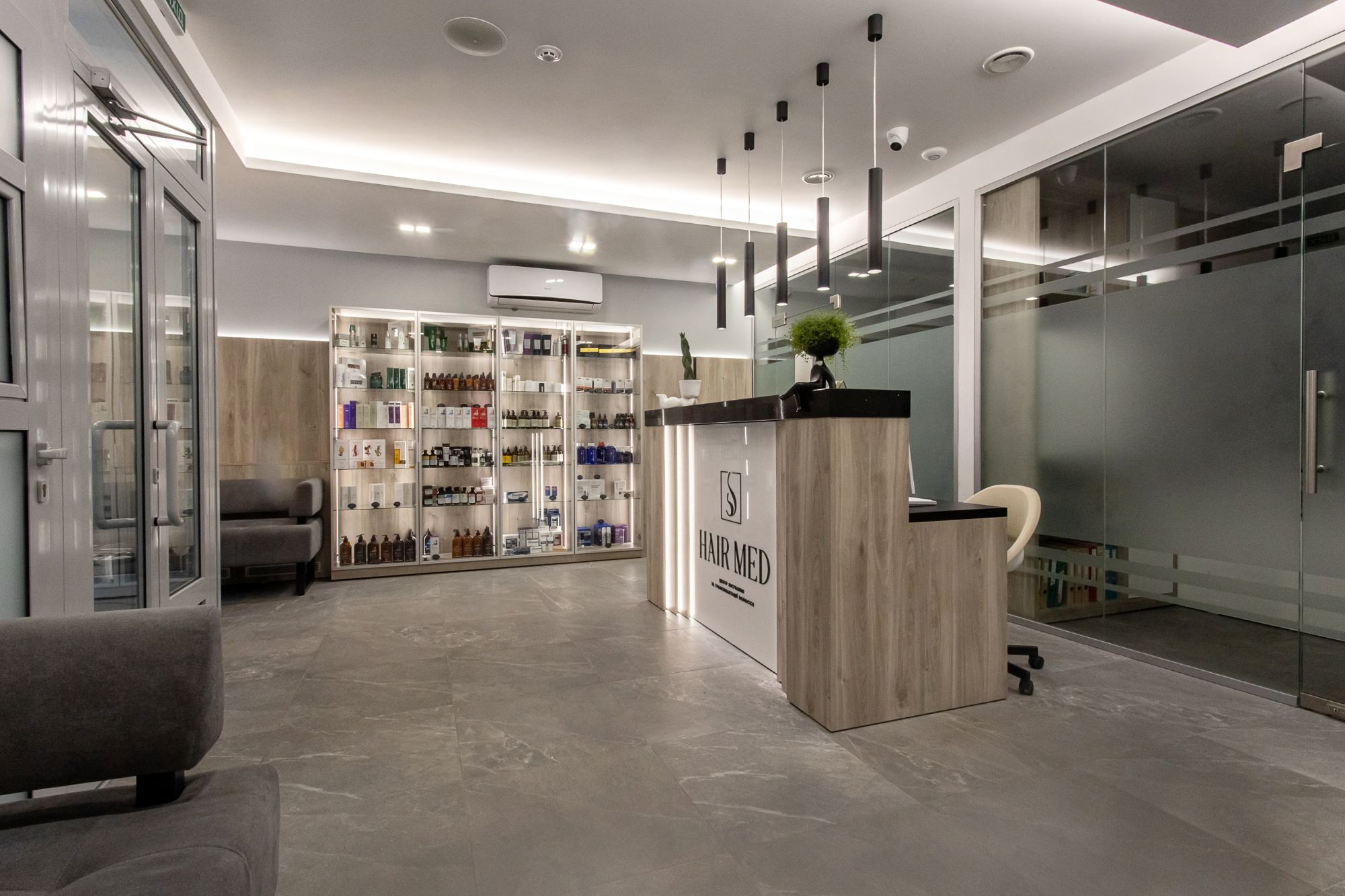
📍 Dnipro, Ukraine
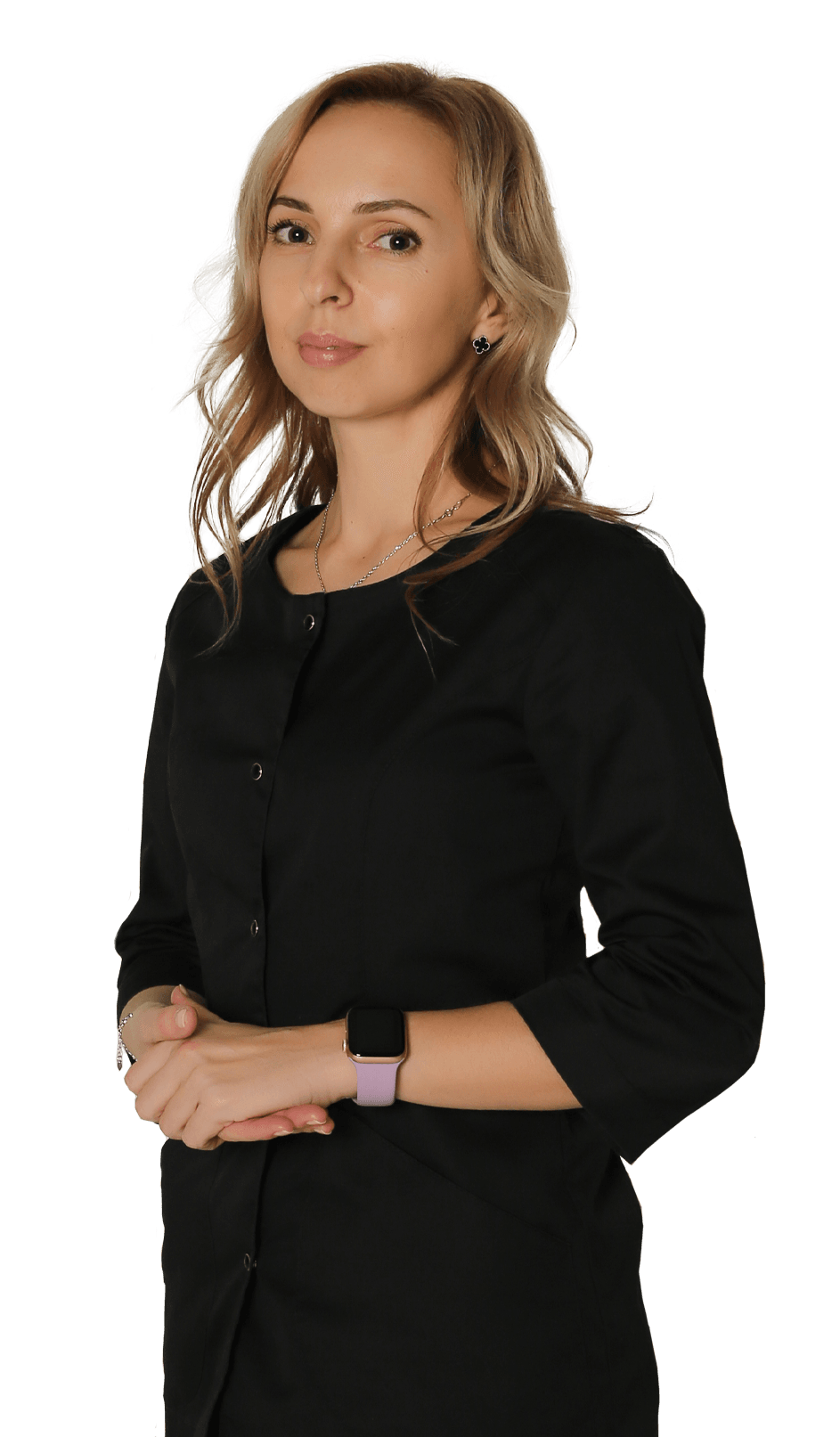
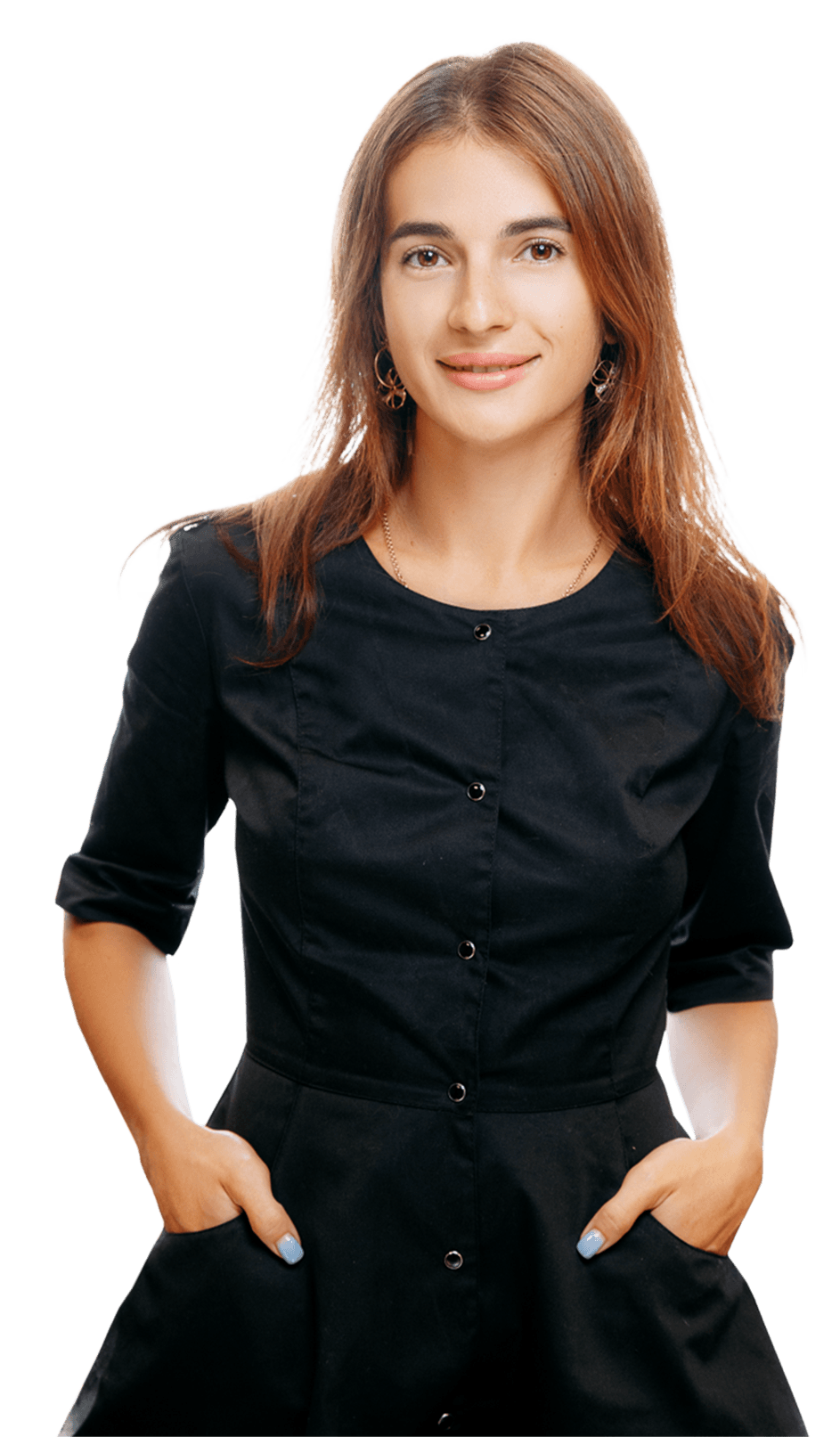
A hair treatment and transplant centre in Dnipro: 430 m², two surgical zones, an SMP room and its own HairHub. Transplants are performed by Ivan Baranov, PhD (member of ISHRS and the World FUE Institute) and transplant surgeon Svitlana Nedbailo. Therapy is led by a team of trichologists and dermatologists.
There will be no linear scar as after FUT: the skin is neither cut nor sutured. Instead, hundreds of pinpoint white scars up to a millimetre in diameter remain in the donor area. They cannot be seen under medium-length hair, but they are noticeable with a clipper cut at grade one or two. If you wear your hair very short, tell the surgeon before surgery: they can change the harvesting pattern so that the points are spread more evenly.
This is calculated in person: the doctor assesses the size of the thinning area, the stage of alopecia and the density of the donor area. As a guide, the front hairline with the temple corners takes 1,500–2,500 grafts, the whole frontal area 2,500–3,500 and the crown 1,500–2,500. A figure given "from photos" is a marketing estimate, not a calculation, and the contract should state the number of grafts as a specific number.
The operation itself is painless: local anaesthesia fully numbs the donor area and the transplant area, and it is topped up during the day. The most unpleasant part is the first few minutes, while the anaesthetic is being injected. After the procedure there may be a pulling discomfort in the donor area for two or three days, which is relieved by an ordinary painkiller prescribed by the doctor.
This is shock loss, an expected phase rather than a loss of the result. After 2–4 weeks the shaft of the transplanted hair drops away, while the follicle under the skin stays alive and enters a resting phase. Growth usually starts from the third or fourth month. Along with the transplanted hair, some of your own hair around the area may fall out too; most likely it will grow back as well.
No, if the cause is androgenetic alopecia. The transplanted follicles are insensitive to dihydrotestosterone and stay in place, but your own hair around them keeps thinning. Without treatment, two or three years later an empty area forms around the dense transplanted zone and another operation is needed, drawing on the same limited donor supply. The regimen and its duration are decided by the doctor.
The Turkish market is built on volume: clinics perform many operations every day, packages include a hotel and transfer, and this throughput keeps prices lower than even in Ukraine. A low price is not a flaw in itself.
The question is a different one: who operates. At some clinics the doctor only does the marking or appears as a formality, while graft harvesting and implantation are done entirely by technicians. The patient finds this out only once in the chair, and the operating surgeon's name is often missing from the contract altogether.
So you are choosing a specific clinic, not a country. Ask in writing for the surgeon's name, the list of stages they perform personally, the number of grafts as a figure and a portfolio with photos of the donor area a year after surgery. If there is no straight answer on these four points, the price no longer matters.
Surgery is not performed during active alopecia areata: the immune attack will destroy the transplanted follicles just as it does your own. Unstable scarring alopecias are not operated on either (lichen planopilaris, frontal fibrosing alopecia and folliculitis decalvans): in these cases a transplant is considered only after at least a year of inactive disease. Uncontrolled diabetes, blood clotting problems and a tendency to keloid scars are weighed separately. Surgeons also decline when expectations are unrealistic, that is, when there is physically not enough donor supply for the desired density.
Tell us what you need: we will suggest a clinic and a doctor and send you a cost estimate.
Request a consultation →