| Service | 🇺🇦 Ukraine | 🇨🇿 Czech Republic | 🇹🇷 Turkey |
|---|---|---|---|
| Composite veneers (direct restoration) | from USD 156 | from USD 310 | from USD 126 |
| Ceramic veneer | from USD 342 | from USD 573 | from USD 167 |
| Customised ceramic veneer | from USD 440 | — | — |
| Aesthetic composite restoration of a tooth | from USD 73 | from USD 143 | from USD 94 |
Prices in the “Ukraine” column come from MediUkraine’s partner clinics. The Czech Republic and Turkey columns show the lower bounds of prices published by clinics there (for Turkey, also the Turkish Dental Association’s recommended 2026 tariff), collected in August 2026 and converted to US dollars at the rate on the day of collection. A dash means we could not find a comparable published price. In any country, the final cost is set by the clinic after an examination.
A veneer is a thin shell, roughly 0.3–0.7 mm thick, bonded to the front surface of the tooth and partly to the incisal edge. It is made either from composite material directly in the chair, or from ceramic in a dental laboratory from an impression or a digital scan. It masks the tooth's natural colour and gives it a new shape, length and contour.
Most people come for veneers when whitening cannot fix the colour: tetracycline staining, fluorosis, a tooth that has darkened after root canal treatment, persistent stains. The other common reason is shape: chips on the incisal edge, worn teeth, a gap between the front teeth, a slightly rotated tooth, teeth of different lengths.
It is important to understand what veneers cannot do. Veneers are aesthetics, not treatment. They do not treat decay, stop gum inflammation or correct the bite: all of that is done beforehand, by entirely different means. A veneer goes on a prepared, healthy tooth and solves one problem only: how the tooth looks.
In some situations veneers are ruled out or postponed: active decay and untreated gum inflammation, bruxism without a protective splint, a deep bite with overloading of the front teeth, and adolescence, until the enamel has finished maturing and the gum contour has stabilised. Marked crowding or a bite anomaly is a reason to see an orthodontist first: otherwise you end up masking what would be better moved.
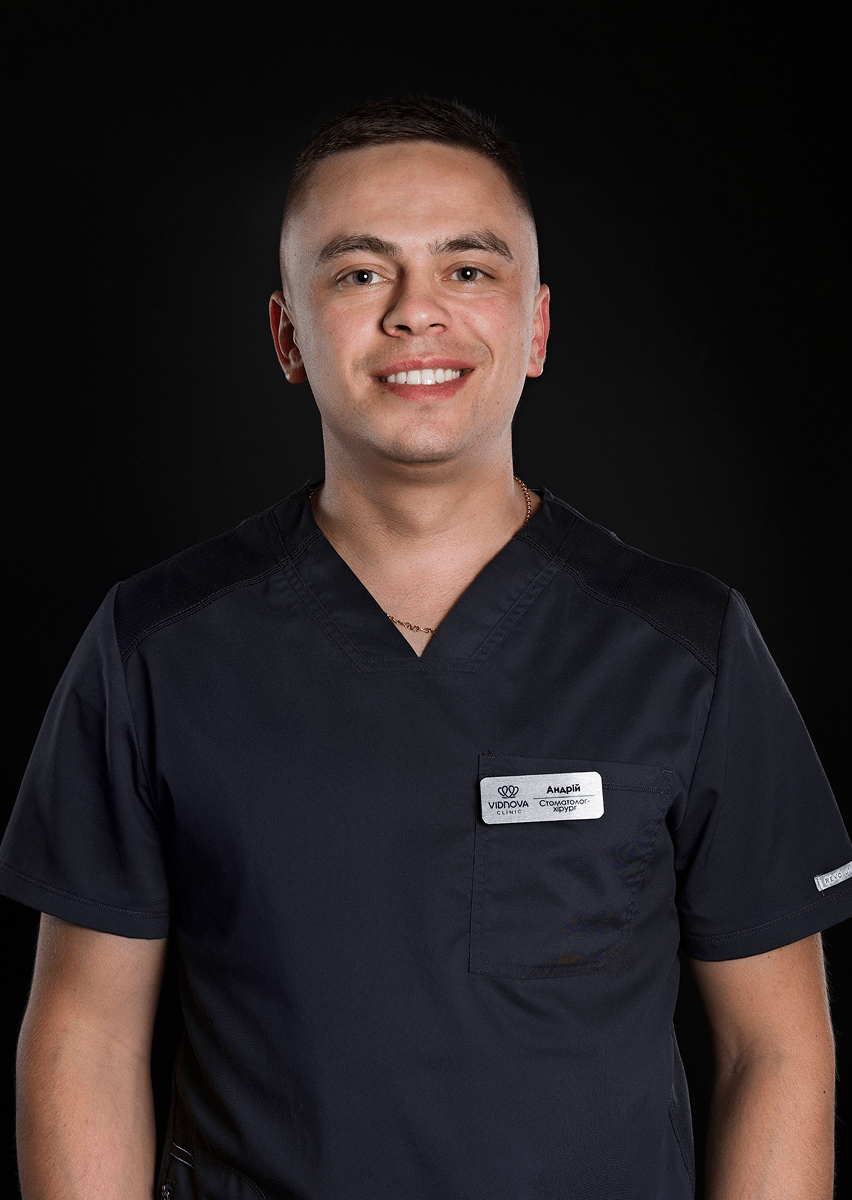
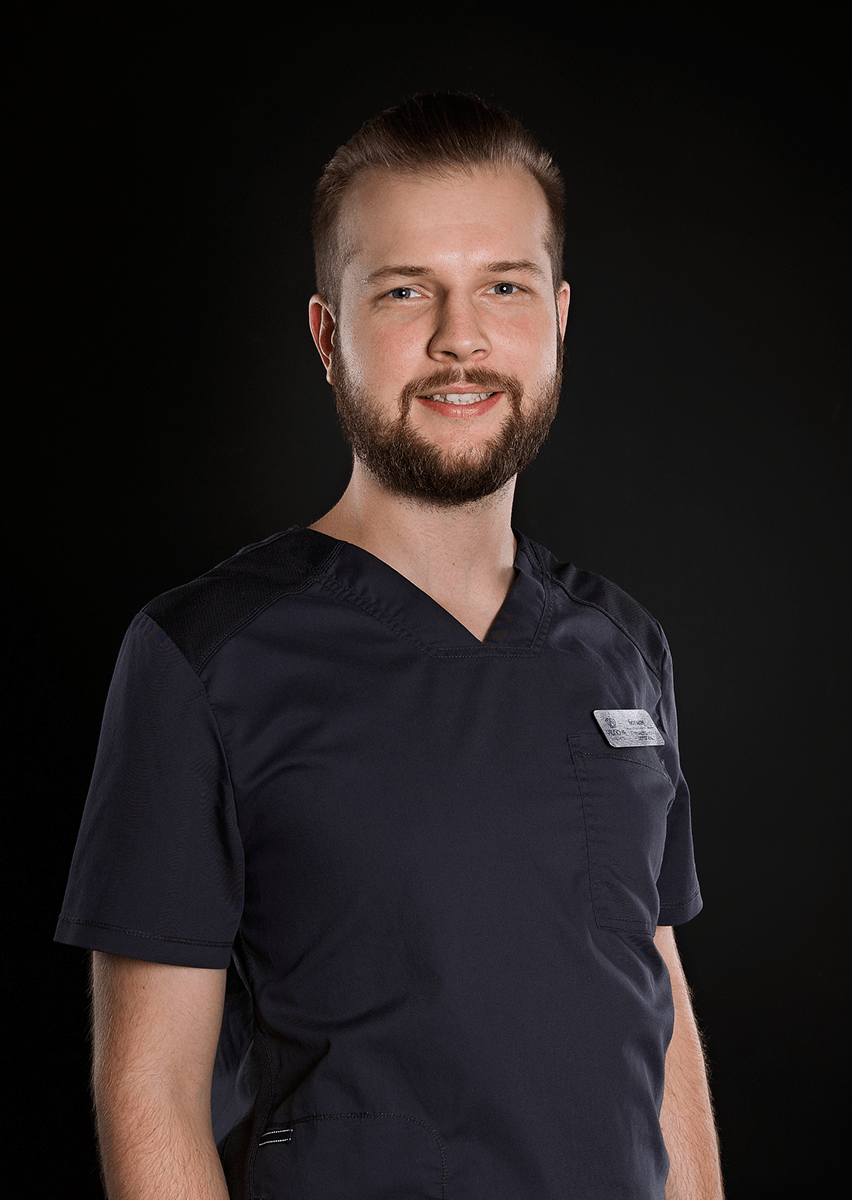
MediUkraine is a service that finds and coordinates treatment; it is not a clinic. Cosmetic work on the front teeth for our patients is carried out by Vidnova Dental Clinic in Lviv. We arrange the dates, support you at appointments and pass on documents; whether veneers are right for you is decided by the dentist after an in-person examination.

Travel. Ukrainian airspace is closed, so there are no commercial flights. Patients reach Lviv overland, most often from Poland: Rzeszów and Kraków airports are the usual entry points, with a train, bus or private transfer onward to the border and on to the city. Lviv is roughly 70 km from the Polish border, the shortest crossing of any Ukrainian city.
Visas. Citizens of the EU, the United Kingdom and the United States do not need a visa for short stays in Ukraine. Rules depend on your citizenship, so check your own before booking.
Safety, plainly. Ukraine is at war. Air raid alerts occur in Lviv, and an appointment can be interrupted by one. Several governments advise against travel to Ukraine, and while that advice stands, ordinary travel and medical insurance is often void — confirm your cover with your insurer before you commit to anything.
Language. MediUkraine handles correspondence, scheduling, the written treatment plan and the quote in English. The clinic's team communicates with international patients in English.
Payment. You pay the clinic directly. Our coordination service is free of charge for you.
More on travel, safety and insurance: Safety and travel.
Composite veneers are a direct restoration: the dentist applies light-cured composite in layers to the prepared surface of the tooth, shapes it, polishes it to a shine and completes the work in a single visit. The material is matched in shade and translucency to the neighbouring teeth, and layers of different opacity imitate dentine and enamel. For one or two teeth or a small chip this is often enough, and preparation is minimal or not needed at all.
Composite's weak point is that it ages. The polymer matrix absorbs pigments from coffee, tea, red wine and tobacco, the surface gradually loses its gloss and becomes rougher, and the thin incisal edge chips. To keep their appearance, the restorations are polished every 6–12 months, and even with careful maintenance they are usually redone after 3–5 years. This is not a defect of the work but a property of the material, which is worth knowing before you start.
A ceramic veneer is made by a dental technician outside the mouth: from a digital scan or an impression the technician obtains a model, and the veneer is either pressed from lithium disilicate or built up in layers of feldspathic porcelain on a refractory die. Ceramic does not absorb pigments and does not change colour over time, keeps its polish and resists wear better. Long-term studies show a high proportion of ceramic veneers lasting around ten years, although the actual lifespan depends on the bite, hygiene and load.
A customised ceramic veneer differs not in strength but in how colour is reproduced. A monolithic veneer is stained and glazed on the outside, while a customised one is built by the technician in layers: a dentine core, a translucent incisal edge, fine white streaks and surface microtexture, each separately. This makes sense above all when the veneer sits next to natural teeth and has to match them; a continuous row of identical veneers needs this level of detail less often.
The key technical issue is preparation. In most cases a layer of enamel of roughly 0.3–0.7 mm is removed for a ceramic veneer, and this is irreversible: enamel does not grow back, and from then on the tooth will always need a covering. That is why veneers are a lifelong decision, not a cosmetic treatment for a season. Adhesion to enamel is far more reliable than to dentine, so the dentist's task is to stay within the enamel layer: deep preparation into the dentine weakens the long-term bond.
Minimal-prep and no-prep veneers exist, but they suit fewer people than advertising suggests. A thin veneer of 0.2–0.3 mm is placed when the teeth are naturally small or worn, when there are gaps or a tooth is tilted slightly inwards, that is, when volume needs to be added rather than removed. If, however, a tooth is dark, protrudes or is of normal size, a veneer without preparation will make it look bulkier, and its edge near the gum will be noticeable.
A diagnostic wax-up and a mock-up are what separates a predictable result from a surprise. The technician models the future shape of the teeth in wax on a plaster model or in digital design software, a silicone index is made from that model, and the dentist transfers the shape into the mouth with temporary composite, without drilling the enamel and without anaesthesia. The mock-up stays in place for several hours, and during that time you can see the new length of the teeth, talk, smile, show it to family and friends and take photos.
Changes are made on the mock-up: lengthening or shortening the incisal edge, changing the width of the teeth, raising the gum line. Once it is agreed, the same silicone index is used as a guide during preparation, so the dentist removes only as much as the veneer needs, rather than working by eye. Skipping this stage saves one visit but removes the only chance to see the shape before irreversible steps.
Bonding ceramic veneers follows a strict adhesive protocol. The teeth are isolated with a rubber dam, the inner surface of the ceramic is etched with hydrofluoric acid and treated with silane, the enamel with phosphoric acid and an adhesive, after which the veneer is seated on light-cured composite cement. Excess cement is removed before curing, the interdental spaces are cleaned separately and the bite is checked in different positions of the jaw.
Before any teeth are prepared, it is worth weighing less invasive options. If the shape is fine and only the colour is a problem, the starting point is professional whitening. A single chip or a small area can be repaired with an aesthetic composite restoration without covering the whole tooth. Gaps and uneven tooth positions are often better corrected orthodontically. And when a tooth is more than half destroyed or root-treated, a crown that covers it on all sides works more reliably: a veneer holds less well on such a tooth.
After preparation the teeth are covered with temporary composite veneers. You can eat and talk with them, but they are thinner than the permanent ones, stain easily and sometimes come off. That is common and not an emergency: just let the clinic know so they can be put back. These 1–2 weeks while the laboratory works also let you test the new shape in everyday life.
In the first days after bonding the teeth usually react to cold and heat. It is caused by the preparation and bonding, lasts from a few days to 2–3 weeks and gradually fades. If you get prolonged spontaneous pain or pain at night, see the dentist rather than wait.
The gums along the veneer margins look red and slightly swollen for the first few days. Their contour recovers in about 2 weeks, and how the gums have finally settled against the veneer margin is assessed after 3–4 weeks. That is why the final photos are taken not on the day of bonding but at the check-up.
Your tongue has to get used to the new shape too. For the first two or three days you may have a slight lisp and feel that your front teeth are in the way: speech adapts to the new length of the incisal edge. If discomfort in the bite persists after a week, the dentist checks the contacts and adjusts them: this is a normal part of the work, not a redo.
Lifespan can honestly only be given as a range. Composite restorations usually need polishing every 6–12 months and redoing after 3–5 years. According to long-term studies, most ceramic veneers last around ten years or longer, but these are averages, not a prediction for any one patient: the outcome depends on the bite, the presence of bruxism, hygiene and the habit of biting hard things with the front teeth.
A check-up is scheduled about a week after bonding, then every 6 months with your professional cleaning. Tell the hygienist about the veneers: an ultrasonic scaler should not be used along their margins, and abrasive powder can dull the polished surface of ceramic and composite. Small chips in composite can be polished out on the spot, while a chip in ceramic most often means making a new veneer.
Step 1. Consultation, examination and clinical photos. The dentist assesses the condition of the enamel, gums and bite, checks for decay and inflammation, and asks about bruxism, injuries to the front teeth and previous treatment. Photos are taken from standard angles, and you discuss what exactly you dislike about your smile. Based on this, a plan is drawn up with the stages, the number of teeth and the quote.
Step 2. Wax-up and mock-up. After a scan or impressions, the technician models the future shape of the teeth in wax on a model or in digital design software. A silicone index is made from that model, and the dentist transfers the shape into the mouth with temporary composite, without drilling the enamel. You see the new length and width of the teeth in your own face and can ask for changes before anything irreversible is done.
In total, getting from the first consultation to finished veneers takes 2–3 visits over 1–2 weeks. Between the examination, photos and mock-up at the start and the bonding of the finished veneers at the end come any dental treatment, preparation guided by the silicone index and the technician's work, while you wear temporary veneers. Composite veneers shorten this path to a single visit, because the dentist shapes them directly in the mouth.
The work falls into three parts: diagnostic, laboratory and maintenance. The first answers whether veneers are indicated at all and what shape the teeth will have; the second creates and bonds the veneers; the third lasts as long as they do.
The diagnostic part takes 1–2 visits over a few days: examination, clinical photos, X-ray, scan, wax-up and mock-up. It also includes any dental treatment: decay, old fillings, gum inflammation. If orthodontic treatment is needed, the cycle is extended by months, and this becomes clear at this stage.
The laboratory part runs from preparation to bonding. The technician makes the veneers in 5–10 working days, and you wear temporary ones throughout. Then comes the try-in, colour or contact corrections in the laboratory if needed, and adhesive bonding. Composite restorations do not have this part: they are done in a single visit.
The maintenance part begins immediately after bonding and has no end. It includes a check-up after a week and then every 6 months, professional cleaning that takes care around the veneer margins, polishing of composite restorations, a night guard for bruxism and monitoring of the bite.
There is also a long-term cycle that is rarely discussed at the first consultation. At some point the veneers will have to be replaced, and replacement is not simply removing them and bonding new ones: the old layer is cut away, the surface is prepared again, and each time there is less enamel left. That is why your age and how much tooth structure is left are taken into account at the planning stage, especially for young people.
The main risk here is not a complication but irreversibility. Removed enamel does not grow back, so after preparation the tooth will stay covered for ever: veneers are not taken off, only replaced with new ones. Minimally invasive preparation within the enamel and a mock-up beforehand limit how much is removed, but they do not make it reversible.
Sensitivity after preparation is an expected reaction that passes within a few weeks. Less often, if the preparation was deep and the tooth had large fillings or an earlier injury, the pulp becomes inflamed and root canal treatment (removal of the nerve) is needed. A root-treated tooth darkens from the inside and becomes more brittle, which is why dentists avoid removing more than necessary.
Chips and debonding are the most common mechanical complications. Ceramic is hard but brittle: the incisal edge chips under angled load, when hard things are bitten with the front teeth, nails are bitten or packaging is opened. Debonding usually means that moisture got into the adhesion zone during bonding or that too little enamel was left under the veneer. In most cases the veneer has to be remade.
The margin of the veneer and the gums need attention for years. Plaque collects more readily where the veneer meets the tooth, so without thorough hygiene, secondary decay and gum inflammation develop there. Over time the gum may recede, exposing the edge of the veneer as a visible line, and this can only be fixed by redoing the work.
The aesthetic risks are real too. Ceramic does not change colour, while your own teeth next to it darken over the years, so after a few years a single veneer may start to stand out. Whitening has no effect on a veneer: your own teeth are whitened first, and only then is the ceramic shade chosen. The most common cause of disappointment, though, is mismatched expectations about shape, which is exactly what a mock-up before preparation prevents.
To list the contraindications plainly: veneers are not placed with active decay and untreated gum inflammation, with bruxism without a protective splint, with a deep bite overloading the front teeth, with insufficient enamel or with poor hygiene. In adolescents they are postponed until the enamel has finished maturing and the gum contour has stabilised. You are entitled to a second opinion: the plan, X-rays and clinical photos can be shown to another dentist, and MediUkraine can arrange such a consultation if needed.
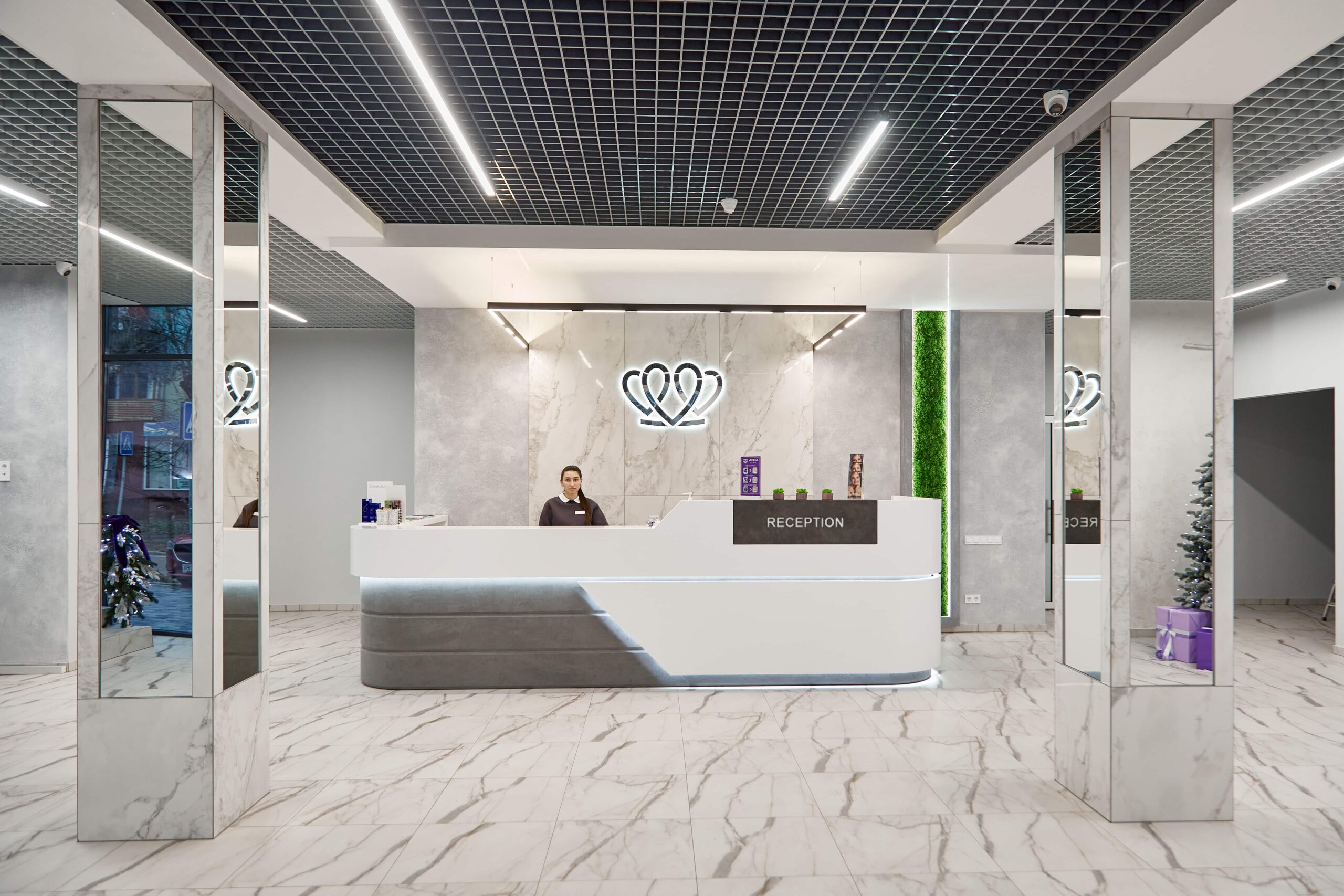
📍 Lviv, Ukraine
A dental clinic in Lviv with a separate doctor for each field: oral surgery and implants, prosthodontics, restorative dentistry, endodontics under a microscope, periodontics, orthodontics and paediatric dentistry.
A veneer covers the front surface of the tooth and part of the incisal edge, while a crown covers the tooth on all sides. So less tissue is removed for a veneer: roughly 0.3–0.7 mm of enamel, compared with much deeper preparation for a crown. But a veneer needs intact enamel and a strong, living tooth: if the crown of the tooth is more than half destroyed or the tooth is root-treated, a crown works more reliably. The dentist decides after an examination and an X-ray, not from a photo.
At MediUkraine's partner clinic a composite veneer costs from USD 156 per tooth, a ceramic one from USD 342, and a ceramic veneer with customised colour from USD 440. Aesthetic composite restoration of a single tooth is priced from USD 73. The consultation with clinical photos, X-ray, professional cleaning, treatment of decay, wax-up and mock-up are charged separately. The total depends above all on the number of teeth: a smile makeover usually covers six, eight or ten. The dentist confirms the final cost after an examination.
In most cases yes, and this is the most important thing to understand before you start. Roughly 0.3–0.7 mm of enamel is removed for a ceramic veneer; it does not grow back, so the tooth will stay covered for ever. An option without preparation is possible when the teeth are small, worn or have gaps between them, that is, when volume needs to be added. If the tooth is of normal size or protrudes, a no-prep veneer will make it look bulkier. The decision is made after an examination and a mock-up.
Composite is cheaper and is done in a single visit: the dentist shapes the restoration directly in the mouth. But the material absorbs pigments from coffee, tea and wine, loses its gloss and chips, so it is polished every 6–12 months and usually redone after 3–5 years. Ceramic is more expensive and needs a laboratory and 2–3 visits, but it does not change colour and, according to long-term studies, mostly lasts around ten years or longer. For a single tooth or a small chip composite is often enough; for a complete smile makeover ceramic is chosen more often.
Composite restorations usually need polishing every 6–12 months and redoing after 3–5 years. According to long-term studies, ceramic veneers mostly last around ten years or longer. These are averages, not a prediction for any one person: lifespan depends on the bite, bruxism, the quality of hygiene and the habit of biting hard things with the front teeth. A chip in ceramic most often means making a new veneer; a small chip in composite is polished on the spot.
Bruxism without a protective splint is a contraindication: night-time clenching and grinding create a load under which thin ceramic chips and composite wears away. First the cause is established, a night guard is made, the bite is assessed and, if needed, an orthodontist is involved. Only after that is the aesthetic stage discussed, and the guard will have to be worn from then on. The same applies to a deep bite in which the front teeth are overloaded: using veneers to mask a problem caused by the bite leads to repeat work.
A mock-up is the future shape of the teeth transferred into the mouth with temporary composite, using a silicone index made from the wax-up. The enamel is not drilled and no anaesthesia is needed; the mock-up stays in place for several hours and is then removed. During that time you can see the new length and width of the teeth, talk, smile, photograph the result and ask for changes. It is the only opportunity to assess the shape before irreversible preparation, so this stage should not be skipped.
Tell us what you need: we will suggest a clinic and a doctor and send you a cost estimate.
Request a consultation →