Travel. Ukrainian airspace is closed, so there are no commercial flights. Uzhhorod lies right on the border with Slovakia and close to Hungary, so patients usually arrive overland from one of these two countries, by car, bus or train.
Visas. Citizens of the EU, the United Kingdom and the United States do not need a visa for short stays in Ukraine. Rules depend on your citizenship, so check your own before booking.
Safety, plainly. Ukraine is at war. Air raid alerts occur across the country, including in Uzhhorod, and an appointment can be interrupted by one. Several governments advise against travel to Ukraine, and while that advice stands, ordinary travel and medical insurance is often void — confirm your cover with your insurer before you commit to anything.
Language. MediUkraine handles correspondence, scheduling, the written treatment plan and the quote in English. The clinic's team communicates with international patients in English.
Payment. You pay the clinic directly. Our coordination service is free of charge for you.
More on travel, safety and insurance: Safety and travel.
Endoscopic access to the ureter is widely used in Ukraine: stones, tumours or bleeding are dealt with without incisions, through the natural openings. The hospital stay is short, and the risk of complications remains minimal even in older patients.
In contact ureteroscopy the doctor brings the instrument right up to the stone, sees it and immediately removes it or performs laser lithotripsy. It is used for urinary stone disease, ureteral strictures, bleeding and tumours.
When the stone or lesion is located high up, a flexible endoscope is needed. This procedure is done under general anaesthesia with fine instruments and visual control: it is minimally traumatic, and the return to your normal routine is quick.
The urologist chooses the type of instrument, rigid or flexible, according to the location of the problem, your condition and any other conditions. In every case it is worth seeing a doctor as early as possible: this helps preserve kidney function and reduces the risk of complications.
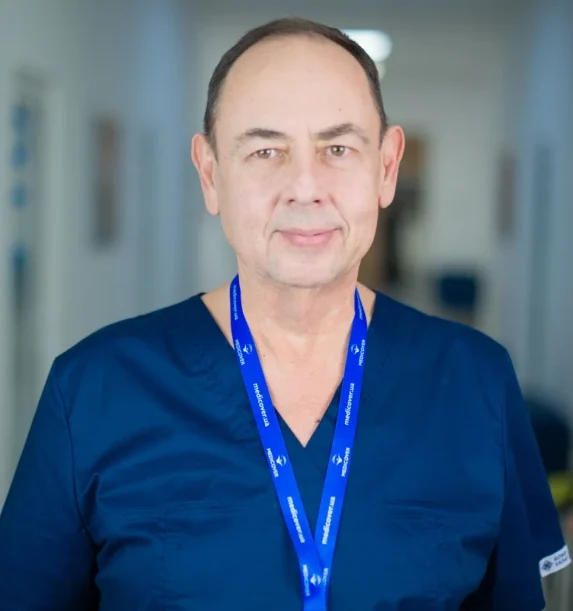
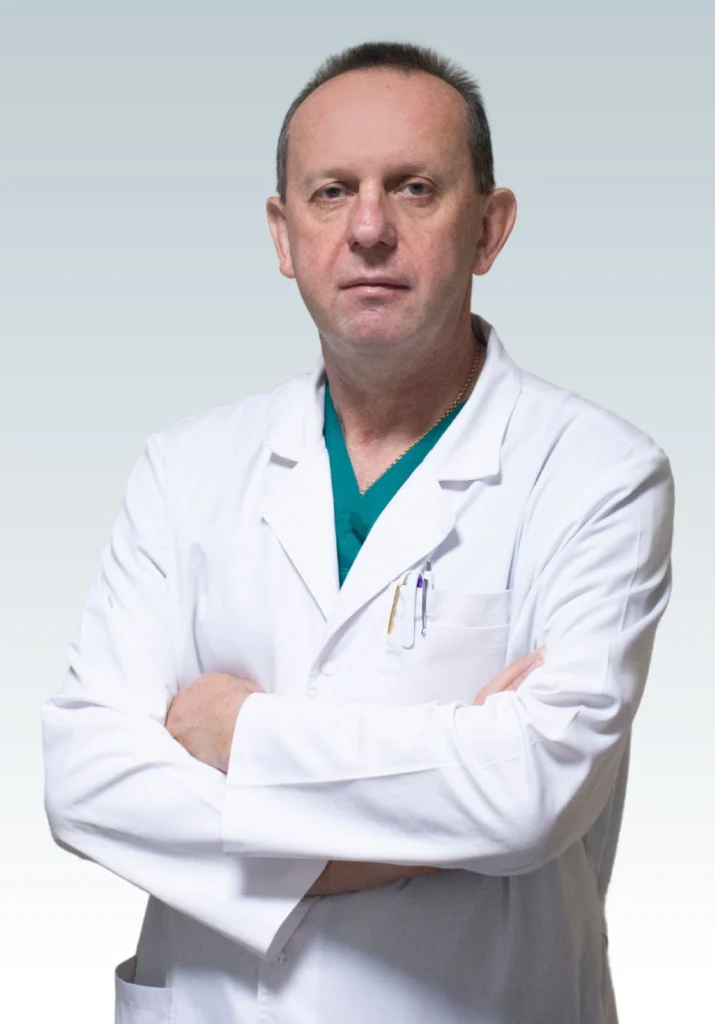
Through MediUkraine you can book an appointment with a urologist-endoscopist at the partner clinic in Uzhhorod and receive a treatment route and support at every stage.
The doctor's work does not end in the operating theatre: a supervised recovery period follows. In the first days you may have a mild burning sensation when urinating or spasms: this is a normal reaction of the body. Return to your normal lifestyle gradually: in the first week avoid physical exertion and getting cold.
The length of full recovery depends on the complexity of the procedure, the type of instrument (rigid or flexible), your condition and the scope of the operation. After a simple diagnostic procedure most patients return to work within a few days. If laser lithotripsy or other surgical treatment was carried out, rehabilitation may take up to 2–3 weeks. The doctor gives final recommendations after the check-up.
For a successful recovery it is important to drink enough fluids, take a walk in the fresh air every day, and avoid saunas, hot baths and alcohol. Pay attention to hygiene, diet and infection prevention as well.
Pain, a fever or blood in the urine after discharge are reasons to contact the doctor immediately, without waiting for the planned check-up. A MediUkraine coordinator stays in touch with you and the clinic throughout the post-operative period.
An endoscopic procedure not only removes the obstruction in the ureter but also preserves the full function of the kidneys and the urinary system as a whole. This is particularly important for patients at risk of hydronephrosis, with frequent infections or reduced kidney filtration. Gentle endoscopic techniques avoid incisions and do not injure healthy tissue.
The approach is always individual. The urologist orders tests (ultrasound, CT, urinalysis, urine culture) and determines the location, size and density of the stone or growth. If there is a risk of ureteral obstruction, the doctor chooses gentle access through the urethra. If necessary, a laser is used to break up or remove the growth.
In some cases surgery is not needed. If the obstruction is detected at an early stage, conservative treatment or monitoring may be possible. The treatment method is decided together with the doctor after assessing the risks and a detailed examination.
Ukrainian clinics combine European standards of treatment with an affordable price. More and more patients from abroad choose them for the high quality of service, transparent stages of treatment and a comfortable medical environment. The clinic's team communicates with international patients in English.
One of the main advantages is the chance to avoid open surgery. Thanks to endoscopic access through the urethra, the doctor can precisely remove a stone or other growth without incisions, trauma or a long recovery. This is especially important for frail patients or those with chronic conditions.
The cost of endoscopic treatment of urinary stone disease in Ukraine is much lower than at clinics in the EU or Turkey. It reflects lower rent and labour costs and the level of local competition. You receive a clear quote with no “surprises” or unnecessary charges.
Ukrainian urology centres work according to international clinical protocols and use modern imaging and instruments. This supports not only the result but also safety control at every stage.
▪ a lower cost of procedures compared with the EU
▪ expert-level endoscopic equipment and qualified specialists
▪ procedures as an outpatient, without a long hospital stay
▪ a transparent quote, a predictable result and a high level of comfort
The method follows international standards, and the risks are kept under control. At the partner clinic procedures are done in sterile conditions, with strict adherence to anaesthesia rules, control of infection risks and good post-procedure care.
Minimally invasive access makes it possible to avoid incisions, shorten the hospital stay and reduce the number of complications. Experienced urologists operate with modern endoscopic equipment that gives an accurate image, so a stone or other abnormal growth is removed while sparing healthy tissue.
At the partner clinic in Uzhhorod you receive the full range of care, from consultation to the end of rehabilitation, within one medical facility. This avoids unnecessary costs, saves time and lets you focus on a quick recovery.
When choosing a clinic, ask about the number of procedures performed, the doctors' experience, reviews and how clear the pricing is. MediUkraine arranges ureteroscopy at the partner clinic in Uzhhorod, where it is performed regularly and according to protocol.

📍 Uzhhorod, Ukraine
A multidisciplinary hospital in Uzhhorod, part of a network of medical facilities in western Ukraine: an outpatient clinic, a surgical centre covering 15 specialties and a 30-bed inpatient unit. Its 52 doctors include professors and PhDs; many operations are done as day surgery, with discharge after 1–2 days.
Ureteroscopy is an endoscopic procedure in which the doctor examines the ureter and renal pelvis from the inside and removes stones or other problems without incisions. The instrument, the ureteroscope, is inserted through the urethra, so the skin and muscles remain intact.
The cost of this operation in Ukraine is much lower than in EU countries or the USA. It depends on the complexity of the case and the scope of the service; prices for each option are shown in the table above. The full quote is determined after a consultation and tests.
Citizens of many countries do not need a visa for a short stay in Ukraine (up to 90 days). Check the current entry rules for your citizenship before you travel.
The procedure is recommended for patients with stones in the ureters or kidneys when the size, location or density of the stone prevents it from passing naturally. The final decision is made by the doctor after tests (ultrasound, CT, urinalysis) and a consultation with a urologist.
Both rigid and flexible ureteroscopy are performed in Ukraine. Depending on the indications, diagnosis is combined with treatment: breaking up stones with a laser (laser lithotripsy), a biopsy or removal of foreign bodies. Everything is done under fully sterile conditions.
Most patients return to normal life within 1–3 days. If the procedure was uncomplicated, the hospital stay lasts a day or less. A few days of light activity and the medicines prescribed by the doctor are usually enough.
As a rule, no. The procedure does not involve the organs responsible for fertility or potency, so it does not usually affect reproductive function or sexual health. Complications in this area are extremely rare.
Tell us what you need: we will suggest a clinic and a doctor and send you a cost estimate.
Request a consultation →