| Service | 🇺🇦 Ukraine | 🇨🇿 Czech Republic | 🇹🇷 Turkey |
|---|---|---|---|
| Dermatologist-trichologist consultation with trichoscopy | from USD 31 | from USD 50 | from USD 40 |
| Intralesional corticosteroid injection session | from USD 38 | from USD 130 | from USD 80 |
Prices in the “Ukraine” column come from MediUkraine’s partner clinics. The Czech Republic and Turkey columns show the lower bounds of prices published by clinics there (for Turkey, also the Turkish Dental Association’s recommended 2026 tariff), collected in August 2026 and converted to US dollars at the rate on the day of collection. A dash means we could not find a comparable published price. In any country, the final cost is set by the clinic after an examination.
The hair follicle is one of the few parts of the body that the immune system normally leaves alone: the bulb is protected by what is known as immune privilege. In alopecia areata this protection breaks down, and T lymphocytes cluster around follicles in their growth phase and force them into premature dormancy; under the microscope this cluster is described as a "swarm of bees".
The key point: the follicle does not die. It shrinks and goes dormant, but its stem cell zone stays intact and the follicle opening on the skin is preserved. That is why hair can grow back even on an area that has been bare for several years, and this is exactly what sets alopecia areata apart from scarring forms, in which the opening is permanently replaced by scar tissue.
The condition can take different forms. The classic form is one or more round patches of smooth skin; ophiasis is a band of hair loss along the lower edge of the back of the head and above the ears; total alopecia means losing all the hair on the head, and universal alopecia means losing the eyebrows, eyelashes and body hair as well. The beard can also be affected, and the nails often develop tiny pinpoint pits, like the surface of a thimble.
The condition rarely comes alone. Autoimmune thyroiditis, vitiligo, atopic dermatitis and asthma occur alongside it more often than in the general population. Its course is unpredictable: a first single patch regrows on its own within a year in a considerable share of patients, yet most people have relapses during their lifetime. The outlook is worse with ophiasis, onset in childhood, nail involvement and loss of more than half the hair.
MediUkraine is a service that finds and coordinates treatment; it is not a clinic. We choose the clinic and a dermatologist experienced in autoimmune hair loss, arrange the appointment date and support you throughout, including if you are travelling from abroad. Diagnosis and treatment decisions are made by the doctor after an in-person examination.

Travel. Ukrainian airspace is closed, so there are no commercial flights. Patients enter Ukraine overland, most often from Poland (Rzeszów and Kraków airports are the usual entry points), and continue to Dnipro by train. Dnipro is in the east of the country, a long journey from the border, so plan the route and timing with us before you book.
Visas. Citizens of the EU, the United Kingdom and the United States do not need a visa for short stays in Ukraine. Rules depend on your citizenship, so check your own before booking.
Safety, plainly. Ukraine is at war. Dnipro is attacked more often than western Ukraine, and an appointment can be interrupted by an air raid alert. Several governments advise against travel to Ukraine, and while that advice stands, ordinary travel and medical insurance is often void — confirm your cover with your insurer before you commit to anything.
Before you travel. The centre offers an online consultation, so the plan and the number of grafts can be estimated from photos before you decide to make the trip.
Language. MediUkraine handles correspondence, scheduling, the written treatment plan and the quote in English. The centre's team communicates with international patients in English.
Payment. You pay the centre directly. Our coordination service is free of charge for you.
More on travel, safety and insurance: Safety and travel.
Treatment is chosen based on three factors: how much area is affected, how fast the condition is progressing and the patient's age. The working threshold is 50% of the scalp: below it, topical treatments and injections into the patches are used; above it, local methods cannot keep up with the disease. Most injectable and systemic options are not suitable for children.
Topical corticosteroids are first-line treatment for limited forms and almost the only option for young children. Potent preparations in lotion, foam or ointment form are used in courses with breaks: the evidence is moderate, but the method is simple. The price of uncontrolled use is skin thinning and steroid folliculitis.
Intralesional triamcinolone injections are the main treatment for adults with limited patches. The drug is diluted to 2.5–10 mg/ml and injected with a fine needle at several points across the patch; a session takes 10–20 minutes and is repeated every 4–6 weeks. Regrowth is achieved in about two thirds of patients, with the first fine hairs appearing after 4–6 weeks. The most common side effect is a temporary dent in the skin at the injection site.
Injections are not given all over the head "just in case". If new patches keep appearing within a few weeks, local treatment no longer makes sense, and a short course of systemic glucocorticoids is considered. It can stop a wave of hair loss, but the effect often lasts only while the medicine is taken, and long-term steroid treatment is not justified here.
Topical immunotherapy with diphencyprone is used for extensive forms and works paradoxically: a substance that causes controlled contact dermatitis is deliberately applied to the skin, and this reaction diverts the immune attack away from the follicles. Applications then continue weekly at the clinic and are washed off after 24–48 hours. Results vary widely: in limited forms, regrowth is reported in most patients, and in total and universal forms in about one in six, with relapse in a third. In Ukraine the method is available at only a handful of centres.
Janus kinase (JAK) inhibitors have changed the treatment of severe forms. Baricitinib and ritlecitinib are approved by US and EU regulators for severe alopecia areata, and deuruxolitinib was approved later. They block the signalling pathway immune cells use to communicate. In the registration trials, roughly 35–40% of patients reached a point where no more than a fifth of the scalp remained affected; this takes six months or more.
The limitations are serious, and the clinic should explain them before the first prescription. The medicine has to be taken continuously: once it is stopped, hair loss usually returns. Laboratory monitoring is required: blood counts, liver tests and lipids, plus screening for tuberculosis and hepatitis before starting; there are warnings about infections and thrombosis. Add the cost of treatment and limited availability in Ukraine: not all of these medicines are on the market, so check their status at the consultation.
Other methods play a supporting role. Minoxidil does not stop alopecia areata on its own because it does not affect the immune attack, but it is added to the main treatment. Scalp mesotherapy has no standard formulation or protocol: reviews describe small, unblinded studies, and there is not enough data to recommend it. PRP has been studied less here than in inherited thinning, and vitamins (without a confirmed deficiency) do not affect the course of the disease.
Hair transplantation is not performed in active alopecia areata. The reason is biology, not technique: a transplanted follicle comes under the same immune attack and falls out just like the native one, and the donor area is used up for nothing. Besides, your own follicles in the patch are alive and may regrow on their own. A transplant is discussed, if at all, only after years of stable remission.
The psychological side of the condition is as real as the medical one. Losing eyebrows and eyelashes changes the face more than a patch hidden under the hair, and in children the disease affects school life; anxiety and depression are more common in people with this condition. That is why the plan also covers practical matters: a wig or hair system, eyebrow make-up, protecting the eyes without eyelashes and support from a psychologist.
A word on the advice to "wait and it will go away". A single small patch does often regrow within a year without treatment, and watchful waiting is a legitimate approach here. But waiting is risky if there are several patches, ophiasis has appeared, the nails are affected or the area is growing quickly: the longer treatment is delayed, the poorer the response. A decision to watch and wait is made after an examination and with a follow-up date.
The first thing to appear in a patch is not hair but colourless fine down. After intralesional injections it usually becomes visible after 4–6 weeks: at first thin and pale, it gradually thickens and gains colour. The area may look grey for a long time; this is a normal stage, not a side effect.
For local treatment, a reasonable time to assess results is three months. If there is no regrowth at all in the patch after three or four injection sessions, the treatment is changed rather than continued out of habit. Prolonging an ineffective course is especially costly with this condition: meanwhile, the affected area may grow.
Systemic treatment works on a different timescale. JAK inhibitors are assessed at weeks 24–36, and in some patients the full response takes closer to a year, so stopping after two months "because it isn't working" is a common mistake. The interim visits are needed for laboratory monitoring, not just to report on progress.
Remission does not mean the disease is over. Alopecia areata comes in waves, and a new patch a year or five years later does not prove that the previous treatment was pointless. It is better to know this in advance than to experience a relapse as a personal failure.
Monitoring is based on figures and images: repeat trichoscopy of the same areas, assessment of the affected area on the SALT scale, and photos taken under the same lighting. "It seems to be better" is not enough: hair grows back too slowly for the eye to catch the change between visits.
If you live abroad, part of the monitoring can conveniently be done remotely. You keep the report, the images and the treatment record, a local dermatologist can continue the follow-up, and if needed MediUkraine arranges a video consultation with the same doctor or your next in-person visit.
Step 1. Examination and trichoscopy. The doctor asks when the patch appeared, how it has changed and whether there are autoimmune diseases in the family. They then examine the scalp, eyebrows, eyelashes, beard and nails and look at the skin under digital magnification. The affected area is recorded as a percentage, and the patches are photographed.
Step 2. Ruling out other causes. A smooth bald patch is not always autoimmune alopecia: fungal infection, trichotillomania and scarring forms can look similar. If needed, a skin scraping is tested for fungi, and if the picture is unclear, a scalp biopsy is taken.
In total, the first appointment takes about 30–40 minutes and the procedure 10–20 minutes. No hospital stay or recovery period is needed: straight after the visit you can travel home or go to work. The course is spread out over time not because the procedure is complicated but because of how hair grows: it simply cannot grow any faster.
Ukrainian clinics operate with a different cost structure. Rent, non-medical staff salaries, utilities and administration cost a clinic several times less than in Germany, Austria or the UK, and this is directly reflected in its prices.
The second factor is laboratory costs. The test panel needed for autoimmune alopecia is paid for at the laboratory; on request, the clinic provides the list of markers in the panel, the method used to measure each one and the name of the laboratory.
The third factor is competition. In Ukraine, including Kyiv and Dnipro, there are private clinics with dermatology departments, and they compete for patients on price and service, not just on reputation.
The medicine itself is also cheaper: triamcinolone and topical corticosteroids are long-established drugs with many generics, so the cost of an injection session is mainly the doctor's work rather than the price of the ampoule. The details of each session (drug concentration, number of injection points and the interval to the next visit) are recorded by the doctor in the treatment record, which the clinic provides on request.
Logistics also save money: the consultation, tests, procedure and follow-up examination all take place at one clinic, without referrals or queues between facilities. For patients from abroad, this means fewer days of travel and lower travel and accommodation costs.
The consultation and trichoscopy are non-invasive: the skin is not broken, no anaesthesia is used and there is no recovery period. The dermatoscope probe is disinfected between patients and single-use tips are used. Partner clinics are licensed by the Ministry of Health of Ukraine for dermatovenereology, and systemic treatment is prescribed only where laboratory monitoring is available.
Injections into the patch are given in a treatment room with sterile single-use instruments. The main risk is local thinning of the skin and fat beneath it, seen as a temporary dent, sometimes with lighter skin; that is why the doctor uses the lowest effective concentration, spreads the drug across several points and avoids injecting too superficially.
Systemic glucocorticoids are prescribed in short courses and only when indicated. Before starting, the doctor checks blood pressure, blood glucose, stomach health and any infections, and plans a gradual dose reduction at the end of the course rather than an abrupt stop. Taking steroids long-term for the sake of hair is not justified.
JAK inhibitors require the closest supervision. Before they are prescribed, you are screened for tuberculosis and viral hepatitis, blood counts, liver tests and lipids are checked, and your vaccinations are reviewed; the tests are then repeated on a schedule. There are warnings about serious infections, thrombosis and cardiovascular events, so the medicine is not given without a risk assessment, and pregnancy, breastfeeding and contraception are discussed before the first tablet.
Diphencyprone is applied only at the clinic and is not given out for home use: the dose is chosen to cause a mild, controlled reaction, and a mistake with the concentration leads to severe dermatitis. Itching, redness and swollen lymph nodes in the neck are an expected part of the method, whereas a widespread rash or lasting pigment changes are a reason to reconsider the treatment.
You receive the report and can take it to another specialist: the images and the examination record are enough for a fresh assessment. If a clinic promises a guaranteed result or offers a transplant while the disease is active, the recommendation is worth double-checking. If you want your treatment plan reviewed, we arrange a second opinion at another partner clinic.
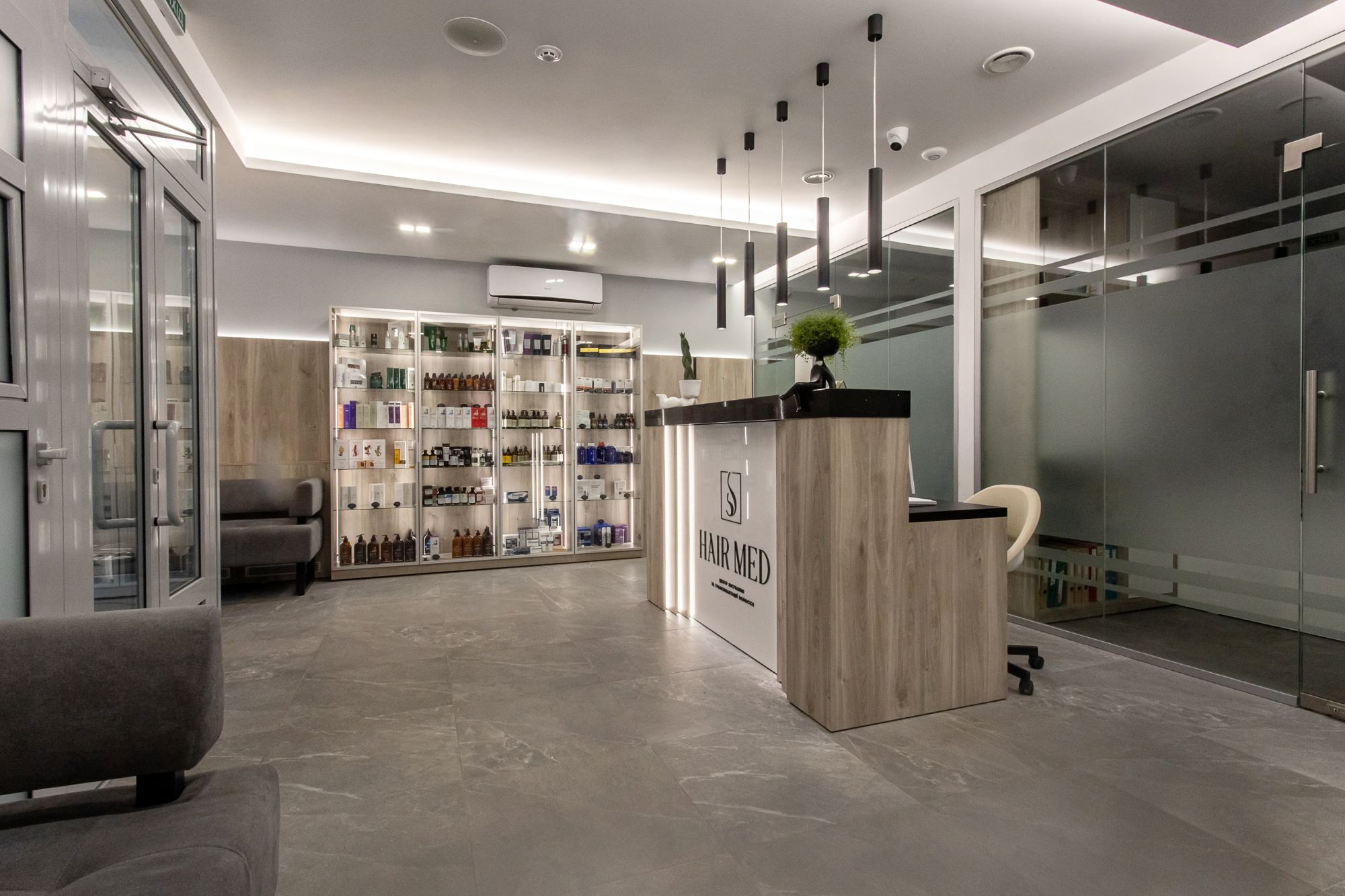
📍 Dnipro, Ukraine
A hair treatment and transplant centre in Dnipro: 430 m², two surgical zones, an SMP room and its own HairHub. Transplants are performed by Ivan Baranov, PhD (member of ISHRS and the World FUE Institute) and transplant surgeon Svitlana Nedbailo. Therapy is led by a team of trichologists and dermatologists.
Most likely yes, but there are no guarantees. In this condition the follicles do not die but go dormant, so regrowth is possible even on an area that has been bare for years. A single small patch regrows within a year without treatment in a considerable share of patients, and treatment usually speeds this up. With ophiasis and the total and universal forms the outlook is worse, and only a doctor can predict the result for an individual patient after an in-person examination.
A dermatologist consultation with trichoscopy costs from USD 31 and an intralesional injection session from USD 38. A course usually involves three to six sessions 4–6 weeks apart, so it is the cost of the whole course that matters, not a single procedure. In the Czech Republic a consultation costs from around USD 50, in Turkey from USD 40. The clinic confirms the final cost.
Sometimes, but this should be the doctor's decision after an examination, not a way of avoiding a visit. Watchful waiting is justified with a single small, stable patch, and a follow-up date is then set straight away. Waiting is not advisable if there are several patches, they are growing quickly, a band of hair loss has appeared along the lower edge of the back of the head, the nails have changed or the condition started in childhood: in these situations, the response to treatment worsens with every month of delay.
Stress can be a trigger, but the cause runs deeper: the immune system stops ignoring the body's own hair follicles and starts attacking them. The tendency to this is largely inherited, so other autoimmune conditions often run in the family: thyroid disease, vitiligo, atopy. Reducing stress helps, but calm alone will not switch the condition off, and there is no reason to blame yourself for having been "stressed".
It depends on the individual case. These medicines are approved abroad specifically for severe alopecia areata, but not all of them are available on the Ukrainian market, and the registered indication may differ, so their current status is checked at the consultation. In any country, treatment cannot start without a work-up: before prescribing, you are screened for tuberculosis and hepatitis and have blood counts and liver tests checked, and the tests are then repeated on a schedule. Bear in mind too that once the medicine is stopped, hair loss usually returns.
Not while alopecia areata is active. A transplanted follicle comes under the same immune attack as the native one, so the result is lost and the donor area is used up for good. Besides, the native follicles in the patch are alive and able to regrow on their own, so there is no need for surgery. If a clinic offers a transplant without establishing how active the condition is, that is a reason to get a second opinion.
The total and universal forms are harder to treat but not hopeless: topical immunotherapy and systemic medicines are considered, and some patients respond even after years of complete hair loss. Alongside treatment, it is worth sorting out practical matters: choosing a wig or hair system, working out how to protect your eyes without eyelashes, having permanent eyebrow make-up done and using sun protection on the scalp.
Psychological support is just as important. Anxiety and low mood with this condition are not a sign of weakness but a common reaction, and a psychologist or support group helps as much as any ointment. It is worth seeking this help straight away, not only when things get really hard.
Tell us what you need: we will suggest a clinic and a doctor and send you a cost estimate.
Request a consultation →