| Service | 🇺🇦 Ukraine | 🇨🇿 Czech Republic | 🇹🇷 Turkey |
|---|---|---|---|
| Closed sinus lift | from USD 489 | from USD 239 | from USD 290 |
| Open sinus lift | from USD 733 | from USD 716 | from USD 580 |
| Bone grafting | from USD 144 | from USD 239 | from USD 334 |
| Consultation with CT scan and planning | from USD 20 | from USD 114 | from USD 92 |
Prices in the “Ukraine” column come from MediUkraine’s partner clinics. The Czech Republic and Turkey columns show the lower bounds of prices published by clinics there (for Turkey, also the Turkish Dental Association’s recommended 2026 tariff), collected in August 2026 and converted to US dollars at the rate on the day of collection. A dash means we could not find a comparable published price. In any country, the final cost is set by the clinic after an examination.
Above the roots of the back teeth of the upper jaw lies the maxillary sinus, a cavity lined with a thin mucous membrane which in dentistry is called the Schneiderian membrane. Between the floor of the sinus and the mouth there is a layer of bone, and that is where the implant is placed. While the tooth is in place, chewing load passes through the root into the bone, and the bone keeps its volume.
After a tooth is extracted, that load disappears. During the first year the ridge loses a noticeable part of its height and width; after that the process slows down but does not stop, and meanwhile the sinus gradually expands downwards into the space. A few years later, only 2–5 mm of bone is left where the sixth or seventh tooth (the first or second molar) used to be, whereas a stable implant usually needs at least 8–10 mm.
A sinus lift solves this problem: the floor of the sinus is carefully raised and the space created is filled with bone material. Over a few months it remodels into your own bone, and there is enough height for implant placement. It is indicated when implants are planned for the upper back teeth but bone height is insufficient, when teeth were lost long ago, and when the ridge has thinned after injury or years of wearing a removable denture.
It is not for everyone. The procedure is not done during a flare-up of chronic maxillary sinusitis, with polyps or cysts of the sinus, after recent sinus surgery, with uncontrolled diabetes, during intravenous bisphosphonate treatment, or with active periodontitis and poor oral hygiene: these are dealt with first. Smokers are warned that they are more likely to lose some of the graft and are asked to stop smoking for at least two weeks before surgery.
MediUkraine is a service that finds and coordinates treatment; it is not a clinic. We choose the clinic and a surgeon with the right specialism, arrange the dates and support patients, including those travelling from abroad. The surgeon decides on the scope of the procedure after an examination and review of the CT scan.

Travel. Ukrainian airspace is closed, so there are no commercial flights. Patients reach Lviv overland, most often from Poland: Rzeszów and Kraków airports are the usual entry points, with a train, bus or private transfer onward to the border and on to the city. Lviv is roughly 70 km from the Polish border, the shortest crossing of any Ukrainian city.
Visas. Citizens of the EU, the United Kingdom and the United States do not need a visa for short stays in Ukraine. Rules depend on your citizenship, so check your own before booking.
Safety, plainly. Ukraine is at war. Air raid alerts occur in Lviv, and an appointment can be interrupted by one. Several governments advise against travel to Ukraine, and while that advice stands, ordinary travel and medical insurance is often void — confirm your cover with your insurer before you commit to anything.
Language. MediUkraine handles correspondence, scheduling, the written treatment plan and the quote in English. The clinic's team communicates with international patients in English.
Payment. You pay the clinic directly. Our coordination service is free of charge for you.
More on travel, safety and insurance: Safety and travel.
A sinus lift is done through one of two approaches, and the choice between them is decided not by the surgeon's habit but by the remaining bone height on the scan. The closed (transalveolar) approach is used when about 2–4 mm of height is missing. The open (lateral) approach is needed when the floor has to be raised by 5 mm or more, or when the sinus has a complex shape with septa.
With the closed approach there is no separate window on the cheek side: the surgeon prepares the site of the future implant through the ridge, stopping a millimetre short of the sinus floor, and then, with Summers osteotomes or blunt-tipped drills, carefully fractures the thin plate of bone and raises it together with the lining. The space is filled with bone material and the implant is most often placed straight away. A hydraulic variant uses saline pressure to detach the membrane; it is less traumatic but can only lift so far.
The open approach begins with an incision along the ridge and lifting of a flap, after which a window is made in the side wall of the sinus with a bur or a piezosurgery tip, which cuts bone with ultrasound and does not damage soft tissue. Through the window the lining is detached from the floor and side walls all the way round, the space beneath it is filled with bone material, the window is covered with a barrier membrane, and the flap is put back and sutured. Then comes a healing period of 4–6 months, and only after that implant placement.
Whether the implant goes in straight away depends on primary stability. If at least 4–5 mm of the patient's own bone is left beneath the sinus, the implant usually holds firmly enough in it to get through the integration period, and it is placed at the same time as the lift. If there is less height, implant placement is postponed: an implant screwed into loose material that has not yet remodelled will be mobile and will be lost.
Graft materials fall into four groups. Xenogeneic granules from bovine bone, cleaned of protein, are the most common option: they resorb very little and maintain the added volume for a long time. Alloplastic synthetic materials based on beta-tricalcium phosphate and hydroxyapatite are fully replaced by the patient's own bone, but lose volume faster. Allogeneic material is processed donor bone from a tissue bank. Autogenous bone from the patient, collected while preparing the implant site or taken from the ramus of the lower jaw, remodels fastest, but only a limited amount is available, so it is usually mixed with xenogeneic granules.
The barrier membrane covers the bone window so that soft tissue, which regenerates faster than bone, does not grow into the graft. Resorbable collagen membranes dissolve on their own within 4–24 weeks depending on how they are processed; non-resorbable PTFE (polytetrafluoroethylene) membranes hold their shape better but have to be removed in a separate procedure. Membranes made from your own blood are a separate category: the blood is centrifuged to obtain a clot of fibrin and platelets, which is used as a covering or mixed into the granules.
Bone grafting of the ridge is often needed together with the sinus lift, when not only height but also width is lacking. A narrow ridge can be split and widened and the deficit is filled with granules under a membrane (guided bone regeneration); in more complex cases a bone block taken from the ramus of the lower jaw or the chin is fixed with titanium screws, or a titanium mesh is used. These stages may be done at the same time as raising the sinus floor or at a separate visit, depending on how large the defect is.
Sometimes augmentation is not needed at all. With a remaining height of 5–7 mm, short implants 6–8 mm long are sometimes enough: studies show survival comparable to longer implants combined with a sinus lift, with fewer stages. Other ways around the problem are tilted implants placed in front of the sinus, protocols with four or six implants for the whole jaw, and, with severe atrophy, zygomatic implants anchored in the cheekbone. A removable denture also remains a workable solution if you are not ready for surgery.
The final plan is built from the scan. The remaining height at each position, the width of the ridge, the thickness of the sinus lining, the presence of septa, the course of the artery in the side wall and the condition of neighbouring teeth are all assessed. The implant positions are modelled in software and are often transferred to the mouth with a surgical guide printed from that model, so that the axis of the implant matches the future crown.
It is also worth understanding what a sinus lift cannot do. A sinus lift adds bone height, but it does not treat diseased teeth, does not stop periodontitis and does not replace hygiene; if there is active inflammation in the mouth, the graft is less likely to take. It is not a one-off procedure but the first step of a pathway that ends with a crown many months later. Nor does it remove the need for follow-up: an implant in remodelled bone needs the same regular check-ups as one in natural bone.
Cheek swelling increases for the first two to three days, then gradually goes down; sometimes a bruise appears, which fades within 7–10 days. Slight bloody discharge from the nose on the side of the operation in the first days is an expected reaction, not a complication. Pain is usually moderate and is controlled with ordinary painkillers prescribed by the doctor.
The restrictions during this period are about avoiding pressure in the sinus. For two to three weeks, do not blow your nose (dab it instead), sneeze with your mouth open, and avoid diving, playing wind instruments, blowing up balloons and drinking through a straw. Do not plan flights for the first 10–14 days, and put off saunas, steam baths and sport for two weeks.
Post-operative prescriptions are standard: a course of antibiotics, a painkiller, antiseptic rinses or a spray and, if needed, decongestant nose drops for a few days. In the first days eat warm, soft food, chew on the other side and brush your teeth carefully, avoiding the stitches. The stitches come out on day 7–10, when the surgeon also checks the wound.
Then comes the longest part, the remodelling of the material. The granules are gradually replaced by your own bone, which takes 4–6 months, sometimes longer if the lift was large or a slower material was used. This process cannot be sped up: neither vitamins nor physiotherapy change the timeline.
Readiness for implant placement is judged not by the calendar but by a follow-up CT scan, which shows the density and height of the new bone at the required point. If the implant was placed at the same time, the period after the sinus floor lift is followed by osseointegration, usually 4–6 months before the implant is loaded with a crown.
The final result can be judged once the permanent restoration is on the implants and you are chewing with it, which is on average 8–12 months after the first operation. Timelines in a particular case depend on the patient's own bone height, the amount of material, age, smoking and other illnesses; only a surgeon can predict the result in your case, after an examination.
Step 1. Planning from the CT scan. The surgeon measures the remaining bone height at each position of the future implant, assesses the thickness of the sinus lining, looks for septa inside the sinus and for the course of the artery in its side wall. On this basis the surgeon chooses the approach (closed or open), decides whether to place the implant at the same time or as a separate stage, and calculates how much material is needed. You see the scan on screen and receive a plan listing the stages and timelines.
Step 2. Anaesthesia and access. The operation is done under local anaesthesia: the area goes numb within a few minutes and you stay awake. If you wish, or if you are very anxious, sedation is added and an anaesthetist joins the team. Next an incision is made along the ridge and a mucoperiosteal flap is lifted: with the closed approach it is minimal, with the open approach it exposes the side wall of the sinus.
In total, the operation takes 40 minutes to 1.5 hours: between planning and the stitches come lifting the sinus lining, filling the space with bone granules and closing the window with a barrier membrane. No hospital admission is needed, anaesthesia is local, and the next stage, placement of the implants, follows 4–6 months later if they were not placed at the same time.
A sinus lift is not a stand-alone service but the first step of a pathway that ends with a crown on an implant. Overall the cycle consists of four stages: diagnosis and preparation, the bone surgery, implant placement and prosthetics. Each has its own timeline, and a delay at one pushes back all the rest.
The first stage takes one to three weeks. It includes the CT scan, an examination, treatment of any dental problems, professional cleaning and, if needed, an ENT opinion and a consultation with a general practitioner about chronic illnesses and medicines. This is where it becomes clear whether the sinus will need treatment first.
The second stage is the operation itself and healing. With the closed approach the implant is often placed at the same time, and there is no separate wait for the material to remodel; ordinary osseointegration follows. With the open approach 4–6 months pass between the operation and implant placement, and a follow-up CT scan is taken before it.
The third stage is placement of the implants and their integration. In the upper jaw, especially in remodelled bone, this period usually lasts four to six months. At the end, the dentist fits a healing abutment, and another two to three weeks are spent shaping the soft tissue.
The fourth stage is prosthetic: impressions or digital scanning, the abutment, a crown or bridge, try-in and fitting. On average, it takes 8–12 months from the first consultation to the finished restoration. For patients from other cities and countries this pathway is usually split into two or three trips, with interim check-ups done remotely.
The most common complication is perforation of the Schneiderian membrane, that is, a tear in the thin lining of the sinus while it is being lifted. Studies put it at roughly one patient in five with the open approach, and in most cases the tear is noticed straight away and closed with a collagen membrane during the operation, after which the procedure continues as planned. If the defect is large, the surgeon stops the procedure, sutures the wound and postpones the operation for 6–8 weeks while the lining recovers; this is not a mistake but correct practice.
The second group is sinus inflammation. Acute maxillary sinusitis after the procedure shows up as a blocked nose, purulent discharge, pain and pressure in the cheek and a raised temperature. The risk is higher in people who had undiagnosed sinus disease before the operation, which is why the scan is not reviewed by the dentist alone. It is treated with antibiotics together with an ENT specialist; in severe cases, some of the graft has to be removed.
The graft may not take fully. The causes are infection of the graft, the wound edges coming apart and the membrane becoming exposed, excessive pressure from a removable denture on the operation area, and smoking. In that case the height gained turns out lower than planned and a repeat operation is needed; sometimes the surgeon switches to a different plan, such as a shorter implant or avoiding the area. This is one of the scenarios worth asking about in advance.
Rarer complications are also described: bleeding from the artery in the side wall of the sinus, displacement of granules or of the implant itself into the sinus cavity, prolonged swelling and haematoma, and altered sensation. A separate case is a flare-up of chronic maxillary sinusitis that had gone unnoticed before the operation.
Contraindications can be permanent or temporary. The procedure is not performed with chronic maxillary sinusitis, polyps and cysts of the maxillary sinus, recent sinus surgery, after radiotherapy to the head and neck, with intravenous bisphosphonates and denosumab injections, severe blood clotting disorders, uncontrolled diabetes, or malignant tumours under treatment. Temporary ones are an acute respiratory infection, a flare-up of allergic rhinitis, active periodontitis, untreated decay and pregnancy: here the operation is simply postponed.
A consistent routine reduces the risks: a CT scan before planning, treatment of the mouth, a piezosurgery instrument instead of a bur when making the window, work under magnification, no smoking before and after the procedure, and following the prescriptions exactly. You are entitled to a second opinion: the scan, the plan and the quote can be shown to another surgeon, and if needed MediUkraine arranges such a consultation at another partner clinic.
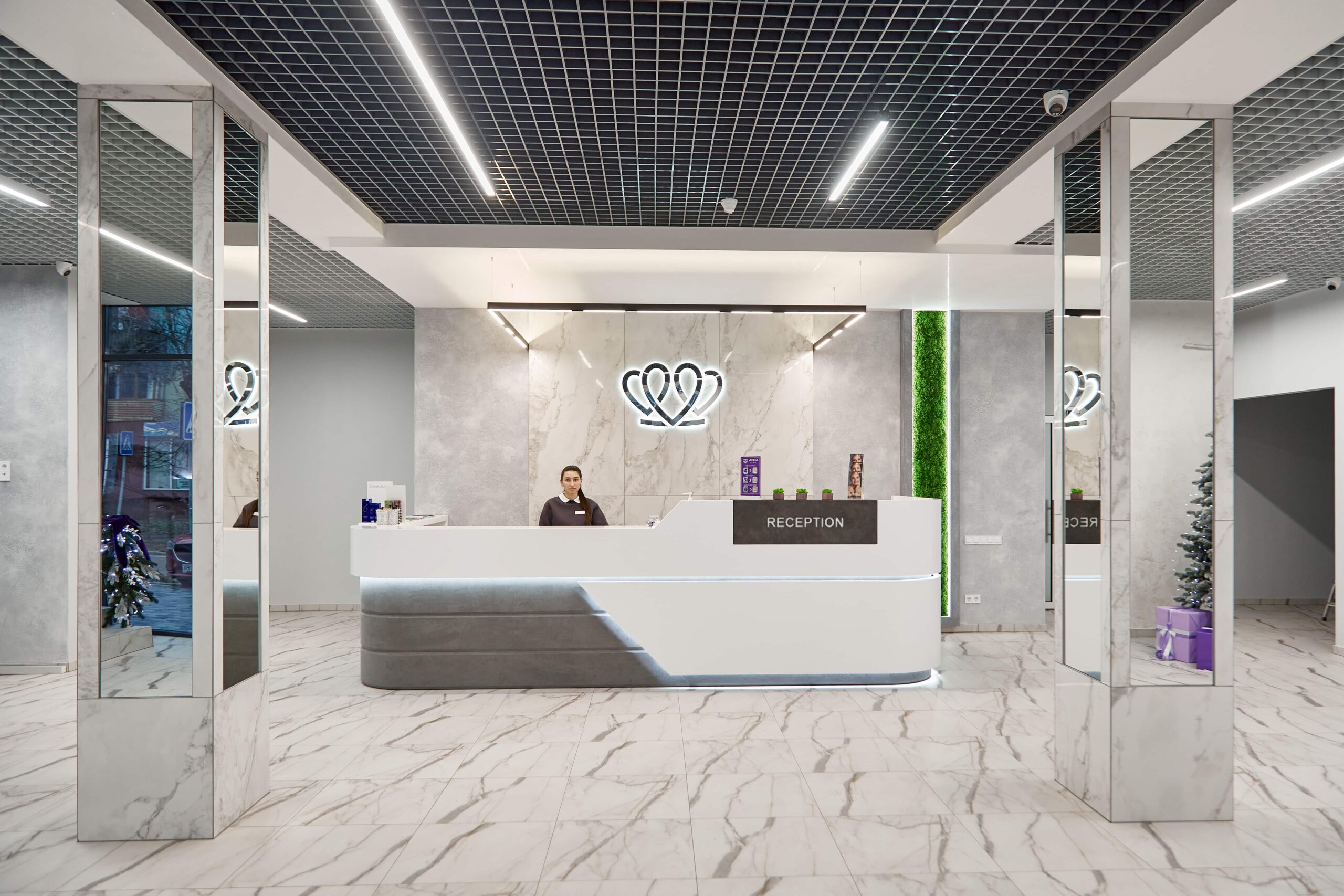
📍 Lviv, Ukraine
A dental clinic in Lviv with a separate doctor for each field: oral surgery and implants, prosthodontics, restorative dentistry, endodontics under a microscope, periodontics, orthodontics and paediatric dentistry.
There is no pain during the operation: it is done under local anaesthesia, with sedation added if needed, in which case you are drowsy. You may feel pressure and vibration; this is normal, and you will be warned about it in advance. Once the anaesthetic wears off, swelling of the cheek and moderate pain are a nuisance for a few days, relieved with ordinary painkillers prescribed by the doctor. The greatest discomfort comes on the second or third day, and after that it gets easier every day.
At Vidnova Dental Clinic in Lviv the closed approach starts from USD 489, the open approach from USD 733 per side, bone grafting of the ridge from USD 144, and a consultation with a CT scan and planning from USD 20. These sums do not include the implant itself, the abutment and crown, sedation or medicines from the pharmacy. The surgeon confirms the final cost after an examination and review of the scan, because the scope of work depends on the bone height and the number of areas treated. A preliminary quote can be obtained before you arrive.
The difference is in the access and how far the floor is raised. A closed lift is done through the site of the future implant in the ridge, without a window on the cheek side; it is chosen with a deficit of about 2–4 mm and is often combined with placing the implant at the same visit. An open lift is needed when the floor has to be raised by 5 mm or more, or when the sinus has septa: a window is made in the side wall, the lining is detached all the way round, and implant placement is postponed for 4–6 months. The choice is made by the surgeon from the CT scan, not at the patient's request.
If at least 4–5 mm of the patient's own bone is left beneath the sinus, the implant can usually be placed at the same time as the floor is raised: it holds firmly enough in the remaining bone during integration. When there is less height, implant placement is postponed for 4–6 months, until the added material has remodelled into the patient's own bone. Readiness is judged from a follow-up CT scan, not by the calendar: in smokers and with a large amount of material this period can be longer.
This is the most common complication, and surgeons are prepared for it. A small tear is noticed immediately and closed with a collagen membrane, after which the operation continues as planned; such an episode usually does not affect the later results. If the defect is large, the doctor stops the procedure, sutures the wound and postpones the operation for about 6–8 weeks, during which the sinus lining recovers. It is not wise to insist on continuing in such a situation: material that gets into the sinus causes inflammation.
Sometimes, yes. With a remaining height of 5–7 mm, short implants 6–8 mm long are considered: studies show survival comparable to longer implants combined with a sinus lift, and there are fewer stages. Other options are tilted implants in front of the sinus, protocols with four or six implants per jaw and, with severe atrophy, zygomatic implants; a removable denture also remains a workable solution. What suits you can only be decided from the CT scan after an examination.
On average 8–12 months pass from the first consultation to the finished crown: preparation takes 1–3 weeks, remodelling of the bone material 4–6 months, implant integration another 4–6 months, and the prosthetic stage several visits. For patients from other cities and countries the pathway is usually split into two or three trips of a few days each, with interim check-ups done remotely from photos and a description. The exact schedule is drawn up after an examination, because it depends on the approach chosen.
Tell us what you need: we will suggest a clinic and a doctor and send you a cost estimate.
Request a consultation →