| Service | 🇺🇦 Ukraine | 🇨🇿 Czech Republic | 🇹🇷 Turkey |
|---|---|---|---|
| MegaGen AnyRidge implant | from USD 562 | from USD 810 | from USD 675 |
| Crown placement | from USD 280 | from USD 476 | from USD 260 |
| Consultation with CT scan | from USD 20 | from USD 114 | from USD 92 |
Prices in the “Ukraine” column come from MediUkraine’s partner clinics. The Czech Republic and Turkey columns show the lower bounds of prices published by clinics there (for Turkey, also the Turkish Dental Association’s recommended 2026 tariff), collected in August 2026 and converted to US dollars at the rate on the day of collection. A dash means we could not find a comparable published price. In any country, the final cost is set by the clinic after an examination.
AnyRidge is a line of dental implants from the South Korean company MegaGen. It is recognisable by its thread geometry: the threads are deep, thin and sharp (the manufacturer calls them Knife-thread), and the core of the implant is deliberately narrow. The diameter in each size designation is the outer thread diameter; the core diameter stays the same across the line.
The practical point of this design is a larger bone contact area. A deep thread reaches further and grips a larger volume of cancellous tissue than a shallow thread in a site of the same diameter. That is why AnyRidge comes up most often in the context of porous bone, where conventional thread designs give only weak primary stability.
The indications are broadly the same as for any implant treatment: a single missing tooth, a gap between teeth or at the end of the arch, or complete tooth loss. AnyRidge is considered in particular when the bone is porous (types D3 and D4), when a tooth has been missing for a long time and the ridge has had time to remodel, and when the implant is planned to go straight into the socket of an extracted tooth. It does not pay to wait too long: once a tooth is lost, the bone at that site gradually shrinks, the neighbouring teeth tilt and the opposing tooth over-erupts, so eventually the implant has to be combined with bone grafting or orthodontic preparation.
Implants are not for everyone. They are not planned before the jaws have stopped growing, in uncontrolled diabetes, during chemotherapy or radiotherapy to the head and neck, in patients on intravenous bisphosphonates or denosumab injections for cancer, or with untreated periodontitis and poor oral hygiene. Smoking, bruxism and pregnancy do not rule implants out, but they are a reason to change the timing or the protocol.
MediUkraine is a treatment search and coordination service, not a clinic. We match you with a clinic and a suitably specialised doctor, arrange the dates and support you throughout, including if you are travelling from abroad. The choice of system, implant size and protocol rests with the doctor after an in-person examination and review of the scan.

Travel. Ukrainian airspace is closed, so there are no commercial flights. Patients reach Lviv overland, most often from Poland: Rzeszów and Kraków airports are the usual entry points, with a train, bus or private transfer onward to the border and on to the city. Lviv is roughly 70 km from the Polish border, the shortest crossing of any Ukrainian city.
Visas. Citizens of the EU, the United Kingdom and the United States do not need a visa for short stays in Ukraine. Rules depend on your citizenship, so check your own before booking.
Safety, plainly. Ukraine is at war. Air raid alerts occur in Lviv, and an appointment can be interrupted by one. Several governments advise against travel to Ukraine, and while that advice stands, ordinary travel and medical insurance is often void — confirm your cover with your insurer before you commit to anything.
Language. MediUkraine handles correspondence, scheduling, the written treatment plan and the quote in English. The clinic's team communicates with international patients in English.
Payment. You pay the clinic directly. Our coordination service is free of charge for you.
More on travel, safety and insurance: Safety and travel.
Knife-thread is a thread that is deep but thin. On a conventional implant the thread is shallow, so the outer diameter is not much larger than the core; AnyRidge has a deliberately narrow core with the thread extending far outwards. That is why the size designation gives the outer thread diameter rather than the body diameter: implants of different "widths" within the line share the same core, go into sites of similar diameter and differ only in thread depth.
Primary stability is the mechanical hold of the implant in the bone immediately after placement, before any integration. It is created by friction and compression between the thread and the walls of the site. A deep, sharp thread reaches further into the bone and grips a larger volume of cancellous bone, so the implant can hold even where the cortical plate is thin and the bone inside is soft.
Bone density is graded from D1 to D4: D1 is the dense cortical bone of the front of the lower jaw, D4 the loose cancellous tissue of the posterior upper jaw. D3 and D4 cause the most problems: the site turns out "hollow", the implant spins, and immediate loading is out of the question. In such cases the site is underprepared, that is, made narrower than the implant, so that the bone is compacted around the threads rather than drilled away.
Stability is not judged by eye. Insertion torque is read off the implant motor in newton-centimetres: the reference point for immediate loading is around 35 N·cm and above. The second metric is ISQ, a stability quotient on a scale from 1 to 100, measured by resonance frequency analysis: values of around 70 and above are usually considered sufficient for loading, and below 60 a reason to wait. Both figures go into your record so that they can later be compared with a repeat measurement before the prosthetic stage.
Between mechanical hold and integration there is a gap known as the stability dip. In the first two to four weeks the bone around the threads remodels, the mechanical compression weakens and new bone has not yet formed, so overall stability is at its lowest in this period. Geometry with a large contact area smooths out the dip but does not eliminate it, which is why the doctor decides how much load the implant can take in the first month based on the measurements, not on how the patient feels.
The surface takes care of the biological side. AnyRidge uses Xpeed, a sandblasted and acid-etched surface into which calcium ions are additionally incorporated. The idea is to make the surface more active and to speed up mineral deposition and the attachment of bone cells in the first weeks. This affects the speed of secondary, biological stability, not the mechanical hold on the day of surgery.
The connection to the abutment is conical, with an internal hexagon and platform switching: the edge of the prosthetic part is slightly narrower than the implant platform, which moves the microgap zone inwards, away from the bone edge. Abutment options include stock straight and angled abutments, titanium bases for custom zirconia restorations, and multi-unit abutments for full arches. The abutment is tightened with a torque wrench to the torque set by the manufacturer, usually around 30 N·cm.
The system is chosen to fit the clinical situation, not for its name. AnyRidge makes sense when the bone is porous, when the implant is placed straight into the socket of an extracted tooth and needs to grip its walls, and when the width of the ridge is limited. In dense D1 bone, by contrast, a deep thread works against itself: high insertion torque puts excessive pressure on the cortical layer, which risks impairing the blood supply and causing marginal resorption. In that case the site is drilled wider or a different design is used: MegaGen itself has other lines for this, and the clinics also offer systems from other manufacturers.
Implant geometry does not replace bone volume. If the ridge is narrow or the height below the sinus is small, bone grafting or a sinus lift is needed, which are separate procedures with their own timelines and risks. Likewise, the choice of system does not remove the need to treat periodontitis: an implant cannot decay, but the tissue around it becomes inflamed in the same way as around a natural tooth.
A practical point if you live abroad: MegaGen is distributed in many countries, so the system's prosthetic components are available not only where the operation took place. To make use of this you need the implant passport with the product code and serial number, so keep it together with your discharge summary. The manufacturer's warranty covers the product itself, not the clinical outcome: only a doctor who has examined you can predict the outcome in your case.
Expect swelling for the first two days. On the first day, apply cold through a cloth for 15–20 minutes at a time with breaks, sleep with your head slightly raised and eat soft, cool food. Do not rinse your mouth at all on the day of the operation, and from the next day switch to gentle antiseptic mouth baths without vigorous rinsing, so as not to dislodge the blood clot from the wound.
Swelling peaks on the second or third day and then goes down; a bruise on the cheek sometimes appears later and lasts up to a week. Painkillers are taken as prescribed, and an antibiotic, if prescribed, is taken as a full course. Hot baths, saunas and the gym are best avoided in the first days, and it is best not to fly on the first day.
Stitches are removed on day 7–10 unless dissolvable sutures were used. At the same visit the doctor checks how the gum has healed. This is a soft tissue check, not yet an assessment of the implant itself.
Osseointegration, the bonding of bone to the implant surface, takes on average 2–3 months in the lower jaw and 3–6 months in the upper. If bone grafting or a sinus lift was done at the same time, the period extends to 6–9 months. Before the prosthetic stage, stability is measured again and compared with the figure recorded on the day of the operation.
Next a healing abutment is fitted and the gum is left to take shape around it for another 2–4 weeks; then a digital scan or impression is taken and the crown is made. The result is assessed not on the day the crown is fitted but 2–3 weeks later, once you have got used to chewing on the new tooth and the doctor has checked the bite under real load.
Long-term monitoring relies on X-rays. A follow-up X-ray is taken after the crown is fitted, then a year later and annually after that: normally the bone level at the neck of the implant drops by no more than 1.5 mm in the first year, and by about 0.2 mm a year in subsequent years. Visits to the hygienist every six months are part of the plan, not an optional extra: most late problems start with plaque and inflammation of the mucosa around the crown.
Step 1. Examination and plan. The doctor examines the mouth, assesses the bite and the condition of the neighbouring teeth, and takes a cone beam CT scan. The scan is used to choose the implant length, diameter and angle, and to decide whether bone grafting is needed. The surgeon and the prosthodontist agree the position to suit the future crown: this step decides whether a well-fitting crown can be made at all.
Step 2. Implant placement. Under local anaesthesia, the bone is exposed and the site is prepared with a sequence of drills. In porous bone the site is deliberately made narrower than the implant to achieve a firmer hold. The implant is screwed in under torque control, stability is measured on the ISQ scale, a cover screw or healing abutment is fitted and the wound is sutured. One implant takes 30–60 minutes.
Overall, it usually takes three to six months from the first visit to the permanent crown, and longer with bone grafting. Between the operation and the crown there is always suture removal on day 7–10, the osseointegration period with a repeat stability measurement, and the stage of shaping the gum contour before the scan. This interval can be shortened only when primary stability is sufficient for immediate loading with a temporary crown, and this is decided by the doctor based on the insertion torque and the ISQ value, not on the patient's wishes.
Treatment is divided into three blocks: diagnostics and preparation, the surgical stage and the prosthetic stage. They do not overlap: each one begins when the previous one has finished, and that is why the total timeline is counted in months rather than weeks.
The minimum set of visits for one implant is about five: a consultation with a scan, the operation, suture removal, a check-up with placement of the healing abutment, and a prosthetic appointment with a scan and fitting of the crown. The last one is often split into two if a try-in of the framework is needed.
The only stage that cannot be sped up is osseointegration. It is the biological time the bone needs to remodel, and it does not depend on the implant system or on how much you pay. Trying to load an implant earlier than its stability allows is one of the most common causes of early loss.
For patients travelling from far away, treatment is usually split into two trips: surgical and prosthetic. The first covers the consultation, the scan, treatment of existing problems and the operation; the second, the healing abutment, the scan and the crown. Contact is maintained remotely in between: you send photos of the area and, if needed, have a follow-up X-ray taken where you live.
If stability during the operation turns out lower than expected, the plan is changed: instead of immediate loading, a cover screw is fitted and the healing period is extended. This is neither a complication nor a mistake, just a routine change of plan; the decision is made on the basis of the insertion torque and ISQ figures obtained during the operation itself.
The most common after-effects are expected and temporary: swelling, moderate pain, bruising, slight bleeding on the first day, discomfort when opening the mouth. They pass within a few days. Warning signs are pain that increases after the third day, discharge of pus, a raised temperature or sutures coming apart: in these cases an unscheduled examination is needed rather than waiting.
The most common late complication is inflammation of the tissues around the implant. Mucositis affects only the mucosa and is reversible; peri-implantitis already destroys the bone around the implant neck. According to systematic reviews, mucositis is found in about 40–45% of patients with implants and peri-implantitis in about 20%. The main risk factors are plaque and inadequate hygiene, smoking, a history of periodontitis and skipping regular check-ups.
An implant may fail to integrate. Early loss, that is, failure of osseointegration in the first months, occurs in a few per cent of cases; long-term studies show implant survival of over 90% at ten years. These are group statistics, not a forecast for a particular person: if an implant fails to integrate, it is removed, the bone is allowed to heal for 2–3 months and, if the patient wishes, placement is attempted again.
One risk is specific to deep-thread designs. In dense D1 bone, high insertion torque puts excessive pressure on the cortical layer, which can impair the blood supply and lead to marginal bone resorption around the implant neck. That is why in dense bone the site is prepared wider and the torque is controlled with a device: this is the surgeon's decision during the operation itself, and why the same system may be placed with a different protocol in different parts of the jaw.
Anatomical risks relate to neighbouring structures: the inferior alveolar nerve and the mental foramen in the lower jaw, the maxillary sinus and the nasal cavity in the upper. Nerve damage causes numbness of the lip and chin, which can be long-lasting. That is why a cone beam CT scan is mandatory, and a margin of at least 2 mm is left between the tip of the implant and the canal.
Contraindications are divided into permanent and temporary. Implants are not planned in uncontrolled diabetes, during chemotherapy or radiotherapy to the head and neck, in patients on intravenous bisphosphonates or denosumab injections for cancer (because of the risk of medication-related osteonecrosis of the jaw), with severe blood clotting disorders, or in the first six months after a heart attack. Temporary contraindications are pregnancy, acute inflammation in the mouth, untreated periodontitis and incomplete jaw growth. Smoking and bruxism do not rule out implants but noticeably increase the risk, so they are discussed before the operation: with bruxism, for example, a protective night guard is planned separately.
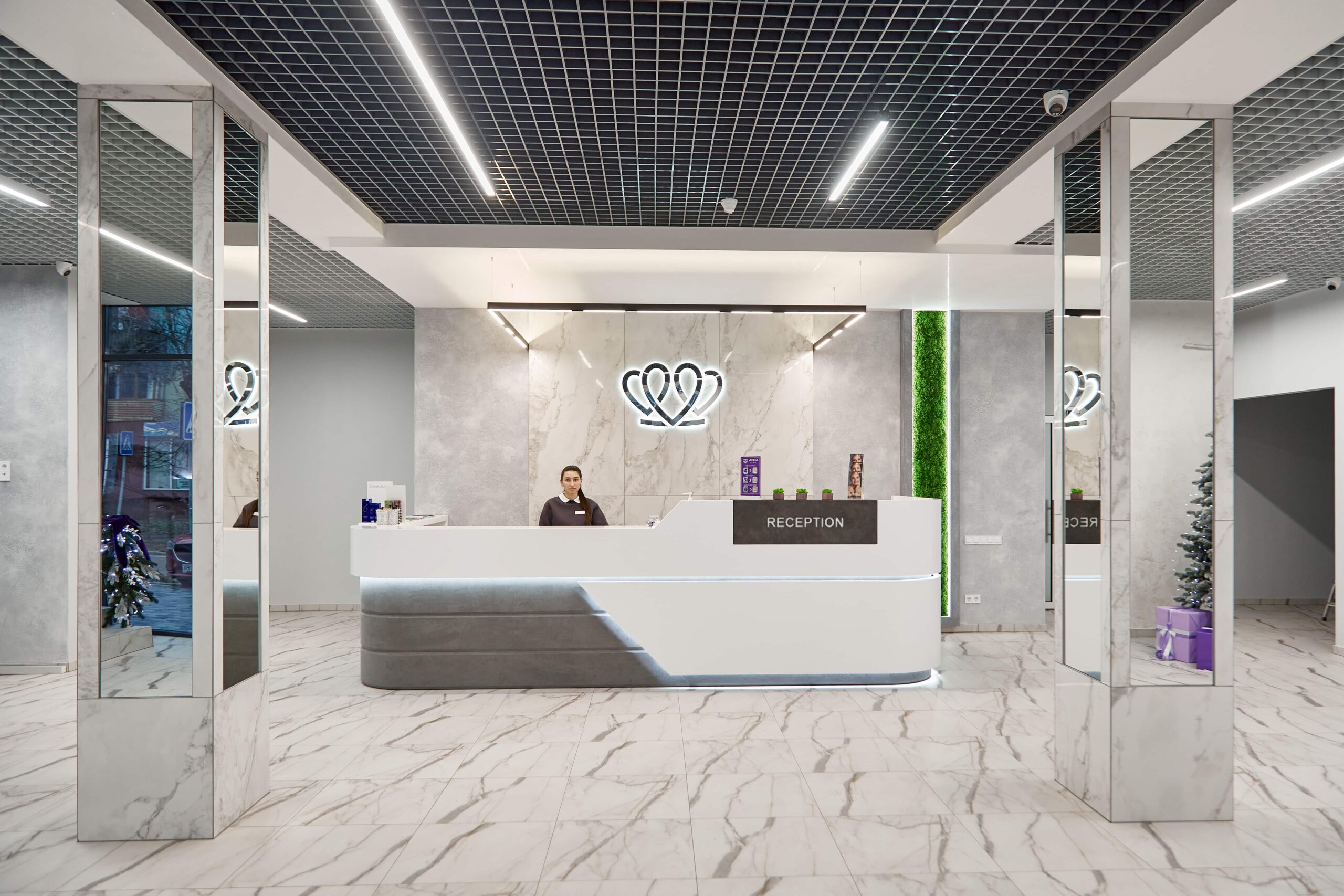
📍 Lviv, Ukraine
A dental clinic in Lviv with a separate doctor for each field: oral surgery and implants, prosthodontics, restorative dentistry, endodontics under a microscope, periodontics, orthodontics and paediatric dentistry.
The main difference is the thread geometry. The thread is deep and thin and the core of the implant is narrow, so the size name gives the outer diameter of the thread. Such a thread reaches further into the bone and increases the area of contact with it, which gives a better mechanical hold in porous bone. The second feature is the Xpeed surface with incorporated calcium, designed to speed up integration. The system on its own does not determine the result: bone volume, implant position, the bite and hygiene matter far more.
At the clinics MediUkraine works with, an AnyRidge implant costs from USD 562 which is the surgical stage for one implant. The prosthetic part is charged separately: a MegaGen abutment is a separate item, and crown placement is from USD 280. A consultation with a CT scan costs from USD 20. Preparatory procedures, bone grafting or a sinus lift, and a temporary restoration may be added to the total. The final cost is set by the clinic according to the treatment plan after an examination.
Porous bone is the typical situation in which this system is considered. The deep thread grips a larger volume of cancellous tissue, and the implant site is deliberately made narrower so that the bone is compacted around the threads. But geometry does not replace volume: if the ridge lacks height or width, a sinus lift or bone grafting is needed whichever system is chosen. What exactly is needed in your case can be seen only on a cone beam CT scan.
Sometimes, yes, but this is decided not by the patient or the implant brand but by the figures obtained during the operation. The reference points are an insertion torque of around 35 N·cm and an ISQ stability value of around 70 and above. If they are lower, a cover screw or healing abutment is fitted and the implant is left to integrate. Even with immediate loading, the crown is a temporary one, kept out of direct contact with the opposing teeth, so that chewing pressure does not loosen the implant in the first weeks.
Usually three to six months. Osseointegration takes 2–3 months in the lower jaw and 3–6 months in the upper; if bone grafting or a sinus lift was done, the period extends to 6–9 months. After that, another 2–4 weeks go on shaping the gum contour around the healing abutment, followed by the scan, fabrication of the crown and fitting. The intermediate visits are suture removal on day 7–10 and a check-up before the prosthetic stage.
Ten-year observations show implant survival of over 90%, but these are average figures for large groups, not a forecast for an individual. How long it lasts depends on hygiene, smoking, diabetes control, a history of periodontitis, bruxism and the regularity of check-ups. Problems most often start not with the implant itself but with inflammation of the mucosa around it. The minimum maintenance is professional cleaning twice a year and a follow-up X-ray once a year.
Ask the clinic for the implant passport with the product code and serial number, your discharge summary and the cone beam CT scan file. With these details a dentist can select a compatible prosthetic component: MegaGen is distributed in many countries, so the system's components are available not only where the operation took place. MediUkraine keeps copies of the documents and, if needed, arranges a video call with the doctor who performed the operation.
Tell us what you need: we will suggest a clinic and a doctor and send you a cost estimate.
Request a consultation →