| Service | 🇺🇦 Ukraine | 🇨🇿 Czech Republic | 🇹🇷 Turkey |
|---|---|---|---|
| Fissure sealing | from USD 17 | from USD 29 | from USD 26 |
| Preventive dental hygiene, ages 6–12 | from USD 22 | from USD 64 | from USD 63 |
| Paediatric dentist consultation | from USD 12 | from USD 71 | from USD 43 |
Prices in the “Ukraine” column come from MediUkraine’s partner clinics. The Czech Republic and Turkey columns show the lower bounds of prices published by clinics there (for Turkey, also the Turkish Dental Association’s recommended 2026 tariff), collected in August 2026 and converted to US dollars at the rate on the day of collection. A dash means we could not find a comparable published price. In any country, the final cost is set by the clinic after an examination.
Fissures are the natural grooves on the chewing surface of molars and premolars. In some children they are wide and shallow; in others they are narrow and deep, shaped like a drop or a flask: the entrance is about 0.1 mm wide, while the inner part is wider. A toothbrush bristle is about 0.2 mm in diameter and simply cannot get into such a groove, so plaque stays there even with careful brushing.
That is why a child's first cavity most often appears on the chewing surface. The first permanent molar erupts at 6–7 years, and its enamel goes on maturing for about two more years, taking up minerals from saliva; during this period it dissolves in acid more easily than the enamel of a mature tooth. On top of that, a six-year-old is simply less skilled with a toothbrush than an adult and tends to miss the area behind the last tooth altogether.
The procedure involves filling the grooves with a flowable material and curing it with a lamp. The surface becomes smooth: plaque is washed off it by saliva and removed by the brush, and the entrance to the fissure is sealed off from bacteria and acids. This is not a filling: healthy tissue is not removed, and when a narrow groove is opened, the intervention does not go beyond the enamel.
The indications are specific: the tooth has just erupted; the grooves are deep and closed; the child has already had caries or has a lot of plaque; a diet with frequent snacking; orthodontic appliances; limited ability to brush well. Baby molars with deep grooves are sealed too, usually after the age of three, if the child can cope with the visit. The procedure is not done when there is already a carious cavity in the groove: that is treated first. Nor is a tooth sealed if it has only partly erupted and its surface cannot be kept dry, and sealant is not relied on if caries is developing on the contact surfaces between the teeth, since the material does not reach them. Wide grooves that a brush can reach do not need sealing either.
MediUkraine is a treatment search and coordination service, not a clinic. We select the clinic and the paediatric dentist, arrange the date and support your family throughout, including if you are travelling from abroad. Which teeth to seal, and how, is decided by the dentist after an examination.

Travel. Ukrainian airspace is closed, so there are no commercial flights. Patients reach Lviv overland, most often from Poland: Rzeszów and Kraków airports are the usual entry points, with a train, bus or private transfer onward to the border and on to the city. Lviv is roughly 70 km from the Polish border, the shortest crossing of any Ukrainian city.
Visas. Citizens of the EU, the United Kingdom and the United States do not need a visa for short stays in Ukraine. Rules depend on your citizenship, so check your own before booking.
Safety, plainly. Ukraine is at war. Air raid alerts occur in Lviv, and an appointment can be interrupted by one. Several governments advise against travel to Ukraine, and while that advice stands, ordinary travel and medical insurance is often void — confirm your cover with your insurer before you commit to anything.
Language. MediUkraine handles correspondence, scheduling, the written treatment plan and the quote in English. The clinic's team communicates with international patients in English.
Payment. You pay the clinic directly. Our coordination service is free of charge for you.
More on travel, safety and insurance: Safety and travel.
The main factor in success is timing. The first permanent molar erupts at 6–7 years and most often becomes the first tooth that needs treatment. The grooves are best sealed as soon as possible after the chewing surface has fully emerged from the gum and can be kept dry: in practice that means the first 6–12 months after eruption. The second permanent molars erupt at 11–13 years and the premolars at around 10–12, and for each tooth the window is counted separately, from its own eruption, not from the child's age.
The reason for the urgency is post-eruptive enamel maturation. The enamel of a newly erupted tooth contains fewer minerals and has a more porous surface; it gains strength from saliva over about two years. During the same period the grooves have not yet been smoothed by chewing, and the child's brushing skills are only just forming. Damage to the chewing surfaces peaks in exactly these two years, so a missed window does not mean "we'll do it later" but "most likely we'll be treating it".
Before sealing, the grooves have to be examined, and this is a stage in its own right. The surface is cleaned, dried with air and inspected in good light, often under magnification: dried enamel with early demineralisation turns chalky white, and a carious cavity under the enamel shows as a greyish shadow. A stained groove is not a diagnosis in itself: a brown line can also appear on dense, arrested enamel. If in doubt, the dentist adds laser fluorescence or orders a bitewing X-ray, which also shows the contact surfaces. The choice of method depends on the outcome of this stage.
The non-invasive method is used when the grooves are open, their bottom is visible and there is no doubt about the state of the enamel. The surface is cleaned with a brush and paste or with an air-abrasion stream, the tooth is isolated from saliva, phosphoric acid gel is applied for 15–30 seconds, rinsed off with water and thoroughly dried: properly prepared enamel looks matt and chalky. The sealant is then placed in the grooves, spread with a probe so that no air bubbles remain, and cured with a lamp for 20–40 seconds. Finally the bite is checked with articulating paper and any excess is ground away.
The invasive method, or fissurotomy, is needed when a groove is narrow and closed, the bottom cannot be seen and the staining raises suspicion. The entrance to the fissure is opened with a fine bur by a fraction of a millimetre, just enough to see the bottom and let the material fill the whole groove without leaving voids. The intervention does not go beyond the enamel, anaesthesia is mostly not needed, and sometimes a topical gel is enough. After that the protocol is the same as the non-invasive one. The difference is fundamental: the material simply will not flow into a closed fissure, and sealant applied over the top only masks what is inside.
If, after opening, a small lesion is found within the enamel or the superficial dentine, the dentist does not call the child back for a separate visit. The affected area is cleaned out within the limits of what was found and closed with composite, and the remaining grooves of the same tooth are covered with sealant in the same session. This is halfway between prevention and a filling, and its price is in between too.
There are two main types of material. Composite sealants based on resins are the standard choice: they hold more firmly than other materials, because after etching the resin flows into the micropores of the enamel. They come clear or opaque; for children an opaque white or coloured one is chosen more often, as it is easier to see at a check-up. Filled composites with a mineral filler are more resistant to wear; unfilled ones are more fluid and flow better into narrow grooves. They share one strict requirement: a completely dry surface. A drop of saliva under the material and the bond is lost, even if everything looks fine from the outside.
Glass ionomer cements work differently. They bond chemically with the tooth tissue, tolerate a little moisture and release fluoride into the adjacent enamel, strengthening it. The trade-off is lower mechanical strength: such material wears faster and is lost from the chewing surface more often. So glass ionomer is chosen mainly where composite cannot be placed: the tooth has partly erupted, the child cannot tolerate long isolation, or the visit takes place under a school programme without full equipment. It is a deliberately temporary solution: once the tooth has fully erupted, the sealant is replaced with composite. An intermediate group consists of resin-modified glass ionomers and compomers, which combine fluoride release with greater strength.
Now for how long sealants last, which is worth knowing before you pay. A composite sealant placed in a dry field remains fully intact in most children during the first year, and after five years it is still whole on roughly half to two thirds of teeth; the rest have lost some material. This is not a sign of poor work: the sealant wears with chewing and is renewed. That is why an examination every six months is part of the method, not a formality: partial loss of material is visible only to the dentist, and an exposed part of the groove under the edge of the sealant is the worst possible state.
Finally, the limits of the method. Sealant covers only the pits and grooves of the chewing surface: it does not protect the contact surfaces between the teeth, the area near the gum or the gum margin, so brushing twice a day, flossing and fluoride toothpaste all still apply. Children at high risk of caries are also prescribed fluoride varnish several times a year, and early demineralisation on smooth surfaces is treated with resin infiltration. Sealing is one tool of a prevention programme, not a substitute for it, and no dentist will promise that a sealed tooth will definitely not decay.
A composite sealant is fully cured with the lamp, so there are no restrictions straight after the visit: the child can eat and drink on leaving the surgery. If glass ionomer cement was used, it is better to stick to soft food for the first few hours, as it reaches its final strength more slowly.
On the first day the child may say the tooth "is in the way" or "feels higher". A difference of a few tenths of a millimetre really can be felt, and it usually disappears within a day or two as the material wears in. If the feeling lasts longer, or the child has started chewing on one side, come back: adjusting the bite takes a few minutes.
There is no pain after the procedure: no tissue below the enamel was prepared and the nerve was not touched. If the tooth does react to cold or sweet things, book an extra check-up: the most likely cause is caries on another surface, unrelated to the sealed grooves.
The first check-up is scheduled after six months. The dentist dries the surface, examines the edge of the sealant under magnification and checks with a probe for any area where the material has come away. Partial loss is corrected by adding material at the same visit; if the sealant has been lost completely, the surface is etched and sealed again.
There is no visible change to judge: the tooth looks the same as before the procedure. There is only one real measure: whether caries has appeared on the chewing surface over the years of follow-up. That is why the programme is designed for years rather than a single visit, and there is no point judging it after a week or a month.
Families travelling from abroad should agree follow-up arrangements in advance. You receive a summary listing the sealed teeth, the material used and the date of the next check-up, and photos of the chewing surfaces can be passed to a dentist where you live, so that follow-up can continue without starting diagnosis from scratch.
Step 1. Examination and decision. The dentist cleans the chewing surface, dries it with air and examines the grooves under magnification, adding laser fluorescence or a bitewing X-ray if needed. This is where the key decision is made: whether the tooth is ready for sealing, needs treatment first, or is better left for a few months until it has fully erupted.
Step 2. Cleaning the surface. The grooves are cleaned with a rotating brush and paste or with an air-abrasion stream to remove plaque and food debris right down to the bottom. If a groove is narrow and closed, it is opened there and then with a fine bur by a fraction of a millimetre: this is the invasive method, and it takes a minute or two per tooth.
In total, one tooth takes 10–15 minutes, and the four first permanent molars 40–50 minutes with pauses. Between cleaning the grooves and checking the bite come three more essential stages: isolating the tooth from saliva, etching the enamel with acid followed by rinsing, and placing the sealant and curing it with a lamp. No anaesthesia is needed with the non-invasive method, and there is no hospital stay or recovery period: the child leaves the surgery and returns to school and normal food the same day. The only next step is a check-up in six months.
Sealing the grooves is not a one-off procedure but one step in a programme spanning eight to nine years. The first permanent molars are sealed at 6–7 years, the premolars at around 10–12, and the second molars at 11–13. Each tooth enters the programme separately, in its own window after eruption, so the child sees the dentist on a schedule, not only when something hurts.
The schedule is built around a check-up every six months, at which the dentist checks that existing sealants are intact, looks for newly erupted teeth suitable for sealing and assesses hygiene. For children at high risk of caries the interval is shortened to three or four months.
The examination is usually combined with professional hygiene and an application of fluoride varnish. These procedures work where sealant does not reach: on the contact and smooth surfaces. The dentist also teaches the child to brush, focusing on the area behind the last molar, which is most often missed.
If caries is found at a check-up, it is treated within the same cycle, without waiting for the next scheduled visit. A baby tooth is treated as carefully as a permanent one: it holds the space for the permanent tooth, and inflammation near its root can damage the bud of a tooth that has not yet erupted.
The programme gradually winds down at around 14–15 years, when all the chewing teeth have erupted, the enamel has matured and the grooves have been partly smoothed by chewing. After that the teenager moves on to the adult schedule of check-ups, and existing sealants are simply monitored and renewed for as long as needed.
The procedure itself is minimally invasive: the nerve is not touched, no tissue below the enamel is prepared, and no anaesthesia is needed with the non-invasive method. So the risks here are not surgical but technical, and almost all of them come down to the quality of isolation and diagnosis.
The most common problem is saliva getting under the material. The bond is lost, a gap forms between the sealant and the enamel, and bacteria get into it. From the outside the tooth looks sealed, so such an area is found only at an examination under magnification on a dried surface. This is the main reason why a check-up every six months is part of the method rather than an optional extra.
The second issue is sealing over undiagnosed caries. Studies show that under an intact sealant, caries usually slows down or stops: the bacteria are cut off from their supply of carbohydrates. But this holds only while the seal is intact; once material is partly lost, the covered area is no longer protected. That is why, at the slightest doubt, the groove is opened with a bur and the bottom inspected, rather than covered blindly.
Technical complications are rare and are corrected on the spot. Excess material that raises the bite is ground away; an air bubble within the sealant is noticed immediately after curing and that area is redone. The etching gel must not come into contact with the soft tissue of the mouth; if it does, it causes brief stinging, which is why the work is done with isolation and suction.
Allergic reactions to components of composites have been described but are rare; tell the dentist about any known allergies, including to latex, before work begins. Bisphenol A (BPA) deserves a separate note: trace amounts of related compounds can be released from the surface layer in the first hours after curing, and to avoid this the surface is wiped after curing and the child is asked to rinse. The measured amounts are very small, and professional dental associations consider the benefit of preventing caries to outweigh this risk.
There are few contraindications, and they are specific: a carious cavity in the groove, which needs to be treated rather than covered; a tooth that has partly erupted and whose surface cannot be kept dry; active caries on the contact surfaces, which needs other treatment first. A special case is a child who, at their age, cannot yet cope with all the stages: then either glass ionomer cement, which is less sensitive to moisture, is used, or the procedure is postponed for a few months and started with adaptation visits. Whether sealing suits a particular child and which teeth are ready for it can be determined only by the dentist after an examination.
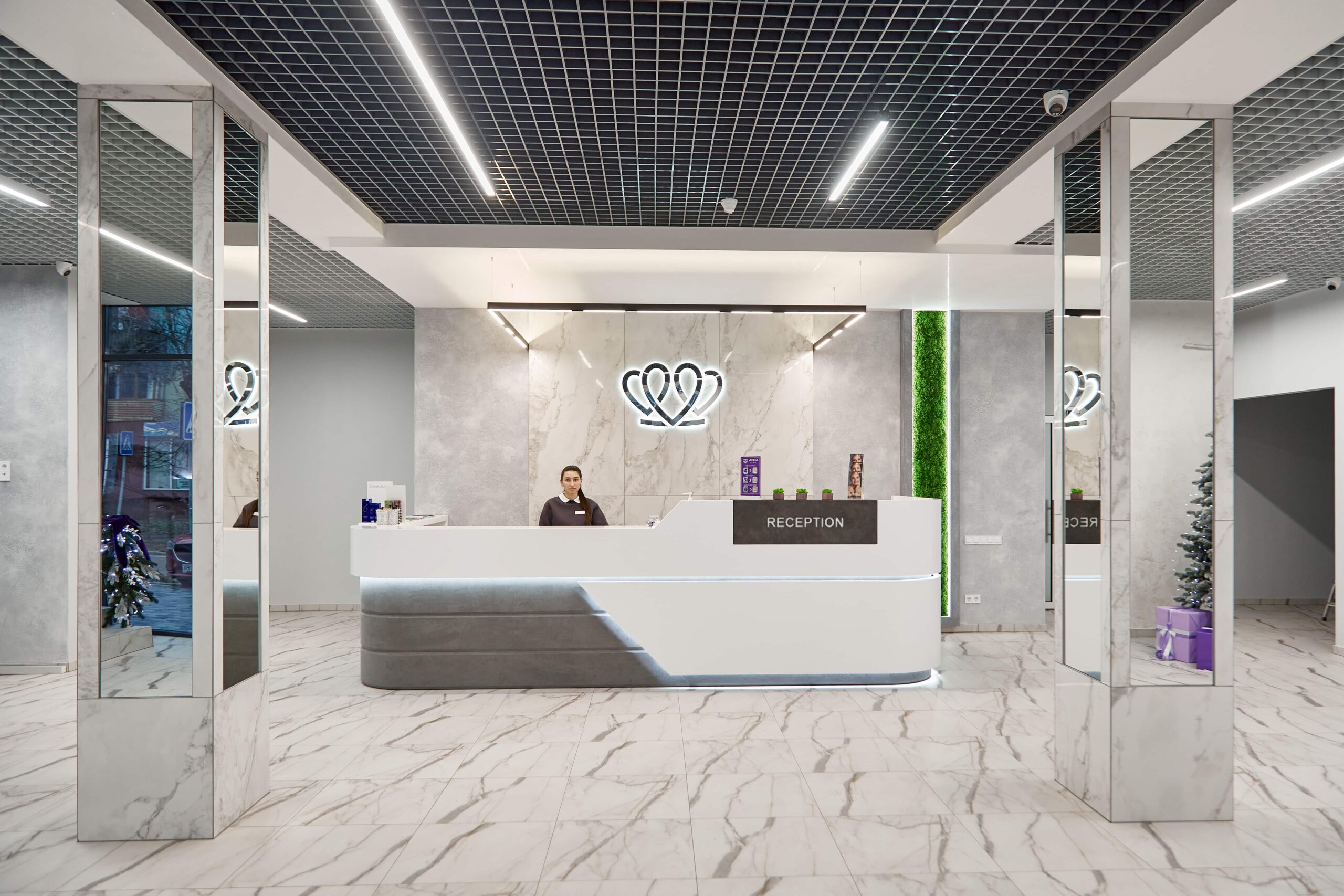
📍 Lviv, Ukraine
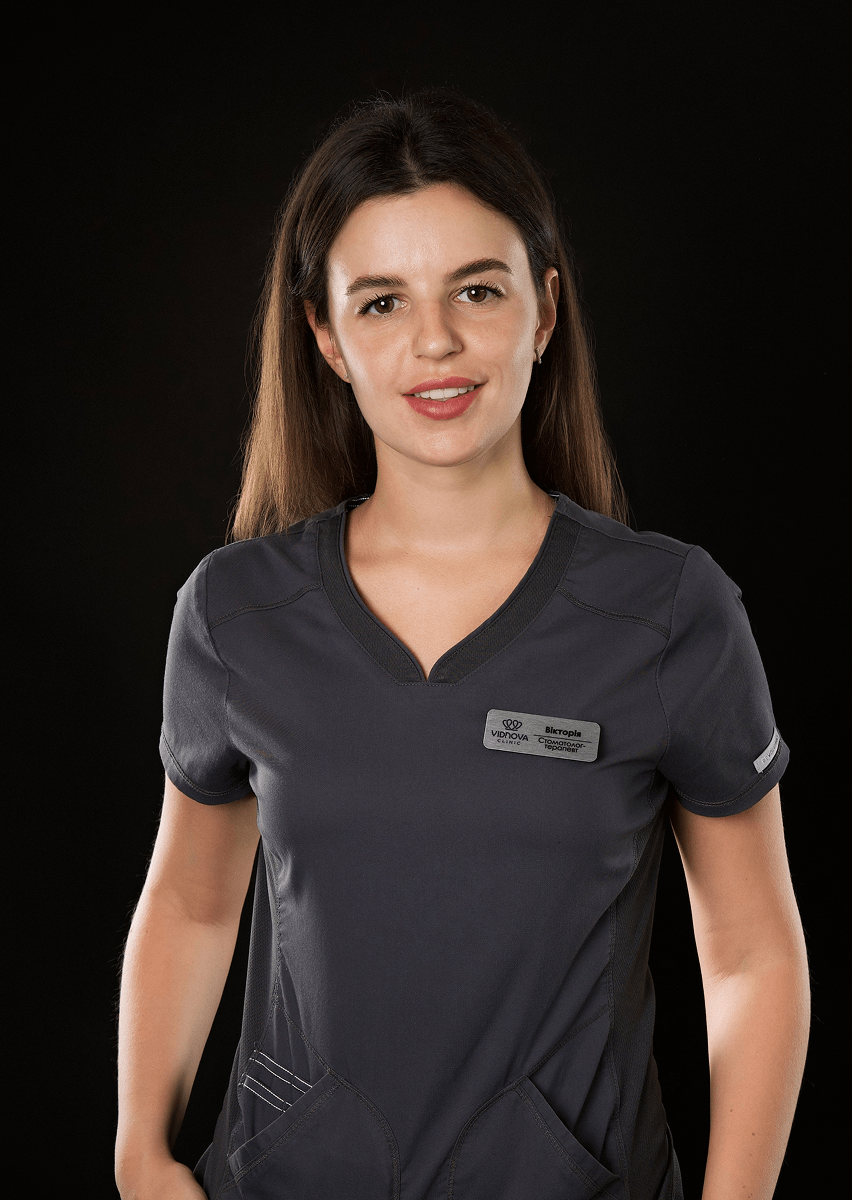
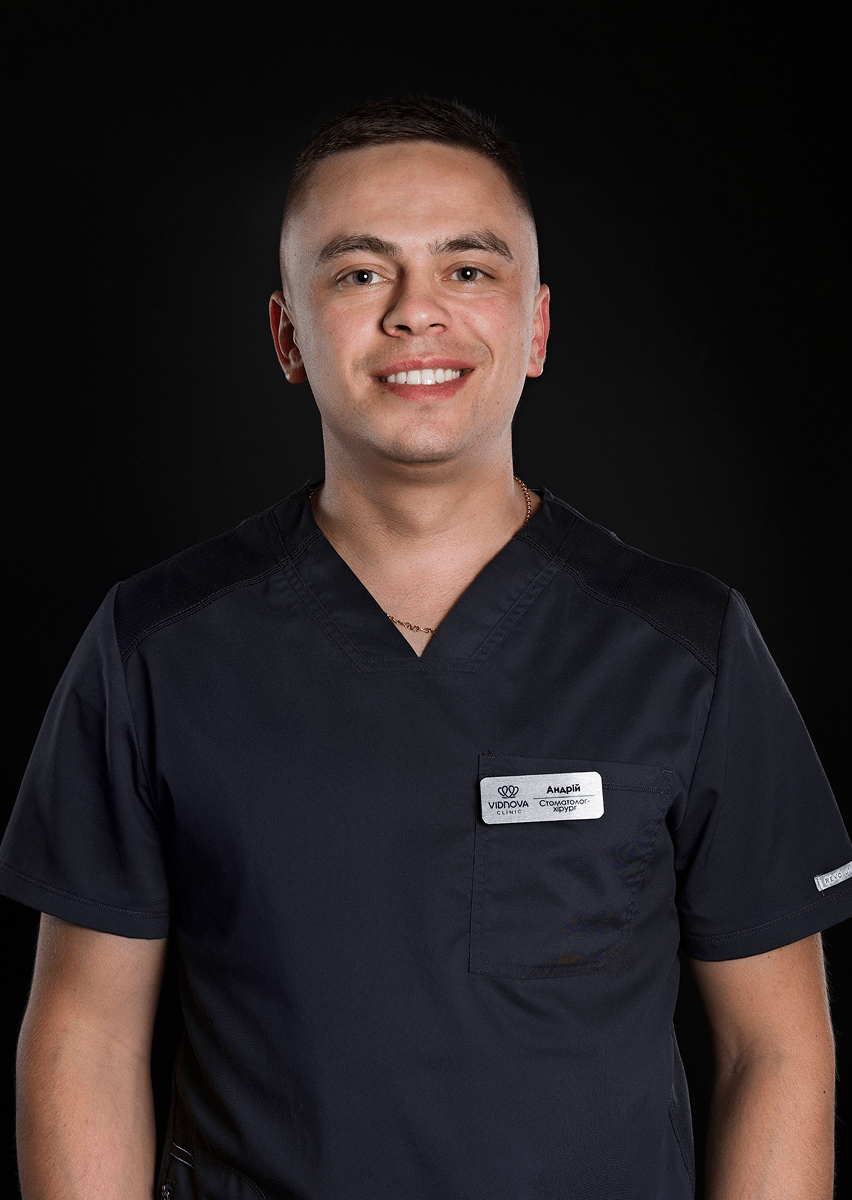
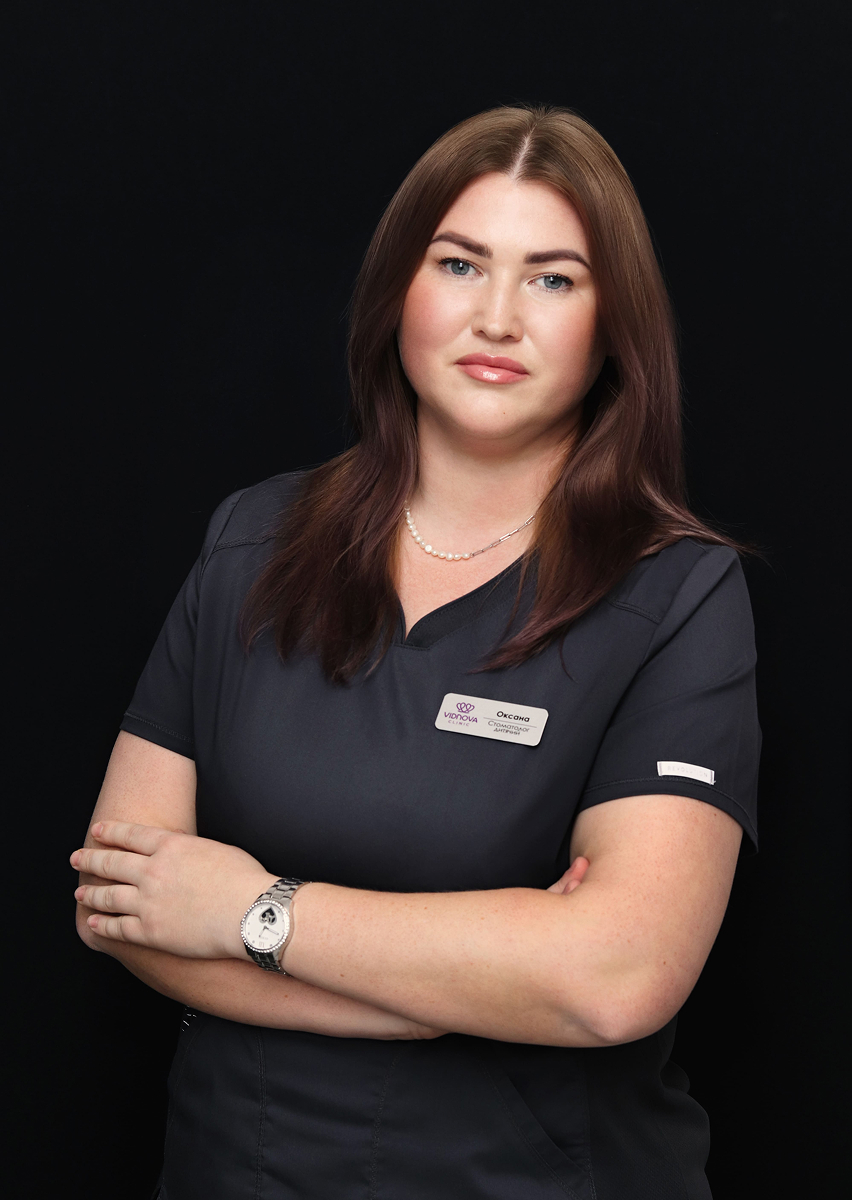
A dental clinic in Lviv with a separate doctor for each field: oral surgery and implants, prosthodontics, restorative dentistry, endodontics under a microscope, periodontics, orthodontics and paediatric dentistry.
What matters is not the child's age but when each tooth erupts. The first permanent molars come through at 6–7 years, and they are best sealed within the first 6–12 months after the chewing surface has fully emerged: that is when the enamel is still maturing and is most easily damaged. The premolars erupt at around 10–12 years, and the second molars at 11–13. Baby molars with deep grooves are usually sealed after the age of three if the child is at high risk of caries.
At MediUkraine's partner clinics, the procedure starts from USD 17 per tooth. A paediatric dentist consultation costs from USD 12, and professional hygiene for a child aged 6–12 from USD 22; it is usually done before the procedure, because the grooves must be completely clean. If caries is found in a groove, it becomes treatment, charged at a different rate. The final sum is set by the clinic after an examination, once it is known how many teeth are being treated and with which method.
With the non-invasive method the tooth is not prepared at all, so there is no pain and no anaesthesia is needed. The most unpleasant part for a child is keeping the mouth open and not swallowing for a few minutes. If a groove has to be opened with a fine bur, the intervention stays within the enamel, which has no nerve endings; if needed, the dentist adds a topical gel. After the visit the tooth does not hurt, and with a composite sealant there are no restrictions on eating.
The non-invasive method is cleaning, etching and applying the material without using a bur; it is used when the grooves are open and their bottom is visible. The invasive method, or fissurotomy, is needed for narrow, closed grooves whose bottom cannot be examined: the entrance is opened with a fine bur by a fraction of a millimetre within the enamel, inspected, and only then sealed. The point is that the material simply will not flow into a narrow fissure, and a covering on top would mask what the dentist has not seen.
A composite sealant holds better mechanically and lasts longer, but it requires a completely dry surface. Glass ionomer cement bonds chemically with the tooth tissue, tolerates a little moisture and releases fluoride, but it wears faster. So glass ionomer is chosen when the tooth has only partly erupted or the child cannot tolerate long isolation, and it is regarded as a temporary solution: as soon as the tooth has fully erupted, the sealant is replaced with composite. The dentist chooses the material for the specific situation.
During the first year a composite sealant usually remains fully intact, and after five years it is still whole on roughly half to two thirds of teeth; the rest have lost some material. This is normal wear, not a fault: the sealant is renewed by adding material or applied again. Sealed teeth need to be examined every six months: partial lifting is visible only to the dentist on a dried surface, and an exposed area under the edge of the sealant is more dangerous than an unsealed groove.
Sometimes. Baby molars have grooves no less deep than permanent ones, and their enamel is thinner, so caries spreads faster. The procedure is considered when the child has already had caries, has a lot of plaque or a diet with frequent sugary snacks raises the risk, and when the child can sit calmly through the stages, usually from the age of three. Where the risk is low and hygiene is good, the dentist may limit care to fluoride varnish and check-ups every six months.
Tell us what you need: we will suggest a clinic and a doctor and send you a cost estimate.
Request a consultation →