| Service | 🇺🇦 Ukraine | 🇨🇿 Czech Republic | 🇹🇷 Turkey |
|---|---|---|---|
| Root canal treatment | from USD 67 | from USD 229 | from USD 96 |
| Emergency pain relief | from USD 24 | from USD 72 | from USD 35 |
| Caries treatment | from USD 56 | from USD 119 | from USD 52 |
| Computer-controlled anaesthesia | from USD 13 | from USD 7 | from USD 7 |
Prices in the “Ukraine” column come from MediUkraine’s partner clinics. The Czech Republic and Turkey columns show the lower bounds of prices published by clinics there (for Turkey, also the Turkish Dental Association’s recommended 2026 tariff), collected in August 2026 and converted to US dollars at the rate on the day of collection. A dash means we could not find a comparable published price. In any country, the final cost is set by the clinic after an examination.
Inside the tooth, beneath the enamel and dentine, is a cavity containing the pulp, a soft tissue with blood vessels, nerves and the cells that build dentine. The pulp nourishes the tooth from within and is responsible for its sensitivity. Pulpitis is inflammation of the pulp, and it is almost always bacterial: caries gradually destroys the dentine, micro-organisms reach the pulp chamber, and the tissue inside the tooth responds with swelling.
The pulp is enclosed within rigid walls. The swollen tissue has nowhere to expand, so the pressure inside the chamber rises and acts on the nerve endings. This explains the pain: it comes in waves, gets worse when lying down (that is, at night) and often wakes you up. At first cold causes a sharp flare, while at later stages the pain builds from heat instead, and cold temporarily eases it.
Pulpitis is classed as reversible or irreversible, and the whole approach depends on this distinction. Reversible pulpitis is when the pulp is still able to recover: the pain is brief, lasts seconds after cold and goes away as soon as the trigger is removed, and there are no spontaneous attacks. Irreversible pulpitis is when the inflammation has gone deeper: the pain lasts minutes or hours, comes on by itself, radiates to the temple, the ear or neighbouring teeth, and it is often hard to say which tooth is hurting.
Treatment is needed in either case, and also when the dentist, while preparing a deep cavity, sees that the caries has reached the pulp. Another reason is an injury in which part of the crown has broken off and a pink spot of pulp is exposed: in the first hours the pulp can still be saved. Treatment also has limits. A tooth is not treated when it is broken down below the level of the bone, has a vertical root fracture or has become loose because of bone loss around it. In such cases it is more honest to discuss extraction and a replacement tooth than an attempt that will take several visits and end in extraction anyway.
MediUkraine is a treatment search and coordination service, not a clinic. For dental treatment we work with a partner clinic: Vidnova Dental Clinic in Lviv, 10 Ivana-Teodoziia Kurovtsia Street. We select a dentist with the right specialisation, arrange the date and support you throughout, including if you are travelling from abroad. The diagnosis and treatment approach are decided by the dentist after an in-person examination and an X-ray.

Travel. Ukrainian airspace is closed, so there are no commercial flights. Patients reach Lviv overland, most often from Poland: Rzeszów and Kraków airports are the usual entry points, with a train, bus or private transfer onward to the border and on to the city. Lviv is roughly 70 km from the Polish border, the shortest crossing of any Ukrainian city.
Visas. Citizens of the EU, the United Kingdom and the United States do not need a visa for short stays in Ukraine. Rules depend on your citizenship, so check your own before booking.
Safety, plainly. Ukraine is at war. Air raid alerts occur in Lviv, and an appointment can be interrupted by one. Several governments advise against travel to Ukraine, and while that advice stands, ordinary travel and medical insurance is often void — confirm your cover with your insurer before you commit to anything.
Language. MediUkraine handles correspondence, scheduling, the written treatment plan and the quote in English. The clinic's team communicates with international patients in English.
Payment. You pay the clinic directly. Our coordination service is free of charge for you.
More on travel, safety and insurance: Safety and travel.
Inflammation of the pulp starts with caries and almost never appears suddenly. Bacteria destroy the enamel, then the dentine, and their toxins travel through the dentinal tubules to the pulp long before an opening into the chamber appears. The pulp first responds defensively: it builds reparative dentine and tries to wall itself off. When the bacterial load exceeds what it can cope with, the inflammation becomes persistent. Less often the cause is a crack in the enamel, an injury with part of the crown broken off, overheating during drilling without cooling, or a leaking filling under which bacteria have lived for years.
In reversible pulpitis the whole pulp can still be preserved. The pain is brief: cold causes a sharp flare that passes within a few seconds of the trigger being removed, there are no spontaneous attacks, and the tooth does not trouble you at night. Treatment consists of removing the cause: all the affected dentine is removed, in a deep cavity a thin layer of liner is left at the base, and the tooth is sealed tightly with a restoration. Within a few weeks the sensitivity usually fades, and the tooth keeps its vital pulp.
Irreversible pulpitis is a different situation. The pain comes on by itself, lasts from several minutes to hours, gets worse at night and when lying down, and radiates to the temple, the ear or neighbouring teeth. It is often hard to pinpoint the tooth responsible: the pulp has no position receptors, so the brain cannot localise the pain precisely. At this stage the pulp can no longer be preserved in full, and the only question is how much of it will have to be removed.
The dentist tells the two apart using several signs, not just one. The cold test is done with a chilled cotton pellet, looking not at whether there is a reaction but at how long it lasts after the trigger is removed. Percussion and the response to biting are added, which suggest whether the inflammation has spread beyond the root tip, along with electric pulp testing and a periapical X-ray, which shows the depth of the cavity and the condition of the bone around the root tip. The boundary between reversible and irreversible inflammation is not clear-cut, so the final decision is sometimes made only after the caries has been removed and the pulp itself has been seen.
Methods that preserve the pulp are known as vital pulp therapy. The gentlest option is indirect pulp capping: a thin layer of affected dentine is left over the pulp and covered with the capping material. Direct pulp capping is used when the pulp has been exposed at a single point during caries removal or after a recent injury. Partial pulpotomy removes 2–3 mm of the superficial pulp, and full pulpotomy removes the entire coronal pulp down to the canal openings. In each case, bleeding is controlled first: if it does not stop within a few minutes, the tissue is inflamed more deeply than it seemed, and the method is changed.
The material matters a great deal. Today, bioceramic calcium silicate cements such as MTA and similar products are placed on the cut surface of the pulp: they are alkaline, well tolerated by the tissue and promote the formation of a dentine bridge. Calcium hydroxide, which was used for decades, gives a less predictable seal, so it is used less often in this role. Equally important is a well-sealed restoration over the material, because bacteria getting back in undoes any pulp-preserving treatment.
A tooth with an incompletely formed root is a special case. In a teenager's permanent tooth the root goes on maturing for another 2–3 years after eruption, and it is the pulp that builds it: it thickens the walls and forms the root tip. If the pulp is removed completely from such a tooth, the root will stay short for good, with thin walls and a wide open tip; it is difficult to fill tightly, and the tooth itself is at risk of fracture for years. That is why, after an injury or exposure by caries in a young tooth, a partial pulpotomy is done, leaving the root pulp alive, and the root is given time to finish forming; this approach is called apexogenesis. In primary (baby) teeth, pulpotomy also remains the main method.
When there is nothing left to preserve, the pulp is removed completely and classic endodontics follows. The tooth is isolated with a rubber dam, the chamber is opened, the canal openings are located, the working length is measured with an apex locator and confirmed by an X-ray, the canals are shaped with nickel-titanium instruments and irrigated generously with sodium hypochlorite. The canals are then filled along their full length with gutta-percha and sealer, without voids, and a check X-ray is taken. A root-treated tooth becomes brittle, so on molars and premolars it is covered with a ceramic onlay or a crown rather than a filling alone.
The number of visits depends on the condition of the pulp, not on the patient's preference. Irreversible pulpitis with a vital pulp is often treated in one appointment: the canal is only lightly infected, and there is no point in dragging treatment out. Two or three visits are needed when the pulp has already died, a lesion has appeared at the root tip or there is marked exudation; in that case the canals are filled with calcium hydroxide for 7–14 days between appointments. A further visit is planned for the permanent restoration. A short emergency pain-relief appointment is a separate matter: the dentist numbs the tooth, opens it and relieves the pressure inside the chamber, and schedules full treatment for the next few days.
Anaesthesia in pulpitis is technically harder than with ordinary caries. Inflamed tissue is acidic, and ordinary infiltration anaesthesia works less well in it, so the dentist adds a nerve block, intraligamentary and sometimes intrapulpal injection, and checks sensitivity before starting work. Computer-controlled anaesthesia delivers the solution slowly and at controlled pressure, so the injection is felt less and the numbing is more even. A plain word on devitalising pastes: the arsenic-based products once used to "kill the nerve" over a few days cause necrosis of the gum and bone if left in too long, and the practice has been abandoned.
For the first few days after the appointment the tooth may be sensitive to biting. This is a normal reaction of the ligament that holds the root in place to instruments working near the root tip. The discomfort is usually most noticeable on the first day and eases within 2–5 days; if needed, the dentist recommends a non-steroidal anti-inflammatory painkiller at the usual dose. Avoid chewing on that side until the permanent restoration is in place.
If the pulp has been preserved, the tooth may respond to cold with brief sensitivity for a few more weeks. What matters is not the reaction itself but how it changes: it should get weaker from week to week. A reaction that instead gets stronger, appears at night or lasts longer than a few seconds means that the inflammation has progressed, and the tooth needs to be re-examined rather than waited out.
Some symptoms should not wait for a scheduled visit: pain that builds instead of easing, swelling of the cheek or gum, a raised temperature, an unpleasant taste from under the temporary filling, or the filling falling out. In these cases, contact the clinic the same day: early intervention is usually simpler than treatment put off for a week.
A temporary filling is designed to last weeks, not months: it wears away and begins to let saliva and bacteria back into the tooth. That is why the permanent restoration is planned within 2–4 weeks. The seal of the crown affects the long-term result as much as the quality of the work inside the tooth, and this applies equally to a preserved pulp and to filled canals.
The result is assessed at different times depending on what was done. After pulp preservation the tooth is checked at 3, 6 and 12 months: the response to cold, the absence of spontaneous pain and the condition of the bone around the root tip on the X-ray are reviewed. After complete removal of the pulp the tooth no longer responds to cold, so the only way to monitor it is an X-ray at 6 and 12 months: a lesion in the bone shrinks slowly, and it takes one to two years to disappear.
Clinical studies show a high success rate for partial pulpotomy in teeth with a vital pulp, and canal treatment carried out according to protocol leads to healing in about 85–90% of cases. These are statistics, not a promise: the prognosis for a particular tooth depends on the stage of inflammation, the number of canals and how much tissue has been preserved, and only a dentist can outline it after an examination and an X-ray.
Step 1. Examination, tests and X-ray. The dentist asks about the nature of the pain, checks the response to cold and biting, carries out electric pulp testing if needed and studies a periapical X-ray. This is where the key questions are answered: whether the inflammation is still reversible or not, whether it has spread beyond the root tip, and whether the tooth is worth treating at all. You see the X-ray and receive a quote broken down by stage.
Step 2. Anaesthesia and rubber dam isolation. In acute pulpitis ordinary infiltration is often not enough, so the dentist adds a nerve block or intraligamentary injection, uses computer-controlled anaesthesia with metered delivery if needed, and checks that the tooth really is numb. The tooth is then isolated with a rubber dam: saliva does not get into the cavity, solutions do not run onto the mucosa, and a small instrument cannot be swallowed.
In total the visit takes from 40 minutes to 2 hours: preserving the pulp in a single-rooted tooth is quicker than treating the three or four canals of a molar. Between anaesthesia and isolation at the start and the final X-ray comes the main work: complete removal of caries and access to the pulp, the decision to preserve or remove it, and then either covering the cut surface with a bioceramic material, or measuring the length with an apex locator, shaping the canals with nickel-titanium instruments, irrigating with sodium hypochlorite and filling with gutta-percha. No hospital admission is needed, you can return to your usual activities the same day, and the permanent restoration is planned as a separate visit.
The cycle begins not with the drill but with diagnostics, and ends not with a filling but with a follow-up examination. Getting from the first appointment to a fully restored tooth usually takes two weeks to a month and a half, depending on whether the pulp could be preserved and which restoration was chosen.
The shortest scenario is reversible inflammation: the caries is removed, the base of the cavity is covered with a liner, the tooth is restored the same day, and what remains is a check-up a few months later. A longer scenario is irreversible pulpitis with a vital pulp: the canals are treated and filled in one appointment, and the permanent restoration is planned as a separate visit within two to four weeks.
The longest scenario is a tooth that has been left untreated for a long time. The pulp has already died, a lesion has appeared at the root tip, and between visits the canals are kept under calcium hydroxide for 7–14 days, so the number of appointments rises to two or three. It is the same work, just with more stages and less tooth tissue to spare.
Teeth with an incompletely formed root follow a schedule of their own. After a vital pulpotomy the patient is monitored until the root has finished forming, which takes from a few months to two years, with check X-rays roughly every six months. This monitoring is part of the treatment, not an extra service, and it is planned in advance.
Part of the work can be done outside the trip: the consultation based on existing X-rays is held remotely, the plan and the quote are agreed in advance, and what remains on site are the clinical stages, with a set list of procedures and a known duration. After that the cycle moves into monitoring: an examination and an X-ray at 6 and 12 months, then routine hygiene every six months with a check of the restoration. If the X-ray shows no improvement, the dentist discusses retreatment or other options rather than simply continuing to watch.
The biggest risk in pulpitis is not the treatment itself but waiting. Acute pain eventually subsides on its own, but this is not recovery: it stops because the pulp is dying. The infection spreads beyond the root tip into the bone and periodontitis develops: pain on biting, then swelling, a fistula on the gum, sometimes a cyst. A tooth that could have been treated in one visit while only the pulp was inflamed now needs two or three appointments with an interim dressing, and the chances of saving it fall. "Putting up with it" costs you money and can cost you the tooth.
Complications of the work itself are uncommon, but they are worth knowing about. The best known is a fractured instrument in the canal: nickel-titanium files work close to the fatigue limit of the metal, and in a narrow, curved canal the tip can break off. The fragment is retrieved with ultrasonic tips under the microscope, bypassed or left under observation; if the canal had already been cleaned, the prognosis is usually unaffected. A perforation, a hole right through the wall or floor of the tooth cavity, is closed with a bioceramic material, and the sooner this is done, the better the prognosis.
Other risks relate to irrigating solutions and materials. Filling material pushed beyond the root tip, or sodium hypochlorite getting into the tissue around it, causes sharp pain and swelling that pass within a few weeks under the dentist's supervision, which is why solution concentration, syringe pressure and rubber dam isolation are not treated as minor details. Temporary numbness of the lip after treatment of lower teeth can be linked to the root tip lying close to the inferior alveolar nerve.
Vital pulp therapy carries a risk of its own: the pulp may fail to recover and die after treatment. The tooth then starts to hurt again, or quietly develops a lesion at the root tip, and complete removal of the pulp with canal treatment is needed. That is why such teeth are checked at 3, 6 and 12 months, and the patient is warned about this scenario before treatment, not after. The chances are better when the tooth is young, the bleeding from the pulp stops quickly and the restoration is well sealed.
Devitalising pastes deserve a special mention. The arsenic-based products once used to "kill the nerve" over two or three days cause necrosis of the gum and bone if left in too long, and the pain comes back after them; the practice has been abandoned, and the pulp is now removed straight away under anaesthesia. Likewise, never put a painkiller tablet on the gum: it causes a chemical burn of the mucosa that will have to be treated separately.
Contraindications relate mostly to the condition of the tooth and the patient rather than to the procedure itself. Treatment does not go ahead when the tooth is broken down below the level of the bone, has a vertical root fracture or has become loose because of bone loss around it. Pregnancy, clotting disorders, taking anticoagulants or bisphosphonates, and allergies to anaesthetics or latex should be mentioned to the dentist before starting: planned stages during pregnancy are usually carried out in the second trimester, X-rays are taken with a protective apron, and acute pain is relieved at any stage of pregnancy, because untreated pulpitis is riskier for a pregnancy than a visit to the dentist. You have the right to a second opinion: the X-rays, the record and the quote are yours to keep, and they can be shown to another specialist before the tooth is opened.
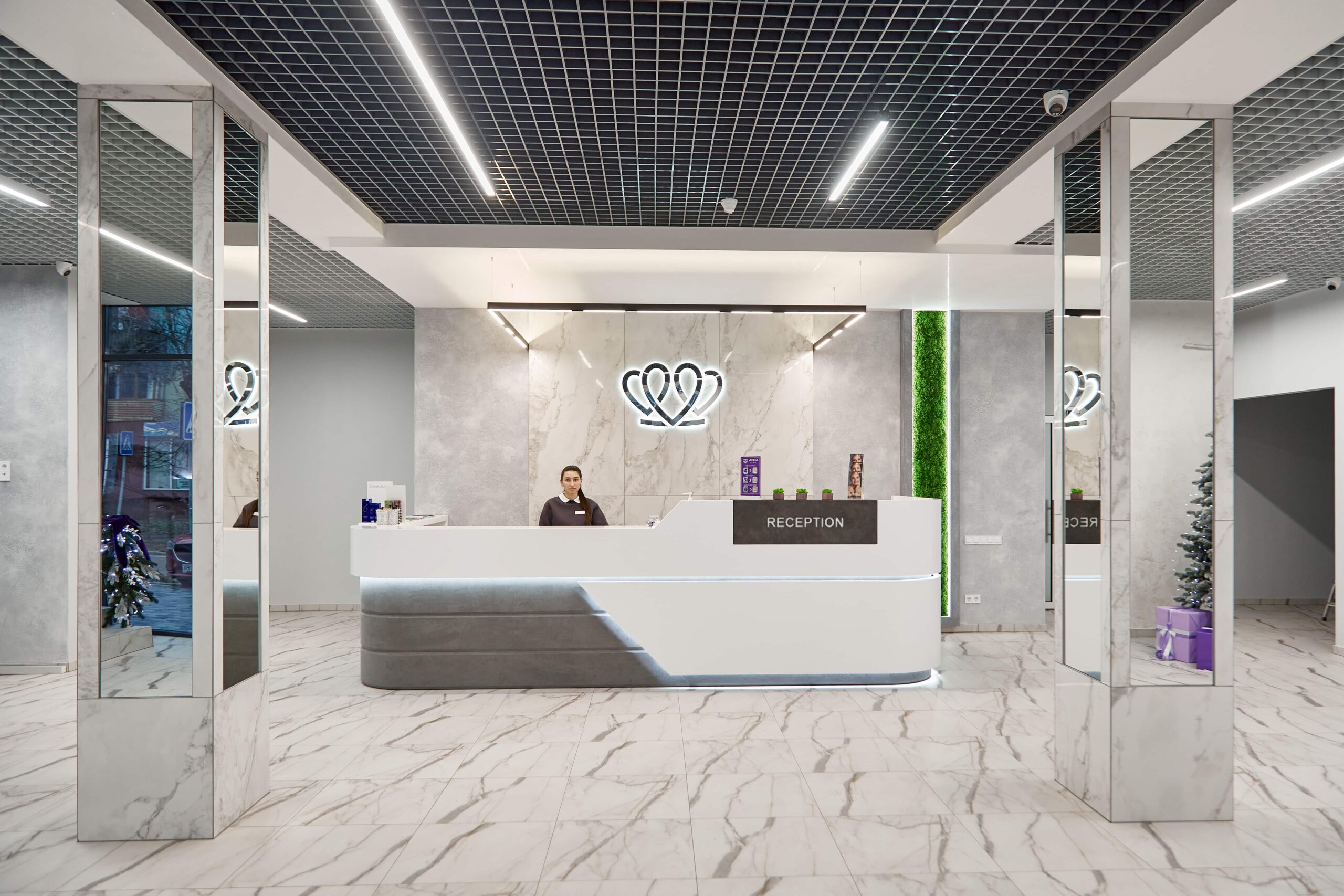
📍 Lviv, Ukraine
A dental clinic in Lviv with a separate doctor for each field: oral surgery and implants, prosthodontics, restorative dentistry, endodontics under a microscope, periodontics, orthodontics and paediatric dentistry.
The main difference is how long the reaction lasts. With increased sensitivity or reversible inflammation, pain from cold lasts seconds and goes away as soon as the trigger is removed. With irreversible pulpitis an attack lasts from several minutes to hours, comes on by itself, gets worse at night and when lying down, and often radiates to the temple or ear. Another sign is not being able to tell exactly which tooth is causing the pain. The dentist makes the final call using tests and an X-ray, not from a description over the phone.
At MediUkraine's partner clinic, treatment of one root canal costs from USD 67, emergency pain relief as a separate visit from USD 24, caries treatment, if the pulp can be saved, from USD 56, and computer-controlled anaesthesia from USD 13. The charge is per canal, so work on a molar with three or four canals costs more than work on an incisor. Restoring the tooth after the canals are filled is charged separately. The prices are indicative; the dentist gives the final figure after an examination and an X-ray.
The pulp is enclosed within the rigid walls of the tooth and has nowhere to expand when it swells. When you lie down, blood flow to the head increases and the pressure inside the chamber rises, so pain that was bearable during the day becomes unbearable at night. On top of that, in the evening there is nothing to distract you, so the sensation is felt more sharply. Night pain that wakes you is a typical sign of irreversible inflammation and a reason to book an appointment for the very next day rather than to keep taking painkillers.
Sometimes, yes. In reversible inflammation it is enough to remove all the affected dentine and seal the tooth tightly, and the pulp stays alive. If it has been exposed at a single point during caries removal or after a recent injury, direct pulp capping or a partial pulpotomy is used: 2–3 mm of the superficial tissue is removed, the bleeding is stopped and the cut surface is covered with a bioceramic material. In irreversible pulpitis with spontaneous and night-time pain, the pulp usually can no longer be saved. The decision is made by the dentist after seeing the tissue under magnification.
Reversible inflammation is treated in one appointment. Irreversible pulpitis with a vital pulp is also often treated in one visit lasting from 40 minutes to 2 hours, after which the restoration is planned separately. Two or three appointments are needed when the pulp has already died or there is a lesion at the root tip or marked exudation: in that case the canals are filled with calcium hydroxide for 7–14 days between visits. Emergency pain relief is a separate short appointment and does not replace treatment.
The pain will indeed subside, but not because the tooth has recovered: the pulp is dying, and the nerve endings stop sending signals. The infection then spreads beyond the root tip into the bone, and periodontitis develops, with pain on biting, swelling, a fistula on the gum and sometimes a cyst. Treating such a tooth takes longer, costs more and needs two or three visits, and the chances of saving the tooth are lower. So a lull after a few sleepless nights is a reason to book an appointment, not a reason to relax.
Numbing an inflamed pulp is harder than numbing a healthy tooth: the tissue is acidic, and ordinary infiltration anaesthesia works less well in it. That is why the dentist adds a nerve block, intraligamentary and, if needed, intrapulpal injection, and checks sensitivity before starting work. Computer-controlled anaesthesia delivers the solution slowly and at controlled pressure, so the injection is felt less. During the work you feel touch and vibration, but not pain; if sensation returns, the dentist adds more anaesthetic, so tell them straight away.
Tell us what you need: we will suggest a clinic and a doctor and send you a cost estimate.
Request a consultation →