| Service | 🇺🇦 Ukraine | 🇨🇿 Czech Republic | 🇹🇷 Turkey |
|---|---|---|---|
| Neodent implant | from USD 373 | from USD 1,146 | from USD 470 |
| Crown placement | from USD 280 | from USD 476 | from USD 260 |
Prices in the “Ukraine” column come from MediUkraine’s partner clinics. The Czech Republic and Turkey columns show the lower bounds of prices published by clinics there (for Turkey, also the Turkish Dental Association’s recommended 2026 tariff), collected in August 2026 and converted to US dollars at the rate on the day of collection. A dash means we could not find a comparable published price. In any country, the final cost is set by the clinic after an examination.
Neodent is a Brazilian manufacturer of dental implants based in Curitiba, founded in 1993. Since 2012 the company has been part of the Straumann group, covering the mid-price range of its portfolio while the Straumann brand remains premium. For you, this means the manufacturing and research backing of a large group at a lower price for the implant itself.
The implant is a titanium screw placed in the jawbone to replace a lost root. Over several months the bone grows into its textured surface, and only after this osseointegration are the abutment and crown fitted. The principle is the same for all systems; they differ in thread design, surface treatment, the implant–abutment connection and the range of prosthetic components.
The system is used in typical clinical situations: replacing a single missing tooth or several in a row, and also a jaw with no teeth at all, where implants support a fixed denture. The Grand Morse line covers diameters from 3.5 to 7.0 mm, so it can be used in the narrow front of the mouth, in the molar region and in a fresh socket straight after an extraction.
Implant treatment is ruled out or postponed in the case of uncontrolled diabetes, high-dose bisphosphonates or denosumab, active periodontitis with loose teeth, untreated infection at the site, pregnancy, age before the jaws have finished growing, a history of radiotherapy to the maxillofacial area. Some of these are temporary: the question is revisited after treatment or once the condition is stable.
Sometimes the doctor will suggest a different system, and that is normal. Surgeons follow the protocol of the system they trained on, and the instruments, drill sequence and recommended loading times differ between manufacturers. Grand Morse has been made since 2017, so there is less long-term data for this connection than for platforms on the market since the nineties: if ten-year-plus data matter to you, say so at the consultation.
MediUkraine is a treatment search and coordination service, not a clinic. We choose a clinic and a doctor who works with this system, arrange the visit dates and support you throughout, including if you are travelling from abroad. Whether an implant can be placed, and which system to use, is decided by the doctor after an in-person examination and a review of the CT scan.

Travel. Ukrainian airspace is closed, so there are no commercial flights. Patients reach Lviv overland, most often from Poland: Rzeszów and Kraków airports are the usual entry points, with a train, bus or private transfer onward to the border and on to the city. Lviv is roughly 70 km from the Polish border, the shortest crossing of any Ukrainian city.
Visas. Citizens of the EU, the United Kingdom and the United States do not need a visa for short stays in Ukraine. Rules depend on your citizenship, so check your own before booking.
Safety, plainly. Ukraine is at war. Air raid alerts occur in Lviv, and an appointment can be interrupted by one. Several governments advise against travel to Ukraine, and while that advice stands, ordinary travel and medical insurance is often void — confirm your cover with your insurer before you commit to anything.
Language. MediUkraine handles correspondence, scheduling, the written treatment plan and the quote in English. The clinic's team communicates with international patients in English.
Payment. You pay the clinic directly. Our coordination service is free of charge for you.
More on travel, safety and insurance: Safety and travel.
The brand's current platform is called Grand Morse. Its core feature is a single conical implant–abutment connection (an indexed 16-degree Morse taper) for all implant diameters, from 3.5 to 7.0 mm. The practical benefit for you is simple: the prosthetic components are standardised, so if the crown has to be remade years later, the doctor will not have to hunt for a rare abutment for a particular diameter.
A conical connection holds the abutment in the implant by friction along the taper, not by the screw alone. In laboratory studies such connections show a smaller microgap and less micromovement under load than a traditional external hex, which is one of the factors that keep the bone around the implant neck stable. Platform switching is also built in: the abutment is narrower than the implant platform, so the junction sits away from the edge of the bone.
Grand Morse includes several implant designs for different clinical situations. Helix GM is an all-purpose implant with a tapered body, a progressive thread and cutting chambers: it achieves primary stability in soft bone and in a fresh extraction socket, which is why it is used in most cases. Drive GM is used when high insertion torque is needed; Titamax GM has a simpler cylindrical geometry for dense bone. There are also narrow single-stage implants for very tight gaps, and the Zygoma GM zygomatic implant, a specialised solution for severe upper-jaw bone loss offered at only a few centres.
Lengths range from about 8 to 18 mm, and the combination of length and diameter is chosen from the CT scan, not by preference. Narrow 3.5 mm implants are used for lower incisors and upper lateral incisors, where the ridge is thin; diameters of 5.0–7.0 mm for molars and wide sockets left after extracting a multi-rooted tooth. Wider does not mean more reliable: if less than a millimetre of bone is left around the implant, the extra width is a drawback, not an advantage.
The system's basic surface is Neoporos: the titanium is sandblasted and acid-etched to create a micro-rough texture that the bone grows into. Most mid-range and premium systems use this type of surface, and it accounts for most of the brand's clinical data.
Acqua is the same surface with additional treatment that makes it hydrophilic: blood spreads over the implant at once instead of forming droplets. The idea is that the clot and cells are in contact with the surface from the first minutes, so the early stages of osseointegration go faster. This version costs more, and the extra cost is not always justified.
Acqua is usually chosen when the bone is soft, as at the back of the upper jaw, when the implant goes straight into an extraction socket, when the aim is to shorten the time to loading, or when healing is expected to be slower, as in smokers or patients with controlled diabetes. What a hydrophilic surface cannot do: it does not remove the need for osseointegration, it does not replace bone grafting where bone is lacking, and it does not justify early loading of an implant that is not firmly held. The doctor sets the timeline by primary stability, not by the surface name.
There are several placement protocols, and the choice is a clinical one. Conventional two-stage: the implant is closed with a cover screw, left to integrate, and then the site is reopened to fit a healing abutment. Single-stage: the healing abutment is fitted straight away, so no second surgical procedure is needed. Immediate placement: the implant goes into the socket on the day of extraction, which is possible when the socket walls are intact and there is no acute inflammation. Immediate loading: a temporary crown is fitted within the first few days, and the deciding factor is not the patient's wish but the insertion torque, usually from 35 N·cm, together with a measured stability value.
For a full arch the system has the NeoArch protocol: four to six implants, angled multi-unit abutments and a fixed temporary denture within a short time, with the permanent bridge made after osseointegration. This is a separate area with its own indications and limitations, planned differently from single-tooth replacement. The restorative work is mostly digital: a scan body is screwed into the implant, the mouth is scanned and the crown is milled using the manufacturer's digital library. Crowns can be screw-retained or cemented; a screw-retained crown can be removed without damaging it and leaves no excess cement under the gum, a common cause of inflammation around implants.
How does the system compare with premium brands? Mainly in the price of the implant and in the length of published follow-up: Grand Morse was launched in 2017, whereas some premium connections have been made for decades and have more complete ten-year data. Premium lines also offer some options Neodent does not, such as a titanium-zirconium alloy that provides strength at small diameters. At the same time, systematic reviews show that implant survival varies between manufacturers far less than price does: the outcome depends more on CT-based planning, bone condition, hygiene, smoking and the doctor's experience. That is why the system should be chosen with your doctor for your specific case, not by price alone.
Swelling and moderate pain are normal for the first two or three days; this is the expected tissue response, not a complication. The doctor prescribes painkillers, an antibiotic and antiseptic rinses where indicated, and advises a cold compress on the cheek for the first few hours and soft, lukewarm food. Avoid saunas, the gym, flights and hot food during these days.
Sutures come out on day 7–10, and the doctor examines the wound at the same visit. Until then, do not brush the area; use rinses instead and chew on the other side. Contact the clinic if you notice swelling that gets worse after the third day, throbbing pain, pus, a temperature above 38 °C, or numbness that persists after the anaesthetic has worn off.
Osseointegration follows, and it takes up most of the treatment time: usually 3–4 months in the lower jaw and 4–6 in the upper, longer after bone grafting or a sinus lift. The manufacturer states shorter early timelines for the Acqua surface, and in some cases the doctor does shorten the wait, but on the basis of primary stability and a follow-up X-ray, not the surface name.
The restorative stage adds another 2–4 weeks: healing abutment, abutment, scan or impression, and making the crown in the laboratory. You can chew normally on the new tooth once the permanent crown is fitted, and most patients get used to it within a few weeks. The gum contour around the crown takes several more months to settle fully, which is noticeable in the smile zone.
Failures should be discussed openly: some implants do not integrate. This is uncommon and happens mostly in the first months; causes include infection, overheating of the bone during drilling, loading too early, smoking and poorly controlled medical conditions. The implant is then removed, the site heals for 2–3 months, bone graft material is added if needed and a new implant is placed; a second attempt usually succeeds, but that cannot be promised in advance.
Once the crown is fitted, treatment moves into maintenance: a check-up and professional cleaning every six months and a follow-up X-ray once a year to check the bone level around the implant neck. Ten-year studies of the major systems show that more than 90% of implants are still functioning, but that is a statistic, not a promise: only a doctor who has seen your CT scan and the condition of the tissues can predict the outcome in your case.
Step 1. Consultation, CT scan and choice of system. The doctor examines your mouth, assesses the bite and the gums, and refers you for a cone beam CT scan. The scan shows whether there is enough bone, whether grafting is needed, which diameter and length of Grand Morse implant to choose, and which surface (Neoporos or Acqua). You receive a written plan with stages, timelines and a quote.
Step 2. Implant placement. The procedure is done under local anaesthesia, with sedation if needed, and takes 40–60 minutes per implant. The doctor prepares the site with the system's original drills, inserts the implant using a torque wrench to control the force and takes a follow-up X-ray. The wound is stitched; if primary stability is sufficient, a healing abutment or a temporary crown kept out of the bite is fitted straight away.
In total, it takes three to six months from the first consultation to the permanent crown, or up to nine if bone grafting is needed. Between surgery and the crown come osseointegration, the healing abutment, the abutment and making the crown in the laboratory, so there are few active visits in that time: most of it is healing, which you spend at home. Every stage is outpatient, no hospital stay is needed, and you can return to your usual activities the same day after each visit.
Implant treatment is not a single procedure but a process lasting several months, with long breaks between the active stages. If you are coming from another city or from abroad, it splits conveniently into two trips, or three if bone grafting is done as a separate stage.
The first trip is diagnostic and surgical: consultation, CT scan, extraction if needed, implant placement, a follow-up X-ray and a check before you leave. Altogether that takes 2–4 days, of which only a few hours are spent at the clinic. The sticker with the implant's reference and serial numbers goes into your implant passport at this stage.
Then comes the osseointegration period, 3–6 months at home. No active treatment is needed, just thorough hygiene, care not to load the site, and contacting the doctor if anything seems wrong. If the missing tooth is visible when you smile, a temporary replacement is made for this period.
The second trip is restorative: healing abutment, abutment, scan or impression, try-in and fitting of the permanent crown. It takes 5 to 10 days, depending on the dental laboratory's workload and the number of crowns.
After that comes maintenance: a check-up and professional cleaning every six months and a follow-up X-ray every year. The documents stay with you, so follow-up can also be done where you live, and if the crown ever has to be remade, a compatible component can be found using the reference number in the passport. MediUkraine plans both trips and stays in touch between the stages.
Implant placement is surgery, and some after-effects are normal in the first days: swelling, bruising on the cheek, moderate pain and sometimes slight bleeding. These pass within a few days. Contact the clinic if you notice swelling that gets worse after the third day, throbbing pain, pus, a temperature above 38 °C, or numbness that persists after the anaesthetic has worn off.
Surgical complications are uncommon but serious. In the lower jaw, the inferior alveolar nerve can be damaged, causing numbness of the lip, chin or gum, which may be temporary and is sometimes permanent. In the upper jaw, the floor of the maxillary sinus can be perforated, which can lead to sinusitis. The root of a neighbouring tooth can also be damaged. The safeguard is the same in every case: planning from a cone beam CT scan and using a surgical guide rather than drilling by eye.
The main late complication is peri-implantitis, inflammation of the tissue around the implant with loss of bone. It is preceded by mucositis, inflammation of the soft tissue only, which is still reversible. The triggers are well known: poor hygiene, smoking, cement left under the gum with cemented crowns, a history of periodontitis and irregular check-ups. Treatment involves cleaning the implant surface, antiseptics and antibiotics, and in advanced cases surgery or removal of the implant, which is why early detection at check-ups matters so much.
Failed osseointegration is a separate issue: the implant does not fuse with the bone and becomes loose. This happens mainly in the first months after placement, and neither the surface nor the brand protects against it: the condition of the bone, a drilling technique that avoids overheating, smoking and other medical conditions matter far more. The approach is standard: the implant is removed, the site is left to heal, bone graft material is added if needed and a new implant is placed after 2–3 months.
The restoration itself can also have complications: a loose or broken abutment screw, chipped crown porcelain and, less often, a fractured abutment. Prevention is technical: tightening with a torque wrench to the manufacturer's specified torque, a carefully adjusted bite and components designed for this connection. Third-party "compatible" abutments cost less, but the manufacturer has tested the taper fit and the behaviour of the connection under load only for its own parts. That is why you should find out which abutment is included in the quote before the restorative stage, not after.
Contraindications are divided into permanent and temporary. The first group includes severe uncontrolled heart disease and clotting disorders, a history of radiotherapy to the maxillofacial area, and taking bisphosphonates and denosumab at high oncological doses because of the risk of medication-related osteonecrosis of the jaw. The second includes uncontrolled diabetes, active periodontitis with loose teeth, untreated infection at the site, pregnancy, and age before the jaws have finished growing. Smoking does not formally rule out the procedure, but it noticeably raises the risk of peri-implantitis and early implant loss. Only a doctor, after an examination and a review of the scan, can assess the risks in your case.
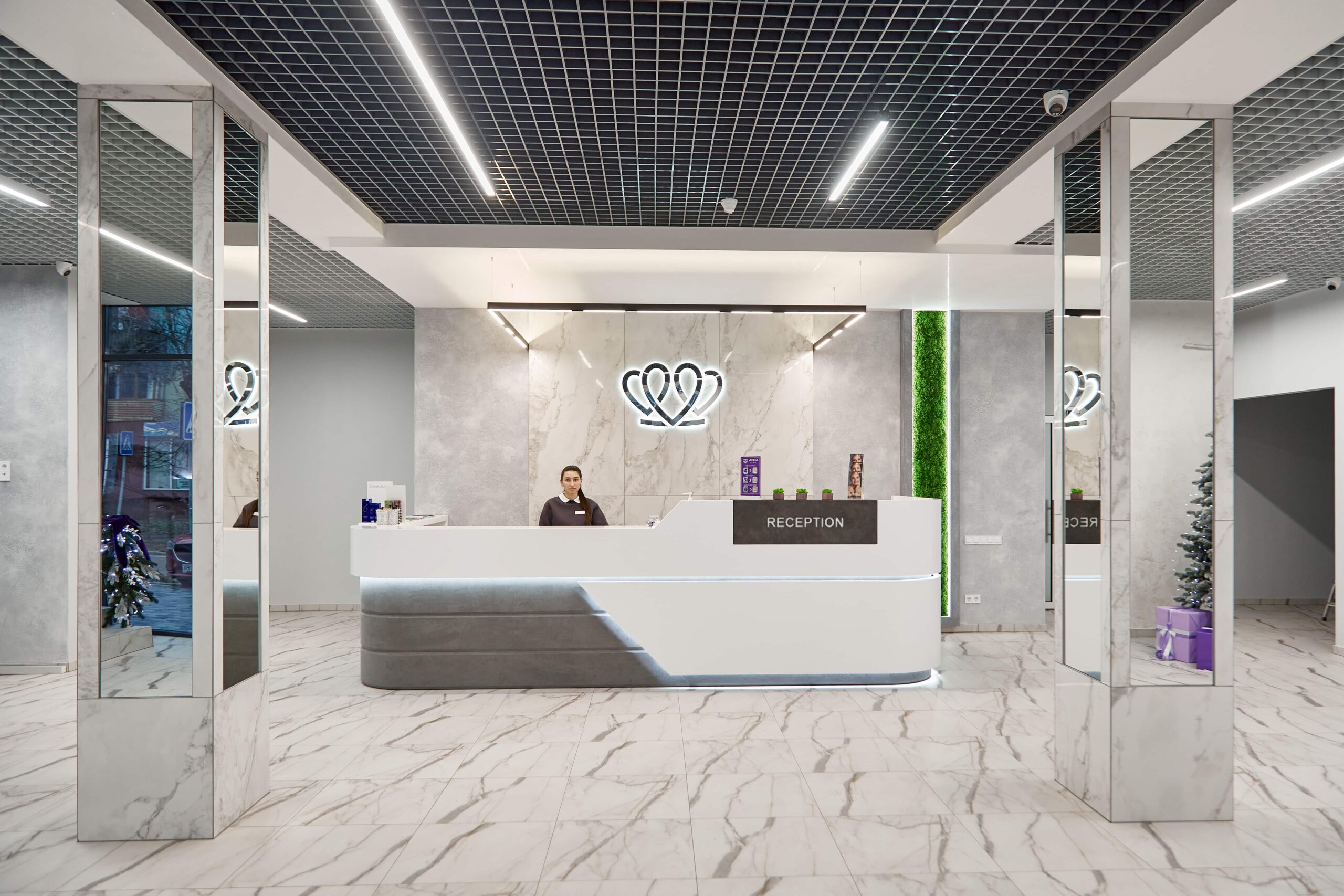
📍 Lviv, Ukraine
A dental clinic in Lviv with a separate doctor for each field: oral surgery and implants, prosthodontics, restorative dentistry, endodontics under a microscope, periodontics, orthodontics and paediatric dentistry.
Mainly in the price of the implant and the amount of published data. Neodent has been part of the Straumann group since 2012 and sits in its mid-price range; the Grand Morse platform was launched in 2017, so there is less ten-year data for this connection than for platforms made for decades. Technically it is a complete system with a conical connection, micro-rough and hydrophilic surfaces and a full range of prosthetic components. Systematic reviews show that implant survival varies between manufacturers far less than price does.
At the clinics MediUkraine works with, placement costs from USD 373. This covers the surgical stage: the abutment is charged separately, and crown placement is from USD 280. So each restored tooth involves at least three items in the quote, plus an extraction, bone grafting or a sinus lift if needed. The doctor confirms the final cost after an examination and a CT scan.
Acqua is a hydrophilic version of the same surface: blood wets the implant immediately, so the early stages of osseointegration go faster. It is usually chosen for soft bone, for placement straight into an extraction socket, when the aim is to shorten the time to loading, or when healing is expected to be slower. In a straightforward case with enough dense bone, paying extra is optional. The doctor decides from the CT scan, so raise this question at the consultation.
Grand Morse is a platform built around a single conical connection with the abutment for all implant diameters, from 3.5 to 7.0 mm. For the doctor this means less chance of choosing the wrong component; for you, it means easier maintenance of the restoration years later, because the abutment for your implant will not have to be tracked down by a rare reference number. A conical connection also fits more tightly than a traditional external hex, which helps keep the bone around the implant neck stable.
Ten-year studies of the major systems show that more than 90% of implants are still functioning. Follow-up for the Grand Morse platform is shorter, because it has been made since 2017. But any such figure is a group statistic, not a promise for an individual: lifespan depends on hygiene, smoking, a history of periodontitis, how regularly you attend check-ups and how the chewing load is distributed. The crown on an implant does not last as long as the implant itself and needs replacing over time.
Sometimes, yes, but it is the surgeon's decision, not the patient's. A temporary crown kept out of the bite is fitted in the first days only when the implant is held firmly; the deciding factors are the insertion torque, usually from 35 N·cm, and a measured stability value. The permanent crown is made after osseointegration in any case. If the bone is soft or bone grafting was done at the same time, immediate loading is ruled out so that the implant can integrate.
Technically, yes: there are abutments on the market sold as compatible with this connection, and they cost less than the originals. But the manufacturer has tested the taper fit and the behaviour of the connection under load only for its own components, so the risk of a microgap and screw loosening is higher with a non-original part. Raise the question before the restorative stage and ask for the reference numbers to be written into the quote. The crown is made by a dental laboratory, and its material is chosen separately.
Tell us what you need: we will suggest a clinic and a doctor and send you a cost estimate.
Request a consultation →