| Service | 🇺🇦 Ukraine | 🇨🇿 Czech Republic | 🇹🇷 Turkey |
|---|---|---|---|
| Zirconia crown on an implant | from USD 282 | from USD 298 | from USD 225 |
| Prosthodontist consultation and treatment planning | from USD 14 | — | — |
Prices in the “Ukraine” column come from MediUkraine’s partner clinics. The Czech Republic and Turkey columns show the lower bounds of prices published by clinics there (for Turkey, also the Turkish Dental Association’s recommended 2026 tariff), collected in August 2026 and converted to US dollars at the rate on the day of collection. A dash means we could not find a comparable published price. In any country, the final cost is set by the clinic after an examination.
Implant treatment has two distinct stages, and mixing them up is the main reason a quote comes as a surprise. The surgical stage is the placement of a titanium screw in the bone in place of the tooth root. The prosthetic stage is the fabrication of the part that is visible in the mouth and used for chewing. They are at least several months apart and are paid for separately.
The structure on top of an implant consists of three elements. The healing abutment is a temporary titanium cylinder that shapes the soft tissue around the future crown over several weeks. The abutment is a connector that screws into the implant and carries the crown. The crown is the tooth itself, made of zirconia, ceramic or porcelain fused to metal. Each component has its own catalogue number and price, and is ordered separately.
Implant-supported restorations are used when a single tooth is missing and you would rather not have the neighbouring teeth drilled down for a bridge; when several teeth in a row are missing; when there is no tooth behind the gap, so a conventional bridge has nothing to rest on; and when a whole jaw has no teeth, in which case the restoration sits on four to six implants. The choice between single crowns and a bridge depends on the number of implants, their angle and the distance between them.
It is not for everyone. The prosthetic stage is postponed if the gum around the implant is actively inflamed, the neighbouring teeth have untreated decay, or tartar has not been removed. Limitations include bruxism without a protective splint, smoking, uncontrolled diabetes, intravenous bisphosphonates and radiotherapy to the jaw area. Your readiness for daily hygiene is assessed too: an implant restoration needs more care than a natural tooth.
MediUkraine is a service that finds and coordinates treatment; it is not a clinic. We choose the clinic and a dentist with the right specialism, arrange appointment dates and support patients, including those travelling from abroad. Our dental work is carried out with Vidnova Dental Clinic in Lviv. The dentist decides on the restoration and timeline after seeing you in person.

Travel. Ukrainian airspace is closed, so there are no commercial flights. Patients reach Lviv overland, most often from Poland: Rzeszów and Kraków airports are the usual entry points, with a train, bus or private transfer onward to the border and on to the city. Lviv is roughly 70 km from the Polish border, the shortest crossing of any Ukrainian city.
Visas. Citizens of the EU, the United Kingdom and the United States do not need a visa for short stays in Ukraine. Rules depend on your citizenship, so check your own before booking.
Safety, plainly. Ukraine is at war. Air raid alerts occur in Lviv, and an appointment can be interrupted by one. Several governments advise against travel to Ukraine, and while that advice stands, ordinary travel and medical insurance is often void — confirm your cover with your insurer before you commit to anything.
Language. MediUkraine handles correspondence, scheduling, the written treatment plan and the quote in English. The clinic's team communicates with international patients in English.
Payment. You pay the clinic directly. Our coordination service is free of charge for you.
More on travel, safety and insurance: Safety and travel.
Most consultations start with the same question: why is the crown not included in the price of the implant? Because they are different products with different production times. The implant is screwed into the bone and left to fuse with it for several months; everything that goes on top is ordered later, once it is clear how the implant sits and how the gum has settled. The healing abutment, the abutment and the crown are three separate items, and building them into the cost of the operation in advance would mean quoting for a restoration that has not been designed yet.
The healing abutment is the first component of the prosthetic stage. It is a short titanium cylinder screwed into the implant in place of the cover screw and left for 2–3 weeks. During that time the soft tissue around it heals in the shape of the future crown, forming what is called the emergence profile: the transition from the round cross-section of the implant to the natural shape of a tooth's neck. Skip this step and the crown emerges from the gum like a straight post, leaving a dark triangle next to the neighbouring tooth where food gets trapped.
A stock abutment is a factory-made part available in several sizes by height, diameter and angle. It is cheaper and available straight away, and on back teeth with thick gum it is usually enough. Its limitation is that its cross-section is round and symmetrical, whereas the neck of a tooth never is: in the front of the mouth the difference is visible to the naked eye.
A custom abutment is milled for the specific case from a scan or an impression. The technician shapes it to follow the contour created by the healing abutment and places its margin at the required depth relative to the gum: deeper on the tongue side, shallower on the cheek or lip side. The gum then fits closely around it with a smooth transition to the crown, and with cement retention it also allows the cement line to be raised closer to the gum margin so that excess cement can be removed. It costs more than a stock abutment and needs additional laboratory time.
By material, abutments are titanium, zirconia or combined. Titanium is the standard choice for back teeth: strong, predictable and good at holding a thread. Zirconia is used in the smile zone, where grey metal can show through thin gum. The most common compromise is a restoration on a titanium base (Ti-base): the metal part forms the connection with the implant and takes the load, while the zirconia superstructure is responsible for the aesthetics.
Screw retention means that the crown and abutment are screwed to the implant, and the screw access channel is sealed with Teflon and composite. The main advantage is reversibility: the structure can be removed in a few minutes, the screw tightened, a chip repaired, the gum treated if it is inflamed, and everything put back. There is no cement at all, and so no risk of it being left under the gum. There are limitations too: the screw channel has to emerge on the chewing surface or on the palatal side, so if the implant is at an awkward angle this option is not always possible, and the filling in the channel darkens over the years and needs replacing.
Cement retention gives a continuous surface with no opening: the crown is seated on the abutment with dental cement. Aesthetically this is better in the front of the mouth and simpler when the implant is angled. The trade-off is residual cement. If the cement line lies deep under the gum, the excess cannot be fully removed even under magnification, and the cement left behind holds plaque and sustains inflammation; this is a proven contributor to peri-implantitis, and it shows up not straight away but months later. That is why a custom abutment is used to bring a deep margin within reach. Bear in mind, too, that a cemented crown cannot be removed without destroying it.
The crown itself is most often made of monolithic zirconia, layered zirconia with ceramic, or porcelain fused to metal. Monolithic zirconia is strong and has no veneering layer to chip, so it is used on back teeth and for patients with bruxism, though it looks less lifelike. Layered zirconia looks more natural, but the ceramic layer can chip. Porcelain fused to metal is cheaper and has a track record of decades; its drawback is the dark metal margin that becomes visible if the gum recedes.
When several teeth are missing, the restoration is chosen according to the number and position of the implants. Three missing teeth in a row do not always mean three implants: often two are placed and a bridge is made on them. When a jaw has no teeth at all, two approaches are used: a fixed zirconia bridge on six to eight implants, or a screw-retained hybrid denture on four to six, which only the dentist removes for maintenance. The second option is cheaper and easier to care for; the first feels closer to natural teeth.
Now to timing, where expectations run highest. The permanent crown is not fitted immediately after implant placement, because the implant has to fuse with the bone: in the lower jaw this usually takes 2–3 months, in the upper jaw 4–6 months, and longer after bone grafting or a sinus lift. Loading during this period causes micromovements that interfere with integration. Immediate loading with a temporary crown is possible, but it is not a matter of preference; two conditions must be met: sufficient primary stability of the implant, measured by insertion torque or with an ISQ device, and keeping the crown out of the bite so that it bears no chewing load. The prosthetic stage itself, from impression to fitting, takes 2–4 weeks, most of it laboratory time.
For the first few days after fitting, the crown feels unfamiliar: a crown on an implant has no periodontal ligament, so the tooth does not give slightly under load and biting force feels different. Mild sensitivity of the gum around the restoration for two or three days is expected. But if the crown feels higher than the teeth next to it, do not put up with it: go back and have the bite checked, because excess load loosens the screw.
A check-up usually follows 1–2 weeks later. The dentist checks the occlusion with articulating paper, both at rest and during side-to-side jaw movements, along with the condition of the gum and the tightness of contacts with neighbouring teeth. With cement retention, residual cement is also looked for, and a periapical X-ray shows whether the abutment has seated tightly on the implant platform: even a small gap leads to inflammation over time.
Caring for it is different from caring for a natural tooth. A toothbrush alone is not enough: under a crown on an implant there is an area the bristles cannot reach, so interdental brushes in a size chosen by the doctor, superfloss and, if needed, a water flosser are required. Professional cleaning is done every six months, using special tips that do not scratch the titanium surface.
Some signs should not wait for a routine visit: a mobile crown, pain on biting, bleeding and swelling of the gum around the restoration, an unpleasant taste or smell, or a gap appearing between the crown and the neighbouring tooth. The most common cause is a loose screw, and the sooner it is tightened, the lower the chance that it will break inside the implant.
The gum does not reach its final shape within a week. The soft tissue contour around the crown stabilises over 6–12 months, and during that time the gum margin may recede slightly, especially with a thin gum biotype. The papilla between the teeth does not always recover: its height depends on the bone level on the neighbouring tooth, not on the technician's skill. Only a dentist can predict the result in your case, after an examination.
The main thing to know in advance: an implant restoration is not fit-and-forget. Over the years the screw may loosen, the ceramic veneer may chip, the filling in the screw channel may darken, and the chewing surface gradually wears. Replacing the prosthetic part after ten to fifteen years is a normal scenario, not a sign of poor work; the implant itself usually stays in place. This is why screw retention is often preferred where there is a choice: a restoration that can be removed is cheaper to maintain.
Step 1. Prosthodontist consultation and plan. The dentist reviews a periapical X-ray or CT scan, checks whether osseointegration is complete, and examines the gum around the implant, the bite and the neighbouring teeth. From the implant passport they identify the system and platform diameter, then propose the type of abutment, the crown material and the retention method (screw or cement), explaining the reasons and how many items the quote will include.
Step 2. Placing the healing abutment. Under local anaesthesia the implant is uncovered, the cover screw removed and the healing abutment screwed in: a titanium cylinder that stays in the mouth for 2–3 weeks and shapes the soft tissue around the future crown. The visit is short, no hospital stay is needed, and you can return to your usual activities the same day.
In total, it takes about 1.5–2 months from the first visit to fitting: roughly 2–3 weeks for shaping the gum and another 2–4 weeks for fabricating the restoration in the laboratory. Between placing the healing abutment and the finished crown come the impression or digital scan, the technician's work, the try-in and the fitting with a bite check, and a check-up 1–2 weeks later completes the cycle. Each visit lasts from 30 minutes to 1.5 hours, anaesthesia is needed only at the stage of uncovering the implant, and no hospital stay is needed.
The full cycle consists of three parts: surgical, prosthetic and maintenance. The surgical part ends with placement of the implant, followed by a pause for osseointegration: 2–3 months in the lower jaw and 4–6 months in the upper. The prosthetic part, which this page is about, begins after the pause and lasts 1.5–2 months.
The prosthetic stage usually involves four to six visits: placing the healing abutment, taking an impression or scan, a framework try-in if needed, fitting the finished restoration and a check-up. The intervals between them are dictated not by the clinic but by biology and the laboratory: the gum takes two to three weeks to shape, and the crown two to four weeks to make.
For patients travelling from far away, the cycle is split into two trips. The first is implant placement; the second, a few months later, is the prosthetics. If the implant is already in place and has integrated, one trip is enough; in that case some visits are combined, and the healing abutment is sometimes placed before you arrive, at a clinic near home, if that is possible there.
After fitting, the cycle does not end; it moves into maintenance. An examination and professional cleaning every six months, a periapical X-ray once a year to monitor the bone level around the implant, and checks of screw tightness and occlusion. This is not a formality: most problems with implant restorations are found at routine check-ups, when they can still be solved by tightening a screw or adjusting the bite.
Leaving the cycle unfinished has a cost. An implant that has stood for several years under a cover screw without a crown usually remains usable, but during that time the opposing tooth drifts towards the empty space, the neighbouring teeth tilt, and there is less room for a crown; sometimes the bite has to be corrected first. So plan the prosthetic stage within the timeframe the dentist gives, rather than putting it off indefinitely.
The prosthetic stage itself is minimally invasive: anaesthesia is needed only when the implant is uncovered and the healing abutment placed, the other visits take place without it, and there is no hospital stay. Instruments for work on the implant are sterile, and single-use components are used where the manufacturer specifies them; each system has its own set of drivers and impression copings, and using components from another system is a cause of complications in its own right.
Mechanical complications are the most common. Abutment screw loosening is the most frequent; it occurs with an inaccurate bite, an overly wide chewing surface on the crown or incorrect tightening torque, and is treated by tightening the screw and sometimes replacing it. A worse scenario is a screw fracturing inside the implant thread: the fragment is removed with a special kit, and this does not always succeed at the first attempt. Chips in the ceramic veneer are repaired with composite or the crown is remade.
Biological complications come in two forms. Peri-implant mucositis is inflammation of the soft tissue only: the gum is red and bleeds on brushing, but the bone is not affected. It is reversible if the cause is removed. Peri-implantitis is the same inflammation once it has reached the bone and begun to destroy it; lost bone is not fully restored, and treatment aims to stop the process. Which of the two you end up with is largely a question of how soon you seek help.
Cement deserves a separate mention, because it is a man-made and entirely predictable risk. Residual cement under the gum holds plaque and sustains chronic inflammation, and it is often discovered a year or more later, when bone loss is already visible on an X-ray. The risk grows with the depth of the cement line: the deeper under the gum the margin lies, the lower the chance of removing all the excess. That is why, when the margin is deep, screw retention or a custom abutment that brings the margin closer to the gum line is chosen.
Contraindications and limitations relate mainly to your general health rather than to the restoration itself. Planned stages are postponed during pregnancy, acute infections and flare-ups of chronic illness. Caution is needed with uncontrolled diabetes, intravenous bisphosphonates and denosumab injections because of the risk of osteonecrosis of the jaw, radiotherapy to the head and neck, and uncontrolled cardiovascular disease. Smoking, bruxism without a protective splint, active periodontitis and irregular hygiene do not rule out prosthetics, but they noticeably worsen the prognosis, and the dentist must tell you so before work begins.
The clinics MediUkraine works with hold a Ministry of Health of Ukraine licence for medical practice. You receive the plan, the images and the component passports, and you are entitled to a second opinion: with these documents any other prosthodontist can assess the restoration. Only a dentist can predict, after an examination, how the restoration will behave in your case: the bite, hygiene, the condition of the bone and habits that do not show on an X-ray all play a part.
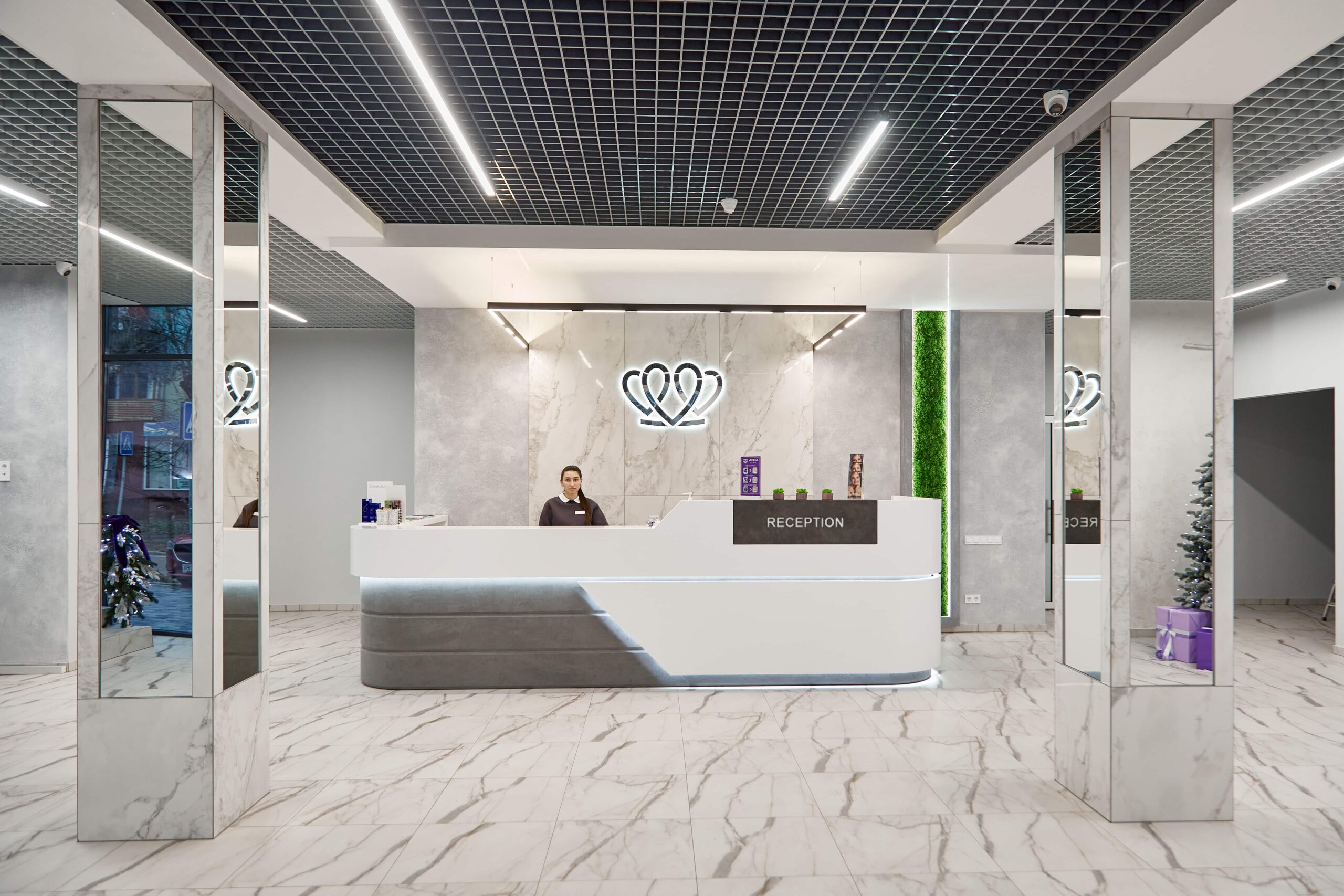
📍 Lviv, Ukraine
A dental clinic in Lviv with a separate doctor for each field: oral surgery and implants, prosthodontics, restorative dentistry, endodontics under a microscope, periodontics, orthodontics and paediatric dentistry.
Because they are different products and different stages. Implantation is the placement of a titanium screw in the bone; the crown is ordered a few months later, once the implant has integrated and it is clear how the gum has settled. Between them are two more separate items: the healing abutment, which shapes the soft tissue contour over 2–3 weeks, and the abutment, the connector that joins the implant to the crown. Each element has its own catalogue number and price, so a quote is easier to read as a list of items than as a single sum.
At the clinics MediUkraine works with, a zirconia crown on an implant starts from USD 282. The abutment is paid for separately. A prosthodontist consultation and treatment planning is from USD 14. The total for your case depends on the number of units, the crown material, the type of abutment and the retention method, so the dentist confirms the final cost after an examination.
Its shape. A stock abutment has a round, symmetrical cross-section, whereas the neck of a natural tooth never does, so in the smile zone the transition from crown to gum looks less natural. A custom abutment is milled for the specific case: it follows the contour created by the healing abutment and allows the margin to be placed at different depths on different sides. With cement retention there is another advantage: the cement line can be raised closer to the gum margin so that excess cement can be removed. On back teeth with thick gum a stock abutment is usually enough.
The dentist decides based on the implant's position, but the logic is simple. A screw-retained restoration can be removed in a few minutes: the screw can be tightened, a chip repaired, the gum treated if inflamed. There is no cement, and therefore no risk of it being left under the gum. The drawback is the screw access hole on the chewing surface and the need for a suitable implant angle. Cement retention is more aesthetic and suits an angled implant, but such a crown cannot be removed without destroying it, and residual cement under the gum is a proven factor in peri-implantitis.
Once the implant has fused with the bone: usually after 2–3 months in the lower jaw and 4–6 months in the upper, and longer after bone grafting or a sinus lift. It is not fitted sooner because chewing load causes micromovements that interfere with integration. A temporary crown is sometimes fitted immediately after the operation, but under two conditions: sufficient primary stability of the implant and keeping the crown out of the bite. After the pause, the prosthetic stage takes another 1.5–2 months.
Honestly, it depends on hygiene, your bite and your habits, and it is certainly not fit-and-forget. With good care the implant itself lasts for decades, but the prosthetic part wears faster: over the years the screw may loosen, the ceramic veneer may chip and the composite in the screw channel may darken. Replacing the restoration after ten to fifteen years is a normal scenario in which the implant usually stays in place. This is why screw retention is preferred where there is a choice: it is cheaper to maintain.
Yes, if the implant system is known. Bring the passport you were given after the operation: it states the manufacturer, model, platform diameter and serial number, and the prosthodontist orders a compatible abutment from these details. If the passport has been lost, the system can often be identified from a periapical X-ray, but that adds a separate visit and time. Before starting, the doctor also checks whether osseointegration is complete and whether the neighbouring teeth have shifted during the wait.
Tell us what you need: we will suggest a clinic and a doctor and send you a cost estimate.
Request a consultation →