| Service | 🇺🇦 Ukraine | 🇨🇿 Czech Republic | 🇹🇷 Turkey |
|---|---|---|---|
| Wisdom tooth (third molar) extraction | from USD 52 | from USD 143 | from USD 167 |
| Tooth extraction (simple) | from USD 42 | from USD 73 | from USD 52 |
| CT scan before extraction | from USD 15 | — | — |
| Oral surgeon consultation | from USD 8 | from USD 38 | from USD 34 |
Prices in the “Ukraine” column come from MediUkraine’s partner clinics. The Czech Republic and Turkey columns show the lower bounds of prices published by clinics there (for Turkey, also the Turkish Dental Association’s recommended 2026 tariff), collected in August 2026 and converted to US dollars at the rate on the day of collection. A dash means we could not find a comparable published price. In any country, the final cost is set by the clinic after an examination.
Wisdom teeth are the third molars, the last in the row. They are the last to come through, usually at 17–25 years of age, when the jaw is fully formed and there is often no room left in the dental arch. As a result, a wisdom tooth either does not come through at all (impaction) or comes through partially and at an angle (malposition).
Removal is needed when the tooth is causing a problem. The indications are: an impacted tooth presses on the neighbouring second molar, and resorption or decay appears on its root or back surface; the flap of gum over a partially erupted wisdom tooth becomes inflamed (pericoronitis) and the inflammation keeps coming back; the tooth itself is destroyed by decay, and its canals cannot be reached with instruments and filled; a follicular cyst is visible on the scan around an impacted tooth; an orthodontist is planning to move teeth, and the wisdom tooth is in the way.
Now the other side, which is mentioned less often. A properly erupted, upright wisdom tooth that has an opposing tooth, does not hurt and can be reached with a toothbrush does not have to be removed. Removing all four wisdom teeth "just in case" has not been shown to be beneficial: when there are no symptoms, monitoring with an examination and a scan every year or two is an acceptable approach.
In some situations a planned extraction is postponed or agreed with another specialist first: the acute phase of an infectious disease, uncontrolled diabetes, taking anticoagulants, treatment with bisphosphonates or denosumab, a history of radiotherapy to the head and neck, pregnancy. The surgeon asks about each of these before the procedure, not after it.
MediUkraine is a service that finds and coordinates treatment; it is not a clinic. Oral surgery for our patients is carried out at Vidnova Dental Clinic in Lviv. We arrange the date, pass on the quote and support patients, including those travelling from abroad. Whether you need an extraction is decided by the surgeon after an examination and a scan.

Travel. Ukrainian airspace is closed, so there are no commercial flights. Patients reach Lviv overland, most often from Poland: Rzeszów and Kraków airports are the usual entry points, with a train, bus or private transfer onward to the border and on to the city. Lviv is roughly 70 km from the Polish border, the shortest crossing of any Ukrainian city.
Visas. Citizens of the EU, the United Kingdom and the United States do not need a visa for short stays in Ukraine. Rules depend on your citizenship, so check your own before booking.
Safety, plainly. Ukraine is at war. Air raid alerts occur in Lviv, and an appointment can be interrupted by one. Several governments advise against travel to Ukraine, and while that advice stands, ordinary travel and medical insurance is often void — confirm your cover with your insurer before you commit to anything.
Language. MediUkraine handles correspondence, scheduling, the written treatment plan and the quote in English. The clinic's team communicates with international patients in English.
Payment. You pay the clinic directly. Our coordination service is free of charge for you.
More on travel, safety and insurance: Safety and travel.
If the panoramic X-ray shows the roots close to the nerve canal, the doctor orders a CT scan, and it determines the further plan. It shows how many roots the tooth has, which way they are angled, whether the tips are curved, how dense the surrounding bone is and, above all, where the mandibular canal with the inferior alveolar nerve runs. When a root lies right against the canal, the plan changes: a different technique is chosen, and sometimes the roots are deliberately not removed in full. On a panoramic X-ray, indirect signs suggest the canal is close: darkening of the root where it crosses the canal, narrowing or deviation of the canal, interruption of its cortical outline; if these are seen, the surgeon orders a three-dimensional scan.
For upper wisdom teeth a different neighbouring structure is critical: the floor of the maxillary sinus. The roots of the third molar are often separated from it by a layer of bone less than a millimetre thick, and sometimes protrude into the sinus. The CT scan shows this in advance, so the surgeon can work more cautiously and, after the extraction, check that the sinus floor is intact with a nose-blow test.
The tooth's position is described using standard classifications: by how deep it lies relative to the neighbouring molar and the ramus of the jaw, and by its angle of tilt. A wisdom tooth may stand upright, tilt forward towards the second molar (mesioangular position) or backward (distoangular), or lie horizontally. A mesioangular tilt is what most often causes decay in the neighbouring tooth, while distoangular and horizontal positions are considered the most difficult to extract.
Anaesthesia for work on the lower jaw is a nerve block: the anaesthetic is delivered near the inferior alveolar nerve, and half of the jaw goes numb together with the lip and tongue. For upper teeth, infiltration anaesthesia is enough. Articaine with a vasoconstrictor is used; for patients with cardiovascular disease there are forms with a reduced concentration of adrenaline or with none at all. If you find dental treatment hard to cope with, sedation is added, either inhaled, with a mixture of oxygen and nitrous oxide, or intravenous, and an anaesthetist is then present at the appointment. General anaesthesia is rarely used for this procedure, and only when specifically indicated.
Simple extraction applies to a tooth that has fully erupted and can be reached with instruments. The surgeon releases the gum attachment around the tooth, loosens it with an elevator to break its attachment to the socket, and removes it with forceps. The socket is then inspected, granulation tissue and remnants of the dental follicle are cleared, and the edges of the gum are brought together. A stitch is not always needed. It takes about 15–20 minutes.
Complex (surgical) extraction is needed when the tooth is impacted or lies at an angle. The sequence is as follows. First the surgeon makes an incision in the gum and lifts a mucoperiosteal flap, exposing the bone over the tooth. Then, using a bur with constant irrigation, they remove only as much of the bone over the crown as is needed for access. Next the tooth is sectioned into fragments: the crown is cut away from the roots, the roots themselves are separated from each other if needed, and each fragment is removed separately. This is the step that keeps the operation conservative: removing the tooth in pieces is easier than levering it out whole, and less bone has to be removed. Finally the socket is rinsed, sharp edges are smoothed, and the flap is put back in place and secured with sutures. Sutures are removed on day 7–10, unless absorbable sutures were used.
When a root lies tight against the mandibular canal, a coronectomy is discussed: deliberate removal of the crown only, leaving the roots in the bone. The logic is simple: the roots are not pulled out, so the nerve next to them is not injured, and over time bone grows over the retained roots. The method has its limits: it is not suitable when the roots are infected or mobile, and some patients later need a repeat procedure because the retained roots migrate upwards. The decision is made after the CT scan and a discussion with you.
Piezosurgery may be used on the bone instead of a bur. An ultrasonic tip selectively cuts mineralised tissue and does not damage the soft tissue, blood vessels or nerve on accidental contact. The procedure takes longer, but some patients have less swelling afterwards. The choice of instrument depends on the specific case and on the clinic's equipment.
Age matters too. At 18–25 the roots of a wisdom tooth are often not yet fully formed, the bone is more elastic, the procedure is tolerated more easily and the socket heals faster. After 35–40 the roots are fully formed and sometimes fused with the bone, so both the operating time and the recovery period increase. This is one of the arguments for dealing with a problematic wisdom tooth without delay.
Extraction is not the only option, and it is worth asking about the alternatives. With pericoronitis, the acute inflammation is treated first, and the flap of gum is sometimes removed (operculectomy): this helps, but if space is short the inflammation returns, so it is regarded as a temporary measure. The wisdom tooth itself can be given root canal treatment if it stands upright, can be reached with instruments and is needed to support a prosthetic restoration or is the only molar on that side. Sometimes a wisdom tooth is deliberately kept so that it can later be moved orthodontically into the place of a lost second molar. The final choice between treatment, monitoring and extraction depends on the scan, the condition of the neighbouring teeth and plans for prosthetic work.
The first two hours set the tone for the week. Bite on the gauze pad for 20–30 minutes and then remove it: there is no point keeping it in longer, as it becomes soaked and itself turns into a source of infection. A blood clot should form in the socket; it is what covers the bone and the nerve endings. Do not eat or drink for two hours.
Do not rinse your mouth on the first day. Vigorous rinsing washes out the clot, and without it the bone is exposed and alveolar osteitis develops: a dry socket with sharp pain on the third or fourth day. For the same reason, do not drink through a straw, spit, smoke or apply heat to the cheek: suction and heat are equally dangerous for the clot. From the second day, use mouth baths instead: take the solution into your mouth, hold it there without swishing and let it out.
Swelling is not a complication but an expected tissue reaction. It builds up and peaks on day 2–3, then subsides; trismus, which makes it hard to open the mouth wide in the first days, passes at the same time. Apply cold only in the first 24 hours, for 15–20 minutes at a time with breaks.
Pain is strongest on the first and second days and is relieved with ordinary painkillers, ibuprofen or paracetamol, at the dose the doctor specifies. An antibiotic is not prescribed for everyone, only where indicated: purulent inflammation before the procedure, a long traumatic operation, or coexisting illnesses with reduced immunity. Do not start one on your own "as a precaution".
For the first few days, eat soft, warm (not hot) food and chew on the other side. Avoid alcohol, saunas, swimming pools, bending over and the gym for at least 3–5 days. Brush your teeth from the first day, steering around the socket: skipping hygiene does more harm than a careful touch.
Typical timelines: most people return to their normal routine within 3–7 days, sutures are removed on day 7–10, the soft tissue over the socket closes in approximately 2–3 weeks, and the bone continues to remodel for another 3–6 months, which is why a follow-up X-ray, if needed, is taken no earlier than a few months later. See a dentist urgently if pain gets worse from the third or fourth day, a foul taste appears, your temperature is above 38 °C, swelling increases after the third day, bleeding does not stop, or numbness of the lip lasts more than a day.
Step 1. Examination and CT scan. The surgeon examines the tooth and gums, assesses how wide the mouth opens and reviews the three-dimensional scan: how many roots there are, which way they point, where the mandibular canal or the floor of the maxillary sinus lies. Your medical history, allergies and medicines are also reviewed at this stage. This is where it is decided whether the extraction will be simple or surgical and how long it will take.
Step 2. Anaesthesia. For a lower wisdom tooth a nerve block is given, for an upper one infiltration anaesthesia. It takes effect in 5–10 minutes: half of the jaw, the lip and part of the tongue go numb. The surgeon checks that the area is fully numb and begins only when you can no longer feel the instrument. If needed, sedation is added, and you are then in a light sleep, monitored by an anaesthetist.
In total this takes from 20 minutes for a simple extraction to 1.5 hours for an impacted tooth. Between the anaesthesia and the final instructions, the surgeon opens access to the tooth, with an incision in the gum and removal of part of the bone if needed, sections the tooth into fragments and removes them one by one, cleans and rinses the socket and places sutures. No hospital stay is needed: you go home the same day and are back to your normal routine within 3–7 days.
The cycle is short, with two essential appointments. The first is the consultation with a CT scan and the procedure itself: in uncomplicated cases they are done on the same day, so patients from other cities do not have to come twice. The second is the check-up and suture removal on day 7–10.
If there is acute inflammation before the procedure, such as a swollen cheek, pus from under the gum flap or a fever, the cycle gets longer. The acute infection is dealt with first: it is drained, the area is irrigated and an antibiotic is prescribed; the operation is planned only a few days later. Operating at the height of acute inflammation is not standard practice: anaesthesia works less well in inflamed tissue, and the risk of the infection spreading is higher.
When several wisdom teeth need to come out, the extractions are spread out. In one visit under local anaesthesia, one or two teeth are removed on one side, so that you can chew on the other. Removing all four at one appointment is a separate decision and is usually done under sedation.
When the procedure is part of an orthodontic plan, the date is set by the orthodontist: sometimes wisdom teeth are removed before braces are fitted, sometimes in the middle of treatment, once it becomes clear how much space is lacking in the arch. The same applies to preparation for implants in place of neighbouring teeth: the sequence of stages is planned in advance.
Then comes monitoring. A follow-up X-ray, if needed, is taken after 3–6 months, by which time the bone in the socket has had time to remodel. If the tooth was lying against the root of the second molar, the doctor also checks the condition of that neighbouring tooth. MediUkraine coordinates the appointments with your travel dates so that both visits fit into your plans.
Alveolar osteitis, also known as dry socket, is the most common complication. The clot dissolves or is washed out, the bone is left exposed, and on the third or fourth day severe aching pain radiating to the ear develops, along with an unpleasant smell. After simple extractions this happens in a few per cent of cases, after complex lower wisdom tooth extractions noticeably more often. The risk factors are well known: smoking, rinsing on the first day, inflammation before the procedure. It is treated by irrigating the socket and placing an antiseptic dressing, and the pain passes within a few days.
Paraesthesia is numbness of the lower lip, chin or half of the tongue after work on the lower jaw. The cause is injury to, or swelling around, the inferior alveolar and lingual nerves, which run close to the roots. Temporary loss of sensation occurs in a few per cent of cases and usually resolves within weeks or months, while a permanent disturbance persists in fewer than one per cent of patients. Assessing this risk in advance is exactly why a CT scan is done, and when a root lies right against the canal, coronectomy is considered.
Bleeding from the socket in the first hours is normal; prolonged bleeding is not. If it does not stop after biting on sterile gauze for 20–30 minutes, return to the clinic. The risk is higher in those taking anticoagulants or antiplatelet agents, which is why these medicines should be mentioned in advance. A haematoma on the cheek or neck looks alarming but resolves on its own within 1–2 weeks.
Infection of the socket with swelling, pain and fever requires an examination and an antibiotic. Less common are damage to a neighbouring tooth or its filling, fracture of the maxillary tuberosity, and dislocation of the temporomandibular joint from keeping the mouth open for a long time. Upper wisdom teeth carry a specific risk: an opening between the socket and the maxillary sinus, which is detected immediately after the extraction and, if needed, closed with a gum flap at the same visit.
Contraindications are mostly temporary. A planned procedure is postponed in the event of acute infectious diseases, a flare-up of chronic ones, uncontrolled diabetes, a recent heart attack or stroke, or pregnancy outside the second trimester. A separate category is treatment with bisphosphonates or denosumab and radiotherapy to the head and neck: such patients have a higher risk of osteonecrosis of the jaw, so the approach is agreed with an oncologist or the relevant specialist, and the procedure is carried out with additional precautions.
No surgical procedure is free of risk, and an honest conversation about this is part of the preparation. The likelihood of complications can realistically be reduced: a three-dimensional scan before the operation, a conservative technique with sectioning of the tooth, sterile single-use instruments, and following the aftercare instructions closely in the first days. Only a surgeon, after an examination, can assess the risk in your case and choose the approach. You are entitled to a second opinion: you keep the scan and the record of the procedure, and MediUkraine can arrange a consultation at another partner clinic if needed.
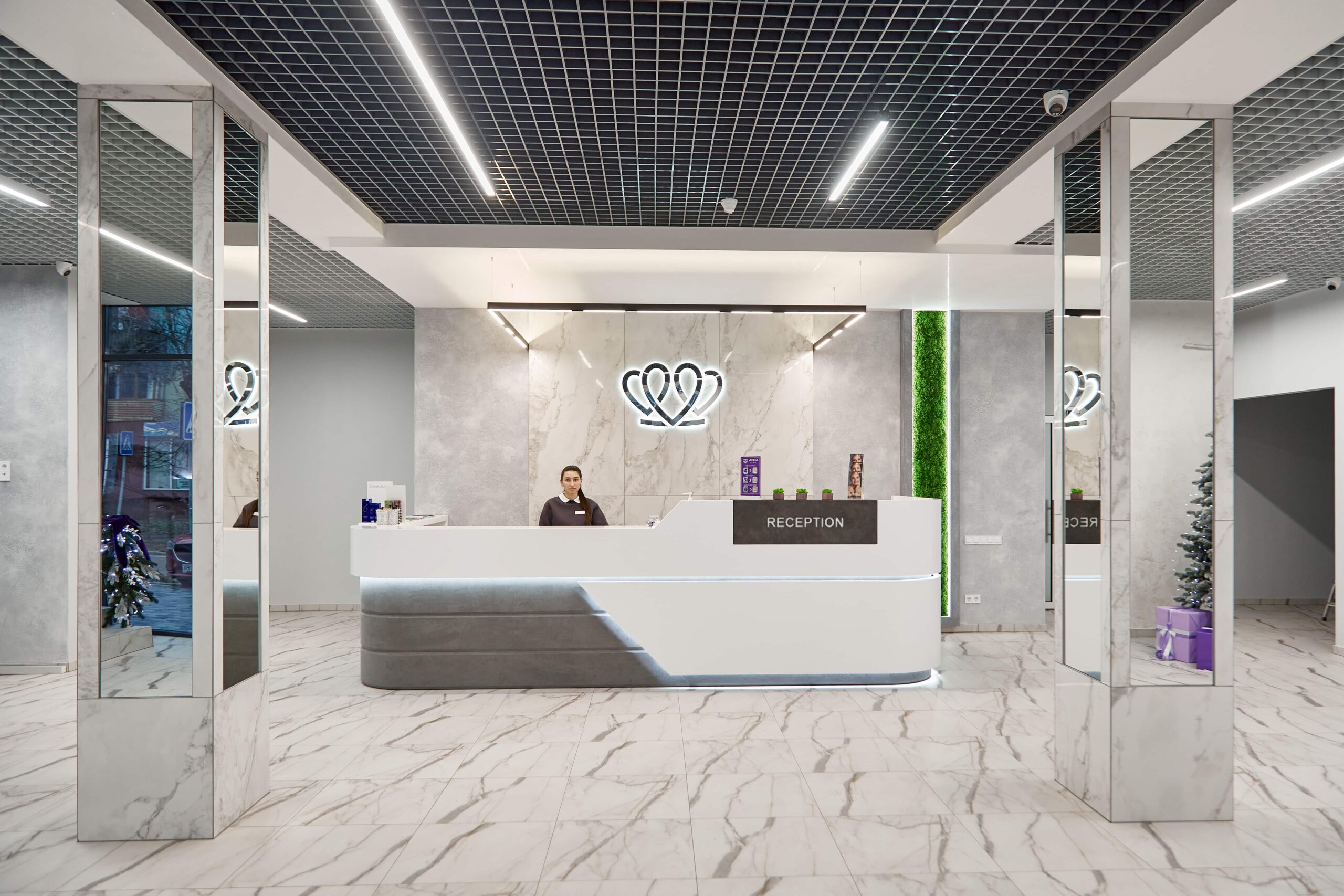
📍 Lviv, Ukraine
A dental clinic in Lviv with a separate doctor for each field: oral surgery and implants, prosthodontics, restorative dentistry, endodontics under a microscope, periodontics, orthodontics and paediatric dentistry.
No. A properly erupted wisdom tooth that stands upright, has an opposing tooth, causes no trouble and can be reached with a toothbrush does not need removing; it is simply monitored with an examination and a scan every year or two. Removing all wisdom teeth "just in case" has not been shown to be beneficial. It is a different matter when the tooth is impacted and pressing on its neighbour, inflammation keeps flaring up under the gum flap, the tooth has decay that cannot be reached with instruments, or a cyst is visible on the scan: then putting it off only makes the eventual operation bigger.
At MediUkraine's partner clinic, removing a wisdom tooth starts from USD 52, and a simple extraction of any other tooth from USD 42. A CT scan costs from USD 15, an oral surgeon consultation from USD 8. The starting price applies to an erupted tooth that is removed without an incision; an impacted tooth requiring removal of part of the bone and sectioning into fragments costs more, and the surgeon quotes for it after the scan. Prices are a guide; the final price is set by the clinic.
To see what an ordinary X-ray does not show: the true number and shape of the roots, their curvature, the density of the bone and the distance to neighbouring structures. For a lower wisdom tooth that means the mandibular canal with the nerve responsible for sensation in the lip and chin; for an upper one, the floor of the maxillary sinus. These millimetres determine the technique, the duration of the procedure and the likelihood of complications. Sometimes it is the CT scan that becomes the reason to choose coronectomy instead of removing the roots completely.
The procedure itself is done under anaesthesia, and you feel no pain: you may feel pressure and movement, but not pain. For lower teeth a nerve block is given, for upper teeth infiltration anaesthesia, and the surgeon begins only after checking that the area is numb. If the anaesthetic starts wearing off during a long operation, more is given. Patients who find dental treatment hard to tolerate are offered sedation. Discomfort appears later, when the anaesthesia wears off, and it is relieved with ordinary painkillers.
Swelling builds up and peaks on day 2–3, then decreases; difficulty opening the mouth eases at the same time. Most people return to their normal routine within 3–7 days, and sutures are removed on day 7–10. The soft tissue over the socket closes in approximately 2–3 weeks, and the bone continues to remodel for another 3–6 months, a stage you no longer notice. Timelines depend on how complex the procedure was, age and coexisting illnesses, so the surgeon gives you timelines for your case.
Because the blood clot has to stay in the socket. It covers the exposed bone and nerve endings and serves as the basis for new tissue. Vigorous rinsing, spitting, drinking through a straw and smoking create suction in the mouth and wash the clot out; that is how alveolar osteitis develops, a dry socket with sharp pain on the third or fourth day. From the second day, use the antiseptic as a mouth bath: take the solution into your mouth, hold it there without swishing for about a minute and let it out.
It is a loss or change of sensation in the lower lip, chin or half of the tongue after a lower wisdom tooth has been removed. The cause is injury to, or swelling around, the nerve that runs close to the roots of the tooth. It feels like persistent numbness, as if the anaesthetic never wore off. In most cases sensation returns within a few weeks or months; a permanent disturbance is rare. Numbness that persists for more than a day after the procedure should be reported to the surgeon, who will assess the situation and prescribe treatment if needed.
Tell us what you need: we will suggest a clinic and a doctor and send you a cost estimate.
Request a consultation →