
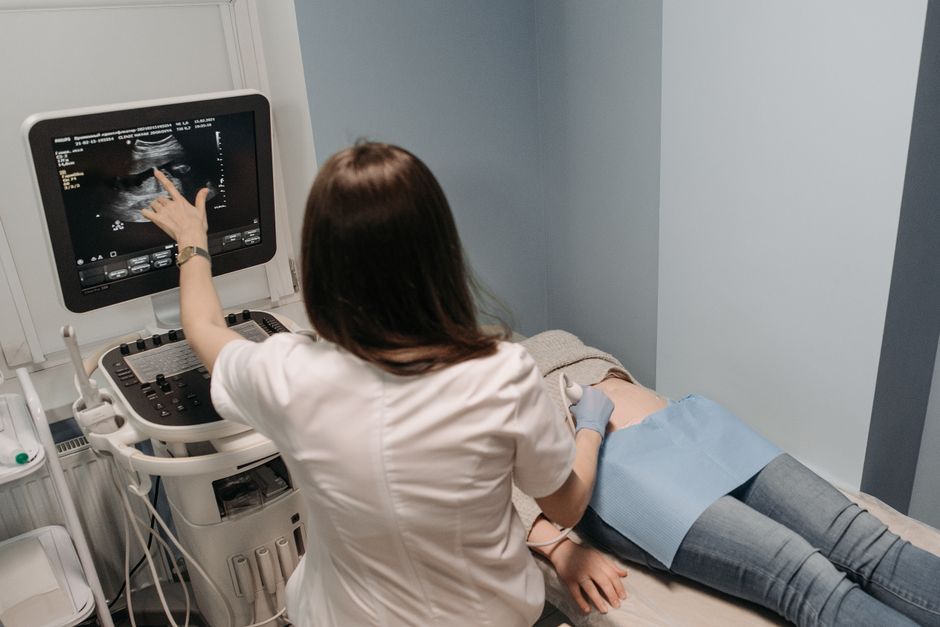
Doppler ultrasound is one of the most informative ways to examine blood flow, and it can reveal vascular problems before serious symptoms appear. In Ukraine this type of scan is widely available at larger clinics. Here we explain who needs a vascular ultrasound and when, how the procedure works and where you can have it.
- Vascular (Doppler) ultrasound is a safe, non-invasive way to assess the arteries and veins and the speed of blood flow through them.
- Indications include varicose veins, atherosclerosis, thrombosis, impaired blood flow to the brain, diabetes and high blood pressure.
- The scan takes 20 to 60 minutes depending on the area examined, and most scans need no special preparation.
- Approximate costs in Poland, Germany and Israel are given below; the price at our partner clinic depends on the type of scan.
01What is vascular Doppler ultrasound and how does it work?

Doppler ultrasound is a type of ultrasound scan that uses the Doppler effect to record the movement of blood in the vessels. The machine detects the change in frequency of the ultrasound wave as it is reflected by red blood cells and converts the signal into an image and sound.
Unlike a standard ultrasound, a Doppler scan shows not only the vessel itself but also the characteristics of blood flow: its speed, direction and any turbulence. This is essential for diagnosing thrombosis, narrowing (stenosis) and aneurysms.
The main types of scan
- Non-imaging Doppler ultrasound: the basic method, which assesses the speed and pattern of blood flow without a full image of the vessel.
- Duplex scanning: combines B-mode ultrasound with Doppler, so the doctor sees the anatomy of the vessel and assesses blood flow at the same time.
- Triplex scanning: adds colour flow mapping to the duplex scan, which makes the diagnosis more accurate.
02Who needs a vascular ultrasound, and when?

A Doppler scan is usually requested by a vascular surgeon, cardiologist, neurologist or phlebologist. However, you can also book one yourself without a referral.
The main indications cover a wide range of conditions, from cosmetic varicose veins to acute vascular emergencies. The earlier a problem is found, the less invasive the treatment is likely to be.
Vessels of the legs and arms
The scan is recommended for swelling, pain and heaviness in the legs, visibly enlarged veins, cramps and numbness. It is essential if deep vein thrombosis is suspected, as this can lead to a pulmonary embolism.
Vessels of the head and neck
Doppler ultrasound of the brachiocephalic arteries and the blood vessels of the brain is recommended for dizziness, chronic headaches, ringing in the ears and transient ischaemic attacks. Your doctor may also suggest it as part of the assessment for high blood pressure.
If you are over 45 and have at least one risk factor, such as high blood pressure, diabetes or raised cholesterol, ask your doctor whether a Doppler scan of the neck and leg vessels, and how often, is advisable for you.
Abdominal and kidney vessels
Scans of the aorta and the renal and mesenteric arteries are recommended if an abdominal aortic aneurysm, renovascular hypertension or reduced blood supply to the bowel is suspected. This scan does require preparation: you will need to fast for 4–6 hours.
Not sure which clinic to start with?
A MediUkraine coordinator will help you choose a clinic and a doctor for your case, free of charge.
03What happens during the scan, and do you need to prepare?

You lie on a couch, the doctor applies a special gel to your skin and moves a probe over the area being examined. The procedure is painless, involves no radiation and has virtually no contraindications.
It takes from 20 minutes for the veins of one limb to 50–60 minutes for a comprehensive scan of several vascular regions. The report is usually given to you straight after the scan or within an hour.
What to bring
All you need is your passport or another ID, a referral if you have one, and the results of any previous vascular scans for comparison. For an abdominal scan, follow the dietary restrictions given by the clinic.
You can find more about preparation and booking on the vascular Doppler ultrasound in Ukraine page.
04How much does a vascular ultrasound cost in Ukraine and abroad?
The cost of a Doppler scan depends on the type of scan, the number of vascular regions and the clinic. A comprehensive triplex scan with a detailed report will cost more than a basic Doppler scan of a single area.
For comparison, here are approximate figures for other countries.
| Country | Approximate cost | What affects the price |
|---|---|---|
| Ukraine | Confirmed by the clinic when you book | Number of areas, type of scan (Doppler / duplex / triplex), clinic |
| Poland | €80–€200 | Public or private clinic, city, specialist’s qualifications |
| Germany | €150–€350 | Type of facility, patient’s insurance status, complexity of the protocol |
| Israel | €200–€450 | Medical centre, whether it is part of a diagnostic package, waiting time |
The exact price depends on which vessels need to be examined, so it is worth agreeing the scope of the scan with the clinic in advance.
MediUkraine can book your scan with an experienced vascular specialist at our partner clinic, EXPERT in Uzhhorod, at a time that suits you. The clinic’s team communicates with international patients in English.
05Frequently asked questions
Do I need a doctor’s referral for a Doppler scan?+
No, a referral is not required: you can book a vascular ultrasound yourself. However, if you have a referral, the doctor will address the specific clinical questions of your treating specialist in the report.
How often can I have a vascular ultrasound?+
Doppler ultrasound is a very safe method with no radiation exposure, so how often it is repeated depends only on clinical need. In chronic vascular conditions the scan is usually repeated 1–2 times a year.
Is a Doppler scan different from a standard vascular ultrasound?+
Yes. A standard ultrasound shows only the anatomical structure of the vessel, whereas a Doppler scan also assesses blood flow: its speed, direction and turbulence. That is why Doppler is much more informative for diagnosing thrombosis, stenosis and varicose veins.
How long do I have to wait for the results?+
At most clinics the report is issued straight after the scan or within 30–60 minutes. In complex or urgent cases, the doctor performing the scan can give you a verbal conclusion on the spot.




