
Cardiovascular disease remains one of the leading causes of death worldwide, and many patients from Europe, the USA, Canada and other countries choose Ukraine for a comprehensive cardiology check-up. The reasons are simple: experienced doctors, modern equipment and lower prices than in Western Europe. But to make your trip worthwhile, you need to understand in advance how the process is organised, what a standard cardiac check-up includes and which mistakes to avoid.
01Why do international patients choose Ukraine for a cardiology check-up?
Patients from abroad most often mention the combination of affordable cost and good-quality care. Ukrainian cardiologists work to current diagnostic protocols.
The key advantage is speed. In most EU countries, waiting for a routine appointment with a cardiologist can take from several weeks to several months. In Ukraine, you can usually get an appointment at a private clinic within 1–3 days, and a full heart work-up usually takes 1–2 days. If you are worried about your heart health or want a preventive check before major surgery or a change in lifestyle, this is a very important factor.
Cost also plays a role. For example, Holter ECG monitoring costs from EUR 300 to 600 in the UK or France, and EUR 30–80 in Ukraine, depending on the clinic. Echocardiography (a heart ultrasound) costs 150–300 zlotys in Poland and the equivalent of EUR 20–50 in Ukraine.
Language matters too. MediUkraine arranges cardiology check-ups at its partner clinic, the EXPERT medical network in Uzhhorod, and the clinic’s team communicates with international patients in English. The MediUkraine team helps organise the whole route, from your first consultation to receiving your results.
02What does a standard cardiology check-up in Ukraine include?
Depending on the purpose of your visit (prevention, clarifying a diagnosis or preparing for surgery), the set of tests may vary. However, a basic cardiac check-up usually includes several key components.
First comes a consultation with a cardiologist and a review of your medical history. The doctor asks in detail about your symptoms, family history, chronic conditions and medication. This is when your individual test plan is drawn up; without this consultation, test and scan results cannot be interpreted correctly.
A resting electrocardiogram (ECG) is a standard, essential test. It can reveal heart rhythm disturbances, signs of a previous heart attack and conduction blocks. An ECG takes 10–15 minutes and is completely painless. Holter ECG monitoring records your heart rhythm around the clock using a portable device. It can pick up abnormalities that a standard ECG misses, such as night-time arrhythmias or episodes of ischaemia.
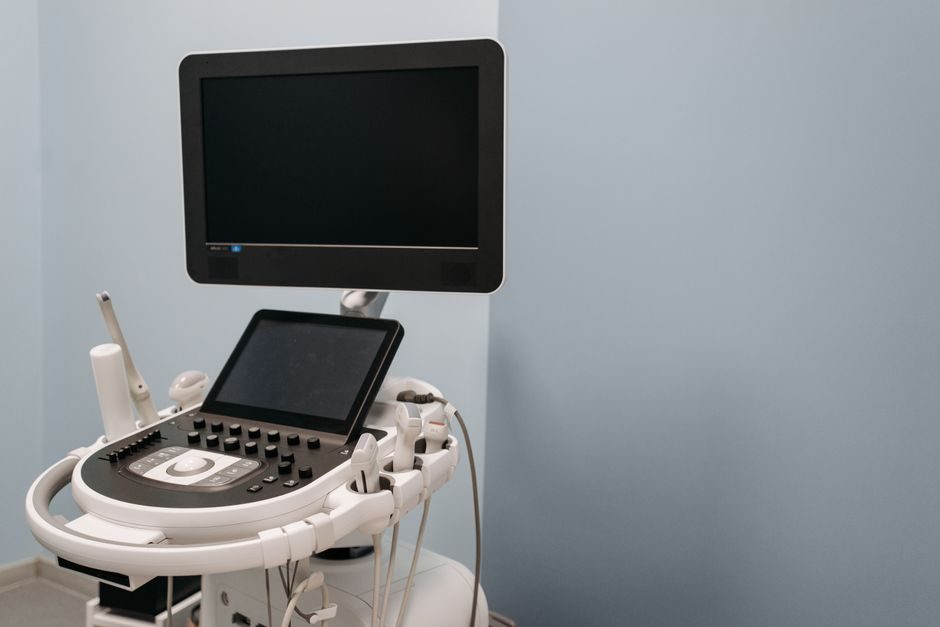
Echocardiography (an echo, or heart ultrasound) shows the structure of the heart, assesses how the valves work and measures the left ventricular ejection fraction, a key indicator of how well the heart pumps. A treadmill test or cycle ergometry are exercise tests in which you walk on a treadmill or pedal an exercise bike while your ECG is monitored. They help detect hidden coronary heart disease that does not show up at rest.
The laboratory panel usually includes a full blood count, a lipid profile (cholesterol levels), troponin (a marker of heart muscle damage), C-reactive protein and a coagulation profile. Some clinics also measure BNP or NT-proBNP, markers of heart failure. Ambulatory blood pressure monitoring (ABPM) is recommended if you have, or may have, high blood pressure: it shows how your blood pressure changes over a full day.
Not sure which clinic to start with?
A MediUkraine coordinator will help you choose a clinic and a doctor for your case, free of charge.
03How to organise your trip and what to prepare in advance
If you are planning a cardiology check-up in Ukraine, prepare for the visit in advance so you can make the most of your time and get accurate results.
First, gather your medical records. Doctors will appreciate previous ECGs, blood test results, hospital discharge summaries and details of any previous heart or vascular surgery. These help the cardiologist compare changes over time and avoid ordering unnecessary tests. Ideally, have your documents translated, or at least have the key terms explained.
Second, tell the doctor about all the medicines you take. Some drugs affect ECG results, blood tests or exercise tests. Some may need to be paused before a test, but only as agreed with the doctor who prescribed them; the cardiologist will give you precise instructions after the initial consultation.
Third, plan the logistics carefully. The MediUkraine team will help you book all the specialists you need and can advise on travel and accommodation. Two days are usually enough for a full cardiology check-up, but some tests (such as Holter monitoring or ABPM) require you to wear a device for a full day.
Choosing a clinic deserves particular attention, and reviews from previous patients, especially those who travelled from your country, are worth reading. MediUkraine takes this step off your hands: the check-up is arranged at its partner clinic in Uzhhorod, so you do not need to compare clinics on your own.
04Which cardiac procedures are available in Ukraine?
Beyond diagnostic tests, more complex cardiac procedures are also available in Ukraine. This overview is for information only: these procedures are not part of a cardiology check-up, and if your results suggest you may need one, discuss the next steps with your cardiologist.
Coronary angiography and stenting are used in coronary heart disease. Angiography shows the condition of the coronary arteries precisely, and if a narrowing is found, a stent can be placed straight away to restore blood flow.
Heart valve surgery, on the mitral or aortic valve, is also performed in Ukraine, including minimally invasive and endovascular procedures.
Pacemakers and implantable cardioverter-defibrillators (ICDs) can also be implanted in Ukraine. For patients with conduction disorders or at risk of sudden cardiac death, these devices are essential.
Ablation is a modern way to treat arrhythmias without open surgery. For atrial fibrillation, tachycardia and other rhythm disorders, radiofrequency ablation or cryoablation can often control the problem and reduce the need for long-term antiarrhythmic medication.
After any test or procedure, you receive a full set of medical documents (a discharge summary, test results and the doctor’s recommendations) in a format that is easy to pass on to your own doctor at home. If needed, the documents can be provided in English. The MediUkraine team can also help arrange an online consultation for follow-up after you return home.




