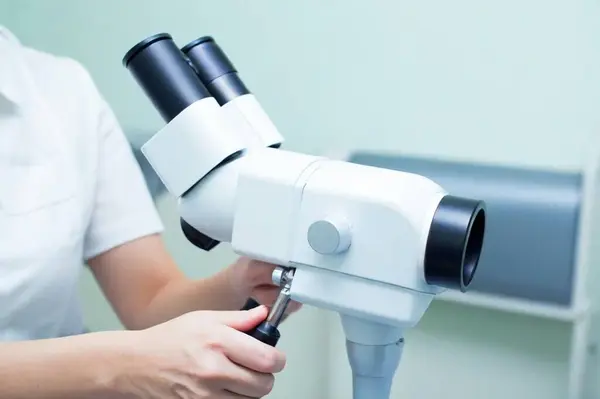
Colposcopy is one of those gynaecological examinations whose name is often more frightening than the procedure itself. For many women, being referred for colposcopy sounds almost like a hint that something very serious is going on, which is why there is so much anxiety, speculation and unnecessary fear around it. In reality, in most cases colposcopy is not a sign of disaster but the logical next step after changes found on cervical screening. Its purpose is not to frighten you but to take a closer look at the cervix, assess the state of the cells and find out whether there really is a problem that needs monitoring or treatment.
The most important thing to understand from the start is that colposcopy does not mean you already have cancer. It is most often recommended when a smear test, an HPV test or an examination has shown changes that cannot be left without further investigation. This examination does not close the story; on the contrary, it helps you move from a general warning sign to a precise understanding of the situation. That is its main value.
In modern gynaecology colposcopy is nothing out of the ordinary but a standard tool that lets the doctor see rather than guess. Instead of a vague “something’s not right”, you get a more specific answer: whether there are areas of abnormal cells, how pronounced they are, whether a biopsy is needed, whether follow-up is enough or whether treatment is advisable. That is why colposcopy should not be seen as a verdict. It is an examination that brings clarity.
What colposcopy really is
Colposcopy is an examination of the cervix under magnification using a special instrument called a colposcope. The instrument itself is not inserted into the body. It stays outside and works as an optical system that allows the doctor to look closely at the surface of the cervix and, if necessary, at the vaginal walls and external tissues.
During the procedure the cervix is treated with special solutions. This is not done as treatment but to make certain areas more visible. Abnormal cells react to these solutions differently from healthy tissue, and this is how the doctor sees whether there are any suspicious areas, where they are and how pronounced they look.
If during colposcopy the doctor sees an area that needs further investigation, they may take a small piece of tissue for testing. This is called a biopsy. A biopsy gives the most accurate answer when there is doubt about whether the changes need closer assessment.
When does a doctor usually refer you for colposcopy?
Most often a referral for colposcopy follows an abnormal Pap test result or a positive test for high-risk human papillomavirus (HPV). This is when women tend to worry most. But it is important to understand that an abnormal smear or HPV is not a cancer diagnosis. It is simply a sign that a closer look is needed.
Colposcopy may also be recommended if the doctor sees a suspicious area on the cervix during a routine gynaecological examination. Sometimes the reason is contact bleeding, for example after sex, or repeated changes that basic tests cannot clearly explain.
Another situation is follow-up after previously detected cervical changes. If a woman has already had atypical cells, has been treated or is under observation, colposcopy helps to assess how the cervix is changing over time.
In other words, it is not a procedure “for everyone” and not a preventive check instead of a smear test. It is recommended when there is already a reason to look more closely than a routine examination allows.
What exactly does colposcopy show?
The main thing colposcopy provides is a visual assessment of the cervix under magnification. The doctor sees whether there are areas that differ from normal tissue and can assess the borders of these changes, their character, their structure and how they react to the special solutions. This makes it possible to tell whether the changes are mild and can simply be monitored, or whether there is reason to suspect a more serious process.
Colposcopy does not always give a final diagnosis straight away, but it shows very precisely where a problem may be. If a biopsy is needed, it is the histological examination of the tissue that gives the final answer.
Essentially, colposcopy answers a few key questions. Are there abnormal cells on the cervix? How suspicious do they look? Is follow-up enough? Is a biopsy needed? And is there reason to talk about treatment?
That is why colposcopy is so important: it takes you from a state of uncertainty to a concrete understanding of the situation.
Is colposcopy painful?
For most women colposcopy itself feels much like a normal gynaecological examination with a speculum, only a little longer and more thorough. Any discomfort usually comes not from the colposcope but from the examination itself. When the cervix is treated with the solutions, there may be a slight stinging or a brief burning sensation.
If no biopsy is taken, the procedure is usually tolerated quite easily. If a biopsy is needed, you may feel a brief pinch or a sharp but short-lived discomfort. For most patients this is not severe pain, although everyone’s sensitivity is different.
The biggest difficulty is often emotional rather than physical. If you arrive very tense, every sensation feels stronger. That is why it is important to understand beforehand what will be done, why it is needed and what to expect. Patients who know what to expect almost always find colposcopy easier.
How to prepare for colposcopy
No special or complicated preparation is needed, but a few things help make the examination more accurate and more comfortable. Colposcopy is usually not scheduled during your period, because blood can make it harder to assess the cervix. It is better for the procedure to take place when there is no heavy bleeding.
Before the examination you are usually advised not to use vaginal pessaries, creams or other local products unless the doctor has told you otherwise. It is also worth avoiding sex the day before, if this is recommended by the clinic or doctor.
In practical terms, it is useful to bring a panty liner, because after the procedure, especially if a biopsy was taken, there may be some light spotting. And one more important thing: try not to come to colposcopy expecting to hear something terrible. Your emotional state has a strong influence on how you experience the whole process.
What happens after colposcopy?
If the doctor sees no serious changes during colposcopy, they can often tell you straight away that the picture looks reassuring and that only follow-up or repeat screening at the recommended intervals will be needed. If a biopsy was taken, the final report usually comes later, once the tissue has been examined under a microscope.
After the procedure without a biopsy, you can usually return to your normal routine straight away. If a biopsy was taken, there may be light spotting or mild discomfort for a short time. That is why it is important to follow the doctor’s advice after the examination.
Most importantly, do not draw your own conclusions before the official result. Colposcopy is a stage of clarification, and what happens next always depends on what it showed. Some women need only follow-up, others a biopsy, others treatment of the abnormal areas. That is why, after colposcopy, what matters is not only the procedure but also a proper explanation of the results.
Does a referral for colposcopy mean there is a risk of cancer?
Not automatically. This is one of the most important things to take on board so as not to live in unnecessary fear. Most often colposcopy is needed precisely to find out whether there are grounds for serious concern, or whether the changes are minimal or manageable.
An abnormal smear, a positive HPV test or even a cervix that looks unusual do not equal a cancer diagnosis. In a great many cases the changes are either mild or are cell abnormalities that have been detected in time and can be brought under control before anything truly dangerous develops.
That is why colposcopy is a tool for prevention, not proof that the worst-case scenario has already happened. The sooner a woman understands this, the less stress she experiences while waiting for and having the examination.
Why you should not put off colposcopy once it has been recommended
Because this examination is not a box-ticking exercise: it is needed to make sense of a warning sign that has already appeared on screening or examination. If you delay colposcopy, you continue to live not in safety but in uncertainty, not knowing whether everything is relatively calm, whether closer monitoring is needed or whether there are already changes that are better not left.
In most cases this does not mean that a few weeks will automatically change things dramatically, but the logic of a proper medical pathway is not to interrupt it without good reason. Screening has shown changes, and colposcopy should clarify them. That is how modern prevention of cervical problems works.
The worst thing here is not the procedure itself but putting it off out of fear, because women are often afraid not of the real situation but of their own assumptions about it.
Why good organisation of this examination matters for international patients
For a woman having the examination outside her own country, colposcopy is not only a medical question but an organisational one too. You need to know whether your existing smear and test results are sufficient or something needs to be repeated, whether colposcopy can be done at the first visit, whether a biopsy is taken on the same day and what happens next with the results.
That is why it is very important that the examination is not a random, stand-alone procedure but part of a logical pathway. For international patients it is especially valuable to have a clear sequence: screening, consultation, colposcopy, a biopsy if needed, and then a clear plan for follow-up or treatment. This approach reduces confusion and gives you a sense of control over the situation.
01Conclusion
Colposcopy is needed when there is already a reason to look at the cervix more closely. It does not replace screening but helps to clarify its results. This examination shows whether there are areas of abnormal cells, how pronounced they are and whether they need only follow-up, a biopsy or treatment.
The most important thing is not to see a referral for colposcopy as a disaster. In most cases it is not proof of a frightening diagnosis but a tool that helps get to the bottom of the situation in time. That is its main value. It is better to have colposcopy and get clarity than to live with anxiety and put off a necessary investigation.