

Treating hearing loss is not a one-off procedure but a whole therapeutic process, after which the body needs time to adapt. Whatever the method, whether hearing aid fitting, cochlear implantation or medication, the recovery period plays a decisive role in the final result. Understanding what happens at each stage of recovery helps you prepare and avoid mistakes.
- Recovery after hearing loss treatment takes from a few weeks to 12 months, depending on the method.
- The first days require strict adherence to your doctor’s recommendations: rest and protecting the ear from water and noise.
- Audiological rehabilitation is an essential stage after surgical treatment.
- Regular follow-up appointments shape the quality of hearing recovery and allow treatment to be adjusted in time.
- What treatments for hearing loss are there, and what does recovery depend on?
- What happens in the first hours after the procedure?
- The first 3 days: what to pay particular attention to
- The first week of recovery: routine and restrictions
- Diet during recovery: what you can eat and what to avoid
- Physical activity: when and how to start moving again
- Audiological rehabilitation: what it is and why you need it
- Follow-up appointments: when and how often should you see the doctor?
- Possible complications: what they are and how to recognise them
- When should you see a doctor immediately?
- Returning to work: when and on what conditions?
- Hearing recovery: how can you tell the treatment has worked?
- Emotional recovery: rarely discussed but important to know about
- Preventing your hearing from getting worse again: how to make the result last
- How to keep your hearing aid or implant in good working order
01What treatments for hearing loss are there, and what does recovery depend on?
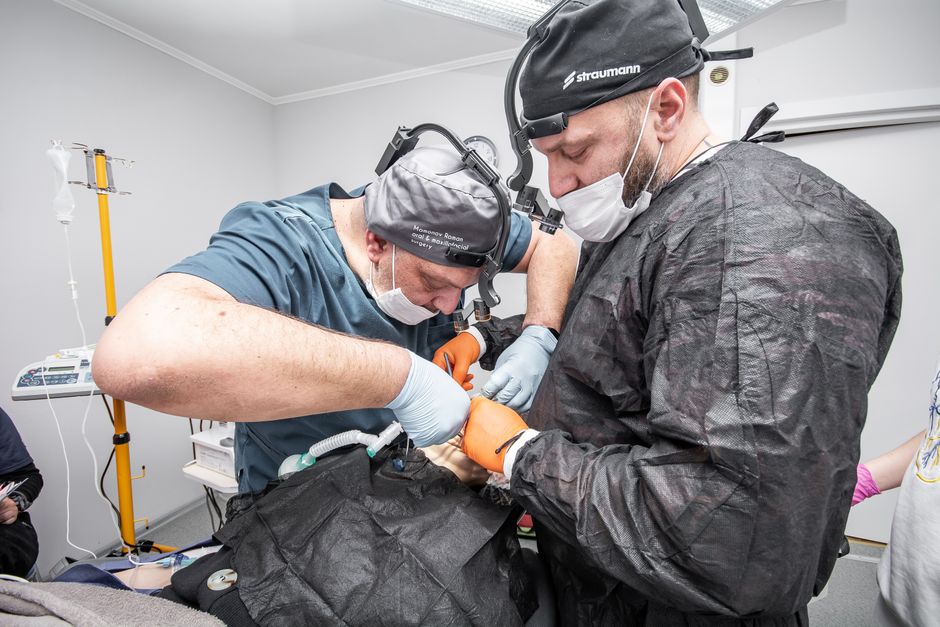
How you recover depends directly on the treatment method used. Each has its own recovery period and puts a different level of strain on the body.
- Hearing aid fitting: selecting and fitting a hearing aid is a non-invasive method; adapting to it takes 4–8 weeks.
- Cochlear implantation: surgery to place an implant in the inner ear; full rehabilitation takes 6 to 12 months.
- Tympanoplasty and stapedoplasty: operations on the middle ear; tissue healing takes 4–6 weeks and hearing recovery up to 3 months.
- Medication: drug treatment for sensorineural or sudden hearing loss; recovery takes from 2 weeks to 3 months.
If you would like more information about hearing loss treatment with MediUkraine, the page describes the available methods and treatment conditions.
Understanding your own treatment method is the first step towards good rehabilitation. Do not go by the experience of other patients who had a different procedure: time frames and restrictions can be completely different.
02What happens in the first hours after the procedure?
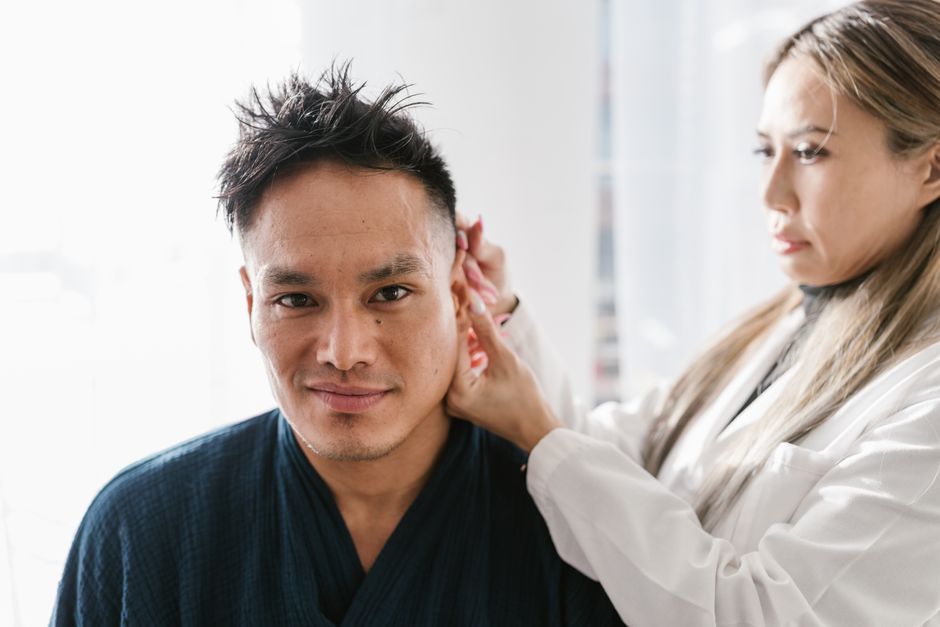
You spend the first hours after surgical treatment for hearing loss under medical supervision. After cochlear implantation or middle ear surgery, staff check your blood pressure, general condition and for complications such as bleeding or dizziness.
During this time, a blocked feeling, mild pain or throbbing in the ear is considered normal. The ear is usually covered with a sterile dressing, which you must not remove yourself. Do not get up suddenly, tilt your head or touch the operated area.
With hearing aids, the first hours after fitting are the brain’s first “introduction” to new sounds. Discomfort, sounds that seem too loud or a “metallic” quality are normal and pass as you adapt. The audiologist makes the initial adjustments during the appointment and gives you specific instructions on how long to wear the aid.
In the first hours, do not eat or drink while the anaesthetic is still working, to avoid nausea. Tell the medical staff straight away about any pain, discomfort or unusual sensations rather than putting up with them.
Not sure which clinic to start with?
A MediUkraine coordinator will help you choose a clinic and a doctor for your case, free of charge.
03The first 3 days: what to pay particular attention to

The first three days after surgery are the most critical period. This is when the risk of infection and tissue swelling is highest. The dressing is changed only by medical staff or by you following your doctor’s clear instructions; do not improvise.
Sleep on your back or on the unaffected side so as not to press on the operated area. Use a pillow of moderate height: if your head is too low, swelling may get worse. Some surgeons recommend keeping the upper body slightly raised for the first few nights.
Strictly off limits: blowing your nose hard, sneezing with your mouth closed, putting your head under water, using earphones or putting anything in your ear. These actions sharply increase pressure in the middle ear and can undo the result of surgery.
Pain in the first three days is controlled with painkillers prescribed by your doctor. If the pain is getting worse rather than easing, contact the clinic before your scheduled appointment. A slight rise in temperature to 37.5°C in the first 48 hours is considered a normal inflammatory response.
04The first week of recovery: routine and restrictions
During the first week, you usually stay at home and take things easy. Physical activity is limited: short, slow walks are allowed, but avoid any exertion, bending and lifting anything heavier than 3–5 kg.
Protect the ear carefully from water when washing. Showering is allowed, but hold your head so that water does not get into the ear. Special protective earplugs or ordinary cotton wool coated in petroleum jelly work well.
During the week, the doctor may schedule a check-up to assess healing and change the dressing. At this appointment, the doctor also checks for signs of inflammation: redness, discharge or increasing pain. If everything is normal, your routine is gradually relaxed.
With medication for hearing loss, the first week means taking the prescribed medicines regularly, at the exact dose and at set times. Missing doses reduces the effectiveness of treatment considerably; stop the course only as agreed with the doctor who prescribed it. Alcohol does not mix with most of the medicines used to treat hearing problems.
05Diet during recovery: what you can eat and what to avoid
The right diet after hearing loss treatment supports tissue healing and your immune system. In the first days after surgery, choose soft, easily digestible food: porridge, puréed soups, boiled vegetables, and lean meat or fish, stewed.
Avoid hard foods that need a lot of chewing: strong jaw movements are transmitted to the temporal bone and can cause discomfort in the operated ear. This is especially important after tympanoplasty and stapedoplasty.
It is a good idea to eat more foods rich in zinc, vitamin C and omega-3 fatty acids, which may support tissue repair and reduce inflammation. Useful foods include sea fish, nuts, citrus fruit, leafy greens and berries.
Limit salt: too much sodium holds fluid in the tissues and can make swelling worse. It is also worth limiting caffeine and alcohol during recovery. Drinking enough plain water, at least 1.5–2 litres a day, is important for normal recovery.
06Physical activity: when and how to start moving again
Physical activity is resumed gradually and in clear stages. For the first two weeks, only gentle walks are allowed. Any sport, even light exercise, is off limits: increased pressure and vibration interfere with healing.
In weeks 3–4, if healing is going well, the doctor may allow brisker walking and gentle stretching. However, exercises that involve sudden head movements, bending or raised pressure inside the head (strength training, jumping) remain off limits.
Swimming and water sports are a special category. After ear surgery, you can return to the pool no earlier than 2–3 months later, and only with your surgeon’s approval. Water in the ear in the early stages can cause a serious infection.
A full return to your usual sporting routine after cochlear implantation or major ear surgery takes 3 to 6 months. Contact sports and activities with a risk of a blow to the head need to be discussed separately with your surgeon; in some cases they remain restricted for a long time.
07Audiological rehabilitation: what it is and why you need it
Audiological rehabilitation is an essential part of recovery after cochlear implantation and hearing aid fitting. A brain that has not received full sound signals for a long time needs time to “learn” to recognise and interpret them.
Rehabilitation includes regular sessions with an audiologist or rehabilitation specialist, speech recognition exercises, work with different sound sources and gradually increasing the time you wear the implant or hearing aid. For children, this is complemented by sessions with a speech and language therapist.
A cochlear implant is first switched on about 4–6 weeks after surgery, once the tissues have healed sufficiently. Rehabilitation proper begins after switch-on: the brain gradually learns to interpret electrical signals as sounds and speech.
Do not skip scheduled audiological rehabilitation sessions, even if you feel you can hear well enough: regular adjustment of the hearing aid or implant has a significant effect on how well you understand speech in the long term.
08Follow-up appointments: when and how often should you see the doctor?
The schedule of follow-up visits is set by the doctor individually, depending on the treatment method and how your recovery is going. There are, however, standard check-points that most clinics follow.
After surgery, a typical schedule looks like this: a check-up on day 3–5 after the operation (dressing change, assessment of healing), at 2–3 weeks (removal of stitches, initial audiometry), at 1–2 months (hearing assessment, updated recommendations), and at 6 and 12 months (final assessment of the result).
With hearing aids, the first adjustment is made straight after fitting. Further check-ups follow after 1–2 weeks, after a month and then every 3–6 months. The hearing aid needs regular adjustment because hearing can change and the brain adapts.
It is important not to skip scheduled check-ups, even when everything seems fine. Some complications develop without symptoms and are only picked up during an examination. Catching a problem early always gives a better result than treating a complication that has been left to progress.
09Possible complications: what they are and how to recognise them
Complications after hearing loss treatment are rare, but you should know the signs so that you can seek help in time. Early diagnosis of a complication is the key to preserving the result of treatment.
After surgery
The most common complications are wound infection, implant rejection, balance problems (dizziness, unsteady walking) and facial nerve weakness. Signs of infection include increasing pain, swelling, redness and discharge from the ear or wound. Dizziness in the first days is normal, but if it gets worse after the third day, seek medical help immediately.
After medication
Drug treatment can cause allergic reactions, kidney problems with long-term use of certain antibiotics, and an ototoxic effect, where the medicine itself harms hearing. That is why it is important to tell your doctor about any change in how you feel during the course of treatment.
With hearing aids
A poorly chosen or poorly adjusted hearing aid can lead to acoustic trauma, skin reactions in the ear canal and increased discomfort. These problems are solved by refitting or reprogramming the aid, always at the audiologist’s, never on your own.
10When should you see a doctor immediately?
Some symptoms require you to contact a doctor or call an ambulance immediately, without waiting for a scheduled appointment. Learn them by heart and do not try to “wait and see”.
Reasons to seek help immediately: a sudden sharp drop in hearing or complete deafness in the operated ear; severe, worsening pain that prescribed painkillers do not relieve; blood or pus coming from the ear; a high temperature above 38.5°C together with headache and ear pain.
Seek help immediately, too, if you have symptoms of meningitis, a rare but serious complication of ear surgery: a stiff neck, marked sensitivity to light, vomiting or confusion. This is a life-threatening condition.
Balance problems that appear or get much worse after day 3–5 following surgery, and numbness or asymmetry of the face (a possible sign of facial nerve damage), also need an urgent consultation with the surgeon. Do not wait for your next scheduled check-up in these situations.
11Returning to work: when and on what conditions?
When you can return to work depends a great deal on the kind of work you do and the treatment method. Office workers and others whose jobs involve no physical exertion are usually allowed to return 7–14 days after surgery.
For people in physically demanding or noisy jobs, such as builders, musicians and factory workers, the time frames are much longer. Long exposure to noise during recovery can undo the result of treatment, so discuss your return to work separately with your doctor.
Computer work and mental work are not prohibited, but in the first days you may feel tired, find it harder to concentrate and feel uncomfortable because of changes in how you hear. This is normal and passes as you adapt.
If your work involves business trips, flying or sudden changes in pressure, you will need a separate consultation. Flying after ear surgery is allowed no earlier than 4–6 weeks later and, in some cases, only once full healing has been confirmed at a check-up.
12Hearing recovery: how can you tell the treatment has worked?
Judging the result of treatment is not always straightforward. Hearing returns gradually, and patients often worry, unsure whether what they are experiencing is normal. There are several objective measures to go by.
After ear surgery, the first signs of improved hearing appear after 4–8 weeks. At first, sounds may seem unusual, “mechanical” or too loud; this is a normal reaction of the auditory system to the change in how sound is conducted.
After cochlear implantation, the process takes much longer: during the first months, the brain “learns” to decode a new type of signal. Patients describe their first experience of speech as squeaky or robotic sounds, and this is entirely expected. Speech perception improves month by month.
The result is measured objectively with audiometry: pure-tone (sensitivity to different frequencies) and speech audiometry (how clearly you understand speech). These tests are done at each follow-up appointment and give the doctor precise figures to track progress. How you feel matters, but it cannot be the only criterion.
13Emotional recovery: rarely discussed but important to know about
Hearing loss is not only a medical problem but also a psychological one. People who have lived with poor hearing or deafness for years often feel anxious, unsure of themselves and exhausted during recovery. This is entirely normal.
After a cochlear implant is switched on or you start wearing a hearing aid, the brain suddenly receives much more sound information. This is genuinely tiring: “listening fatigue” is a real symptom that occurs while the brain has not yet learnt to filter out background noise and focus on the sounds that matter. It eases with practice.
Some patients feel disappointed if the first results do not meet their expectations. Remember that full adaptation after cochlear implantation takes 6 to 12 months, and compare yourself with your own earlier results, not with other people.
If anxiety, low mood or a sense of social isolation do not go away, see a psychologist. Psychological support is part of comprehensive hearing rehabilitation and can improve the overall result of treatment.
14Preventing your hearing from getting worse again: how to make the result last
Even successful treatment does not guarantee a lasting result without proper prevention. Hearing can deteriorate again under the influence of the same factors that caused the problem in the first place. Prevention is therefore no less important than the treatment itself.
Protection from noise is the number one priority. Prolonged exposure to sounds above 85 decibels destroys the hair cells of the cochlea, which cannot currently be restored. In noisy environments, use good-quality earplugs or noise-cancelling headphones.
It is important to avoid ototoxic medicines, those that damage hearing. Before taking any new medicine, tell the doctor about your hearing problem. Be particularly careful with certain antibiotics, diuretics and cancer drugs.
Chronic conditions such as diabetes, high blood pressure and atherosclerosis have a significant effect on the blood supply to the ear and the health of the auditory nerve. Keeping them under control is part of preventing further hearing loss. Annual hearing checks after treatment allow any changes to be picked up early, while they can still be corrected.
15How to keep your hearing aid or implant in good working order
Looking after hearing devices is an essential part of rehabilitation. A hearing aid or the external processor of a cochlear implant needs regular maintenance; otherwise it becomes less effective and the ear may suffer.
Clean your hearing aid every day with a soft, dry cloth, remove earwax from the vents with a special tool and store it overnight in a dry place or a special drying box. Earwax and moisture are the main enemies of the aid’s electronics.
Replace batteries promptly: a weak battery distorts sound and can give you a false impression of your hearing. The external processor of a cochlear implant also needs regular servicing at an authorised service centre.
Have the settings of your hearing aid or processor checked at least once every 6 months, even if you have no complaints. Hearing changes over time, and the device must match the current state of your auditory system. A hearing aid that was set up three years ago may no longer meet your current needs.
MediUkraine can arrange a consultation with an ENT doctor at the EXPERT medical network in Uzhhorod, whose team communicates with international patients in English, to find the right treatment and rehabilitation for your hearing. Get in touch, and you will receive a clear plan from the first examination to full recovery.
16Frequently asked questions
How long does full recovery after cochlear implantation take?+
Full audiological rehabilitation after cochlear implantation takes 6 to 12 months. You hear your first sounds when the implant is switched on 4–6 weeks after surgery, but your understanding of speech improves gradually throughout the rehabilitation period.
When can I wash my hair after ear surgery?+
Washing your hair is usually allowed once the stitches have been removed, 10–14 days after surgery. Until then, you can shower, but the ear must be carefully protected from water. Your surgeon will set the exact timing individually.
Does the ear hurt after hearing loss treatment?+
Moderate pain and discomfort in the first 2–3 days after surgery are normal and are controlled with prescribed painkillers. If the pain gets worse after the third day or does not respond to medication, see a doctor urgently.
Can I fly after ear surgery?+
Flying after ear surgery is allowed no earlier than 4–6 weeks after the procedure. Changes in cabin pressure can affect healing of the middle ear. The final decision is made by your doctor after a check-up.




