
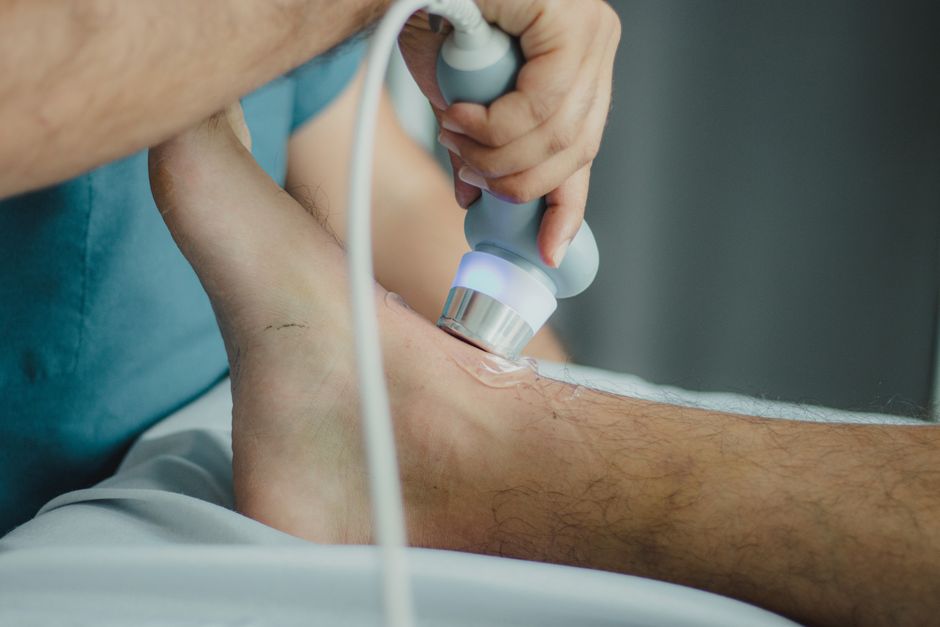
Ultrasound of the joints and soft tissues is one of the most informative ways to examine the musculoskeletal system. It lets the doctor assess cartilage, tendons, ligaments and the tissues around a joint in real time, without radiation exposure. That is why it is used both for acute injuries and for chronic inflammatory conditions.
- Joint ultrasound is a safe, quick and accurate method that involves no ionising radiation
- It is recommended for joint pain, swelling, injuries and suspected inflammation
- Approximate costs in Poland, Germany and Israel are given below for comparison
- Unlike an MRI, the result is ready straight after the scan
01What does a joint ultrasound show, and when is it needed?
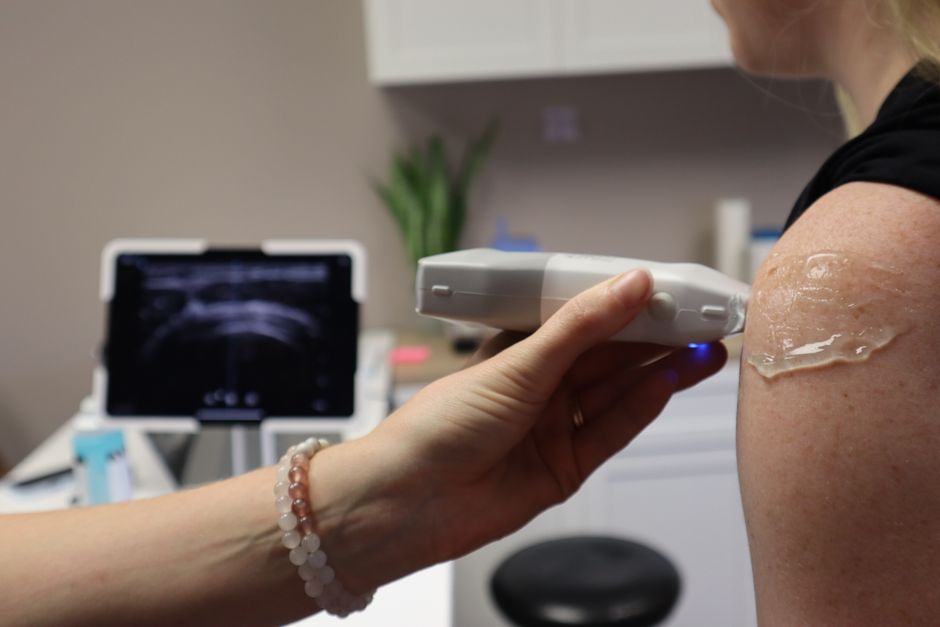
A joint ultrasound shows structures that are not visible on an X-ray: tendons, joint fluid, the synovial membrane, cartilage and muscle. That is why ultrasound is often the first step in investigating pain in the knee, shoulder, hip or ankle.
Your doctor may refer you for a scan if a joint is swollen, its movement is limited, or it clicks or creaks when you move. Ultrasound is also used after injuries to rule out torn ligaments or tendons.
The main reasons for a joint ultrasound
- Arthritis and osteoarthritis: assessing the degree of inflammation, cartilage thinning and any fluid (effusion) in the joint
- Injuries: diagnosing torn tendons and ligaments and haematomas in the soft tissues
- Bursitis and tendinitis: pinpointing the location and extent of inflammation
- Baker’s cysts: detecting fluid-filled swellings behind the knee and measuring their size
- Monitoring treatment: tracking how well therapy or rehabilitation is working
If a joint has been painful for more than two weeks or has become swollen, do not put off an ultrasound: early diagnosis makes treatment considerably simpler and shorter.
02Which joints and tissues can be examined with ultrasound?
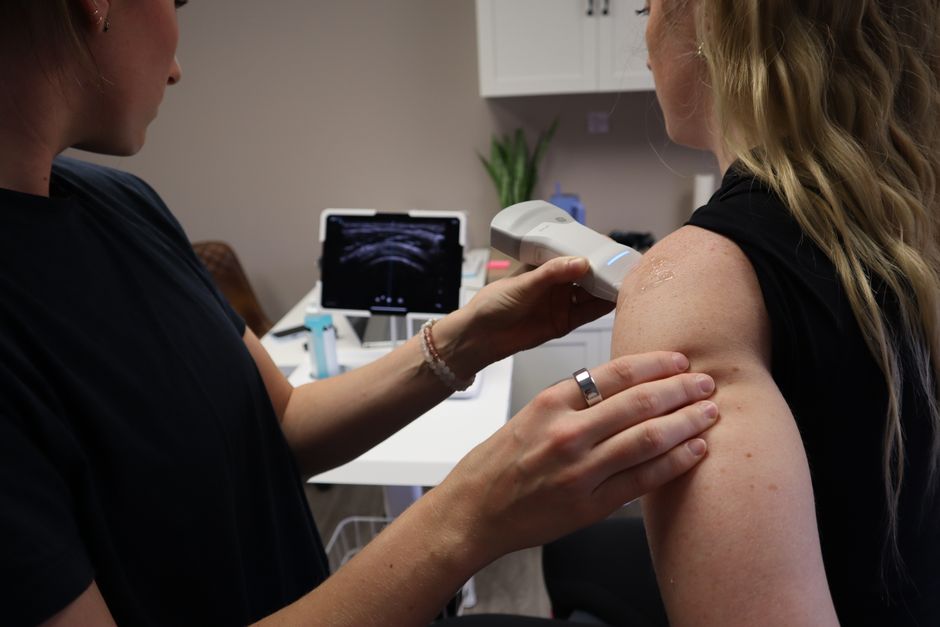
The method is suitable for examining almost any joint in the body. The scans most often performed in Ukraine are of the knee, shoulder, hip, ankle and elbow.
Ultrasound of the small joints of the hands and feet is a separate request. It is particularly useful for rheumatoid arthritis, gout and systemic connective tissue diseases.
The joints examined most often
- Knee: menisci, cruciate ligaments, synovial membrane, Baker’s cyst
- Shoulder: rotator cuff, subacromial bursa, joint cartilage
- Hip: joint fluid, cartilage condition, femoral nerve, bursae
- Ankle: Achilles tendon, ligaments, heel spur
- Small joints of the hands and feet: synovitis, erosions, inflammatory changes in rheumatic diseases
Ultrasound of soft tissues outside the joints is a separate request. It can detect lipomas, ganglion cysts, abscesses, fibromas and foreign bodies in the tissues under the skin.
Not sure which clinic to start with?
A MediUkraine coordinator will help you choose a clinic and a doctor for your case, free of charge.
03What happens during the scan, and do you need to prepare?
A joint ultrasound needs no special preparation. The doctor applies gel to the skin over the area being examined and moves the probe in different planes. The scan takes 15 to 30 minutes, depending on how many joints are examined.
The scan is painless. In some cases the doctor may ask you to change position or make a particular movement, which shows how the joint behaves in motion.
Advantages over other methods
Unlike an MRI, ultrasound can examine the joint dynamically, while it is moving. This is especially important when diagnosing instability or intermittent pain. In addition, the doctor gives you the result and a consultation straight after the scan.
X-rays and CT scans use ionising radiation and show soft tissues less well. Ultrasound has neither of these drawbacks, so it is suitable even for children and pregnant women.
You can find more about booking on the joint and soft tissue ultrasound in Ukraine page.
04How much does a joint ultrasound cost in Ukraine and abroad?
The cost of a joint ultrasound depends on the number of joints and the scope of the scan. The exact price is confirmed by the clinic when you book.
For patients considering treatment abroad or wanting to compare costs, here are approximate figures for the main markets.
| Country | Approximate cost | What affects the price |
|---|---|---|
| Ukraine | Confirmed by the clinic when you book | Type of clinic, equipment, number of joints |
| Poland | €40–€80 | Private or public clinic, region |
| Germany | €80–€150 | University hospital or private centre |
| Israel | €120–€200 | Type of facility, number of areas examined |
MediUkraine can book your scan with an experienced specialist at our partner clinic, EXPERT in Uzhhorod, at a time that suits you. The clinic’s team communicates with international patients in English.
05Frequently asked questions
Is a joint ultrasound painful?+
No, the procedure is painless. The probe glides over the skin with gel; over an inflamed joint you may feel only slight pressure.
How often can I have a joint ultrasound?+
Ultrasound has no limits on how often it can be used, as it involves no ionising radiation. The scan can be repeated as often as your clinical situation requires.
Can ultrasound replace an MRI for joint problems?+
Ultrasound and MRI complement each other rather than replace one another. Ultrasound is better for surface structures and movement, while MRI gives more detail of the structures inside the joint and of the bone marrow. Your doctor will decide which method you need.
What should I bring to a joint ultrasound?+
No special preparation is needed. It helps to bring previous scans, test results and a referral from your doctor, so that the sonographer can carry out a targeted scan and give a more accurate report.




