
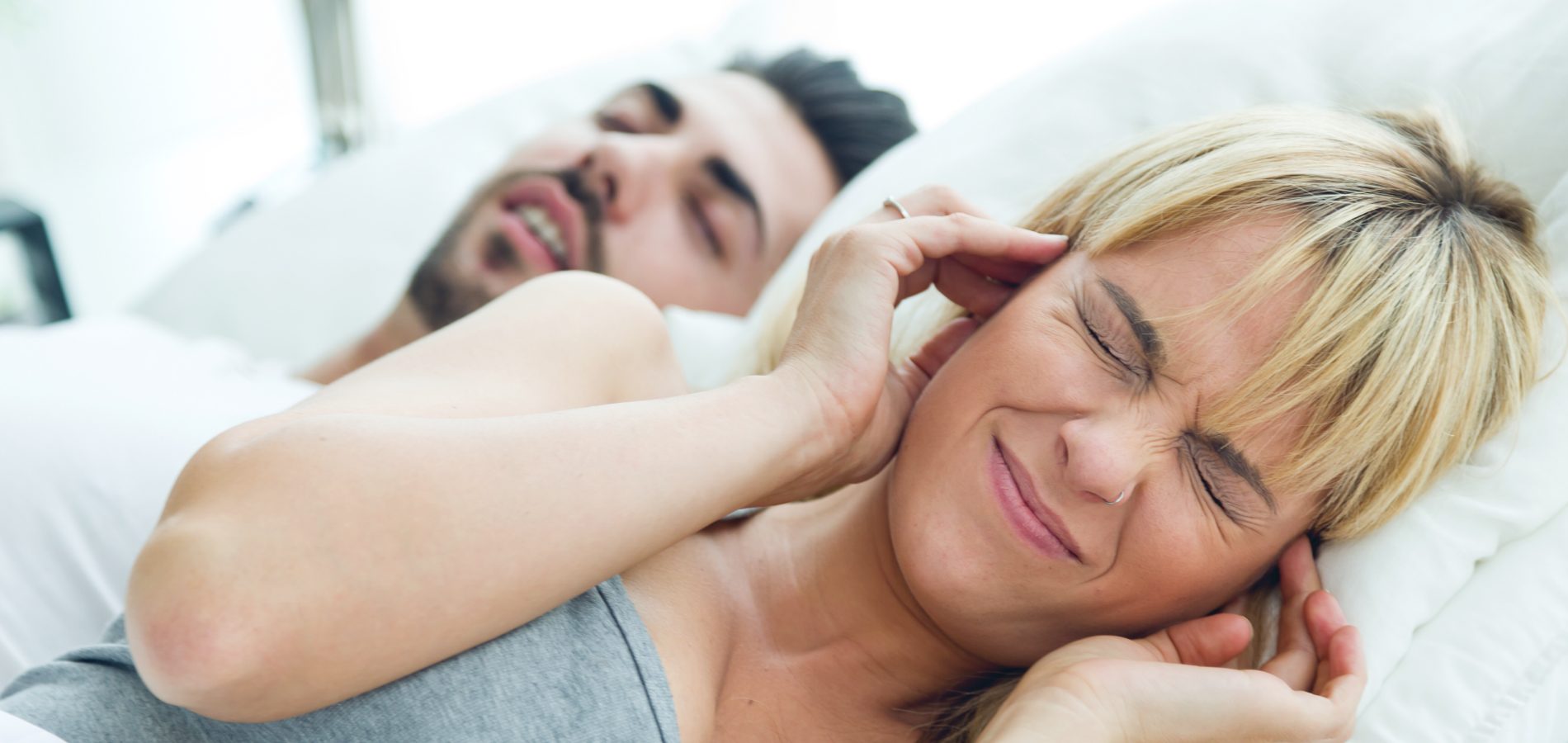
Snoring is something people often treat as a funny quirk or, at most, a nuisance for whoever shares the bedroom. But the sound of night-time snoring can hide a serious medical problem: obstructive sleep apnoea, which considerably raises the risk of cardiovascular events, type 2 diabetes and premature death. Below we explain when snoring is purely an ENT problem and when several specialists need to be involved.
01Why does snoring happen?
Snoring is the sound produced when the soft tissues of the upper airway (the soft palate, uvula, tonsils and base of the tongue) vibrate as you breathe during sleep. When you fall asleep, your muscles relax, the airway narrows, and the air passing through makes the soft tissues vibrate, which creates the characteristic sound.
ENT causes of snoring include: enlarged palatine tonsils and adenoids (the No. 1 cause, especially in children); nasal polyps and chronic rhinosinusitis, where difficulty breathing through the nose makes you breathe through your mouth during sleep, which encourages snoring; a deviated nasal septum; enlargement of the palatine arches and uvula; and congenital or acquired narrowing of the oropharynx. General factors that make snoring worse: excess body weight (fatty tissue narrows the throat), alcohol and sleeping pills (the muscles relax even more), smoking (irritation and swelling of the mucous membranes), sleeping on your back, and age (muscle tone declines over the years).
02When does snoring become dangerous?
Simple snoring without pauses in breathing is unpleasant but generally not dangerous. In a significant proportion of people, however, snoring comes with obstructive sleep apnoea syndrome (OSA): complete or partial pauses in breathing during sleep that last longer than 10 seconds. With apnoea, a person “chokes” in their sleep, the brain wakes up to restart breathing, then falls asleep again, and the cycle repeats dozens or even hundreds of times a night.
Signs that point to apnoea: your partner notices pauses in your breathing while you sleep; you wake up feeling breathless or with a racing heart; you have marked daytime sleepiness even after what should be enough sleep, nodding off at the wheel, in meetings or over a book; you have morning headaches, wake up unrefreshed, feel irritable and notice poorer concentration and memory; you get up to pass urine more than twice a night; your blood pressure is raised in the morning. OSA is an independent risk factor for high blood pressure, coronary heart disease, stroke, arrhythmias and type 2 diabetes. Left untreated, severe apnoea can take years off a person’s life.
Not sure which clinic to start with?
A MediUkraine coordinator will help you choose a clinic and a doctor for your case, free of charge.
03Diagnosis and the role of the ENT doctor
The main method for diagnosing OSA is polysomnography or cardiorespiratory monitoring during sleep. You spend the night in a sleep laboratory, or at home with a device that records your breathing, blood oxygen saturation, pulse and body position. The results give the apnoea–hypopnoea index (the number of breathing pauses per hour): normal is below 5, mild apnoea is 5–15, moderate 15–30 and severe over 30. The ENT doctor carries out a detailed examination: endoscopy of the nose and nasopharynx, assessment of the oropharynx (the size of the tonsils and the condition of the palate and uvula), and drug-induced sleep endoscopy (DISE), an examination of the airway during medication-induced sleep to find the level at which it is obstructed. This procedure makes it possible to tailor surgical treatment to the individual patient.
04Treating snoring and sleep apnoea
The approach depends on how severe the apnoea is and what is narrowing the airway. The “gold standard” for moderate and severe OSA is CPAP therapy: you sleep wearing a special mask that delivers air under positive pressure and keeps the airway open. Its effectiveness exceeds 95%, but it has to be used regularly. When snoring and apnoea have ENT causes, surgery may be recommended: removal of enlarged tonsils and adenoids (particularly effective in children), uvulopalatopharyngoplasty (UPPP), which removes excess tissue from the palate and uvula, and operations on the nasal septum and nasal turbinates when nasal breathing is obstructed. For mild apnoea, or snoring without apnoea, the options are positional therapy (training yourself to sleep on your side), weight loss, avoiding alcohol and oral appliances (mandibular advancement devices). If your sleep comes with loud snoring and daytime sleepiness, or your partner has noticed pauses in your breathing, see an ENT doctor and a sleep specialist. This is not just a nuisance but a question of your health and life expectancy.