| Service | 🇺🇦 Ukraine | 🇨🇿 Czech Republic | 🇹🇷 Turkey |
|---|---|---|---|
| Metal braces | from USD 332 | from USD 3,103 | from USD 854 |
| Ceramic braces | from USD 409 | from USD 2,029 | from USD 731 |
| Self-ligating braces | from USD 516 | from USD 2,148 | from USD 1,358 |
| Braces adjustment with archwire change | from USD 24 | from USD 47 | from USD 94 |
Prices in the “Ukraine” column come from MediUkraine’s partner clinics. The Czech Republic and Turkey columns show the lower bounds of prices published by clinics there (for Turkey, also the Turkish Dental Association’s recommended 2026 tariff), collected in August 2026 and converted to US dollars at the rate on the day of collection. A dash means we could not find a comparable published price. In any country, the final cost is set by the clinic after an examination.
Braces are a fixed appliance with two parts. A bracket with a slot is bonded to each tooth with dental adhesive, and an archwire is fed into the slots of all the brackets. The archwire is bent to the shape of a correct dental arch and tends to return to that shape, so it constantly pulls the teeth along with it. Unlike aligners, the appliance cannot be removed or adjusted at home.
A tooth moves through bone, not through the gum. Constant light pressure triggers remodelling of the bone tissue: on the pressure side it is resorbed, on the opposite side it builds up, and the tooth gradually moves together with its socket. That is why treatment is measured in months rather than weeks: biology cannot be hurried, and excessive force does not speed up movement but raises the risk of damage to the root.
The main indications are crowding and lack of space in the arch, gaps between teeth, a deep, open or crossbite, a shifted midline, and neighbouring teeth that have tilted into the gap left by a tooth lost long ago. Another reason is preparation for prosthetics or implants: before a crown or implant is placed, the teeth often have to be moved apart and uprighted first, otherwise there is simply no room for the restoration.
Now, who should not have braces, or not yet. Untreated caries, inflammation around a root, generalised periodontitis in an acute phase and loose teeth are treated first, because a tooth with destroyed support must not be moved. Nor does treatment start while oral hygiene is poor: plaque around the brackets leaves white spots on the enamel within a few months, and these do not go away on their own. Severe skeletal anomalies are not corrected by the appliance alone; for those a combination with orthognathic (jaw) surgery is discussed. In children treatment is planned after the permanent teeth have come through, usually not before 11–13 years of age.
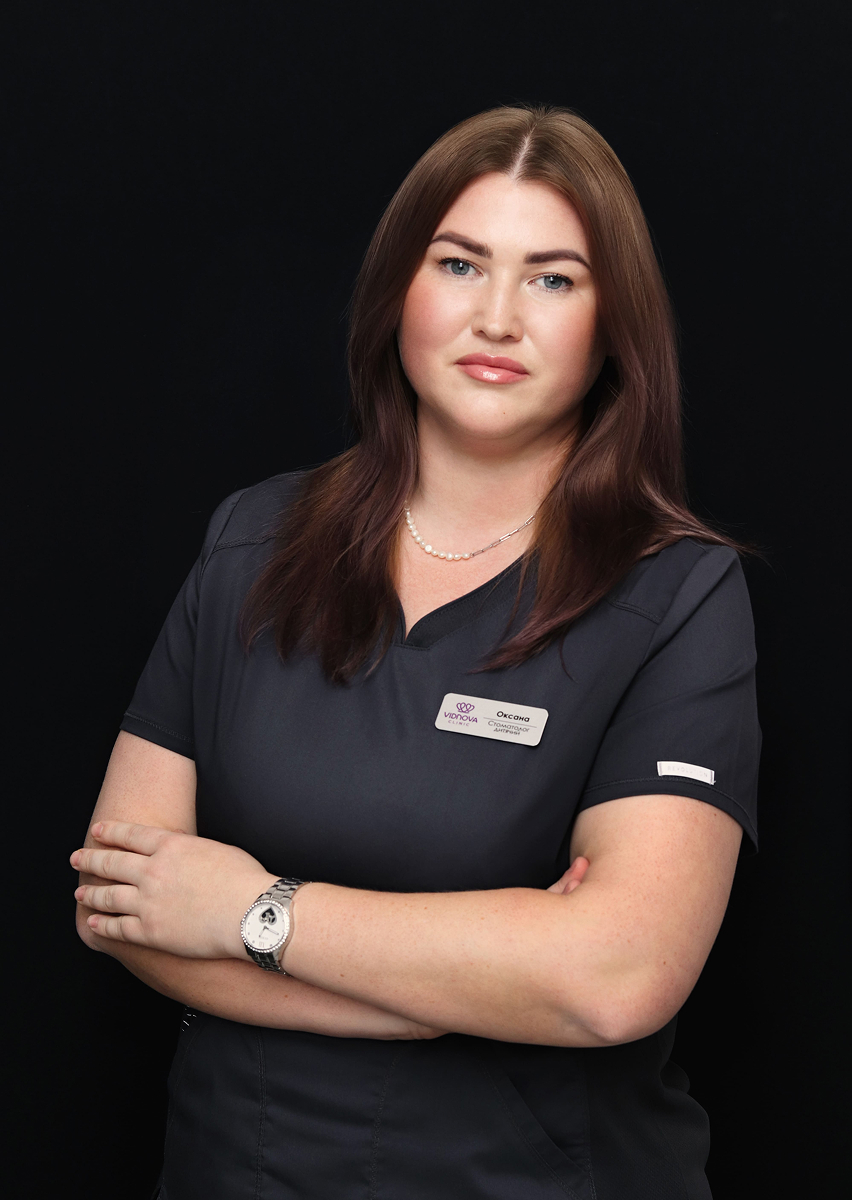
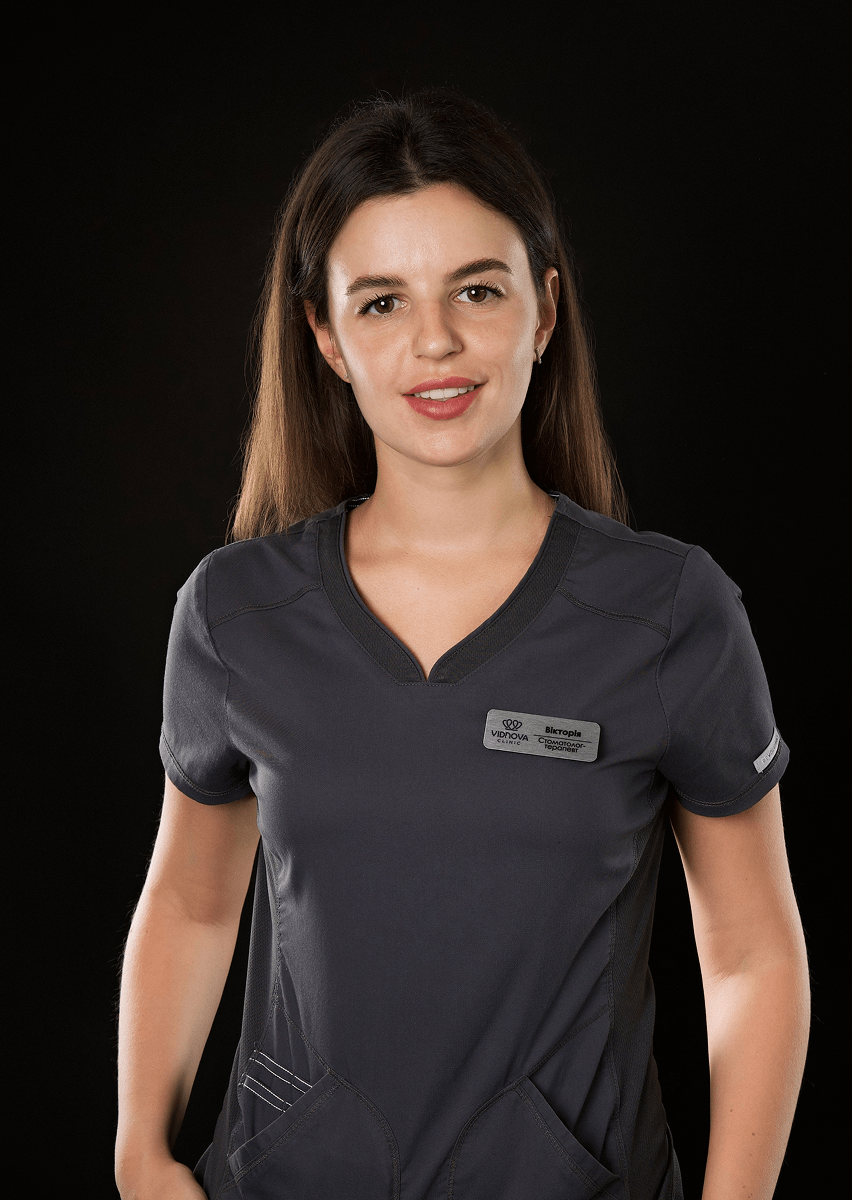
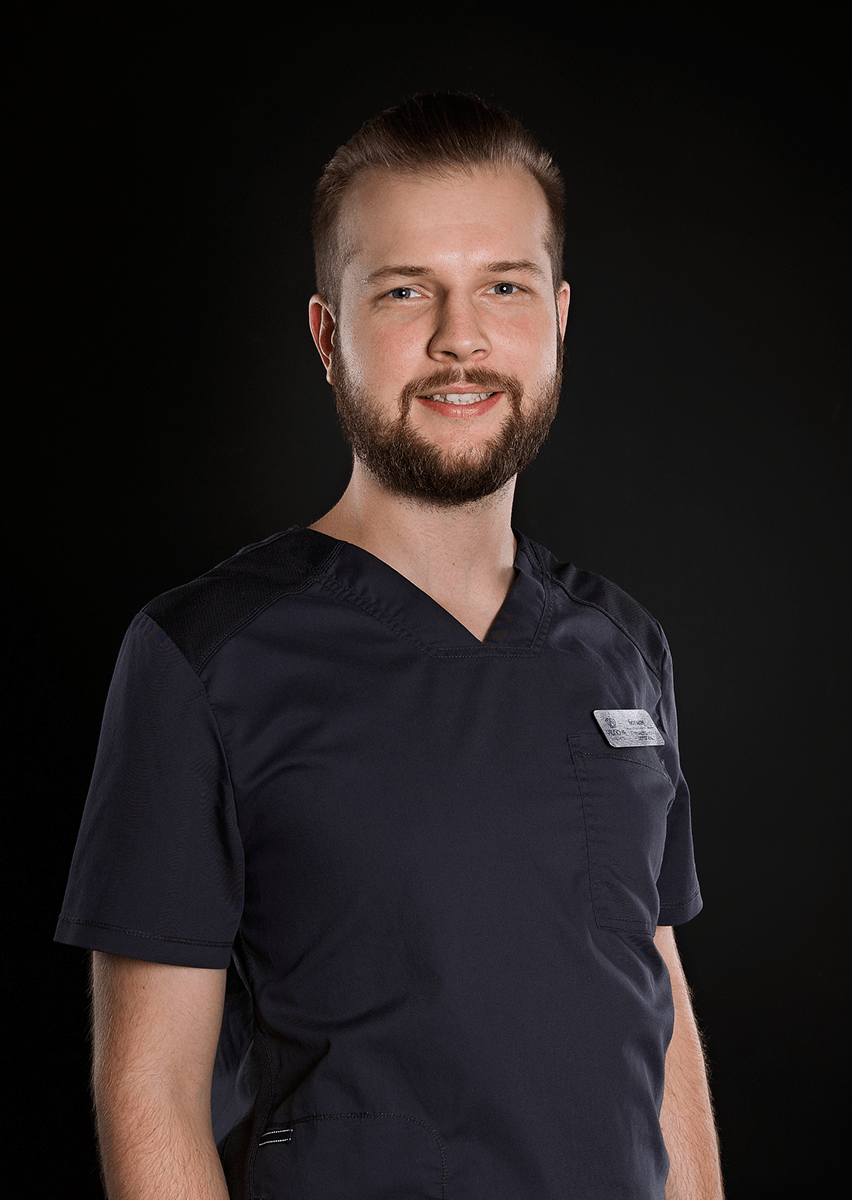
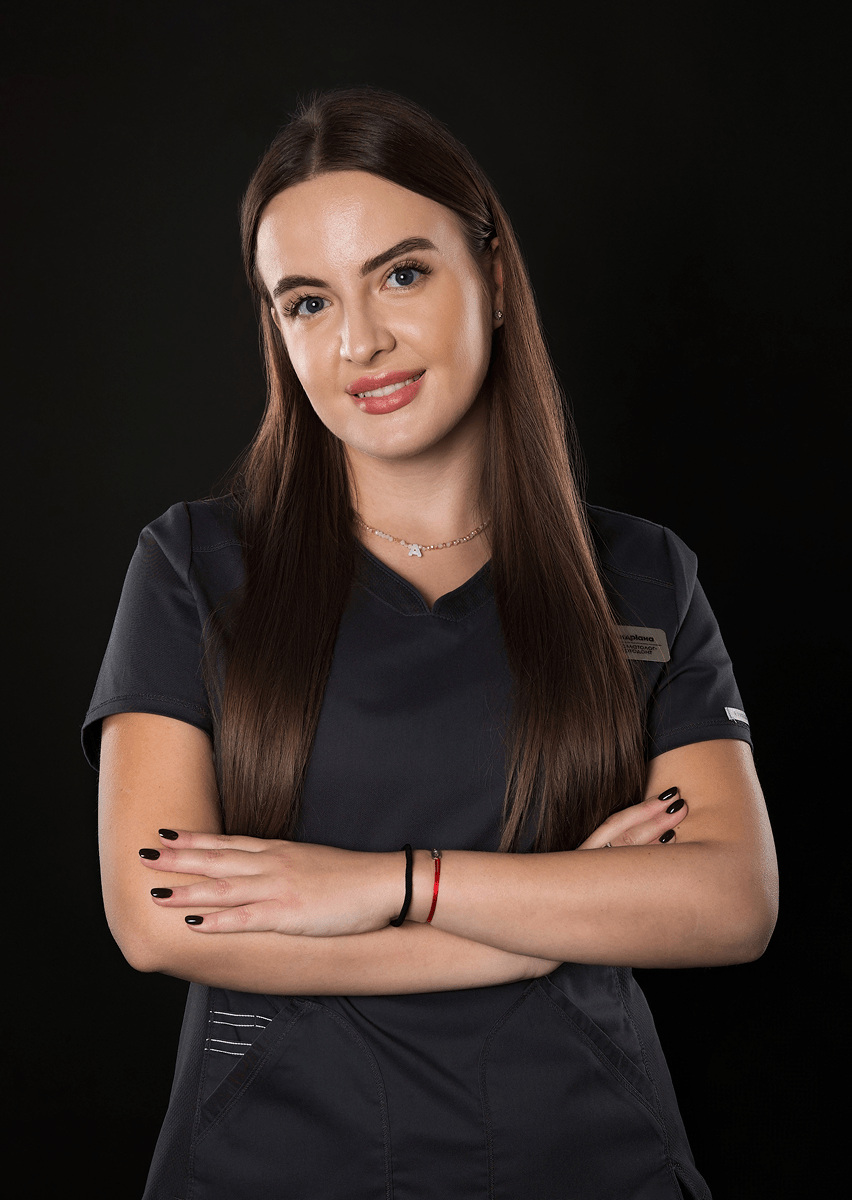
MediUkraine is a treatment search and coordination service, not a clinic. We find the clinic and a doctor with the right specialism, arrange the dates and support you throughout, including if you are travelling from abroad. Our partner clinic in this field is Vidnova Dental Clinic in Lviv, 10 Ivana-Teodoziia Kurovtsia Street. Decisions on indications, the type of appliance and the treatment plan are made by the doctor after an in-person examination.

Travel. Ukrainian airspace is closed, so there are no commercial flights. Patients reach Lviv overland, most often from Poland: Rzeszów and Kraków airports are the usual entry points, with a train, bus or private transfer onward to the border and on to the city. Lviv is roughly 70 km from the Polish border, the shortest crossing of any Ukrainian city.
Visas. Citizens of the EU, the United Kingdom and the United States do not need a visa for short stays in Ukraine. Rules depend on your citizenship, so check your own before booking.
Safety, plainly. Ukraine is at war. Air raid alerts occur in Lviv, and an appointment can be interrupted by one. Several governments advise against travel to Ukraine, and while that advice stands, ordinary travel and medical insurance is often void — confirm your cover with your insurer before you commit to anything.
Language. MediUkraine handles correspondence, scheduling, the written treatment plan and the quote in English. The clinic's team communicates with international patients in English.
Payment. You pay the clinic directly. Our coordination service is free of charge for you.
More on travel, safety and insurance: Safety and travel.
The bracket and the archwire make up the whole mechanism. The bracket slot determines the angle and inclination at which the tooth will sit, and the archwire supplies the force. Work proceeds in stages: first levelling, bringing the teeth into one plane with thin flexible archwires; then the working phase, closing gaps and correcting the relationship between the jaws, which requires stiffer archwires; and finally detailing, the precise seating of the teeth into contact, when from the outside it looks as though nothing is happening any more.
A metal system made of steel is the basic and cheapest option, from USD 332. Its advantages are technical: a steel slot has the least friction with the archwire, the appliance practically never breaks, and a bracket can be adjusted by bending if needed. There is one obvious drawback: it is visible. For complex cases with large movements, orthodontists often recommend metal braces, not to save money but because the material behaves predictably.
A ceramic system made of polycrystalline aluminium oxide costs from USD 409 and is matched to the shade of the enamel, so at conversation distance it is barely noticeable. The trade-off is mechanical: ceramic is more brittle than steel, a bracket can chip if you bite on something hard, friction in the slot is higher, so some movements go more slowly. Clear ligatures stain over time from coffee, tea and turmeric and look worse than the brackets themselves, so they are changed at every adjustment. Ceramic brackets also take longer to remove, and removal carries a higher risk of chipping the enamel.
Sapphire brackets are monocrystalline aluminium oxide, transparent rather than white. On light enamel they are the least noticeable; on darker enamel, by contrast, they show as shiny dots. Mechanically they are similar to ceramic: more brittle than metal and in need of careful handling. The partner clinic does not quote a separate price for them, so the cost is confirmed at the consultation.
A self-ligating system costs from USD 516 and differs in one component: instead of a rubber or wire ligature, the archwire is held by a built-in clip that opens and closes. It is worth being clear about this, because it is the most widespread advertising claim in orthodontics: self-ligating braces do not halve treatment time. Systematic reviews of clinical studies find no clinically significant difference in overall treatment duration compared with conventional systems. The real advantage is different and smaller: changing the archwire takes less chair time, there are no ligatures to stain, and cleaning around the bracket is slightly easier. Those who choose this appliance for these reasons are making a well-founded choice; those who pay for the promise of a course half as long are paying for something the research does not confirm.
Lingual systems, bonded to the inner surface of the teeth, are a separate category: they cannot be seen from outside, but they cost more, have to be custom-made and speech takes several weeks to adapt. The alternative to a fixed appliance is aligners, clear trays you change yourself: they are taken out for eating and brushing, but they do not work in every case and depend entirely on the discipline of wearing them 20–22 hours a day. Which of these suits a particular patient is decided from the imaging, not from preference: complex rotations, pulling impacted teeth into place and large gap closures are still done more reliably with an archwire.
Archwires are changed in a set sequence, and it is the archwire, not the bracket, that does the work. Treatment starts with thin round nickel-titanium wires: this alloy has shape memory and delivers a light constant force that is comfortable during the levelling stage. Next come thicker, rectangular wires, first also nickel-titanium, then steel, which hold their shape and allow gaps to be closed and the inclination of the roots to be controlled. At the final stage, titanium-molybdenum archwires or steel archwires with individual bends are used when the position of individual teeth needs fine-tuning.
Auxiliary elements are added to the archwire, and some of them depend more on the patient than on the doctor. Elastics, small rubber bands the patient puts on between hooks on the upper and lower jaw, correct the relationship between the jaws, and they have to be worn for as many hours a day as the doctor has said: skipped elastics stretch the course by months. Mini-implants, temporary titanium screws in the bone, provide fixed anchorage where neighbouring teeth would otherwise have to be shifted. Molar bands, separation of contacts, buttons on impacted teeth and springs to open space in the arch are also used.
Treatment takes 12–30 months, and where you fall in that range is not a matter of luck. The duration is set by the complexity of the case: mild crowding without extractions goes faster, while closing gaps after premolar extraction and correcting a bite with a marked skeletal component take longer. Bone remodels more slowly in adults than in teenagers, so a similar case usually takes longer to treat in an adult. Breakages add months too: every bracket that comes off is lost time, not just an unscheduled visit. The type of appliance does not fundamentally affect this duration, whatever the advertising promises.
It is also worth knowing what braces cannot do. Marked skeletal discrepancies, where the issue is not the position of the teeth but the size and position of the jaws themselves, are corrected in combination with orthognathic surgery; the archwire alone only compensates here, masking the problem by tilting the teeth. Straightening does not change the shape or colour of the teeth: chips, worn edges and differences in shade are dealt with by restorations after removal. Treatment does not improve the condition of the gums and bone; on the contrary, with untreated periodontitis tooth movement makes things worse. As for expectations, only a doctor, after an examination and analysis of the images, can predict the outcome for a particular patient.
For the first three to five days after bonding the teeth ache and are painful on biting; this is a normal reaction to the start of movement, not a sign that something has gone wrong. Soft food helps and, if needed, an ordinary painkiller. During the same days the lining of the cheeks and lips rubs against the brackets: the spots that chafe are covered with orthodontic wax until you get used to it.
Speech is barely affected: unlike lingual braces, an appliance on the outer surface of the teeth hardly gets in the way. After a week or two you stop noticing it. After each adjustment the discomfort returns for one to three days and is usually milder than the first time.
The first visible changes appear after roughly two to three months, and the front teeth straighten fastest. This is encouraging but misleading: the front teeth move easily, while the main work, correcting the bite, closing gaps and controlling the inclination of the roots, takes up the rest of the course.
The most tedious part comes last. At the detailing stage it looks from the outside as though the teeth are already straight and treatment can be finished, although this is when the contacts between the upper and lower arches are being built. Removing the appliance at this stage means a bite that does not close properly and a high likelihood of the teeth returning to their previous position.
Removal takes one visit: the brackets are taken off with pliers, the adhesive residue is ground away and the enamel is polished. This is when the consequences of hygiene over the whole course become visible: white demineralised spots around where the brackets were, if plaque sat there for months. Such spots do not go away on their own: they are reduced with remineralising therapy, and some cases have to be covered with a restoration. A difference in enamel shade under and around the brackets is also possible, so whitening, if planned, is done after removal.
And the main thing to know before you start: treatment does not end with removal. Teeth that have just moved are held by stretched periodontal fibres and immature bone, so without retention they move back, most noticeably the lower incisors. Straight after removal a retainer is fixed: a thin wire on the tongue side of the front teeth, usually combined with a clear tray for night-time wear. The retention period lasts at least two years, and most orthodontists recommend wearing the night tray indefinitely. This is not an upsell or an optional extra; it is part of the same treatment, without which the previous two years lose their point.
Step 1. Diagnostics and plan. The doctor examines the bite, refers you for a cone beam CT scan and a lateral cephalometric X-ray, takes a photo record and takes impressions or scans the jaws. Cephalometric analysis shows where the problem lies, in the position of the teeth or in the relationship between the jaws, and that determines whether the appliance alone will be enough. You are given a plan with stages, an approximate duration and a quote.
Step 2. Preparatory treatment and professional hygiene. Before bonding, caries is treated, old fillings with overhanging edges are replaced, teeth with root canal treatment are checked and, according to the plan, teeth that are in the way are extracted. Professional hygiene is done shortly before fitting: a bracket will not hold on enamel with plaque on it. This step cannot be skipped, because under a bonded bracket the tooth cannot be treated.
In total the cycle takes 12–30 months: between fitting, which takes 1.5–2 hours, and removal, you will have roughly eight to twenty-five adjustment visits at which archwires, ligatures and auxiliary elements are changed, and before bonding any caries must be treated and professional hygiene done. Neither anaesthesia nor hospital admission is needed at any stage. What completes it all is not removal but retention: a retainer and a night tray for at least two years, otherwise the teeth return to their previous position.
Treatment does not progress continuously but in cycles. The archwire creates constant light pressure, the bone remodels, the tooth shifts by fractions of a millimetre, and within a few weeks the force weakens: the archwire has straightened as far as it can. Then the next cycle is needed, a visit at which the archwire is changed or tightened. Hence the 4–8 week interval, and the reason the course cannot be completed in a few visits.
The cycles make up three phases. Levelling brings the teeth into one arch with thin flexible wires, usually over the first few months; this is when you see the fastest progress. The working phase closes gaps, corrects the relationship between the jaws and moves the roots with stiffer rectangular archwires; it is the longest. Detailing is the final fine-tuning of contacts, when from the outside almost nothing changes any more, but the work continues.
The interval between visits is set by biology, and there is no point shortening it. Coming in after two weeks means catching the bone in the middle of remodelling: it is too early to change the archwire, and excessive force does not speed up movement but raises the risk of damage to the root. Missing two or three intervals is worse: the archwire stops working, the teeth stop or shift in an uncontrolled way, and part of the progress has to be repeated.
The plan is reviewed as treatment goes on, and that is normal. At check-up visits the doctor compares the actual movements with the planned ones; if a tooth is not moving as it should, the sequence is changed, anchorage is added or a previous archwire is reinstated. Roughly halfway through the course a check X-ray is taken to assess the condition of the roots and bone. The duration given at the first visit is the doctor's estimate, not a commitment, and it depends among other things on discipline with the elastics.
The last cycle is retention, and it is the longest. After the appliance is removed the teeth are held with a retainer and a night tray: the periodontal fibres return to their previous form slowly, the bone around the moved teeth matures over months, and this is when the risk of relapse is highest. The minimum period is two years, and most orthodontists advise keeping the night tray for a long time. The retainer should be checked every 6–12 months, because people rarely notice a loose wire themselves.
The most common complication is demineralisation of the enamel around the brackets, the same white chalky spots that become visible after removal. The mechanism is simple: plaque collects next to the bracket and ligature, bacteria produce acid, and minerals are leached out of the surface layer. This is not a cosmetic nuisance but the first stage of caries. Prevention comes down to daily care: brushing after every meal, interdental brushes for the gaps, fluoride toothpastes and mouthwashes, professional hygiene every 3–6 months. Spots that have already formed do not disappear completely.
Close behind come caries and gum inflammation. Gingivitis develops in the first months when hygiene is poor, and in some patients the gums overgrow and partly cover the brackets; professional cleaning is then needed, sometimes surgical correction. Once hygiene is sorted out, the inflammation usually settles. But with generalised periodontitis, tooth movement against a background of active inflammation accelerates bone loss, so treatment is started only after the condition has stabilised.
Root resorption, shortening of the root tips during movement, is detected on X-rays in most patients but is rarely clinically significant. The risk is increased by a long course, large movements, excessive forces, previous trauma to the tooth and an individual predisposition that cannot be predicted in advance. That is why a check X-ray is taken roughly halfway through the course: if resorption is marked, the plan is changed or treatment is paused.
Relapse is the most common long-term outcome, and it is predictable. Without a retainer the teeth return to their previous position; the lower incisors do so faster and more visibly than others, crowding again. Some shifting with age happens even in people who have never had treatment, which is why keeping the night tray for a long time is advised. Not following the retention regime is the most common reason people return to the orthodontist a few years later.
Smaller but frequent nuisances are brackets coming off, broken archwires, the end of an archwire pricking the cheek, and injuries to the lining of the mouth. Every breakage shifts the schedule, so hard, sticky and chewy foods are cut out of the diet for the whole course: nuts, rusks, toffees, popcorn, whole apples and carrots. Less often there is an allergy to the nickel in the archwires; titanium or coated archwires are then used. The link between orthodontic treatment and temporomandibular joint disorders has not been studied sufficiently: there is no reliable evidence that braces cause or treat them, so treat any promises in this area with caution.
Contraindications fall into temporary ones and those that require a separate decision. Temporary ones are untreated caries and inflammation around a root, a flare-up of periodontitis and poor hygiene: all of these are dealt with, after which treatment is possible. Particular caution is needed for patients who take bisphosphonates or denosumab or who have had radiotherapy to the jaw area: their bone remodelling is impaired, and the decision is made together with the doctor who prescribed these medicines. Severe skeletal anomalies are not corrected by the appliance alone; a combination with orthognathic surgery is needed. MediUkraine's partner clinics hold a licence from the Ministry of Health of Ukraine for medical practice in the relevant specialties, and the doctor checks the list of contraindications individually during the examination.
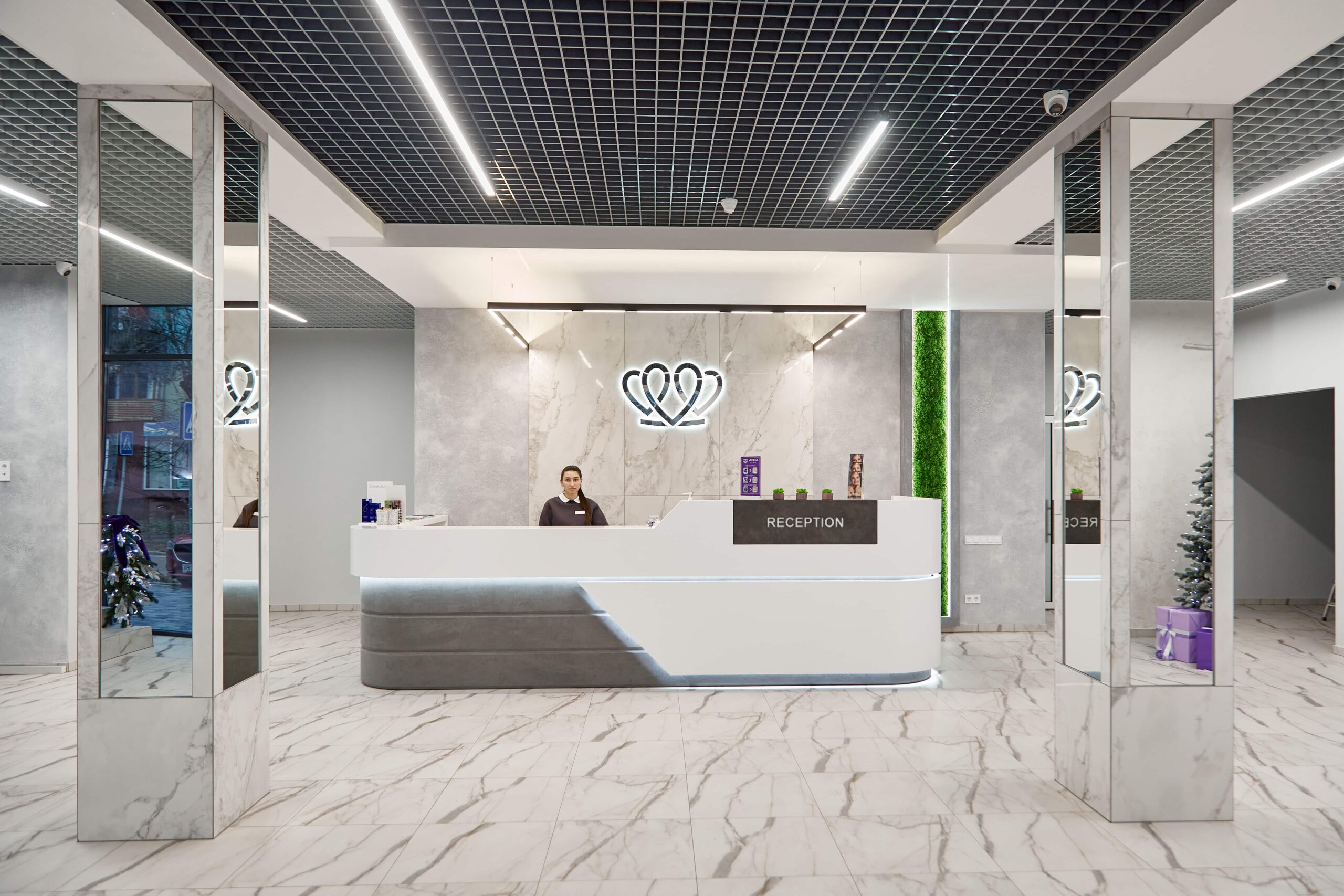
📍 Lviv, Ukraine
A dental clinic in Lviv with a separate doctor for each field: oral surgery and implants, prosthodontics, restorative dentistry, endodontics under a microscope, periodontics, orthodontics and paediatric dentistry.
At MediUkraine's partner clinics, metal braces cost from USD 332 ceramic braces from USD 409 and self-ligating braces from USD 516. This covers the appliance and bonding; check whether the price is for one jaw or both. Adjustment with an archwire change is a separate item, from USD 24 and a full course involves roughly eight to twenty-five of these visits. Add diagnostics, preparatory treatment before the start, removal and the retainer. The final total is set by the doctor after an examination, because the scope depends on the condition of the teeth.
No. This is the most widespread advertising claim in orthodontics, and systematic reviews of clinical studies do not confirm it: no clinically significant difference in overall treatment duration has been found compared with conventional systems. The real advantages of a self-ligating appliance are different: changing the archwire takes less chair time, there are no ligatures to stain, and cleaning around the bracket is slightly easier. The length of the course is set by the complexity of the case, not by the type of bracket.
Usually 12–30 months. Mild crowding without extractions goes faster, while closing gaps after premolar extraction and correcting a bite with a marked skeletal component take longer. Bone remodels more slowly in adults than in teenagers, so a similar case takes longer to treat in an adult. The duration is extended by breakages of the appliance, missed visits and irregular wearing of elastics. The time given at the first visit is the doctor's estimate, not a commitment.
No, and this is not an upsell. The periodontal fibres around the moved teeth remain stretched and the bone matures over months, so without retention the teeth return to their previous position, the lower incisors fastest and most visibly. Retention is part of the same treatment: a fixed wire on the tongue side of the front teeth plus a clear tray for night-time wear. The minimum period is two years, and most orthodontists advise keeping the night tray for a long time. The retainer is checked once every 6–12 months, because patients usually do not notice a loose wire.
Above all in visibility and price. Metal (steel) braces are the cheapest and strongest and have the least friction in the slot, but they can be seen. Ceramic ones are matched to the shade of the enamel; they are more brittle, friction in them is higher, and clear ligatures stain over time from coffee and turmeric. Sapphire ones are transparent and the least noticeable on light enamel, but they are just as brittle. The material does not fundamentally affect the length of treatment, which is set by the complexity of the case. For complex movements the orthodontist often recommends metal, for technical reasons, not to cut costs.
For the first three to five days after bonding the teeth ache and are painful on biting; this is a normal reaction to the start of movement. Soft food and an ordinary painkiller help. During the same days the lining of the cheeks rubs against the brackets, and the spots that chafe are covered with orthodontic wax. After each adjustment the discomfort returns for one to three days and is usually milder than the first time. No anaesthesia is needed for fitting itself: the brackets are bonded to the enamel surface and the nerve is not affected.
Treatment is postponed with untreated caries, inflammation around a root, a flare-up of periodontitis or poor hygiene: all of these are dealt with first. Particular caution is needed for patients who take bisphosphonates or denosumab or who have had radiotherapy to the jaw area: their bone remodelling is impaired. Severe skeletal anomalies are not corrected by the appliance alone; a combination with orthognathic surgery is needed. In children treatment is planned after the permanent teeth have come through. The final decision is made by the doctor after an examination and analysis of the images.
Tell us what you need: we will suggest a clinic and a doctor and send you a cost estimate.
Request a consultation →