
| Service | 🇺🇦 Ukraine | 🇨🇿 Czech Republic | 🇹🇷 Turkey |
|---|---|---|---|
| Aesthetic restoration of a tooth | from USD 73 | from USD 143 | from USD 94 |
| Composite veneer | from USD 156 | from USD 310 | from USD 126 |
| Dentist consultation | from USD 8 | from USD 38 | from USD 34 |
Prices in the “Ukraine” column come from MediUkraine’s partner clinics. The Czech Republic and Turkey columns show the lower bounds of prices published by clinics there (for Turkey, also the Turkish Dental Association’s recommended 2026 tariff), collected in August 2026 and converted to US dollars at the rate on the day of collection. A dash means we could not find a comparable published price. In any country, the final cost is set by the clinic after an examination.
Aesthetic restoration rebuilds the shape, colour and translucency of a tooth with composite directly in the mouth, in a single visit. It differs from an ordinary filling not in the material but in its purpose: a filling closes a cavity, while a restoration reproduces the optical properties of a natural tooth, with a more saturated area near the gum, a dentine body with mamelons and a translucent incisal edge.
The most common indications are an incisor chipped in an injury, a worn or uneven biting edge, a diastema or other gaps between the front teeth, wedge-shaped defects near the gum line, discoloured old fillings with a visible margin, and minor shape irregularities such as a narrow lateral incisor.
Composite is also used to mask isolated enamel spots caused by fluorosis or hypomineralisation when whitening has not removed them. In these cases the dentist removes minimal tissue or none at all, applying a thin layer over the enamel.
This treatment is not suitable with active decay and poor hygiene, during a periodontitis flare-up, when the edge of the defect runs deep under the gum and cannot be isolated, or when more than half the crown is destroyed or the tooth is root-filled and takes the main chewing load. With uncontrolled bruxism, a protective splint should be made first; otherwise the material will keep chipping and repairs will become a regular expense.
MediUkraine is a treatment search and coordination service, not a clinic. We select the clinic and a dentist with the right specialism, agree the visit date and support patients, including those travelling from abroad. The dentist decides on the scope of treatment after an in-person examination.

Travel. Ukrainian airspace is closed, so there are no commercial flights. Patients reach Lviv overland, most often from Poland: Rzeszów and Kraków airports are the usual entry points, with a train, bus or private transfer onward to the border and on to the city. Lviv is roughly 70 km from the Polish border, the shortest crossing of any Ukrainian city.
Visas. Citizens of the EU, the United Kingdom and the United States do not need a visa for short stays in Ukraine. Rules depend on your citizenship, so check your own before booking.
Safety, plainly. Ukraine is at war. Air raid alerts occur in Lviv, and an appointment can be interrupted by one. Several governments advise against travel to Ukraine, and while that advice stands, ordinary travel and medical insurance is often void — confirm your cover with your insurer before you commit to anything.
Language. MediUkraine handles correspondence, scheduling, the written treatment plan and the quote in English. The clinic's team communicates with international patients in English.
Payment. You pay the clinic directly. Our coordination service is free of charge for you.
More on travel, safety and insurance: Safety and travel.
Shade selection is the first and most important stage, and it is done before work begins. Under a rubber dam a tooth dries out within 15–20 minutes and becomes one or two shades lighter, so a colour chosen mid-procedure will be wrong. The dentist uses the Vita shade guide or the composite manufacturer's own guide, in daylight or neutral artificial light, and assesses the area near the gum, the body of the tooth and the incisal edge separately. If needed, they place small test samples of material directly on the enamel of the neighbouring tooth, cure them and compare: this is the most reliable way to check the choice.
The layering technique reproduces the structure of the tooth. An opaque layer masks a dark base or a fracture line, dentine shades form the body and the mamelons (the finger-like lobes of dentine that show through the edge), then comes an enamel shade, and finally a translucent layer that creates the glassy effect along the incisal edge. Each layer is up to 2 mm thick and cured separately: a thicker layer will not set fully, and shrinkage during curing will pull the material away from the wall and open a gap.
A silicone key is a technique for large defects. The dentist makes a diagnostic wax-up on a model or a mock-up in the mouth, takes a silicone impression of it and uses this template to build the thin palatal wall of the tooth first, in an enamel shade. The rest of the tooth is then built up against this wall, which controls the length, thickness and angle of the edge instead of sculpting by eye and correcting at the end.
Materials differ in the size and type of filler. Microhybrids are stronger and hold an incisal edge better, nanofilled composites keep their gloss longer after polishing, and nanoceramic systems combine both properties. In practice the dentist combines them: a denser material on load-bearing areas and a more aesthetic one on the visible surface. There are also effect shades: intense whites for hypoplasia spots, opalescent bluish shades for the edge, and amber shades to imitate depth in the cervical area.
The adhesive protocol determines how long the restoration will last. Enamel is etched with 37% phosphoric acid for 15–30 seconds, while dentine is treated more gently or with a self-etch adhesive. The surface must not be over-dried: over-dried dentine causes post-operative sensitivity, while over-wet dentine weakens the bond. A long, gentle bevel on the enamel edge is what hides the margin of the material: the composite thins out gradually towards the edge, so the transition becomes invisible to the eye.
Closing a diastema with composite has its own rules. The gap is not simply split in half and filled from each side: the dentist works out the proportions, because the width-to-height ratio of a central incisor is usually around 0.75–0.8, and wider teeth look unnatural. The material is taken just under the gum margin so that there is neither an overhang nor a black triangle between the necks of the teeth, using sectional matrices and wedges. If the gap is wider than 2–3 mm per tooth, orthodontic closure is discussed first; otherwise the proportions will not work.
A chipped incisor is treated differently depending on how deep the fracture is. If only the enamel edge has broken off, smoothing and a thin layer of composite are enough. If dentine is exposed, full layered work with an opaquer is needed. If the pulp is exposed, the nerve is dealt with first: after a recent injury, a partial pulpotomy with calcium silicate cement can often keep the tooth vital, and only then is the shape restored. If the patient brings the broken fragment in saline or milk, it can sometimes be bonded back on, which gives the most accurate colour match possible.
Polishing is what makes the difference between work people notice in conversation and work they do not. The contour is finished with progressively finer discs and the spaces between teeth with strips, followed by silicone points, a brush with diamond paste and felt. The mirror gloss creates the look of moist natural enamel; a rough surface collects plaque and stains, and the work starts to show within a few months. Some clinics schedule final polishing as a separate visit after 7–14 days, once the material has fully matured.
A composite veneer is the next step up, when the damage covers the whole visible surface of the tooth. A direct veneer is sculpted in the mouth in one appointment from the same composite; an indirect one is made in a laboratory on a model and bonded adhesively. A direct veneer is cheaper and easy to repair; an indirect one is denser and holds its gloss longer, but both are still composite, with the same properties and the same lifespan.
Composite has limits, and it is better to know them in advance: it gradually loses its gloss, absorbs stains from coffee, tea, wine and tobacco, and after a few years a thin dark line appears where it meets the enamel. Switching to ceramics is worth considering when the restoration has already been redone two or three times and the margin stains again; when more than half of the crown has been lost; when the tooth is root-filled and is so discoloured that masking it with opaquer destroys the translucency; when there is marked wear or bruxism with repeated chipping; or when the colour and shape of several teeth in a row need to change at once. In such cases a ceramic onlay or veneers made of feldspathic porcelain or lithium disilicate are discussed: they do not absorb pigment and keep their gloss for years, but they require preparation, a laboratory stage and a larger budget.
Right after treatment the tooth looks finished, but do not judge the colour on the first day. The rubber dam and air drying have dehydrated the tooth, so it is lighter than usual; within a few hours it rehydrates and the shade evens out. If the restoration seems darker than the neighbouring tooth straight after the appointment, this is most likely the same effect, and the difference will disappear within a day.
For the first 24–48 hours the composite is still maturing, so avoid staining foods and drinks: coffee, black tea, red wine, berries, tomato sauces, turmeric. It is also best not to smoke: tobacco tar stains a fresh surface and the margin with the enamel fastest of all.
Mild sensitivity to cold for a few days is normal, especially if the defect was deep, and usually passes within 1–2 weeks. But if the pain gets worse, comes on at night or lasts more than a minute after the trigger, book another appointment rather than waiting: this suggests a problem with the pulp rather than the material settling in.
A follow-up check is booked after 7–14 days to check the margins, the bite and the contact point (with floss), with final polishing if needed: this restores the gloss and removes micro-roughness that only appears once the material has fully matured.
A direct composite restoration realistically lasts 5–7 years before it needs redoing; this is an observed average, not a promise. Some restorations last more than ten years, while others need correction within two or three. The most common reason for replacement is not breakage but marginal staining and loss of gloss. Only a dentist can estimate the lifespan in your case after an examination, taking into account the bite, habits, the size of the defect and the level of hygiene.
To extend their life, restorations are polished once a year, usually at a routine check-up or professional clean. The procedure takes a few minutes, removes the pigmented surface layer and restores the mirror finish. Tell the hygienist that the tooth has composite on it: air polishing with bicarbonate and some abrasive pastes dull the surface, so it must be polished afterwards.
Step 1. Examination, photos and shade selection. The dentist assesses the defect, checks the vitality of the tooth, takes a periapical X-ray if needed and then selects the shades in daylight, separately for the area near the gum, the body of the tooth and the incisal edge. The shade guide is photographed next to the tooth to record the choice before the tooth dries out. The shape and length of the future edge are agreed at the same time.
Step 2. Rubber dam isolation and surface preparation. A latex or latex-free sheet is placed over the tooth to keep out saliva and moisture from breath. Old material and decayed tissue are removed and the enamel edge is gently bevelled; the surface is then etched, rinsed, dried and coated with adhesive, which is cured.
In total the appointment takes 1–2.5 hours: after preparing the surface, the dentist builds the palatal wall of the tooth with a silicone key if needed, models the shape in layers of dentine and enamel shades, checks the bite with articulating paper and brings the surface to a mirror gloss. No hospital stay is needed and there is no separate recovery period: you can return to normal activities straight away, avoiding only staining foods and drinks for the first two days.
Treatment begins with a consultation and a plan. At the first visit the dentist assesses all your teeth, not just the one that concerns you: a chip is often caused by the bite or by wear, and restoring one tooth without considering the rest can mean another chip a year later.
The second stage is preparatory dental treatment: a professional clean, treatment of decay, replacement of old fillings and, where needed, gum treatment come before the restoration, not after it. There is no point placing composite next to inflamed gums or active decay: the margin will bleed, the isolation will not hold, and the result will not last.
The third stage is the restoration itself. One tooth means one appointment; several front teeth are more often done over two or three visits, so the dentist does not tire and you can live with the new shape for a few days and say what you would like adjusted.
The fourth stage is a check after 7–14 days, with final polishing and a check of the bite. If the plan included a mock-up or a temporary shape, this is where it is decided whether to keep the edge length as it is or shorten it by half a millimetre.
From then on, it is a matter of maintenance: a check-up and polishing once a year and, if needed, replacing an area with marginal staining. Composite's strength is that it can be repaired: a damaged part can usually be repaired locally without removing the whole restoration. But if repairs are needed every year, the dentist will raise the option of a ceramic onlay or veneer again.
Direct restoration is a minor procedure, but it is not without risks. The most common is post-operative sensitivity: the tooth reacts to cold and to biting for a few days or weeks. The causes are the depth of the defect, over-dried dentine or an undercured layer. It usually passes on its own; if not, the dentist checks the bite and the seal of the margin.
Chipping is the second most common complication and is almost always linked to load. The risk is higher with a deep overbite, bruxism, or habits such as biting thread, chewing pens, cracking seeds or opening packaging with your teeth. Composite can be repaired locally, but repeated chipping means the restoration cannot withstand the load and a different solution is needed, not a third attempt.
Marginal staining and secondary caries develop when there is a gap in the adhesive bond, visible as a dark line along the edge of the material. It cannot always simply be polished away: if the dentine underneath has softened, that area is removed and redone. That is why an annual check-up in the chair tells you more than looking in the mirror.
Excess material near the gums causes gum inflammation, bleeding and, over time, recession. This is a technical error and is corrected by recontouring and polishing. For the same reason, restorations with a margin below the gum need especially careful isolation: if this is not possible, the dentist first suggests a minor correction of the gum contour and only then the composite work.
Contraindications are mostly relative. Treatment is postponed with active decay, poor hygiene or a periodontitis flare-up, and also when more than half of the crown has been destroyed, in which case an indirect restoration behaves more predictably. There are few permanent contraindications: a confirmed allergy to components of adhesives and composites, including methacrylates and HEMA, and situations where the area cannot be isolated. Pregnancy is not a contraindication, but elective cosmetic work is usually scheduled for the second trimester or after the birth.
A word on expectations. Composite does not permanently change tooth colour or straighten teeth: it reproduces shape and optical properties within the existing tooth structure. If you want a different shape for the whole smile, a new colour for all your teeth or a change in their position, the honest answer is different: that is a job for orthodontics, whitening or ceramic restorations. The dentist should tell you this before starting, not afterwards.
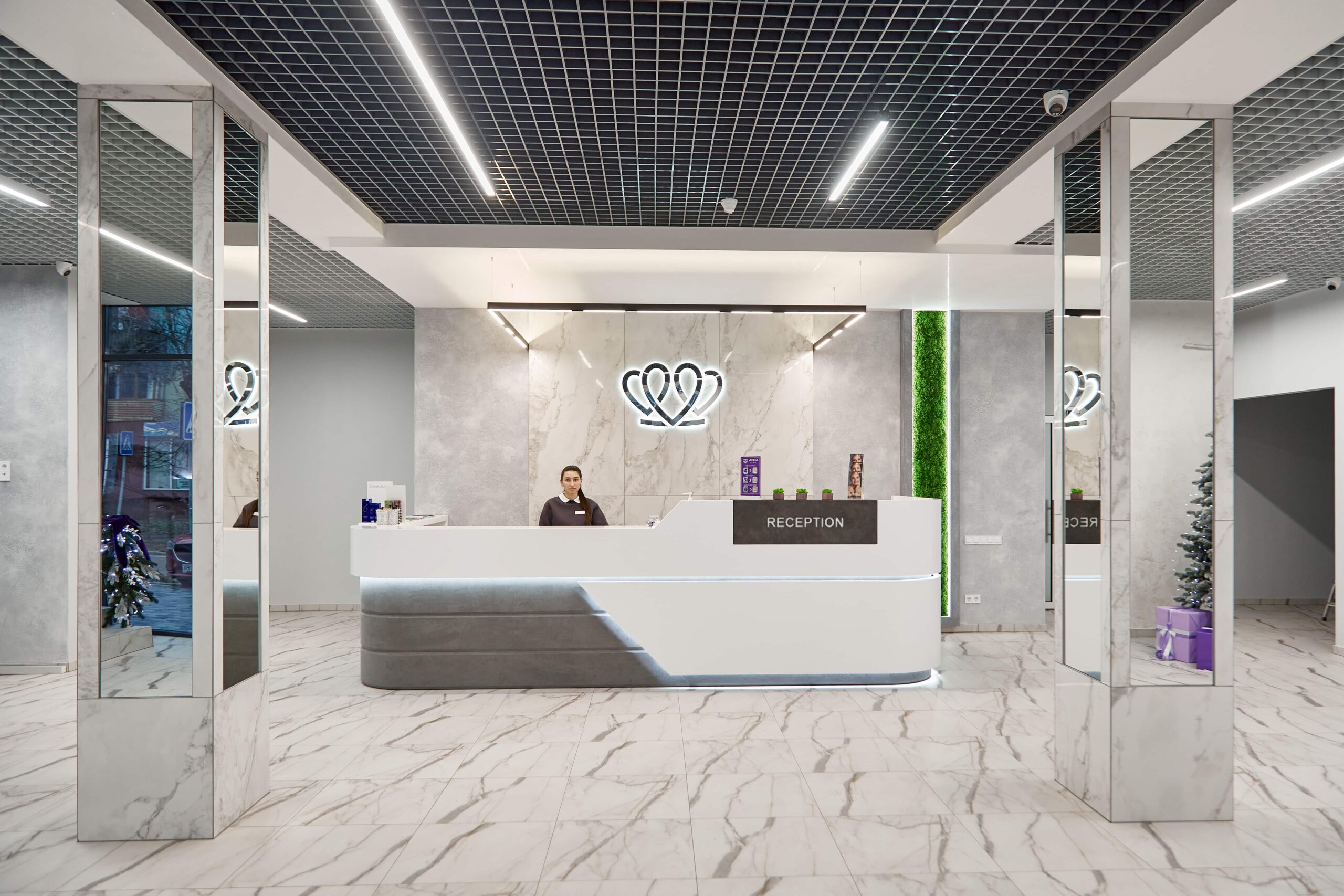
📍 Lviv, Ukraine
A dental clinic in Lviv with a separate doctor for each field: oral surgery and implants, prosthodontics, restorative dentistry, endodontics under a microscope, periodontics, orthodontics and paediatric dentistry.
The material may be the same; the difference lies in the purpose and the time spent. A filling restores the seal and chewing function in a single shade. A restoration reproduces the optical properties of the tooth: the dentist uses three to six shades to recreate the area near the gum, the body with mamelons and the translucent incisal edge separately, then polishes the surface to a mirror gloss. That is why a filling on a back tooth takes 30–40 minutes, while work on an incisor takes 1–2.5 hours.
A realistic guide is 5–7 years before it needs redoing, although some restorations last more than ten years and others need correction within two or three. The most common reason for replacement is not breakage but marginal staining and loss of gloss. The lifespan depends on the bite, habits, the size of the defect and hygiene, so only a dentist can estimate it for you after an examination. Annual polishing noticeably postpones the need to redo it.
It depends on the defect. For a chip, only weakened tissue is removed and the enamel edge is gently bevelled to hide the margin of the material. To mask an enamel spot, the tooth is often not drilled at all, and a thin layer is applied over the surface. Significant reduction is only needed for a ceramic veneer or onlay, which is why composite is considered the more conservative option early on.
At MediUkraine's partner clinics, direct restoration of a single tooth costs from USD 73, and a consultation with clinical photographs from USD 8. A composite veneer costs from USD 156 per tooth; a ceramic onlay is quoted after an examination. A professional clean, treatment of decay under an old filling and a periapical X-ray are charged separately if needed. The clinic gives the final figure after an examination and agreement on the scope of work.
Yes, this is one of the typical indications. The dentist adds material on both sides of the gap, keeping the proportions right: the width-to-height ratio of a central incisor usually stays around 0.75–0.8, otherwise the teeth will look too wide. It is important to take the contour correctly under the gum margin so that there is neither an overhang nor a black triangle between the necks of the teeth. If the gap is wider than 2–3 mm per tooth, orthodontic closure is discussed first.
Yes, over time the surface absorbs pigments from coffee, black tea, red wine and tobacco tar, and a thin dark line appears along the margin with the enamel. The most vulnerable period is the first 24–48 hours while the material matures, so avoid staining foods and drinks during that time. After that, annual polishing helps: it removes the pigmented surface layer and restores the gloss. If the margin of the restoration itself has stained, however, polishing will no longer solve the problem.
When composite has reached its limits. There are several signs of this: the restoration has been redone two or three times and the margin stains again; more than half of the crown has been lost; the tooth is root-filled and is so discoloured that masking it with opaquer destroys the translucency; there is marked wear or bruxism with repeated chipping; the shape and colour of several teeth in a row need to change at once. In such cases a ceramic onlay or veneers are discussed: they do not absorb pigment, but they require preparation and a laboratory stage.
Tell us what you need: we will suggest a clinic and a doctor and send you a cost estimate.
Request a consultation →