| Service | 🇺🇦 Ukraine | 🇨🇿 Czech Republic | 🇹🇷 Turkey |
|---|---|---|---|
| Inhalation sedation, first hour | from USD 89 | from USD 382 | from USD 314 |
| Inhalation sedation, each additional hour | from USD 67 | — | — |
| Drug sedation, 30 min | from USD 33 | — | — |
| Anaesthetist monitoring, 1 hour | from USD 13 | from USD 334 | from USD 313 |
Prices in the “Ukraine” column come from MediUkraine’s partner clinics. The Czech Republic and Turkey columns show the lower bounds of prices published by clinics there (for Turkey, also the Turkish Dental Association’s recommended 2026 tariff), collected in August 2026 and converted to US dollars at the rate on the day of collection. A dash means we could not find a comparable published price. In any country, the final cost is set by the clinic after an examination.
Dental treatment under sedation is ordinary dental work carried out while the patient is in a sedated, sleep-like state. In this state the patient still takes part in the process: they breathe unaided, keep their protective reflexes, respond to voice and touch and can open their mouth when asked, but are not anxious and after waking usually do not remember the details of the visit. The dentist works in the usual way, while a separate anaesthetist monitors breathing, pulse and blood pressure.
It is not general anaesthesia. Under general anaesthesia the patient is completely unconscious, the airway is kept open with a laryngeal mask or an endotracheal tube, breathing is often supported by a ventilator, and the procedure requires a hospital setting and longer observation. Sedation is given on an outpatient basis, its depth is adjusted as the work proceeds, and the patient wakes within a few minutes of the medicine being stopped.
The second thing to understand in advance: sedation does not relieve pain. It removes anxiety, relaxes the muscles and gives amnesia for the period of the work, but pain signals are blocked by local anaesthesia, so the injection in the gum is always given, just after the patient has fallen asleep, and the moment many people dread most passes unnoticed.
There are only a few real indications. Dental phobia: not ordinary nervousness but a fear that makes people put off visits for years and come in only when they are already in acute pain; a strong gag reflex that makes it impossible to examine the back teeth or take an impression; a large volume of treatment that the patient wants to complete in one go; difficulty keeping the mouth open for long because of temporomandibular joint (TMJ) disorders; a situation in which stress in the chair noticeably raises blood pressure or heart rate. Patients with special needs who find an ordinary appointment hard to cope with are considered separately.
That said, most patients do not need sedation: decay can be treated calmly under good local anaesthesia, and unnecessary medication does no one any good. Sedation is not a substitute for talking to the patient and is not used to speed up the dentist's work. MediUkraine is a treatment search and coordination service, not a clinic: we select the clinic and the doctor, arrange the date of the visit and support you throughout, while the decision on whether sedation is possible is made by the anaesthetist after an examination and a review of your test results.

Travel. Ukrainian airspace is closed, so there are no commercial flights. Patients reach Lviv overland, most often from Poland: Rzeszów and Kraków airports are the usual entry points, with a train, bus or private transfer onward to the border and on to the city. Lviv is roughly 70 km from the Polish border, the shortest crossing of any Ukrainian city.
Visas. Citizens of the EU, the United Kingdom and the United States do not need a visa for short stays in Ukraine. Rules depend on your citizenship, so check your own before booking.
Safety, plainly. Ukraine is at war. Air raid alerts occur in Lviv, and an appointment can be interrupted by one. Several governments advise against travel to Ukraine, and while that advice stands, ordinary travel and medical insurance is often void — confirm your cover with your insurer before you commit to anything.
Language. MediUkraine handles correspondence, scheduling, the written treatment plan and the quote in English. The clinic's team communicates with international patients in English.
Payment. You pay the clinic directly. Our coordination service is free of charge for you.
More on travel, safety and insurance: Safety and travel.
Sedation is classified by depth. Minimal sedation only removes anxiety: the patient is conscious and calmly answers questions. Moderate sedation is the level most often needed for dental treatment: the person dozes, responds to voice and light touch, breathes unaided and remembers almost nothing after waking. Deep sedation means that the patient responds only to repeated or painful stimulation, and here the line between sedation and general anaesthesia becomes thin, so the requirements for equipment and monitoring are higher. The level is set not by a line on the bill but by the patient's condition minute by minute: the medicines are given gradually and the depth is adjusted as the work proceeds.
There are several routes of administration. Oral sedation is a sedative tablet taken an hour before the appointment: it is mild, slow to act and hard to control, so it is seen more as preparation for the visit. Inhalation sedation is a mixture of nitrous oxide and oxygen through a nasal mask, the lightest level: the patient is conscious and talks to the doctor, and after the mixture is switched off breathes pure oxygen for a few minutes, after which the effect almost completely wears off. Intravenous sedation means the medicine is given through a cannula in a vein in the arm, and this route gives the control needed for a long treatment session.
The medicines most often used are midazolam and propofol. Midazolam relieves anxiety and produces the amnesia described above, and its effect can be reversed with flumazenil if needed. Propofol is given by infusion and is easy to control, and waking is quick, without prolonged drowsiness; a short-acting analgesic is added if needed. The dose is selected according to weight, age, coexisting illnesses and the patient's response, so there is no single regimen for everyone.
Whatever level is chosen, local anaesthesia is always given. This is articaine with adrenaline or another anaesthetic, by infiltration or nerve block depending on the jaw and the area; some clinics deliver the solution with a computer-controlled injector, which makes the injection itself less noticeable. The injection is given once the patient is asleep, and it lasts longer than the sedation, so the first hours after waking pass without pain.
The dental work done under sedation is ordinary work, just more of it at once. This includes treating decay on several teeth at once, cleaning and filling root canals, professional hygiene and curettage when the gag reflex is strong, simple extractions, and preparing teeth for prosthetic work. A single session is often run by two specialists in turn: a general dentist deals with the decay, and a surgeon removes a broken-down root during the same session, so the patient does not have to come back separately.
The gag reflex deserves a closer look, because it is the reason some people cannot get their back teeth treated for years. The reflex is triggered from the base of the tongue and the palate; in some patients this area is overly sensitive, and the very fear of triggering it intensifies the reaction. Simpler measures are tried first: topical anaesthesia of the mucosa, breathing through the nose, changing the position of the chair, a digital scanner instead of an impression tray, shorter stages of work. If this does not help, drug sedation removes the anxiety that drives the reflex, and the work becomes possible.
With dental phobia, it is important to be clear about the goal. Sedation makes it possible to get treatment here and now, but it does not treat the fear itself: the patient wakes up with the same attitude to the dentist that they came in with. So a sensible plan is to do the bulk of the work, and the most difficult part, under sedation, and then return gradually to ordinary visits, with an agreed "stop" signal, short appointments and an explanation of every step. For those whose fear turns into panic attacks, working with a psychotherapist in parallel helps; this is not a substitute for treatment but a way of not ending up in the same cycle a few years later.
Throughout the session the anaesthetist keeps a monitoring chart: blood oxygen saturation, heart rate, blood pressure at set intervals and, with deeper sedation, the carbon dioxide in exhaled air. Oxygen is given through nasal cannulas, saliva and water are removed with high-volume suction, and the rubber dam keeps the working field dry and isolated. If the readings change, the work is stopped and resumed once the patient's condition has stabilised.
The amount of work for one session is planned in advance, and it is not unlimited. A practical guide is 2–3 hours of work: beyond that, both the patient and the jaw joint, which keeps the mouth open all this time, get tired, so a mouth prop is used and breaks are taken. If the plan is larger, it is split into two sessions a few weeks apart rather than trying to fit everything in at once.
The method also has its limits. Sedation is not suitable for patients with severe heart and lung disease, with uncontrolled conditions and in some cases of sleep apnoea; such patients are treated in hospital, where there is a full anaesthesia service. The reverse also happens: a person who is simply nervous about the drill often needs no more than nitrous oxide, or a calm explanation and thorough local anaesthesia, and there is no reason to burden them with intravenous medicines. Which option is right for you is decided by the anaesthetist together with the dentist after an examination.
Once the work is finished, the medicine is stopped and the patient wakes within a few minutes. Discharge is not by the clock but by formal criteria: stable blood pressure and pulse, confident unaided breathing, full orientation in time and place, the ability to sit up and walk a few steps without support, and no nausea. This usually takes 30 to 60 minutes.
The first few hours afterwards may feel hazy: drowsiness, slight unsteadiness when walking, slowed reactions and, in some patients, nausea or chills. These are expected effects of the medicines and pass on their own; vomiting, a severe headache or difficulty breathing should be reported to the clinic immediately.
Amnesia for the period of the work is not a side effect but the expected action of midazolam. That is why the aftercare instructions are given on paper and gone through in the presence of the escort: whatever is explained to the patient immediately after waking, they will most likely not remember. For the same reason it is perfectly normal to ask the doctor again the next day.
Restrictions apply for a full day after sedation. You must not drive, operate machinery or work at height, drink alcohol, make legal or financial decisions or sign documents. The reason is simple: the medicines are eliminated gradually, and their residual effect on attention, coordination and the ability to judge risk lasts longer than the feeling of drowsiness; a person may subjectively feel "back to normal" while their reactions at the wheel are not.
After that comes ordinary recovery from dental work. After deep fillings, sensitivity to cold and heat usually lasts a few days and passes within 2–3 weeks; after root canal treatment, pain on biting is possible for 3–7 days; after an extraction, the standard rules for caring for the socket apply. Painkillers are taken as prescribed, and if pain increases instead of easing, an unscheduled examination is needed.
It makes sense to judge the result according to the timelines of each procedure, not the next morning. A follow-up examination is usually scheduled after 7–14 days; after root canal treatment a repeat X-ray is taken after 6–12 months, because the bone around the root recovers slowly. Only a doctor, after an examination, can predict the outcome for a particular patient, based on the condition of the teeth and how much tissue it was possible to preserve.
Step 1. Consultation and plan. The dentist examines the mouth, reviews the X-rays and decides which teeth to treat and in what order. The anaesthetist separately checks whether sedation is possible: asks about illnesses, medicines, allergies and previous experience of anaesthesia, and orders tests and, if needed, an ECG. The quote and the approximate length of the session are agreed at the same stage.
Step 2. Preparation on the day of the visit. The patient arrives having fasted, with an escort, and signs consent separately for the treatment and for the sedation. The anaesthetist measures blood pressure and pulse, connects the monitor and places a cannula in a vein. The dentist prepares the instruments and checks the plan of work once more.
Altogether a visit under sedation lasts from 40 minutes to 3 hours, depending on the size of the plan. Between preparation in the chair and discharge, the doctor gives the sedative, administers local anaesthesia once the patient is asleep, isolates the teeth with a rubber dam and carries out the planned treatment, after which the patient is woken and observed until fully oriented; most people do not remember this interval. No hospital admission is needed: patients go home the same day with an escort, do not drive for a full day, and come back for the follow-up examination after 7–14 days.
The cycle starts not with sedation but with diagnostics. The dentist examines all the teeth, takes periapical or panoramic X-rays and, if needed, a CT scan, and draws up a full list of what needs to be done. It is at this stage that it becomes clear whether one session will be enough.
The plan is then divided into visits. The rule of thumb is simple: 2–3 hours of work at a time, first whatever hurts or risks complications, then the planned work. Teeth that need several stages, for example a root canal with a temporary filling and a subsequent check, are distributed so that the hardest part falls under sedation.
The main session is carried out under the anaesthetist's supervision, and the work of two specialists is often fitted into one session. If the volume is large, a second session is scheduled a few weeks later: in that time the gums heal after extractions, sensitivity after deep fillings passes, and the doctor sees how the teeth have responded to the first stage.
Between sessions, ordinary outpatient treatment continues. Replacing a temporary filling with a permanent one, adjusting the bite, removing sutures, hygiene: all of this is done under ordinary local anaesthesia, without sedation, because the procedures are short and predictable.
The cycle ends with a move into monitoring: an examination and professional hygiene twice a year, repeat X-rays after endodontic treatment. For a patient with dental phobia this is a goal in its own right: to bring things to the point where preventive visits become short and predictable, and sedation is no longer needed.
Sedation is a medical intervention, and it has risks of its own. The most significant are respiratory depression and a drop in blood pressure; less often there is nausea and vomiting after waking, paradoxical agitation instead of calm, an allergic reaction to the medicine, or irritation of the vein at the cannula site. That is exactly why sedation is given by a separate anaesthetist, not by the dentist in between other tasks.
The risk is managed through monitoring and a properly equipped room. Throughout the session blood oxygen saturation, pulse and blood pressure are monitored and, with deeper sedation, the carbon dioxide in exhaled air. Oxygen, airway support equipment and reversal agents should be close at hand. The patient is not left unattended until fully awake.
Contraindications are discussed in advance, not on the day of treatment. They include severe breathing disorders, such as uncontrolled chronic obstructive pulmonary disease, severe untreated sleep apnoea or an asthma flare-up; pregnancy; a history of allergy to sedation medicines; severe heart, kidney or liver failure; myasthenia gravis; alcohol or psychoactive substances the day before; and impaired nasal breathing if the inhalation method was planned. Some of these conditions do not rule out treatment altogether but move it to a hospital setting, where there are more options for support.
The depth of sleep itself creates a separate risk. Under sedation the patient cannot complain of pain in time, so local anaesthesia is given in full and topped up as the work proceeds if needed, rather than relying on the fact that the person is asleep. A long session puts strain on the temporomandibular joint because the mouth is held open: a mouth prop is used and breaks are taken, and for patients with joint disorders the amount of work at one time is reduced.
The treatment itself carries the usual dental risks. After a deep filling the pulp may become inflamed, and the tooth then has to have root canal treatment after all; in narrow or curved canals an instrument may break or the canal wall may be perforated; a broken-down tooth may not withstand the load and may need a crown. So even when a lot is done in one session, follow-up examinations are still needed: some complications only become visible over time.
The patient has the right to a second opinion. The sedation record, the description of the work done and the X-rays stay with you, and you can take them to another specialist; if needed, MediUkraine arranges a consultation at another partner clinic. The clinics we work with hold a licence from the Ministry of Health of Ukraine for medical practice, including in the specialities of Restorative Dentistry and Anaesthesiology. The doctor warns about possible complications before the procedure, not after it.
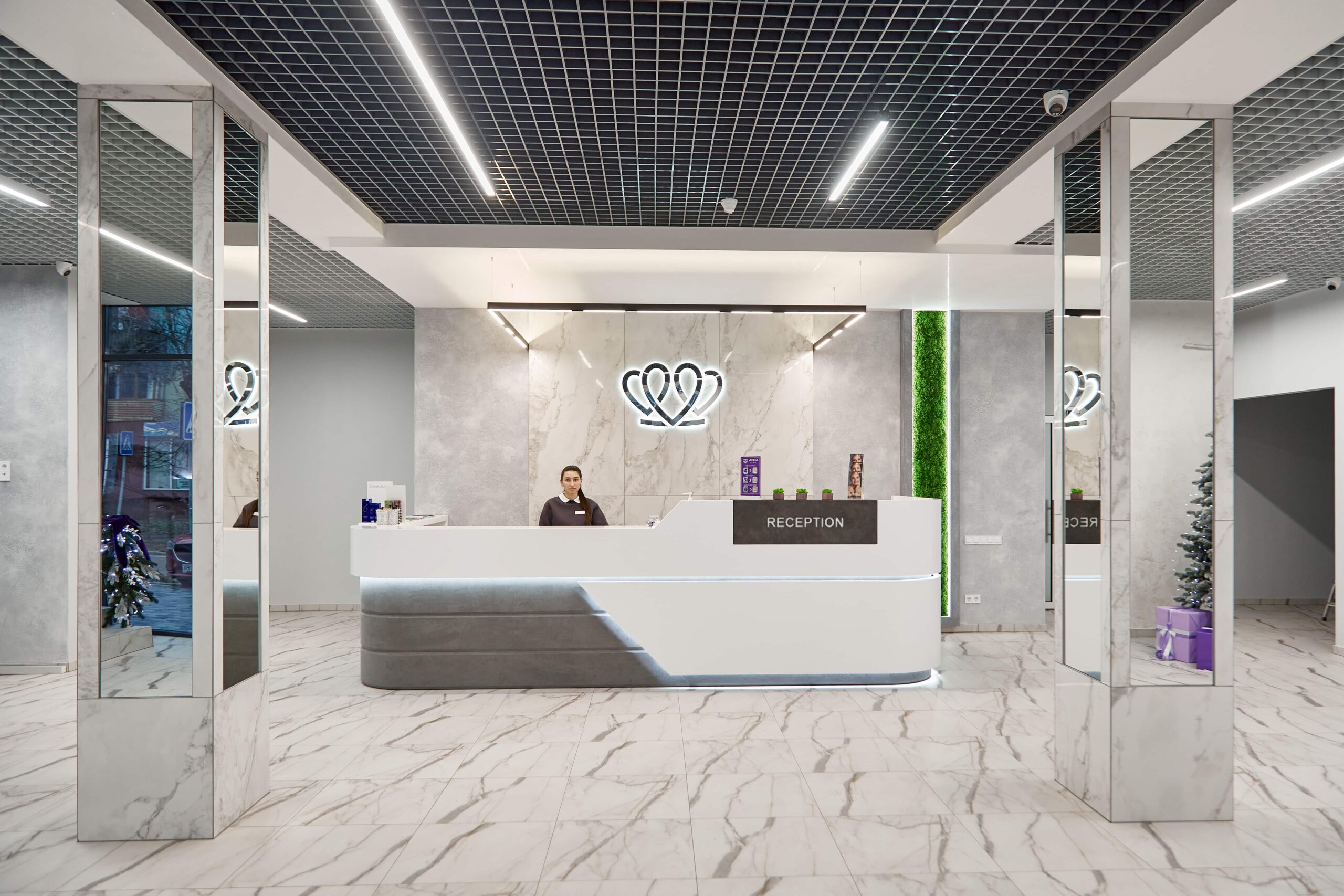
📍 Lviv, Ukraine
A dental clinic in Lviv with a separate doctor for each field: oral surgery and implants, prosthodontics, restorative dentistry, endodontics under a microscope, periodontics, orthodontics and paediatric dentistry.
No. Under sedation the patient breathes unaided, keeps their protective reflexes and responds to the doctor's voice: they can be asked to open their mouth or turn their head. Under general anaesthesia the patient is completely unconscious, the airway is kept open with a tube or a mask, and hospital conditions are needed. Sedation is given on an outpatient basis, and the patient wakes within a few minutes of the medicine being stopped.
Anaesthesia is charged separately from the dental work. At the clinics MediUkraine works with, inhalation sedation costs from USD 89 for the first hour and from USD 67 for each additional hour, drug sedation from USD 33 per 30 minutes, and anaesthetist monitoring from USD 13 per hour. Added to this is the cost of the procedures themselves, such as fillings, root canals and extractions, and of the preparatory tests. The final sum is given by the clinic after an examination and the anaesthetist's assessment.
Sedation does not relieve pain: it removes anxiety and gives amnesia for the period of the work, while pain is blocked by local anaesthesia. Local anaesthesia is always given, once the patient has fallen asleep, so the patient usually neither feels nor remembers the injection itself. The anaesthetic lasts longer than the sedation, so the first hours after waking pass without pain. If the numbness turns out to be insufficient during the work, the doctor tops up the anaesthetic as the session proceeds.
No solid food for at least 6 hours beforehand; clear fluids (water or tea without milk) are allowed up to 2 hours before the visit. Milk, coffee with cream, juices with pulp and chewing gum do not count as clear fluids. The rule exists because under sedation the protective reflexes are dulled and the contents of the stomach can get into the airway. If you have eaten later than that, say so: the session will be rescheduled.
Pregnant women; patients with severe breathing disorders, such as uncontrolled chronic obstructive pulmonary disease, severe untreated sleep apnoea or an asthma flare-up; people with severe heart, kidney or liver failure, myasthenia gravis or a history of allergy to sedation medicines; and anyone who has taken alcohol or psychoactive substances the day before. Some of these conditions do not rule out treatment altogether but move it to a hospital setting. The final decision is made by the anaesthetist after an examination and tests.
Sedation medicines are eliminated gradually, and their residual effect on attention, coordination, reaction speed and the ability to judge risk lasts longer than the feeling of drowsiness. A person may subjectively feel "back to normal" while their reactions at the wheel are not, which is why the restriction applies for a full day rather than until the end of the day. For the same reason, during this time you should not operate machinery, drink alcohol or sign documents. The patient is allowed to go home only with an escort.
Usually yes, and it is one of the main indications. The reflex is triggered from the base of the tongue and the palate, and anxiety noticeably intensifies it, so sedation often makes it possible to work on the back teeth and take impressions. Simpler measures are still tried first: topical anaesthesia of the mucosa, breathing through the nose, changing the position of the chair, a digital scanner instead of a tray with impression material. If they do not work, the doctor will discuss sedation.
Tell us what you need: we will suggest a clinic and a doctor and send you a cost estimate.
Request a consultation →