| Service | 🇺🇦 Ukraine | 🇨🇿 Czech Republic | 🇹🇷 Turkey |
|---|---|---|---|
| Aligner treatment visualisation | from USD 62 | — | — |
| Orthodontist consultation | from USD 16 | — | — |
| Retainer fitting | from USD 49 | from USD 95 | from USD 128 |
Prices in the “Ukraine” column come from MediUkraine’s partner clinics. The Czech Republic and Turkey columns show the lower bounds of prices published by clinics there (for Turkey, also the Turkish Dental Association’s recommended 2026 tariff), collected in August 2026 and converted to US dollars at the rate on the day of collection. A dash means we could not find a comparable published price. In any country, the final cost is set by the clinic after an examination.
An aligner is a thin, clear tray made from a digital model of your jaw. It fits snugly over the teeth and presses on specific teeth at pre-calculated points. One aligner moves a tooth by about 0.2–0.3 millimetres or rotates it by one to three degrees, so treatment is a sequence of aligners, each slightly different from the one before.
The set is worn 20–22 hours a day and taken out only for eating, drinks other than water, and brushing. Aligners are changed every 7–14 days, with the interval set by the doctor. In normal conversation aligners are barely noticeable, and this is the main difference from fixed appliances: an aligner can be taken out before a presentation or a photo shoot, although this should not be overdone.
Indications: mild to moderate crowding, gaps between teeth and a diastema, tilted and rotated individual teeth, relapse after previous braces, aligning the teeth before prosthetic treatment or implant placement, and some cases of deep bite and open bite. Leaving the teeth untreated also has a cost: crowded teeth are hard to clean, so plaque, gum inflammation and decay between the teeth can persist for years, and a traumatic bite gradually leads to chipping and wear of the enamel.
In some situations the orthodontist will suggest a different technique: a marked skeletal mismatch between the jaws, which is corrected with orthognathic surgery; closing large gaps after premolar extraction by bodily movement of teeth; rotations of premolars and canines of more than 45 degrees; significant extrusion of teeth from the bone; short clinical crowns that give the aligner nothing to hold on to; and a large number of crowns and veneers, to which attachments bond less well. Uncontrolled periodontitis and untreated dental problems are a separate matter: they are dealt with first.
The main limitation of the method is not technical but human. An aligner works only when it is on the teeth: with 12–14 hours of wear a day, movement stops, the next aligner no longer fits, and part of the progress has to be repeated. For a patient who is not ready for such a routine, it is more honest to offer a fixed system than to sell a set of aligners.
MediUkraine is a treatment search and coordination service, not a clinic. We match you with a clinic and an orthodontist, arrange the visit dates and support you throughout, including if you are travelling from abroad. Whether aligners will work in your case is decided by the orthodontist after an in-person examination and review of the diagnostic records.

Travel. Ukrainian airspace is closed, so there are no commercial flights. Patients reach Lviv overland, most often from Poland: Rzeszów and Kraków airports are the usual entry points, with a train, bus or private transfer onward to the border and on to the city. Lviv is roughly 70 km from the Polish border, the shortest crossing of any Ukrainian city.
Visas. Citizens of the EU, the United Kingdom and the United States do not need a visa for short stays in Ukraine. Rules depend on your citizenship, so check your own before booking.
Safety, plainly. Ukraine is at war. Air raid alerts occur in Lviv, and an appointment can be interrupted by one. Several governments advise against travel to Ukraine, and while that advice stands, ordinary travel and medical insurance is often void — confirm your cover with your insurer before you commit to anything.
Language. MediUkraine handles correspondence, scheduling, the written treatment plan and the quote in English. The clinic's team communicates with international patients in English.
Payment. You pay the clinic directly. Our coordination service is free of charge for you.
More on travel, safety and insurance: Safety and travel.
Aligners are made from a thermoplastic such as multilayer polyurethane or PET-G, about 0.5–0.75 millimetres thick. The blank is formed over a three-dimensional model of the jaw printed from the digital plan, after which the aligner is trimmed along the gum line and polished. Multilayer materials are valued because they maintain a constant force for longer: a uniform film delivers most of its force in the first hours and then barely works.
Planning begins with an intraoral scan. The scan, X-rays and photographic record are combined into a three-dimensional model on which the doctor moves the teeth into their target position and divides that path into stages: this is the virtual setup that the patient sees as a visualisation. At the partner clinic this costs from USD 62. Bear in mind that this is a movement plan, not a promise: bone and the ligaments holding the teeth respond differently in each person, so the real result may differ from the picture, and that is why checkpoints are built into the plan.
One aligner moves a tooth by about 0.2–0.3 millimetres or rotates it by one to three degrees: the tissues cannot take more at a time without risk. As a result the number of aligners in a course corresponds directly to the amount of movement: a simple correction takes 10–20 aligners, an average case 25–45. The aligner is changed every 7–14 days; a shorter interval is possible only when the doctor can see that the tooth has already reached the planned position.
Attachments are small bumps of composite bonded to the enamel using a template from the digital plan. Without them a smooth aligner slips: to rotate a tooth around its axis, extrude it from the bone or tilt the root, the aligner needs something to grip. The shape of the attachment is chosen for the task: rectangular for controlling position, bevelled for extrusion, optimised for rotations. At the end of treatment they are removed with a bur at low speed and the enamel is polished; the tooth itself is not drilled.
Enamel reduction (interproximal reduction, IPR) is the removal of 0.2–0.5 millimetres of enamel from the side surfaces of the teeth with abrasive strips or a thin disc to create room for alignment. In total this frees a few millimetres and often avoids the extraction of healthy teeth. The procedure needs no anaesthesia and, when done correctly, does not increase the risk of decay: the enamel on the contact surface is thick enough for it, and the treated surfaces are polished and treated with fluoride. The amount of reduction is calculated in the digital plan in advance, tooth by tooth, not done by eye.
When the way the jaws meet needs to change, not just the position of teeth in the arch, elastics are added to the aligners. Small buttons are bonded to the teeth to hold them, and cut-outs or hooks are made in the aligner; you change the elastics yourself every day. This can correct some cases of Class II (distal) and Class III (mesial) bite. But the limit here is clear: if the mismatch between the jaws is skeletal, elastics will not correct it. In children and teenagers it is treated while they are still growing; in adults orthognathic surgery is discussed. For complex movements the orthodontist sometimes places mini-screws as additional anchorage.
A second set of aligners is not a failure but a normal part of the protocol. When the main series ends, the doctor compares what has been achieved with the plan, rescans the jaws and orders additional aligners for fine-tuning: the contacts between individual pairs of teeth, the midline, the depth of the overbite. A significant proportion of patients need such fine-tuning, and it usually adds 2–6 months. Ask at the consultation how many sets are included in the initial quote.
The wearing routine matters more than the aligner material or the brand of the system. 20–22 hours a day means that the set is taken out only for eating, drinks other than water, and brushing. With 12–14 hours a day the teeth have time to partly move back between wears: movement stops, and the next aligner no longer fits snugly on the back teeth. There are then two options, and both cost time: going back a few aligners, or rescanning the jaws and reordering the set. That is why an honest conversation about your daily routine at the consultation matters more than the choice of laboratory.
Some movements aligners do poorly or not at all: closing large gaps after premolar extraction, which requires bodily movement of the tooth together with its root; rotations of premolars and canines of more than 45 degrees, because their crown is close to round in cross-section and does not give the aligner a reliable grip even with an attachment; significant extrusion of teeth from the bone; work on teeth with short clinical crowns; and movement in the area of impacted teeth. Marked skeletal anomalies remain the domain of orthognathic surgery whatever the technique. In some of these cases a combined approach works: first a few months in braces for the hardest part of the movement, then aligners for the final stage.
Caring for aligners is simple but has to be done daily. Aligners are cleaned with a soft brush without toothpaste or with special tablets, rinsed in cool water and not washed in hot water, because thermoplastic deforms. Drink nothing but water with aligners in: coffee, tea and coloured drinks are trapped under the plastic and stain it, and sweet ones keep sugar against the enamel for a long time. For comparison: fixed braces remain the choice for the most complex cases and do not depend on the patient's discipline, lingual braces are placed on the inner side of the teeth, and comparing the options on the basis of the specific diagnostics is the orthodontist's task at the first consultation.
For the first 2–3 days after each new aligner the teeth ache and are sensitive to pressure; this is how the tissues respond to movement. The first aligner feels the strongest; after that the discomfort lessens, and most patients manage without painkillers. It helps to start each new aligner in the evening, so the most uncomfortable period falls while you sleep.
Speech changes in the first 3–7 days: the plastic covers the palatal surface of the teeth, and "s" sounds are harder at first. Speech recovers on its own, faster if you talk aloud more during these days. Saliva production also increases for a few days.
The first visible changes appear after 2–3 months, fastest on the front teeth: they have a single root and move more easily. This is an intermediate stage, not the result: during alignment the teeth often look less even than at the start, because they leave their usual positions at different times.
Overall treatment time depends on how much movement is needed. A simple correction of the front teeth usually takes 4–8 months, an average case 12–18, a complex one from 24 months, and an additional set of aligners adds another 2–6 months. Missed hours of wear lengthen treatment more noticeably than any other factor.
If an aligner does not seat fully or lifts off the back teeth, do not move on to the next one; tell the clinic instead. If you get in touch early, this is usually solved by going back one or two aligners; leaving it for a month means a rescan and a new set. The same applies to a chipped attachment: without it the planned movement stops.
The final outcome can properly be judged after the attachments have been removed and the enamel polished. At that point small restorations to even out the shape of the incisors are planned if needed, and whitening no earlier than 2–4 weeks later. Retention starts immediately after treatment ends: a fixed retainer on the inner side of the front teeth and a clear tray for night-time wear. Without retention the teeth gradually return to their previous positions; this is how the tissues behave, not a mistake by the orthodontist. Only an orthodontist who has examined you and planned your case can predict the outcome.
Step 1. Consultation, diagnostics and preparation. The orthodontist examines the teeth, assesses the bite and the condition of the gums and discusses your expectations, after which a panoramic X-ray, a lateral cephalogram with analysis and a photographic record are taken. In parallel, decay is treated, old restorations are replaced if needed and professional cleaning is done, all before the digital impression is taken, because the set will be made to the shape of the teeth on the day of the scan. This stage takes anything from one visit to several weeks.
Step 2. Scanning the jaws and the digital plan. An intraoral scanner takes a three-dimensional impression of both jaws in 10–15 minutes, without impression material. From the scan and X-rays the doctor builds a virtual setup: moves the teeth into their target position, divides the path into stages, and decides where attachments go and how much enamel reduction is needed. You see this visualisation, the number of aligners and the approximate duration before paying for the aligners. Making the aligners in the laboratory usually takes 2–4 weeks.
Overall, it usually takes 6 to 24 months from the first consultation to removal of the attachments, and longer in complex cases: diagnostics and treatment of the mouth take anything from one visit to several weeks, making the set 2–4 weeks, then come aligner changes every 7–14 days, check-up visits every 6–10 weeks and, if needed, an additional set for 2–6 months. It all ends with retention, which lasts for years. No anaesthesia is needed at any stage, nor is a hospital stay: after each visit you can return to your usual activities.
The course is divided into stages, each with its own goal. The sequence is set by the digital plan: first space is created in the arch, then the teeth are aligned, then the bite is corrected and the details are fine-tuned.
The first stage is alignment. The first 10–15 aligners undo rotations and bring the teeth into line vertically and horizontally. It lasts about 3–5 months and gives the most noticeable visible changes, which is why some patients think treatment is already finished and start wearing their aligners less.
The second stage is the main working phase. Gaps are closed, the depth of the overbite is corrected and, if needed, elastics on buttons are added. This is the longest part of the course, and it is here that the actual hours of wear matter most: starting one aligner late pushes back the whole schedule.
The third stage is fine-tuning. The doctor compares what has been achieved with the plan, rescans the jaws and orders additional aligners for the contacts between individual pairs of teeth, the midline and the depth of the overbite. The changes at this stage are barely visible, but it determines how stably the teeth will hold in their new position.
The last stage is retention, and it is the longest. After the attachments are removed, the teeth are held with a fixed retainer on the inner side of the front teeth and a night-time tray; at the partner clinic, fitting a retainer costs from USD 49. You see the orthodontist once a year to check that the wire is intact and the tray still fits. If the retainer comes unstuck, get in touch straight away: a few months without retention can undo part of what has been achieved.
The most common problem with this method is not a complication but treatment stalling because the wearing routine has not been followed. When the set is worn for fewer than the prescribed hours, the teeth do not reach the planned position, and the next aligner does not fit on the back teeth. This is fixed by going back a few aligners or by rescanning and a new set, so missed hours cost months of treatment.
In the first days with each new aligner the teeth ache and are sensitive to pressure, and the edge of the plastic may rub the inside of the cheek or the tongue; the orthodontist can smooth sharp edges at a visit. Speech changes for 3–7 days, and saliva production increases. Some patients notice a dry mouth, so drink water more often; there is no need to take the aligners out for this.
The second group of risks relates to hygiene. Under an aligner saliva does not wash over the teeth as usual, so anything sweet or acidic drunk with the set in stays against the enamel for a long time, which leads to demineralisation and white matt spots. The rule is simple: drink only water with aligners in, and brush your teeth, or at least rinse your mouth, every time before putting them back in. Clean the aligners daily, or plaque and odour build up.
Moving teeth has a biological cost whatever the technique. In some patients the roots shorten by 1–2 millimetres; usually this does not affect the tooth's long-term outlook, but with roots that are short to begin with the doctor monitors the process with X-rays. If a tooth is moved beyond the bone plate, gum recession is possible, so the amount of movement is planned from a CBCT scan. Temporary mobility of teeth during treatment is expected and passes once they stabilise.
There are risks linked to attachments and enamel reduction. An attachment may chip off; it is rebonded, and until then the planned movement stops; after removal, rough areas remain on the enamel that need polishing. Enamel reduction is irreversible: removed enamel does not grow back, so the amount is calculated in the plan in advance rather than added by eye during treatment. Allergy to the aligner material is rare, but report any reaction in the mouth to your orthodontist.
Most contraindications are relative and can be resolved with preparation: an untreated mouth, active decay, a flare-up of periodontitis, persistently poor hygiene. Marked skeletal anomalies remain the domain of orthognathic surgery, not aligners. Not being ready to wear the set 20–22 hours a day is a contraindication in practice, and it is more honest to admit this before paying than halfway through. Whether the benefit outweighs the risks in a particular case is decided by the doctor after an examination and calculation, and you are entitled to a second opinion at another clinic.
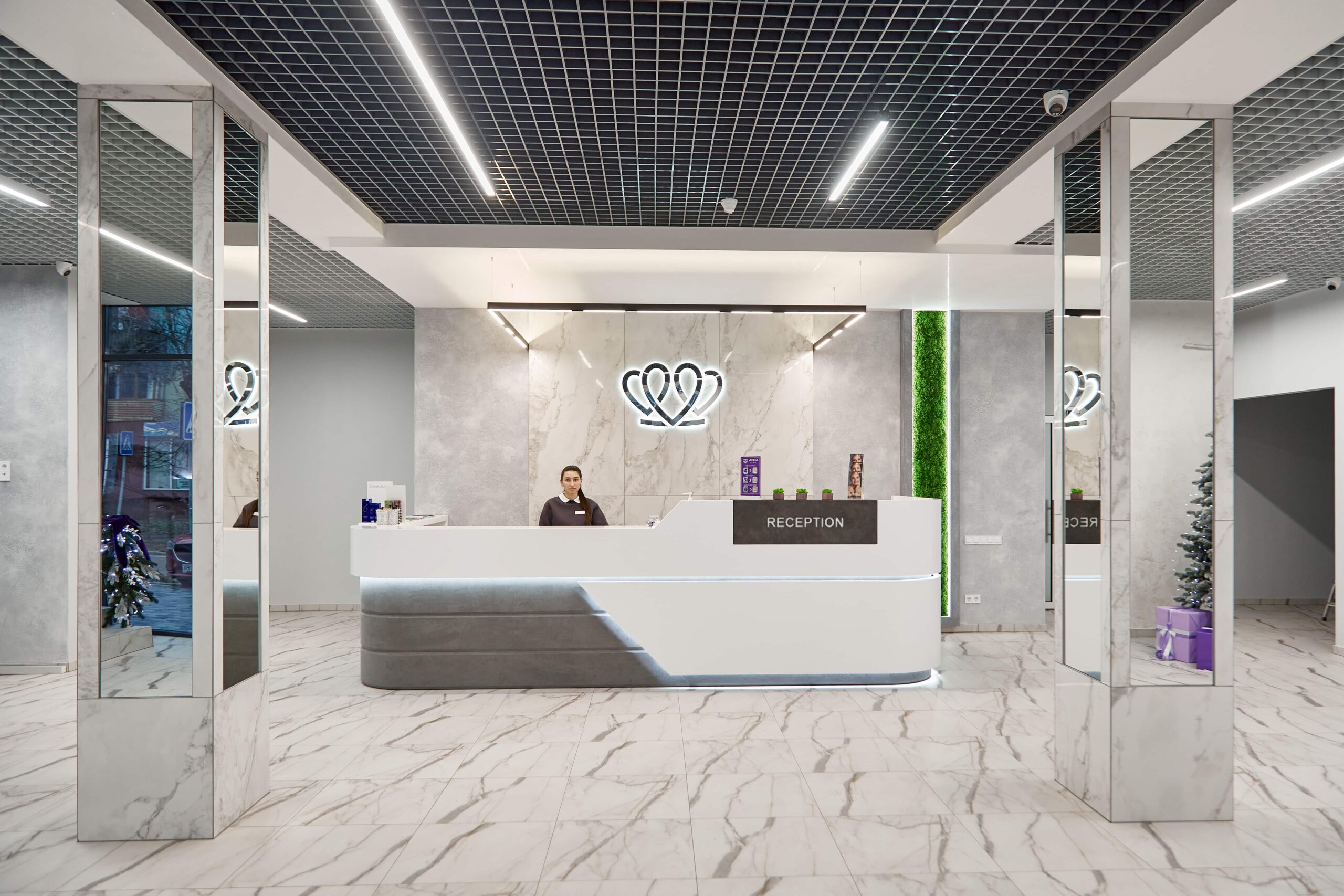
📍 Lviv, Ukraine
A dental clinic in Lviv with a separate doctor for each field: oral surgery and implants, prosthodontics, restorative dentistry, endodontics under a microscope, periodontics, orthodontics and paediatric dentistry.
In many cases, yes: aligners correct mild to moderate crowding, gaps between teeth, rotated and tilted individual teeth, and relapse after braces just as well as fixed braces do. The limits begin where bodily movement of a tooth together with its root is needed, for example closing large gaps after premolar extraction, and with marked skeletal anomalies, which are corrected surgically. The orthodontist will tell you which option suits your case after reviewing your diagnostic records, not from a photo of your smile.
At the partner clinic in Lviv the aligner treatment visualisation costs from USD 62, an orthodontist consultation from USD 16 and fitting a retainer from USD 49. The final sum depends on the number of aligners in the course: a simple correction takes roughly 10–20 aligners, an average case 25–45. Diagnostics, treatment of the mouth and professional cleaning before the scan are paid for separately. The clinic draws up the quote after an examination; prices on this page are a guide.
20–22 hours. They are taken out only for eating, drinks other than water, and brushing, which is 4–6 times a day. With 12–14 hours of wear the teeth have time to partly move back between wears: movement stops, and the next aligner no longer fits snugly on the back teeth. This is fixed by going back a few aligners or by rescanning and a new set, so missed hours turn into extra months of treatment. It is discipline, not the brand of the system, that determines how long the course will take.
In normal conversation aligners are barely noticeable: the plastic is clear and about 0.5–0.75 millimetres thick. The attachments can be more noticeable: enamel-coloured composite bumps bonded to the front teeth; close up they can be seen, and they are removed only at the end of treatment. The aligner itself becomes dull over time from coffee, tea and tobacco, so drink nothing but water while wearing it, and the set is cleaned daily. An aligner can be taken out before a presentation or a photo shoot, but missed hours will have to be made up.
A smooth aligner slips off a tooth when it needs to be rotated around its axis, extruded from the bone or have its root tilted. An attachment, a small composite bump bonded to the enamel using a template from the digital plan, gives the aligner something to grip. At the end of treatment it is removed with a bur and the enamel is polished; the tooth itself is not drilled. Enamel reduction, the removal of 0.2–0.5 millimetres of enamel from the side surfaces, frees up space in the arch and makes it possible to avoid extracting healthy teeth. Its amount is calculated in the digital plan in advance, tooth by tooth.
A simple correction of the front teeth usually takes 4–8 months, an average case 12–18, and a complex one from 24 months. A significant proportion of patients need an additional set of aligners for fine-tuning, which adds another 2–6 months. The length depends on the amount of movement, the patient's age, how regularly you attend visits and, above all, the actual hours of wear. The orthodontist can give a more precise estimate after reviewing your diagnostic records; timelines cannot be predicted from a photo. After treatment ends, retention begins, and it lasts for years.
Aligners do poorly or not at all with bodily movement of teeth into large gaps after premolar extraction, rotations of premolars and canines of more than 45 degrees, significant extrusion of teeth from the bone, movement of teeth with short clinical crowns, and work in the area of impacted teeth. A marked skeletal mismatch between the jaws remains the domain of orthognathic surgery. Uncontrolled periodontitis, active decay and persistently poor hygiene are a reason to treat first rather than start. In some complex cases a combined approach works: a few months in braces, then aligners.
Tell us what you need: we will suggest a clinic and a doctor and send you a cost estimate.
Request a consultation →