| Service | 🇺🇦 Ukraine | 🇨🇿 Czech Republic | 🇹🇷 Turkey |
|---|---|---|---|
| Caries treatment with restoration | from USD 56 | from USD 119 | from USD 52 |
| Computer-controlled anaesthesia | from USD 13 | from USD 7 | from USD 7 |
| Dentist consultation | from USD 8 | from USD 38 | from USD 34 |
| Consultation with CT scan | from USD 20 | from USD 114 | from USD 92 |
Prices in the “Ukraine” column come from MediUkraine’s partner clinics. The Czech Republic and Turkey columns show the lower bounds of prices published by clinics there (for Turkey, also the Turkish Dental Association’s recommended 2026 tariff), collected in August 2026 and converted to US dollars at the rate on the day of collection. A dash means we could not find a comparable published price. In any country, the final cost is set by the clinic after an examination.
Caries is the gradual destruction of the hard tissues of a tooth by acids produced by the microbial biofilm on its surface. The acid washes calcium and phosphates out of the enamel, saliva returns some of them, and as long as the two processes are in balance the tooth stays intact. The balance is upset by frequent snacking and sugary drinks, inadequate cleaning between the teeth, a dry mouth, and deep natural grooves on the chewing surface.
Caries develops in stages, and the treatment depends on the stage. At the white spot stage the enamel is still intact but has lost minerals, and a matt chalky area can be seen on it; no drill is needed here, and the process is halted by remineralisation. Superficial caries already has a cavity within the enamel. Moderate caries reaches the dentine, and that is when a brief reaction to sweet and cold appears. Deep caries comes right up to the pulp, leaving a thin layer of dentine over it. After that comes pulpitis, followed by apical periodontitis, and these call for a different approach.
Any defect that has been found needs treating, whether it bothers you or not. The main trap of caries is that pain appears late: enamel has no nerve endings, and between the teeth and under old fillings a lesion grows unnoticed for years. "It doesn't hurt" does not mean "there is no decay": early stages can be seen only at an examination under magnification and on an X-ray, so a preventive check-up every six months makes sense even when you have no complaints at all.
There are situations where a restoration is not the answer. With irreversible inflammation of the pulp or apical periodontitis, the canals are treated first; a tooth with almost no walls left above the gum is restored with a post and core and a crown, or extraction is discussed; with active gum inflammation and heavy plaque, treatment begins with a hygiene stage. Non-carious lesions are a separate group: enamel erosion, wedge-shaped defects, fluorosis. They look similar but have a different cause, and the treatment is different too, so the diagnosis is made after an examination, not from a photograph.
MediUkraine is a treatment search and coordination service, not a clinic. We find the clinic and a doctor with the right specialism, arrange the visit dates and support you throughout, including if you are travelling from abroad. The scope of the procedure and the approach are decided by the doctor after an in-person examination and X-rays.

Travel. Ukrainian airspace is closed, so there are no commercial flights. Patients reach Lviv overland, most often from Poland: Rzeszów and Kraków airports are the usual entry points, with a train, bus or private transfer onward to the border and on to the city. Lviv is roughly 70 km from the Polish border, the shortest crossing of any Ukrainian city.
Visas. Citizens of the EU, the United Kingdom and the United States do not need a visa for short stays in Ukraine. Rules depend on your citizenship, so check your own before booking.
Safety, plainly. Ukraine is at war. Air raid alerts occur in Lviv, and an appointment can be interrupted by one. Several governments advise against travel to Ukraine, and while that advice stands, ordinary travel and medical insurance is often void — confirm your cover with your insurer before you commit to anything.
Language. MediUkraine handles correspondence, scheduling, the written treatment plan and the quote in English. The clinic's team communicates with international patients in English.
Payment. You pay the clinic directly. Our coordination service is free of charge for you.
More on travel, safety and insurance: Safety and travel.
Diagnosis begins with cleaning and drying the surface: an early spot cannot be seen on wet enamel. The tooth is examined under magnification and the density of the tissue is gently checked with a blunt probe; a sharp one is not used on a spot, because it can easily break through the still thin enamel over the lesion. Periapical and bitewing X-rays show what cannot be seen in the mouth: caries between the teeth, under old fillings and at the margins of crowns. Laser fluorescence and transillumination help in doubtful cases, but the decision is made on the overall picture, not on a reading from the device.
The white spot stage is treated without a drill. As long as the enamel is intact and there is no cavity, lost minerals can be restored: high-concentration fluoride varnishes and gels at the clinic, pastes with calcium and phosphates at home, a review of hygiene and of how often you snack. A check is scheduled after three to six months: the spot either stops and hardens or progresses further, and then the approach is changed. An intermediate option is resin infiltration: the porous area of enamel is etched and impregnated with a liquid resin that seals the micropores from within and halts the process without drilling; the method works for spots between the teeth and after braces, but only while there is no cavity. The condition for success is simple, if unwelcome: without a change in daily care remineralisation will not work, because the cause remains in place.
Once there is a cavity, preparation is needed, and the principle of minimal intervention applies: the affected tissue is removed and everything that can be preserved is kept. Twenty years ago cavities were still routinely enlarged "for safety"; this approach has been abandoned because every unnecessary millimetre of dentine ground away weakens the tooth permanently. Softened dentine is removed with a slow-speed bur, ultrasonic or air-abrasion tips, and caries detector dyes are used as a guide, bearing in mind that they also stain healthy demineralised dentine.
Deep caries is managed differently, and the goal here is to keep the pulp alive. Instead of cleaning the cavity down to a hard floor and exposing the nerve, selective removal is used: the tissue along the walls is removed completely, while a thin layer of altered dentine over the pulp is deliberately left and covered with a calcium silicate material. These materials are alkaline, suppress bacteria and stimulate the formation of reparative dentine, and a sealed restoration on top cuts the lesion off from its nutrition. If the pulp has nevertheless been exposed at a single point and the tooth had not caused trouble before, direct pulp capping is considered.
Whether a restoration can still help depends on the state of the pulp. Prolonged spontaneous pain, aching pain at night, a long reaction to heat that does not pass once the stimulus is removed are signs of irreversible inflammation, and root canal treatment is then needed. To be honest about the unwelcome part: sometimes the true depth of the lesion becomes visible only during preparation, and the plan changes right there in the chair. That is why the doctor discusses this scenario and its cost in advance, not after the tooth has already been opened.
Rubber dam isolation is the part of the protocol that patients often see as an unnecessary inconvenience. A thin sheet on a frame separates the tooth from saliva, the moisture of exhaled air, the tongue and the cheek. Adhesive systems are sensitive to moisture: a drop of saliva on etched enamel reduces the bond, and that is where a gap along the margin and secondary caries appear over the years. The rubber dam also stops small instruments and materials from getting into the airway and keeps the field dry throughout the visit. Talking with it in place is awkward; swallowing and breathing are unrestricted.
Next comes the adhesive protocol. Enamel is etched with phosphoric acid for about thirty seconds and dentine for roughly half that time; the acid is then rinsed off thoroughly, the dentine is dried to a moist sheen without over-drying, and an adhesive is applied and cured with a light. Self-etch systems reduce the number of steps. Getting the timings right matters as much as the brand of material: over-dried dentine causes post-operative sensitivity, while inadequate etching gives a weak bond.
Layered composite restoration is the main way to restore a tooth in a single visit. The material is placed in increments of about 2 mm and each is cured separately: composite shrinks by a few percent as it sets, and it is the layering that stops the shrinkage pulling the walls of the tooth with it. The shape is rebuilt according to the anatomy of the particular tooth: the cusps and fissures on the chewing surface, and a tight contact point with the neighbouring tooth using a matrix and a wedge. The shade is matched against a shade guide in daylight, and in the smile zone it is built from several masses of differing translucency.
The work is finished with a bite check and polishing. Articulating paper is used to find high spots: a restoration that is even fractions of a millimetre too high causes pain on biting and overloads the tooth. Polishing with discs, strips, rubber cups and pastes makes the surface smooth, and smooth composite holds less plaque and changes colour more slowly. This stage only looks cosmetic.
A direct restoration is not always suitable. When more than half of the crown of the tooth has been destroyed or a cusp has been lost, a ceramic inlay or onlay made in a dental laboratory is more reliable, and where a root-treated tooth is badly broken down, a crown. Baby teeth are managed according to their own protocols: glass ionomers and preformed paediatric crowns are used, and when full treatment is not possible, arrest therapy with silver diamine fluoride, which halts the process but leaves a dark stain.
Straight after the visit the tooth is fully functional: light-cured composite hardens under the lamp in the chair, so there is nothing to wait for. The only restriction is not to eat until the anaesthetic has worn off, usually one to two hours. Children are reminded of this separately: a numb lip or cheek is easy to bite without noticing.
Sensitivity to cold and to biting in the first days is an expected reaction, not a sign of a mistake. The tooth has just been through preparation and adhesive treatment, and the pulp needs time to settle. Sensitivity usually fades within one to two weeks; after a deep lesion it can last up to a month, gradually weakening.
A different pattern should cause concern. If the pain does not ease but builds, appears at night, arises in response to heat and takes a long time to pass, if biting becomes more painful every day, or if swelling has appeared, that is a reason to get in touch without waiting for a scheduled check-up. Such symptoms most likely mean that the pulp has not recovered and the tooth will need root canal treatment.
The result is not judged on the day of the visit. A few weeks later, at a follow-up check, the doctor checks the margin of the restoration, the contact point, the bite and the condition of the adjacent gum, and polishes the surface further if needed. After that the tooth is reviewed at routine check-ups every six months, and an X-ray to check hidden areas is taken roughly once every one to two years.
A restoration is not permanent, and this is worth knowing before work begins. According to clinical observations, roughly one to three percent of direct composite restorations fail each year, and the average service life in back teeth is measured in several years, with a range of five to ten most often cited. The spread is wide because service life is affected by the size of the restoration, the number of surfaces rebuilt, hygiene, bruxism and how the chewing load is distributed.
Replacement is a planned part of care, not the result of a doctor's mistake. The key point is this: with each replacement the cavity grows a little, because the old material is removed together with a thin layer of tissue at the margin, so each subsequent restoration is larger than the previous one. This is the main argument for treating early and not letting things reach the deep stage. How long a particular piece of work will last and how the pulp will behave can be forecast only by a doctor after an examination, and even then only approximately.
Step 1. Examination, X-ray and plan. The tooth is examined under magnification after the surface has been cleaned and dried, the reaction to cold is checked, and the bite and the condition of the neighbouring teeth are assessed. A periapical or bitewing X-ray shows how deep the lesion has gone and whether there are changes near the root tip. This is where the main decision is made: is this still caries, which can be repaired with a restoration, or already pulpitis, which needs root canal treatment? You see the X-ray and receive a stage-by-stage quote.
Step 2. Anaesthesia and rubber dam isolation. The injection site is treated with a topical gel, the anaesthetic is injected and the doctor waits for the tooth to lose sensation. A rubber dam is then placed on the tooth: a thin latex or latex-free sheet on a frame that isolates the working field from saliva and the moisture of exhaled air. This is not an optional extra: adhesive materials are sensitive to moisture, and a drop of saliva on an etched surface reduces the bond, which is where a marginal gap and secondary caries begin. The rubber dam also stops small instruments and materials from getting into the airway, holds back the cheek and tongue and keeps the tooth clearly visible.
In total the visit takes from 40 minutes to 1.5 hours. Between anaesthesia with isolation and the finished, polished restoration, the tooth goes through removal of the affected tissue, adhesive preparation and layered placement of composite, after which the doctor fine-tunes the bite. No hospital stay or recovery period is needed: you can go home straight away and eat once the anaesthetic has worn off.
The cycle starts not with the drill but with an examination and an X-ray. The doctor assesses all the teeth at once, because caries rarely affects just one, and draws up a plan in order of priority: first deep lesions and teeth at risk of progressing to pulpitis, then small defects, and finally white spots for remineralisation and prevention.
One tooth usually means one visit. Several teeth in one sector of the jaw can be done in a single appointment under the same anaesthetic; in practice, one to three or four teeth can be treated per visit, depending on the scope. A full plan covering a dozen teeth is spread over several appointments and divided by sector, so that the patient always has something to chew with.
A deep lesion can stretch the cycle. Sometimes the doctor deliberately places a temporary filling and gives the tooth several weeks or months under observation to see how the pulp behaves, and only then makes the final restoration. This scenario is discussed in advance, because it requires an additional visit.
Part of the cycle can be moved outside the trip. A consultation based on existing X-rays is held remotely, the plan and the quote are agreed before you travel, and only the clinical stages remain on site. This way, a patient from abroad arrives for a specific list of work with a known number of visits, rather than on a fact-finding trip.
After the work, the cycle moves into prevention, and it is prevention that determines when you will need to come back. That means daily cleaning between the teeth with floss or an interdental brush, fluoride toothpaste twice a day, restraint in how often you snack, professional hygiene and a check-up every six months, fluoride varnish where indicated, and, for children and teenagers, fissure sealing as soon as the permanent molars erupt. A check-up X-ray once every one to two years shows areas that cannot be seen by eye.
The most common complication is post-operative sensitivity. It arises from over-drying of the dentine, shrinkage of the composite or a high bite, and usually passes within one to two weeks. If the sensitivity lasts longer or gets worse, the restoration is checked: sometimes adjusting the bite is enough, sometimes the work is redone.
The second risk concerns the pulp. The deeper the lesion was, the higher the likelihood that the pulp will not cope even with flawlessly performed work: some of these teeth will later need root canal treatment anyway. This is not the doctor's mistake but the limit of the method, and a conscientious specialist warns about this scenario before starting, not afterwards.
Over time, mechanical and biological complications appear: chipping of the restoration margin, debonding along the margin, the restoration falling out, and, most often, secondary caries at the junction between the material and the tooth tissue. The risk factors are predictable: inadequate cleaning between the teeth, a large restoration area, bruxism and a habit of clenching the jaws, a loose contact point with the neighbouring tooth.
Anaesthesia is discussed separately. Allergy to local anaesthetics is rare but possible; more common minor reactions are a bruise at the injection site, numbness of the area lasting longer than expected, and palpitations caused by the vasoconstrictor component. That is why you should tell the doctor before starting about heart disease, high blood pressure, diabetes, clotting disorders, anticoagulant use, latex allergy and pregnancy.
Contraindications are mostly temporary or concern the choice of method. A restoration is not done when the tooth already has irreversible pulp inflammation or apical periodontitis; there the canals are treated first. With active gum inflammation and heavy plaque, treatment begins with a hygiene stage. A tooth with almost no walls left above the gum is not rebuilt with a direct restoration: the question is whether it can be saved with a post and core and a crown. Planned treatment during pregnancy is usually postponed to the second trimester, emergency care is given at any stage, and X-rays are taken with a protective apron. For patients with a latex allergy, a latex-free rubber dam is used.
The patient has the right to a second opinion: the X-rays, the plan and the quote stay with you, and you can show them to another specialist before work begins. It is worth getting in touch straight away, without waiting for a scheduled check-up, if after the visit the pain builds, appears at night or from heat, if the restoration chips or becomes loose, or if food starts getting trapped between the teeth where this did not happen before.
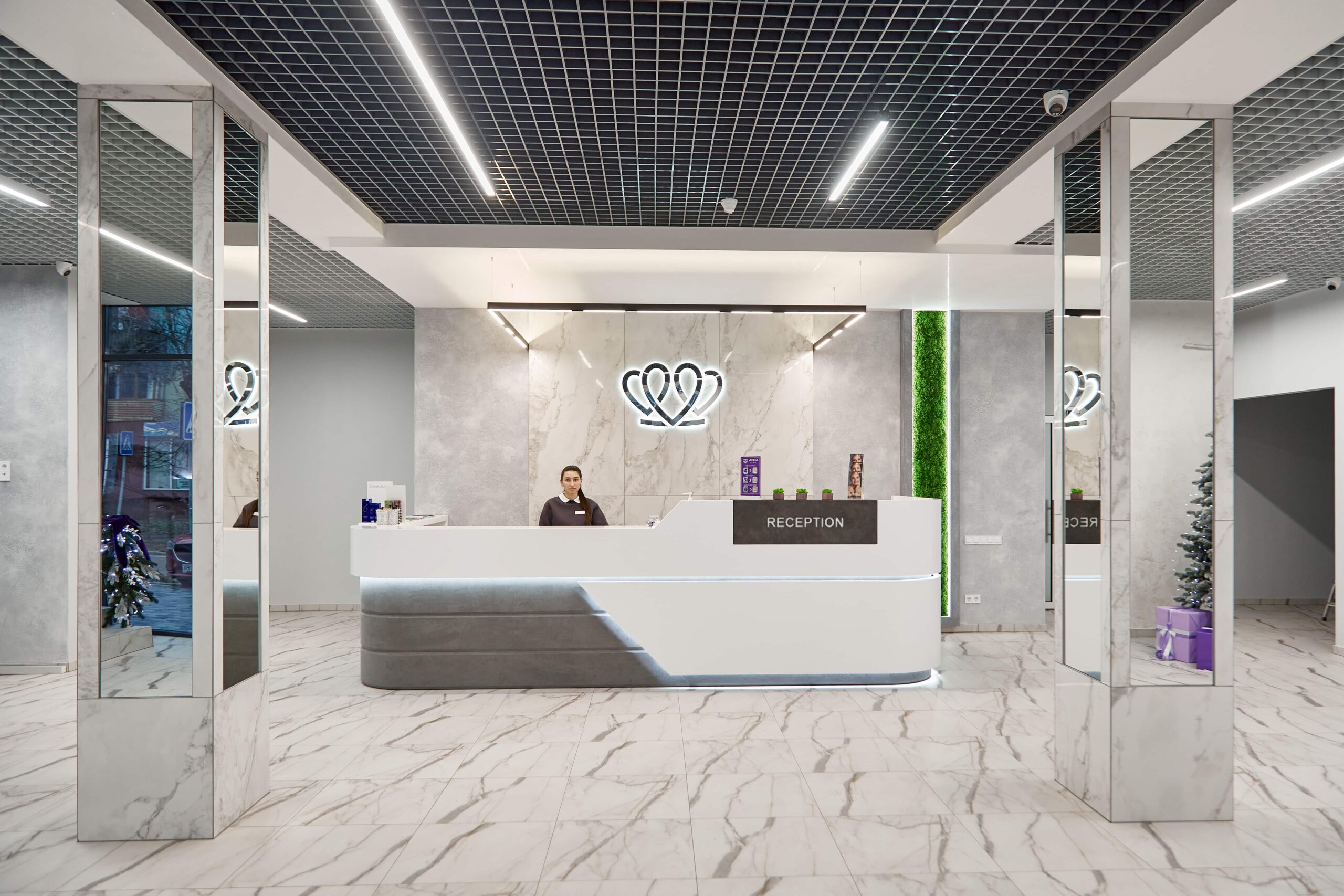
📍 Lviv, Ukraine
A dental clinic in Lviv with a separate doctor for each field: oral surgery and implants, prosthodontics, restorative dentistry, endodontics under a microscope, periodontics, orthodontics and paediatric dentistry.
Yes, but only at the white spot stage, while the enamel is intact and there is no cavity yet. Remineralisation is then used: fluoride varnishes and gels at the clinic, pastes with calcium and phosphates at home, or resin infiltration, which seals the porous enamel from within. A change in daily care and in how often you snack is an essential condition; otherwise the cause remains in place. Once a cavity has formed, the lost tissue cannot be regained: the defect is repaired with a restoration.
At Vidnova Dental Clinic in Lviv, MediUkraine's partner clinic, caries treatment with a restoration costs from USD 56 per tooth. A dentist consultation is from USD 8 a consultation with a CT scan from USD 20 computer-controlled anaesthesia from USD 13. The amount for a particular tooth depends on the depth of the lesion and the number of surfaces rebuilt, so the final cost is given by the doctor after an examination and an X-ray.
The work is done under local anaesthesia, so there is usually no pain during the procedure. The injection itself can be felt, and to reduce even that the site is treated with a topical gel, and on request computer-controlled anaesthesia with slow, electronically controlled delivery of the solution is used. At the white spot stage no anaesthesia is needed at all. For a few days after the visit there may be sensitivity to cold and to biting, which gradually fades.
Direct composite restorations last several years on average: for back teeth a range of five to ten is most often cited, and roughly one to three percent of restorations fail each year. Service life depends on the size of the restoration, the number of surfaces rebuilt, hygiene and bruxism. Replacement is a normal part of care, not the result of a mistake. Bear in mind that with each replacement the cavity grows a little, so the new restoration is larger than the previous one.
On your own, you practically cannot, and that is the main difficulty. Enamel has no nerve endings, so the early stages pass without symptoms, and between the teeth and under old fillings decay grows unnoticed for years. The first sensations, a brief reaction to sweet and cold, appear only once the defect has reached the dentine. An early stage is detected only at an examination under magnification and on an X-ray, so a preventive check-up every six months makes sense even without complaints.
A rubber dam is a thin sheet on a frame that isolates the tooth from saliva, the moisture of exhaled air, the tongue and the cheek. Adhesive materials are sensitive to moisture: a drop of saliva on an etched surface reduces the bond, and that is where a gap along the margin of the restoration and secondary caries later appear. In addition, isolation stops small instruments and materials from getting into the airway. Talking with a rubber dam in place is awkward, but you can swallow freely and it does not restrict breathing.
The foundation is daily cleaning: brushing twice a day with fluoride toothpaste and always cleaning between the teeth with floss or an interdental brush, because that is where the toothbrush does not reach. The second factor is not so much the amount of sugar as how often you snack and have sugary drinks: after each episode the mouth stays acidic for about forty minutes. Next is fluoride: a toothpaste with sufficient content, and fluoride varnish at the clinic where indicated. Children and teenagers have fissure sealing as soon as the permanent molars erupt, sealing the deep grooves where the process most often starts. Finally, have a preventive check-up with professional hygiene every six months.
Tell us what you need: we will suggest a clinic and a doctor and send you a cost estimate.
Request a consultation →