| Service | 🇺🇦 Ukraine | 🇨🇿 Czech Republic | 🇹🇷 Turkey |
|---|---|---|---|
| Self-ligating brace system | from USD 516 | from USD 2,148 | from USD 1,358 |
| Brace activation without wire change | from USD 12 | from USD 47 | from USD 94 |
| Brace removal | from USD 38 | from USD 26 | from USD 16 |
| Retainer fitting | from USD 49 | from USD 95 | from USD 128 |
Prices in the “Ukraine” column come from MediUkraine’s partner clinics. The Czech Republic and Turkey columns show the lower bounds of prices published by clinics there (for Turkey, also the Turkish Dental Association’s recommended 2026 tariff), collected in August 2026 and converted to US dollars at the rate on the day of collection. A dash means we could not find a comparable published price. In any country, the final cost is set by the clinic after an examination.
All fixed braces work the same way: a bracket with a slot is bonded to each tooth, and an archwire runs through the slots and gradually moves the teeth into the planned position. The only difference is what holds the wire in the slot. In conventional braces it is a ligature (an elastic ring or a thin wire tie), which the doctor removes and replaces at every visit. Self-ligating braces have no ligature: the slot is closed by a built-in cover or spring clip, opened with a special instrument, so the bracket ties itself. In practice, wire changes take less chair time, and there are no elastic rings to stain from coffee, tea and turmeric or lose their force within three to four weeks.
There are two types of system. A passive cover simply closes the slot and does not press on the wire: while the wire is thin it moves freely and friction is minimal. An active clip is sprung and presses the wire against the base of the slot as soon as its cross-section is large enough, so rotation and tooth inclination are controlled earlier, but friction is higher. Neither is simply better: they are different tools for different tasks, and the doctor, not the patient, chooses between them.
The indications are the same as for any other fixed appliance: crowding, gaps, rotation of individual teeth, a deep bite, open bite or crossbite, preparation for prosthetic treatment. The type of bracket does not widen the range of problems that can be corrected; it only changes how the doctor manages the mechanics. The choice between conventional, self-ligating or lingual braces and aligners is based on X-rays and analysis, not on advertising.
These braces are not suitable in three situations. The first is unfinished dental treatment: active decay, gum inflammation and tartar are dealt with before bonding, because the enamel under a bracket cannot be reached once it is in place. The second is when the patient cannot keep up with hygiene: plaque around the brackets causes white demineralisation spots whether or not there is a ligature. The third is expecting "faster treatment": if that is the main reason, disappointment is built in from the start, and it is more honest to discuss it before you pay.
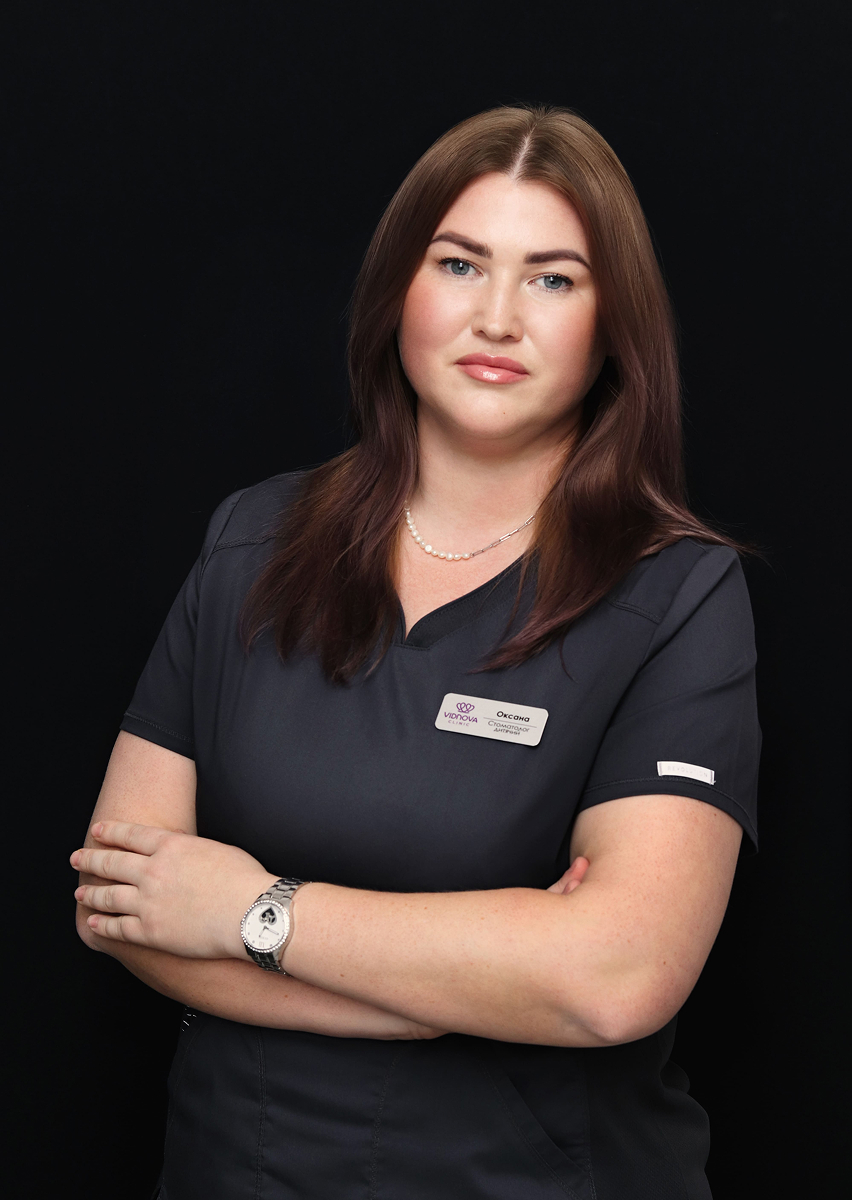
MediUkraine is a treatment search and coordination service, not a clinic. We select the clinic and a doctor with the right specialism, agree dates and support patients, including those travelling from abroad. Our partner clinic for this treatment is the Vidnova Dental Clinic in Lviv. The orthodontist decides on the treatment plan after an in-person examination and X-rays.

Travel. Ukrainian airspace is closed, so there are no commercial flights. Patients reach Lviv overland, most often from Poland: Rzeszów and Kraków airports are the usual entry points, with a train, bus or private transfer onward to the border and on to the city. Lviv is roughly 70 km from the Polish border, the shortest crossing of any Ukrainian city.
Visas. Citizens of the EU, the United Kingdom and the United States do not need a visa for short stays in Ukraine. Rules depend on your citizenship, so check your own before booking.
Safety, plainly. Ukraine is at war. Air raid alerts occur in Lviv, and an appointment can be interrupted by one. Several governments advise against travel to Ukraine, and while that advice stands, ordinary travel and medical insurance is often void — confirm your cover with your insurer before you commit to anything.
Language. MediUkraine handles correspondence, scheduling, the written treatment plan and the quote in English. The clinic's team communicates with international patients in English.
Payment. You pay the clinic directly. Our coordination service is free of charge for you.
More on travel, safety and insurance: Safety and travel.
The bracket and the slot. The key part of the design is the slot that holds the wire. The most common slot size is 0.022 inch, less often 0.018; it determines at what wire size the bracket starts to control root inclination (torque). The cover is opened and closed with an instrument: depending on the system, it is a vertical slide, a rotating latch or a spring plate. This is a moving part, and it does not last forever (more on that below).
Passive self-ligation. The cover closes the slot but does not touch the wire: the slot stays larger than a thin wire. Friction between the wire and the bracket is minimal, the wire slides freely, and at the levelling stage the teeth align under very light forces. The downside comes from the same feature: until the wire fills the slot, the tooth has play, and nothing controls its inclination or rotation. That is why passive systems move earlier to larger rectangular wires, which provide that control. Examples: Damon Q2 and Damon Clear (Ormco), Carriere SLX, Quick (Forestadent), Clarity SL (3M).
Active self-ligation. Here, instead of a cover, a spring clip enters the slot and presses the wire against its base once the wire reaches a certain size. There is no play, rotation and inclination are controlled from the early stages, and force is applied more precisely. The trade-off is higher friction: the wire slides less easily along the arch, which has to be taken into account when closing spaces. Examples: In-Ovation R and In-Ovation C, Speed. Some systems, such as Empower 2, combine both in one set: passive brackets on the back teeth for sliding, active ones on the front teeth for control.
Materials. Metal brackets are made of stainless steel: they are the smallest, the strongest and the cheapest. Ceramic brackets are made of polycrystalline aluminium oxide, tooth-coloured and barely noticeable at conversational distance. The trade-off is mechanics and price: ceramic is more brittle than steel, there is more friction in the slot, and the brackets take longer to remove. An important detail if discretion is what you are paying for: the clip in ceramic brackets is almost always metal and shows as a thin strip down the centre.
Wires. It is the wire that moves the teeth, not the bracket: this is the most important sentence on this page. Treatment starts with thin nickel-titanium wires, including heat-activated ones, which deliver a light, constant force; next come thicker NiTi wires, then rectangular steel or titanium-molybdenum wires for torque and final settling. The sequence and timing of wire changes are set by the system's protocol and the clinical situation, and they are what determine the pace of treatment.
What research shows. The most common advertising claim, "faster and less painful", is not supported by evidence. Systematic reviews, including a Cochrane review, compared these braces with conventional ones and found no clinically significant difference in overall treatment time, in the quality of the final result or in the intensity of pain in the first days after bonding and wire changes. This does not mean the design is bad, just that there are other reasons to choose it.
Where there really is a difference. Visit length: removing and replacing twenty ligatures takes longer than opening and closing twenty covers, and studies consistently confirm this saving. Cleaning around the bracket is easier, because an elastic ring is one more surface where plaque collects. And appearance: clear ligatures stain, covers do not. One more claim needs debunking: low friction does not make it possible to "expand the jaw without extractions"; the decision on extractions is based on X-rays and an analysis of the space shortage, not the type of bracket.
The interval between visits. Conventional braces are usually adjusted every 4–6 weeks, because elastic rings lose their force and colour in that time. Without ligatures this factor disappears, so the interval is often extended to 6–10 weeks, meaning fewer clinic visits overall. But this is a possibility, not a rule: in the space-closing phase elastic chains are used, which also weaken within three to four weeks, so visits have to be more frequent whatever the bracket type.
What does not change at all. These are still fixed braces: hard and sticky foods are off limits, you clean your teeth after every meal, and interdental brushes and wax stay in your pocket. If the doctor prescribes elastics, you wear them yourself, and treatment time depends more on your discipline than on the design. A typical course is 18–24 months; simple cases are completed in 12–14 months, while complex ones, with extractions and large movements, take 30 months or longer.
What it is not. Self-ligation is a way of holding the wire, not a separate treatment method or a substitute for diagnostics. If complete invisibility is needed, lingual braces bonded to the inner surfaces of the teeth are considered; if being able to take the appliance out is essential, aligners, which do not work in every case and have to be worn 20–22 hours a day. The orthodontist decides which suits you based on the X-rays, and the answer is often conventional metal braces, which behave most predictably in complex mechanics.
For the first three to five days the teeth ache and hurt when you bite, as if they were loose. This is a normal response as bone remodelling begins, not a complication: the periodontal ligament fibres have been stretched, and the tooth really does have slight mobility. Soft food, cool drinks and the painkiller recommended by your doctor help during these days. A similar but milder reaction can follow each wire change, usually for a day or two.
The inside of the mouth takes longer to adapt. For the first week or two the brackets rub the cheeks and lips, sometimes to the point of ulcers; cover pressure points with orthodontic wax, and the lining gradually toughens. Speech is affected for a few days and returns to normal on its own. If the end of the wire is poking your cheek, do not just put up with it: book an extra visit.
Visible progress is uneven, which can be confusing. The front teeth straighten fastest: noticeable changes usually appear within two to four months, and this phase gives the impression that everything is moving quickly. After that, progress seems to stall, although more work is being done: space closure, root movement and correcting how the jaws meet are barely visible from the outside.
Roughly halfway through treatment, a follow-up X-ray is taken to assess the condition of the roots and bone and to compare the actual movements with the planned ones. For most cases treatment takes 18–24 months, but this is the doctor's estimate, not a guarantee. The final result is judged after finishing and removal of the braces, not when the teeth "already look straight": the last phase sets the contacts between the teeth, and without it the bite remains unfinished.
After removal, retention begins, and it is essential. A thin wire retainer is bonded behind the front teeth, and a removable night-time retainer is usually added. Retention lasts for years, and for the lower front teeth often indefinitely: the periodontal fibres "remember" the old position and pull the teeth back. Without retention, relapse is most likely exactly where crowding was worst.
The retainer also needs checking every 6–12 months, because the wire can come loose without you noticing. Only a doctor can predict the result in an individual case, after an examination and X-rays: age, bone condition, root shape and how consistently you wear elastics matter as much as the design. For patients from other countries, MediUkraine arranges remote consultations with the same orthodontist, and you keep the treatment report, X-rays and recommendations.
Step 1. Diagnostics and plan. The orthodontist examines the teeth, bite and gums, refers you for cone beam CT and a lateral cephalometric X-ray, and takes a photo record and a scan of the teeth. The X-rays are used to calculate the space shortage, assess root inclination and decide whether extractions are needed. At the next visit you receive a plan with stages, an approximate duration and a quote.
Step 2. Preparatory treatment and cleaning. Decay is treated, tartar and plaque removed and gum inflammation brought under control, all before bonding, because the enamel under a bracket cannot be reached once it is in place. If the plan requires it, teeth that block the planned movements are extracted at this stage. A professional clean is done a few days before bonding so the adhesive bonds to clean enamel.
In total, treatment usually takes 18–24 months: diagnostics and preparatory treatment, then bonding (1.5–2 hours), roughly 10–14 activation visits every 6–10 weeks, and finally finishing, removal of the braces and retention with a fixed retainer and a night-time retainer. The longest stage is not the most visible one: the first few months bring the most noticeable changes, while most of the time goes on closing spaces and perfecting the bite.
Treatment progresses in cycles rather than continuously. The wire applies constant light pressure, the bone around the root remodels, the tooth moves by fractions of a millimetre, and within a few weeks the wire has straightened as far as it can and the force fades. Then the next cycle is needed: a visit to change or activate the wire. Hence the interval, and the reason treatment cannot be completed in three visits.
These cycles make up three phases. Levelling: aligning the teeth into a smooth arch with thin nickel-titanium wires; in passive systems this phase runs with very low friction and shows the most visible progress. The working phase, the longest: rectangular wires, space closure, root torque and correcting the jaw relationship. Finishing: final refinement of the contacts, when almost nothing changes on the outside but the work continues.
The length of a cycle is set by biology, not convenience. Coming back after two weeks catches the bone mid-remodelling: it is too early to change the wire, and more force does not speed up movement but raises the risk of root resorption. Missing two or three intervals is worse: the wire stops working, the teeth stall or drift, and some progress has to be repeated.
Reviewing the plan along the way is a normal part of treatment. At each visit the doctor compares actual movements with the plan; if a tooth is not moving as intended, the wire sequence is changed, anchorage is added or treatment goes back to a smaller wire. Roughly halfway through, a follow-up X-ray is taken. The duration given at the first visit is an estimate and depends, among other things, on how consistently you wear elastics.
The last cycle is retention, and it is the longest. After the braces come off, the teeth are held with a fixed retainer and a night-time retainer, because the periodontal fibres and bone "remember" the old position for several years. Retention is not an add-on but part of treatment: patients who think treatment ends the day the brackets come off are the ones who lose their results.
The most common complication of any fixed braces is enamel demineralisation: matt white spots around the brackets that remain visible after removal. It has one cause: plaque, which stays around a bracket longer than on smooth enamel. Having no elastic ligatures removes one surface where plaque collects, but you still need to clean after every meal and use interdental brushes and fluoride toothpaste. If hygiene stays poor, the orthodontist may remove the braces early.
The second group of risks affects the tissues around the teeth. The gums around brackets often swell and bleed, and prolonged inflammation leads to gum overgrowth, which needs separate treatment. Another risk is root resorption: shortening of the root tips with large movements and long treatment. It is usually slight and clinically insignificant, but the follow-up X-ray midway through treatment is taken precisely to catch it early.
The third group is specific to this design: mechanism failures. A cover or clip can deform, break or jam if plaque or tartar gets under it; the slot is then harder to open, and sometimes the whole bracket has to be replaced. Brackets come off no more often than conventional ones, usually because of hard food. Do not try to prise a cover open with tools at home.
Pain, pressure and cheek rubbing in the first days after bonding and after each wire change are normal. What should concern you: pain that has not eased after a week, noticeable looseness of one tooth, persistent gum bleeding, swelling or a gum boil (fistula). These are reasons for an extra visit, not for taking more painkillers.
Contraindications are mostly temporary and resolve with treatment: active decay, a flare-up of periodontitis, poor hygiene. Permanent ones are rarer: severe uncontrolled general illnesses, including uncontrolled diabetes, bisphosphonate treatment, and previous radiotherapy to the face and jaws. Nickel allergy is a separate issue: steel brackets and nickel-titanium wires contain nickel, so with a confirmed allergy titanium brackets and other wires are chosen.
The last risk is relapse. Without retention the teeth will most likely partly move back, fastest in the first year after removal. That is why the fixed and night-time retainers are not optional. Only a doctor can predict the result in an individual case, after an examination and X-rays: the type of bracket by itself determines neither the duration nor the final picture, and a clinic that gives an exact removal date at the first consultation is promising something it cannot control.
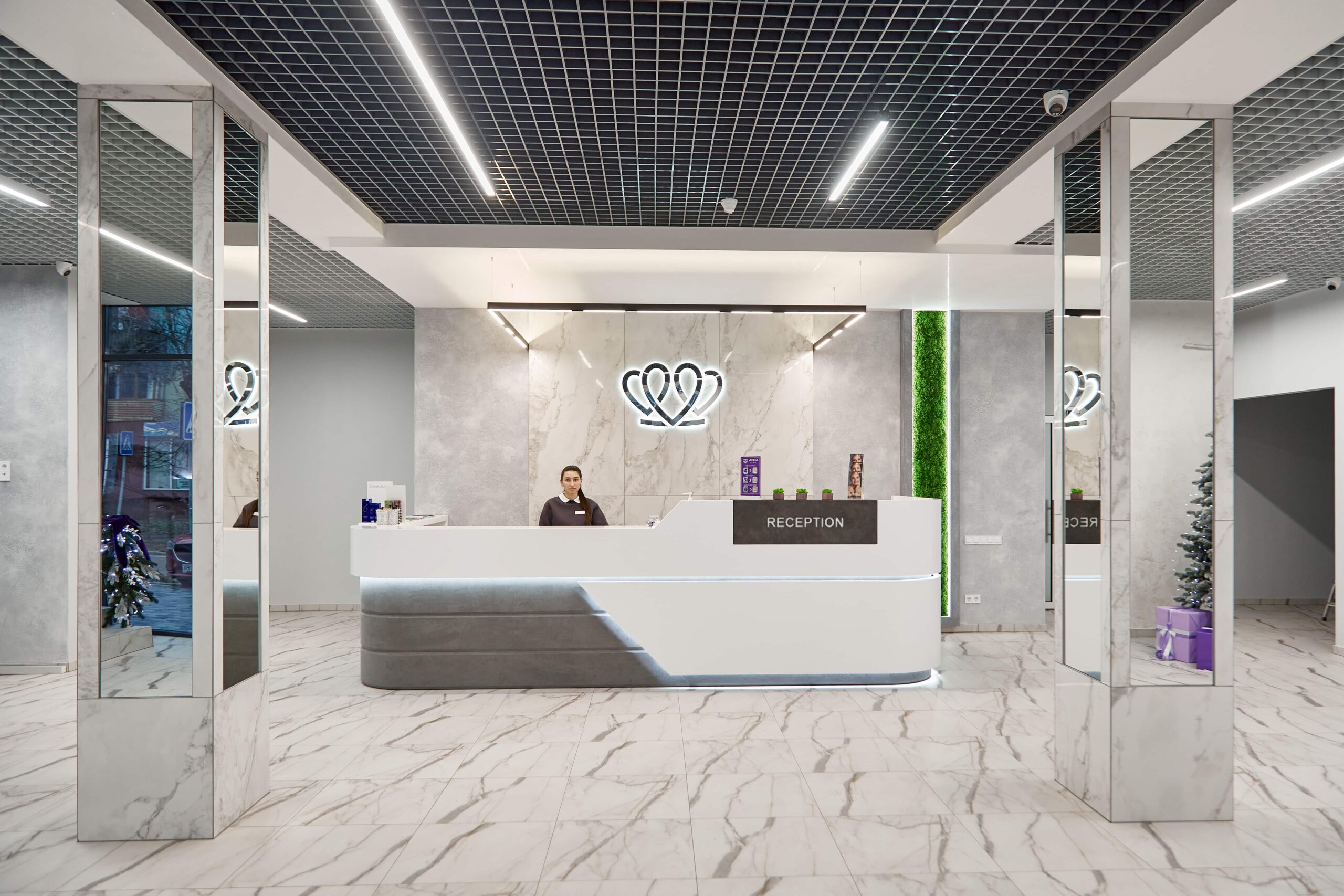
📍 Lviv, Ukraine
A dental clinic in Lviv with a separate doctor for each field: oral surgery and implants, prosthodontics, restorative dentistry, endodontics under a microscope, periodontics, orthodontics and paediatric dentistry.
In one component: the wire is held in the slot not by an elastic or wire ligature but by a built-in cover or spring clip, which the doctor opens with an instrument. As a result, wire changes take less chair time, there are no elastic rings to stain from coffee and turmeric or weaken within three to four weeks, and cleaning around the bracket is a little easier. Everything else stays the same: the indications, the wire sequence, the phases of treatment, the food restrictions and retention.
At MediUkraine's partner clinic, self-ligating braces cost from USD 516. Diagnostics and preparatory treatment are charged separately, as are activation visits (from USD 12 per visit without a wire change), removal of the braces (from USD 38) and fitting a retainer (from USD 49). At the consultation, check whether the price covers one jaw or both and how many activations the plan includes; the clinic confirms the final cost after an examination and X-rays.
The evidence does not support this. Systematic reviews comparing self-ligating and ligated systems found no clinically significant difference in overall treatment time, in the quality of the result or in the severity of pain in the first days after bonding and wire changes. The consistent differences are smaller: shorter visits and no ligatures to stain and collect plaque. The pace of treatment depends on the complexity of the case, the wire protocol and how consistently you wear elastics.
This is the orthodontist's decision, and it depends on the mechanics of the particular case. A passive cover does not press on the wire: friction is minimal and the teeth slide easily, but control of inclination only comes with larger wires. An active clip presses the wire against the base of the slot and controls rotation and torque earlier, at the cost of higher friction when closing spaces. Some systems combine both types of bracket within one arch: passive on the back teeth, active on the front teeth.
Usually every 6–10 weeks, compared with 4–6 weeks for conventional braces, because there are no elastic rings that lose their force within a month. However, the doctor sets the interval according to the phase of treatment, not just the type of bracket. In the space-closing phase elastic chains are used, which also weaken within three to four weeks, and then visits have to be more frequent. An activation visit takes 15–30 minutes, so patients from other cities can usually combine it with other plans on the same day.
Yes, ceramic ones: made of polycrystalline aluminium oxide and tooth-coloured, they are barely noticeable at conversational distance. But the clip in them is most often metal, and it shows as a thin strip down the centre of the bracket. Ceramic is more brittle than steel, has more friction in the slot, costs more, and such brackets take longer to remove. If complete invisibility is needed, lingual braces or aligners are discussed.
Book an extra visit and do not try to fix it yourself. Leave a loose bracket on the wire and do not try to glue it back at home; if the sharp end of the wire is poking your cheek, cover it with orthodontic wax. The doctor opens a jammed or broken clip with a special instrument; trying to prise it open at home usually means the whole bracket has to be replaced. Until the visit, stick to soft food.
Tell us what you need: we will suggest a clinic and a doctor and send you a cost estimate.
Request a consultation →