
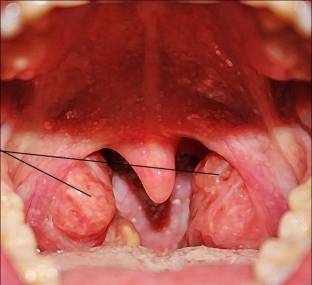
Adenoids are one of the most common ENT problems in childhood, and they worry children and parents alike. “My child snores, sleeps badly, is often ill and talks through their nose” — these are typical complaints that bring families to a paediatrician or an ENT specialist. Whether adenoids should be treated with medicines or “taken out” remains one of the most debated questions in paediatric ENT. Let’s look at what adenoids are, when they become a problem and which approach is right.
01What are adenoids and what do they do?
Adenoids (pharyngeal tonsils) are a mass of lymphoid tissue on the back wall of the nasopharynx. Like the palatine tonsils, the adenoids are part of Waldeyer’s ring and of a child’s immune system. In early childhood they actively “train” the immune system, helping to protect the body from infections that enter through the nose.
Adenoids start to grow from the age of 3–4 months and reach their largest size at 3–7 years — just when a child starts mixing with other children and catching infections. After 7–10 years the adenoids gradually shrink and, as a rule, have largely regressed by the teenage years. This is why adenoids are most often an issue for children aged 2 to 10. It is important to understand that having adenoids is normal at this age. They become a problem when excessive enlargement (hypertrophy) or chronic inflammation (adenoiditis) starts to affect a child’s health and quality of life.
02Symptoms of enlarged adenoids and adenoiditis
Grade I–II adenoid hypertrophy often causes no symptoms or only mild ones. With grade III (the adenoids block more than 2/3 of the nasopharynx) the symptoms become obvious. Difficulty breathing through the nose — the child breathes through the mouth all the time or mostly at night; a blocked nose without visible discharge. Snoring, restless sleep, sleep apnoea (pauses in breathing), sleeping with the mouth open. Frequent acute respiratory infections (more than 6–8 a year), recurrent middle ear infections and otitis media with effusion (fluid in the ear — “glue ear”) with hearing loss. “Adenoid face” with long-standing hypertrophy: an open mouth, flattened nasolabial folds, a changed bite. Speech problems: a “blocked” nasal voice, as if the child is “talking through the nose”. Reduced hearing, difficulty concentrating and hyperactivity due to chronic oxygen deprivation and poor sleep.
Not sure which clinic to start with?
A MediUkraine coordinator will help you choose a clinic and a doctor for your case, free of charge.
03Treating adenoids without surgery
When adenoid enlargement is mild with no significant symptoms, or when there is adenoiditis (inflammation), treatment with medicines is the first line. It includes: topical nasal corticosteroids (mometasone, fluticasone) — the best-evidenced option: they reduce the size of the adenoids and improve nasal breathing after 1–3 months of regular use. Nasal rinsing with isotonic saline solutions — to clean the lining of the nose and reduce inflammation. Antihistamines if there is an allergic component. For adenoiditis — rinsing, local antiseptics and, if indicated, antibiotics. Non-surgical treatment works for grade I–II hypertrophy, when there are no complications and the treatment is used correctly over a long period. It is important to give treatment at least 3 months before deciding on surgery.
04Adenoidectomy: when is surgery necessary?
Adenoidectomy (removal of the adenoids) is recommended for: grade III hypertrophy with marked difficulty breathing through the nose, snoring and apnoea; recurrent middle ear infections (3 or more a year) and chronic otitis media with effusion with hearing loss; no improvement after 3–6 months of non-surgical treatment; changes in the bite linked to chronic mouth breathing. Modern adenoidectomy is performed endoscopically, under direct vision, which reduces the risk of incomplete removal (a common cause of regrowth after a “blind” conventional adenoidectomy). The operation is done under general anaesthesia and takes 15–30 minutes; the child usually goes home the same day or the next day. The effect is often noticeable within the first days: the child starts to breathe more freely through the nose and sleeps better. Speech and general wellbeing usually return to normal within a week or two.
Do not rush into surgery, but do not put it off if there are clear reasons for it. The right approach — medical or surgical — depends on the grade of enlargement, any complications and how well previous treatment has worked. Talk to an experienced ENT specialist, and together you will find the right solution for your child.




