
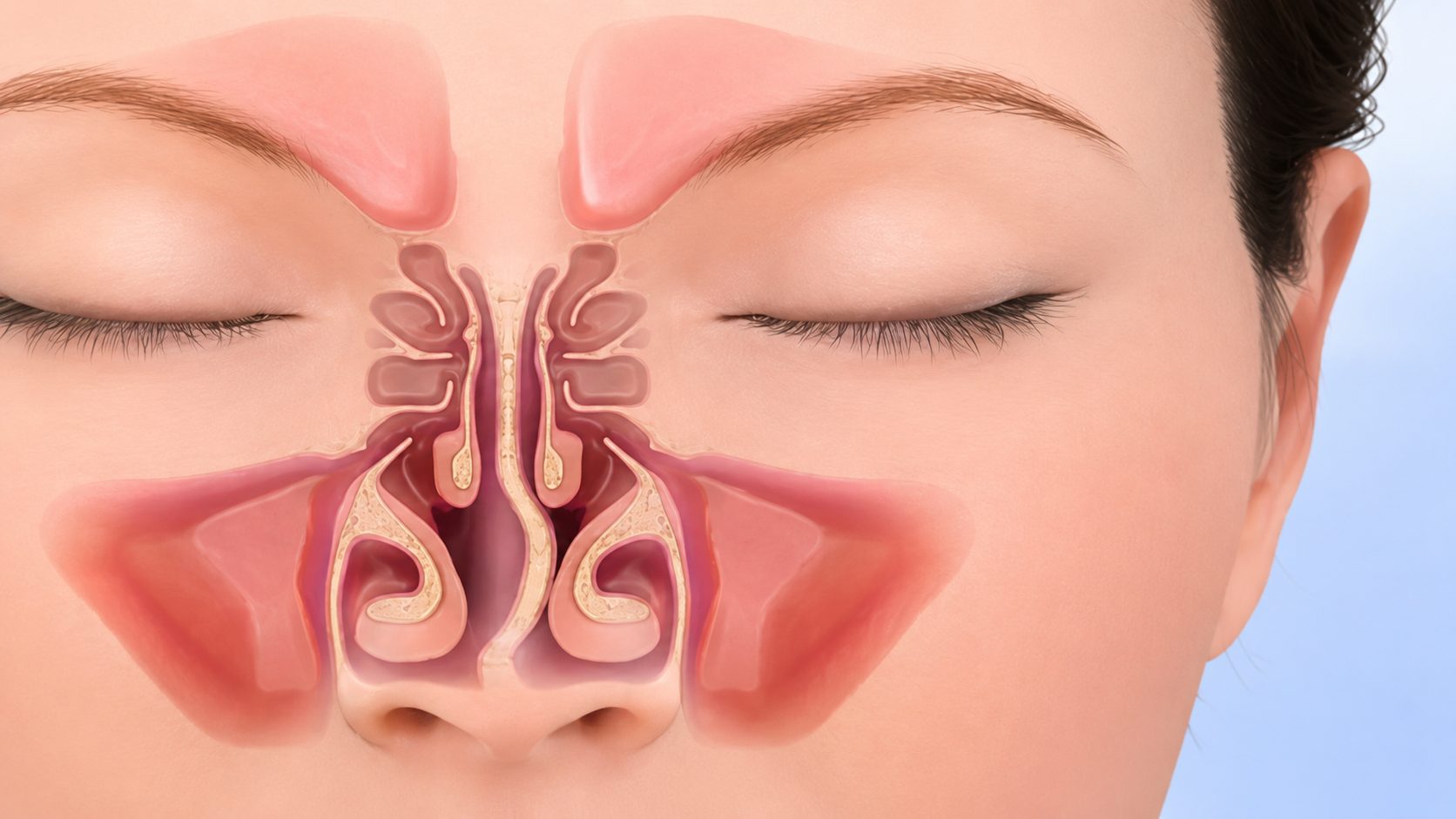
A deviated nasal septum is an extremely common anatomical feature: according to various data, it is found in 70–80% of adults. But does this mean that most people need surgery? Not at all. The key question is not whether the septum is deviated, but whether it causes clinically significant problems. Understanding where the line lies between normal, a clinically insignificant deviation and a condition that needs surgical correction is what allows you to make a well-considered decision.
01What is the nasal septum and why can it be deviated?
The nasal septum is a vertical wall that divides the nasal cavity into two halves. It consists of cartilage at the front and bone at the back. Ideally the septum sits exactly in the midline, but in practice even a slight deviation from this ideal is considered normal.
The causes of a deviated septum fall into several groups. Traumatic — fractures of or blows to the nose at any age; even “minor” injuries in childhood and adolescence can lead to deformity. Congenital — problems during development in the womb or birth injury. Uneven growth — the cartilage and bones of the septum and the surrounding structures grow at different rates, and an S-shaped or C-shaped deviation often forms during adolescence. In the vast majority of cases the real cause is a combination of factors, and what matters is not so much finding out “why” as assessing “how much it gets in the way”.
02Symptoms and consequences of a deviated septum
The symptoms depend on the degree and type of deformity and on the individual structure of the nose. A slight deviation may cause no symptoms at all, whereas a significant one can seriously affect quality of life.
The most common symptom is chronic congestion of one or both sides of the nose that has nothing to do with colds and does not go away with decongestant drops. People start to overuse decongestants, which can lead to rhinitis medicamentosa (rebound congestion) — an even more serious problem. Difficulty breathing through the nose leads to mouth breathing: a dry throat, poorer sleep, snoring and sleep apnoea. Poor ventilation of the sinuses contributes to recurrent sinusitis and ear infections. Chronic headache, especially in the forehead and the bridge of the nose. A reduced sense of smell. Because the nose warms and humidifies inhaled air less well, people may be more prone to allergic reactions and respiratory infections.
Not sure which clinic to start with?
A MediUkraine coordinator will help you choose a clinic and a doctor for your case, free of charge.
03How does a doctor decide whether surgery is needed?
The decision on surgery is made strictly on an individual basis and only when there are clinical indications. The first step is a detailed consultation with an ENT doctor, who takes your history (complaints, how long you have had them, treatments you have tried) and examines you. Anterior rhinoscopy and nasal endoscopy allow the doctor to see the degree and nature of the septal deformity and the condition of the nasal lining and turbinates directly.
It is important to rule out or treat other causes of nasal congestion — allergic rhinitis, enlarged inferior turbinates, polyps. These conditions often occur together with a deviated septum, and septal surgery alone will not be enough if allergic rhinitis is left untreated. A CT scan of the sinuses helps assess the sinuses and detect related changes. Surgery is indicated if: treatment with medicines (topical corticosteroids, antihistamines) does not relieve the symptoms; there is persistent difficulty breathing through the nose that affects sleep and the ability to work; or you suffer from recurrent sinusitis or ear infections linked to poor ventilation.
04Nasal septum surgery: what you need to know
Surgical correction of a deviated septum is called septoplasty. It is a routine, well-established operation performed by ENT surgeons all over the world. During the operation the surgeon reaches the cartilage and bone of the septum through the nostril and removes or repositions the deformed sections, leaving the outer appearance of the nose unchanged (unless rhinoplasty is performed at the same time).
The operation is performed under general or local anaesthesia and usually takes 30–60 minutes. Afterwards the patient stays under observation for a few hours or one night. For the first days there may be packs or splints in the nose; they are removed after 24–72 hours. Recovery takes 1–2 weeks; full healing takes several months. In most cases nasal breathing improves noticeably once the packs are removed and the swelling settles.
You should neither turn down surgery out of fear nor push for it without real indications. Talk to an experienced ENT surgeon, discuss all the pros and cons, and together you will be able to make the right decision for your health.
Already had the operation? Find out more about the period afterwards in our article Septoplasty recovery, day by day.




