| Service | 🇺🇦 Ukraine | 🇨🇿 Czech Republic | 🇹🇷 Turkey |
|---|---|---|---|
| Neodent implant placement (Brazil) | from USD 373 | from USD 1146 | from USD 470 |
| Megagen AnyRidge implant placement (South Korea) | from USD 562 | from USD 810 | from USD 675 |
| Straumann implant placement (Switzerland) | from USD 733 | from USD 929 | from USD 838 |
| Implantologist consultation with CT scan | from USD 20 | from USD 114 | from USD 92 |
Prices in the “Ukraine” column come from MediUkraine’s partner clinics. The Czech Republic and Turkey columns show the lower bounds of prices published by clinics there (for Turkey, also the Turkish Dental Association’s recommended 2026 tariff), collected in August 2026 and converted to US dollars at the rate on the day of collection. A dash means we could not find a comparable published price. In any country, the final cost is set by the clinic after an examination.
A dental implant is a titanium screw driven into the jawbone in place of a lost root. Over several months the bone grows into the microrelief of its surface and the support becomes able to carry chewing load. That process is called osseointegration, and it, rather than the surgery, takes up most of the treatment.
An implant replaces the root, not the whole tooth. The visible part, the crown, appears only at the final stage, after the gum former and the abutment. A promise of "a tooth in one day" is therefore worth reading closely: a single visit usually fixes a temporary structure, while the permanent one is made after the implant has integrated.
Indications: the loss of a single tooth where you would rather not grind down the neighbours for a bridge; several missing teeth in a row; a fully edentulous jaw, where implants become supports for a fixed or semi-removable denture; a removable denture that will not stay in place. There is one more argument, atrophy: without a root the bone in that area gradually loses volume, and the more time has passed, the likelier it is that bone grafting will be needed.
Who the method does not suit, or has to wait: uncontrolled diabetes, treatment with bisphosphonates or denosumab, active periodontitis with loose teeth, untreated infection at the site, age before the jaws have finished growing, pregnancy, a history of radiotherapy to the maxillofacial area. Some of these are temporary: once glycated haemoglobin is within target and periodontitis has been treated, the question is revisited.
MediUkraine is a treatment search and coordination service, not a clinic. We select the dental practice and the implantologist, agree the dates of the visits and support the patient, including patients travelling from abroad. The decision on whether an implant can be placed and which system to choose is made by the doctor after an in-person examination and a reading of the CT scan.

Travel. Ukrainian airspace is closed, so there are no commercial flights. Patients reach Lviv overland, most often from Poland: Rzeszow and Krakow airports are the usual entry points, with a bus, train or private transfer onward to the border and on to the city. Lviv sits roughly 70 km from the Polish border, which makes it the shortest crossing of any Ukrainian city.
Visas. Citizens of the EU, the United Kingdom and the United States do not need a visa for short stays in Ukraine. Rules depend on your citizenship, so check your own before booking.
Safety, plainly. Ukraine is at war. Air raid alerts occur in Lviv and an appointment can be interrupted by one. Several governments advise against travel to Ukraine, and while that advisory stands, ordinary travel and medical insurance is often void — confirm your cover with your insurer before you commit to anything.
Language. Appointments at the clinic are conducted in Ukrainian, with English available by prior arrangement. MediUkraine handles correspondence, scheduling, the written treatment plan and the quote in English, and confirms the language of your appointment with the clinic before you travel.
After you go home. The surgical protocol, the implant passport with the serial number and the scans stay with you, so a dentist anywhere can pick the case up. We can arrange a video consultation with the surgeon who treated you, and the second trip for the crown is scheduled in advance around the osseointegration period.
Treatment begins with a cone beam CT scan and planning. From the scan the surgeon measures the height and width of bone at the future implant site, assesses its density and sees the position of the inferior alveolar nerve and the floor of the maxillary sinus. In the planning software the implant is placed virtually, together with the future crown, so that the support ends up at the right angle. A surgical guide is printed from that plan and, during the operation, sets the entry point, the tilt and the depth of drilling.
Neodent (Brazil) belongs to the Straumann group and occupies the lower price position in this list, from USD 373 for placement. It is a full-featured system with a conical connection and a surface treated by sandblasting and acid etching, with a wide range of diameters and prosthetic components. It is used in standard clinical situations where there is enough bone and loading times are conventional, which covers most single and multiple tooth replacements.
Megagen AnyRidge (South Korea), from USD 562. Its recognisable feature is a deep knife-edge thread with a wide pitch, which gives high primary stability in soft bone, for example in the posterior upper jaw where bone is often porous. Primary stability is how firmly the implant holds immediately after it is driven in, and it is what determines whether immediate loading with a temporary crown can be considered at all.
Straumann (Switzerland), from USD 733. The system has been produced since the 1970s, has the longest record of clinical observation of those listed here and a large body of published data on implant survival over many years. Some items are made from Roxolid, a titanium-zirconium alloy stronger than pure titanium, which allows smaller diameter implants where the bone ridge is narrow, sometimes avoiding grafting.
Straumann Active is not a separate implant but the hydrophilic SLActive surface on the same implant bodies. It is stored in solution and activated immediately before placement, so the blood clot contacts the surface more closely. There is one practical consequence: the manufacturer shortens the recommended time to loading from around six to eight weeks (SLA surface) to three or four. That matters in difficult conditions, with diabetes, after bone grafting, in patients who heal slowly, rather than as a way to give a healthy patient a crown sooner.
It is worth saying plainly here that a more expensive implant does not mean a better outcome in your particular case. Survival of all the systems listed is measured in similar figures in documented observation, and the difference is ultimately made by the volume and quality of bone, the condition of the gums, hygiene, smoking and underlying illness. A more expensive system gives the surgeon more tools in a difficult situation, a narrow ridge, shortened timelines, the need for a particular prosthetic solution; where the situation is standard, that advantage often goes unused. Manufacturers' warranty commitments differ too: most give an extended or lifetime warranty on the implant itself as a product, provided it was placed according to protocol and the patient attends check-ups. The limits of that document need to be understood: it covers the product, not the outcome of treatment, and it does not cover peri-implantitis caused by poor hygiene or smoking.
Protocols differ in when the implant is placed and when it is loaded. Delayed implantation is the classic approach: the tooth is extracted, the socket heals for two to four months, then the implant goes in. Immediate implantation places the screw straight into the socket of the extracted tooth, which is only possible if the socket walls are intact and there is no acute inflammation. Immediate loading fixes a temporary crown within the first days; it requires high primary stability, and the temporary crown is kept out of occlusion so that chewing does not loosen the implant.
Where bone is lacking, the plan becomes more complex. Guided bone regeneration, grafting material placed under a membrane, adds ridge volume and extends treatment by four to six months if done as a separate stage. In the posterior upper jaw a sinus lift is performed: the floor of the maxillary sinus is raised and the space filled with grafting material. A closed sinus lift is sometimes combined with implant placement in one visit; an open one is almost always done separately. The alternative to grafting is smaller diameter implants or shifting the position of the support, and which of these is possible is visible only on the CT scan.
The prosthetic stage begins after osseointegration. First a gum former is fitted, shaping the contour of the soft tissue around the future crown over one to two weeks. It is then replaced with an abutment: a stock abutment suits typical situations, while a custom one is milled for the specific case where the gum profile matters in the smile zone. The crown is made from zirconia or porcelain-fused-to-metal and secured with a screw or with cement. Screw retention allows the crown to be removed without destroying it; cement retention looks neater in some areas, but cement residue under the gum is one of the known causes of peri-implantitis.
Where a jaw has no teeth at all the approach is different: four to six implants become supports for a fixed full-arch denture, a solution known as All-on-4 and All-on-6. The rear implants are placed at an angle, bypassing areas short of bone, and a temporary denture is often fixed within the first days. The permanent structure is made a few months later, once the gums have finally settled. Such a denture is cleaned differently from natural teeth: it needs interdental brushes and an irrigator underneath, and once a year the structure is removed for professional cleaning.
Swelling and moderate pain last for the first two or three days, an expected tissue response to surgery. The surgeon prescribes painkillers, an antibiotic and antiseptic rinses where indicated, and advises cold on the cheek in the first hours and warm soft food. Hot food, saunas, the gym and flights are best avoided during these days.
Sutures come out on day 7 to 10, and the surgeon inspects the wound at the same visit. Until then the site is not brushed, rinses are used instead, and chewing is done on the other side. If swelling increases after the third day, or there is throbbing pain, pus or fever, that is reason to contact the clinic rather than wait for the scheduled appointment.
Osseointegration then begins and takes up most of the treatment: usually three to four months in the lower jaw, four to six in the upper, longer after bone grafting or an open sinus lift. A patient cannot speed this up, and its progress is judged clinically and on a control scan rather than by how it feels: an implant that has failed to integrate often does not hurt.
The prosthetic stage adds another two to four weeks: gum former, abutment, impression or scan, and fabrication of the crown in the laboratory. Full chewing on the new tooth is possible once the permanent crown is fixed, and most patients get used to it within a few weeks. The gum contour around the crown settles finally over several months, which is noticeable in the smile zone.
Failures are worth discussing openly. A proportion of implants do not integrate. This is uncommon and happens mostly in the first months, with infection, overheating of the bone during drilling, excessive early loading, smoking or uncontrolled illness among the causes. The implant is then removed, the area is left to heal for two to three months, grafting material is added if needed and placement is repeated.
Once the crown is fixed, treatment moves into monitoring: an examination and professional hygiene every six months, a control X-ray once a year to assess the bone level around the implant. Only a doctor who has seen the CT scan and the state of the tissues can forecast the outcome for a particular patient, and it is at these check-ups that the forecast is refined.
Step 1. Consultation, CT scan and plan. The surgeon examines the mouth, assesses the bite and the gums and refers you for a cone beam CT scan. The scan shows whether there is enough bone, whether grafting is needed, and how many implants of which system will be required. The patient receives a written plan with stages, timelines and a quote, and discusses with the surgeon how the proposed systems differ.
Step 2. Implant placement. The procedure is done under local anaesthesia, with drug sedation if needed. The surgeon opens access to the bone, prepares the site with drills using the surgical guide and drives in the implant under torque control. One implant takes around 40 minutes, several up to two hours. The wound is sutured, and in some cases a gum former or a temporary crown is fitted straight away.
In total, treating one tooth takes three to six months, and up to nine after bone grafting. Between implant placement and the permanent crown lie osseointegration, the gum former, the abutment and fabrication of the crown in the laboratory: there are few active visits in that period, and most of the time is healing. No hospital admission is needed. Every stage is outpatient, and after each visit the patient returns to normal life the same day.
Implant treatment is not a single procedure but a cycle spread over months, with long pauses between the active stages. For a patient travelling from another city or from abroad, that cycle is conveniently split into two trips, sometimes three if bone grafting is done as a separate stage.
The first trip is diagnostic and surgical: consultation, cone beam CT scan, extraction or augmentation if needed, implant placement and a control scan. Together that is two to four days, of which only a few hours are spent at the clinic; the rest of the time is for initial healing and a check before departure.
Then comes the pause for osseointegration, three to six months that the patient spends at home. During this period thorough hygiene is needed, along with care not to load the site and contact with the doctor if anything is wrong. If the missing tooth is in a visible area, a temporary structure is made for this time.
The second trip is prosthetic: gum former, abutment, impression or scan, try-in and fitting of the permanent crown. It takes five to ten days depending on how busy the dental laboratory is and how many crowns are involved; clinics with their own laboratory are quicker.
After that the cycle moves into maintenance: examinations and professional hygiene every six months, a control scan once a year. The documents, the operation protocol, the implant passport and the scans, stay with the patient, so that monitoring can also be done where they live. MediUkraine builds the schedule for both trips and keeps in touch between them, including on the timing of the second visit.
Placing an implant is surgery, and there are always expected after-effects in the first days: swelling, bruising on the cheek, moderate pain, sometimes slight bleeding. These pass within a few days. Other signs should raise concern: swelling that increases after the third day, throbbing pain, discharge of pus, a temperature above 38 degrees, or numbness that has not resolved after the anaesthetic wore off.
Surgical complications are uncommon but serious. In the lower jaw there is damage to the inferior alveolar nerve, with numbness of the lip, chin or gum, which may be temporary and occasionally persistent. In the upper jaw there is perforation of the floor of the maxillary sinus, which can lead to sinusitis. Damage to the root of a neighbouring tooth is also possible. There is one main safeguard here: planning from a cone beam CT scan and a surgical guide, rather than drilling by eye.
The main late complication is peri-implantitis, inflammation of the tissue around the implant with loss of bone. It is preceded by mucositis, inflammation of the soft tissue only, which is still reversible. The triggers are well known: inadequate hygiene, smoking, cement residue under the gum where the crown is cement-retained, a history of periodontitis, irregular check-ups. Treatment involves cleaning the implant surface, antiseptics and antibiotics, and in advanced cases surgery or removal of the implant, which is why early detection at a check-up counts for a great deal.
Failure of osseointegration stands apart: the implant does not integrate and becomes mobile. This happens mainly in the first months after placement. The approach is standard: the implant is removed, the area is left to heal, grafting material is added if needed and placement is repeated after two to three months. A second attempt is most likely to succeed, but that is not promised in advance.
Contraindications are divided into permanent and temporary. The first group includes severe uncontrolled heart disease and clotting disorders, a history of radiotherapy to the maxillofacial area, and treatment with bisphosphonates or denosumab at high oncological doses because of the risk of medication-related osteonecrosis of the jaw. The second includes uncontrolled diabetes, active periodontitis with loose teeth, untreated infection at the site, pregnancy, and age before the jaws have finished growing. Temporary contraindications are mostly lifted once the condition has been treated or the readings have stabilised.
Smoking does not formally rule out the procedure, but it substantially raises the risk of peri-implantitis and early loss of the support, so the surgeon discusses it separately. Simple things reduce the risks: caries and periodontitis treated before surgery, planning from a CT scan, hygiene with interdental brushes or an irrigator, an examination and cleaning every six months, a scan once a year. Only a doctor, after an examination and a reading of the scan, can assess the risks for a particular patient; there are no remote conclusions here.
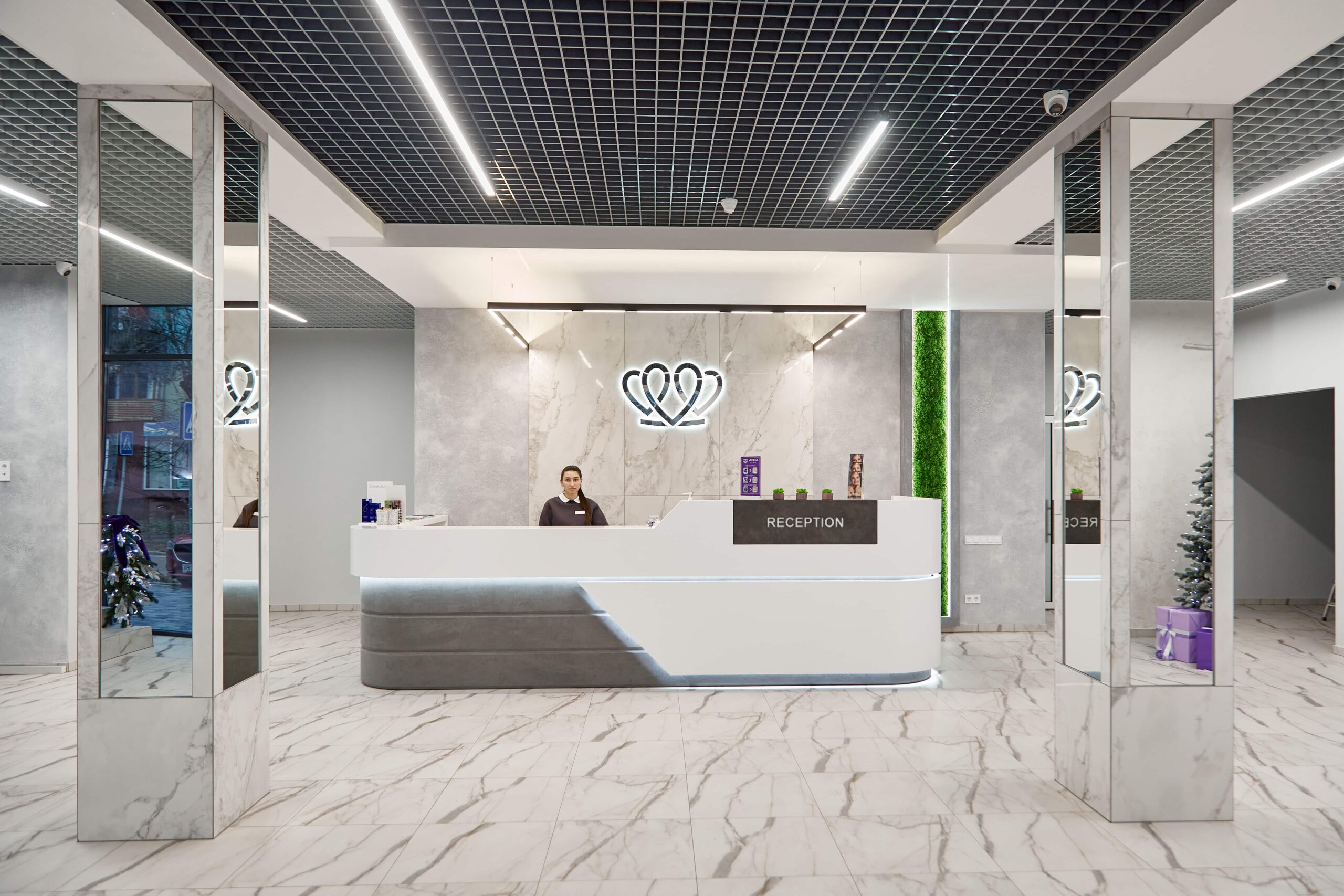
📍 Lviv, Ukraine
A dental clinic in Lviv with a separate doctor for each field: oral surgery and implants, prosthodontics, restorative dentistry, endodontics under a microscope, periodontics, orthodontics and paediatric dentistry.
At the clinics MediUkraine works with, placing a Neodent implant starts from USD 373 Megagen AnyRidge from USD 562 and Straumann from USD 733. An implantologist consultation with a cone beam CT scan is from USD 20. The crown, the abutment and any bone grafting are billed separately. For comparison, placement starts at around USD 1146 in the Czech Republic and around USD 470 in Turkey, figures taken from published clinic price lists in August 2026. Note that on the entry-level system the gap with Turkey is small; it widens on Straumann. The final figure is set by the surgeon after an examination and a reading of the scan.
No. The placement price covers the titanium screw, the surgery and the anaesthesia, and sometimes the gum former. The crown and the abutment are a separate, prosthetic stage, paid for after osseointegration, and it usually costs no less than the surgical stage. Preparatory procedures are billed separately too: extraction, bone grafting, a sinus lift, a temporary crown, a surgical guide. It is therefore worth asking for a full quote covering every stage up to the permanent crown, not just the placement of the support.
Usually three to six months. Bone is denser in the lower jaw and osseointegration more often fits into three to four months there; in the upper jaw it is slower, four to six months. If bone grafting or an open sinus lift was performed, another four to six months is added. The prosthetic stage then takes two to four weeks: gum former, abutment, impression and fabrication of the crown in the laboratory. Specific timelines are given by the surgeon after assessing the CT scan.
They differ in thread geometry, surface treatment, the range of prosthetic components, the volume of published clinical observation and the manufacturer's warranty terms. AnyRidge has a deep thread that helps hold the support in soft bone; some Straumann items are made from Roxolid alloy and allow narrower implants; the SLActive surface in the Straumann Active line shortens the recommended time to loading. A more expensive system does not mean a better outcome for a particular patient: bone volume, gum condition and hygiene decide that.
With controlled diabetes, usually yes. Glycated haemoglobin is the reference point: where readings are persistently high, healing slows and the risk of infection rises, so the procedure is postponed until the figures normalise, in consultation with an endocrinologist. Uncontrolled diabetes is a contraindication. The surgeon also takes account of the medicines the patient takes and schedules more frequent check-ups. The decision in a particular case is made by the implantologist after an examination and a review of test results.
Yes, it is one of the recognised risk factors. Nicotine constricts blood vessels and impairs the blood supply to the gums, which slows healing, and rates of peri-implantitis and early loss of the support are higher in smokers. Smoking is not a contraindication, but the surgeon will usually ask you to abstain for at least two weeks before the surgery and during the first weeks of healing, and to consider quitting after that. Hookah and electronic devices are not a substitute in this respect.
In documented observation most implants work for decades, but service life depends not on the brand but on hygiene, smoking, the bite and how regularly you attend check-ups. The crown wears faster than the support itself and may need replacing over time. Care is simple: brush and paste twice a day, interdental brushes or an irrigator for the gaps, professional hygiene every six months with instruments suitable for implants. A control scan is taken once a year so that changes in bone level are spotted in time.
Tell us what you need: we will suggest a clinic and a doctor and send you a cost estimate.
Request a consultation →